AI & Software
Where AI spending is actually landing
Model releases, enterprise adoption and software margins, read for what they do to revenue — across the labs, the platforms and the software they run on.
2026-10-25


ServiceNow pays $7.75B for Armis: identity arrives inside the workflow layer, and rivals’ “per-seat” logic gets stress-tested
ServiceNow agreed to buy Armis for $7.75B in cash and later completed the deal on April 20, 2026, tying cyber asset intelligence to the Now Platform’s workflow layer. The investor question is no longer whether identity is “a bolt-on,” but whether agent-era automation makes standalone identity revenue structurally harder to defend.

The $10,000-a-Violation Number Is a Rounding Error: Paxton's OpenAI Suit Is Really a Model-Release Gate
Texas filed a 67-page suit against OpenAI and Sam Altman on Oct. 23, 2026, claiming deception and safety failures and seeking civil penalties of up to $10,000 per violation under the SCOPE Act, an injunction barring minors in Texas, and court-appointed approval before any new ChatGPT model reaches Texans. The damages figure is the cheapest part of the case: the same statutes and the same attorney general have already turned that ceiling into four settlements worth at least $4.5 billion, each one bought with injunctive terms rather than a court ruling. The binding term is the model-release gate, because a company that ships one model fleet globally cannot let a single state set its launch calendar, and because the consumer line at issue is the same one Microsoft booked as $24.1 billion of FY2026 revenue from OpenAI commercial arrangements.
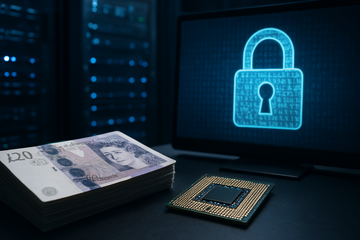
Britain's £200m Model-Credit Deal Is Too Small to Move OpenAI or Anthropic — and Buys Them Influence Over UK Biosecurity Policy
On Oct 24, 2026 the UK unveiled the world's first dedicated AI biosecurity organisation: £100m of public money plus up to £200m of model credits and compute pledged by OpenAI and Anthropic. Priced at the pound-dollar rate Reuters used for the same package, those credits are worth roughly $267m — about 3% of the compute Anthropic burned in the first half of 2026 and 1.6% of its third-quarter revenue. So the pledge cannot be a revenue event; it is a regulatory one, struck eleven days after both labs told a UK parliamentary committee that voluntary pledges no longer worked. Governments are now anchor customers of the frontier labs, and they pay in capacity rather than cash. For public-market investors the exposure runs through utilisation of already-financed compute — CoreWeave, Microsoft, Amazon, Nvidia, Alphabet, SK hynix — not through new chip orders, and the fragility sits in the GPU lessor's balance sheet, not the labs'.
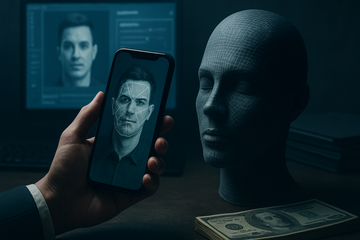
Illinois Put a $5,000-a-Head Price on Face Scans. Two Grok Suits Show Why Consumer AI Now Has to Price That In
Two Illinois class actions filed five days apart in October 2026 allege that Grok's ordinary photo features — rate a selfie, edit a face, measure a jaw — are unlawful biometric \"scans of face geometry\" under a state statute that awards up to $5,000 per person per violation. Because a federal appeals court held in April 2026 that Illinois caps those damages per person rather than per scan, the liability of a consumer AI feature now scales with the number of people it touches instead of the number of times it touches them, which turns a free photo filter into a balance-sheet decision. There is no federal rule coming: state attorneys general are using consumer-protection statutes to hit model makers, and the Justice Department has even intervened for xAI against Colorado's AI law. Grok now sits inside SpaceX, which reported a $413 million trailing net loss on $27.08 billion of revenue, so the bill lands first on Meta, Apple, Snap and Serve Robotics — the platforms whose products touch the most faces.
2026-10-24

Dow -652 points, Nasdaq -0.2%: Apollo Global Management's zero-payoff call exposes AI as a funding line, not a productivity story
Apollo Global Management's chief economist says AI has delivered zero financial payoff to corporate America outside technology, and on the same tape the Dow lost 652 points while the Nasdaq lost 0.2% — because oil at $103.27 and a 4.99% 10-year yield squeeze the half of the market with no AI offset. The fault line is no longer AI versus non-AI; it is who can finance a buildout heading past $1 trillion a year against a customer base that shows no measurable return. Credit has already repriced the AI complex — CoreWeave's five-year default swap at 1,145 basis points, Meta Platforms's at a record 114.79 — while equity has not, and mainland China has priced the same dispersion inside its own AI stocks.

JPMorgan Chase Deposits Grew 8% and Wells Fargo 11% in the Quarter AI Agents Got Blocked — Wall Street Sold the Wrong Half
JPMorgan Chase, Wells Fargo, Citigroup, Bank of America and Morgan Stanley restricted third-party AI agents inside customer accounts between Oct. 13 and Oct. 23, and the market read it as a deposit flight. Average deposits instead grew 8% at JPMorgan Chase and 11% at Wells Fargo in the same quarter, and no bank has disclosed an agent-caused loss. What actually repriced was permission: by redefining consent around the credential, banks kept the balances while the card networks and identity vendors became the parties that say yes to a payment — and collect for saying yes.

Etsy Just Banned AI-Generated Recipes. Its Sellers Grew 5.9% Last Quarter While Its Buyers Fell 0.4%
Etsy's October 22 ban on AI-generated patterns, recipes and bot-built listings is the first large marketplace to police the artifact rather than the disclosure, and it is also an admission that supply-side AI is degrading the search index it monetizes. The mechanism is visible in the June quarter: active sellers grew 5.9% to 5.71 million while active buyers slipped 0.4% to 87.0 million, so listings are compounding faster than the demand that has to sort them. Because Etsy takes 25.9 cents on every dollar of GMS and roughly half of its recent take-rate expansion came from ad impressions on a growing listing pool, cleaning that pool is a deliberate trade of near-term inventory for long-term conversion. The first read on whether that trade works arrives with the October 28 print, and the first read on its cost arrives in February 2027.
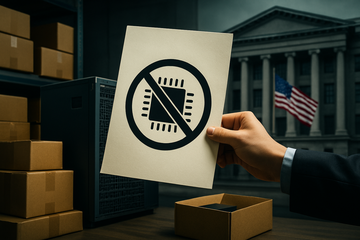
The DeepSeek purge costs DeepSeek nothing: 2,255 federal AI awards now carry a model-provenance bill
The Department of Homeland Security's order, published in the Federal Register on Oct 20, 2026, bars DeepSeek products from federal civilian procurement and orders agencies to strip out not only DeepSeek's own products but any third-party product developed using DeepSeek implementations. Because DeepSeek's models are free to download, nothing is lost on the revenue line: the cost lands on contractors, who must now inventory model provenance, report covered articles within three business days and answer an attestation question that inventory tools cannot verify. The market being re-priced is small and concentrated — $4.10B of net federal AI obligations across 2,255 awards since FY2019, 83% of it Defense — and barely governed, with explicit monitoring appearing in only 4 of the 75 AI solicitations reviewed. Meanwhile NVIDIA names DeepSeek, Qwen and Kimi as a material-impact risk in its own 10-Q, which is the tell that the firewall has moved from silicon to weights.
Frontier models’ partisan answers are becoming a procurement line item—starting with Grok vs. ChatGPT
A new forced-choice test reported by TechCrunch found SpaceXAI [Grok] recommends Republicans far more often (92%) while OpenAI’s GPT favors Democrats (97%), and the models agree in under 10% of cases. That turns “model alignment” from an abstract safety debate into a commercial risk: enterprise and government buyers now need political-leaning verification the same way they require security and bias controls.

Neocloud Credit Is Cracking. Nvidia's $125 Billion Residual Value Guarantee Is How the Loss Reaches the Vendor
CoreWeave's five-year credit default swap spread closed Oct. 21 at 1,145 basis points and implied five-year default odds near 63%, and the listed neoclouds each lost more than 30% in October. The loss does not reach Nvidia through the obvious channel: the $105 billion guarantee it disclosed for OpenAI's leases at the PORTS-Pike campus in Ohio cannot be triggered by a neocloud default, and its equity in CoreWeave sits behind $16.6 billion of unsecured notes. It reaches the vendor instead through a facility built in August, when Nvidia offered its six asset-manager partners a residual-value support mechanism covering up to 25% of any single project inside a $500 billion compute-financing platform, an option with roughly $125 billion of aggregate capacity. Meanwhile the balance sheet Nvidia is financing shows $366 billion of purchase commitments against $134.4 billion of trailing operating cash flow, and operating cash flow halved to $24.1 billion last quarter while net income rose to $59.7 billion.

Getty Filed Chapter 11 on Wednesday, Nvidia Backed Creative AI on Friday: Higgsfield's $1 Billion Run-Rate Is an Inference Order Book, Not Revenue
NVIDIA did not buy a creative app on Oct. 23, 2026 — it bought the demand side of its own order book. Higgsfield's claimed $1 billion annualized revenue is a four-week exit rate, not twelve months of sales, and the more useful number sits underneath it: 150 million generations and 12 trillion tokens a month, rendered on Nvidia hardware that Higgsfield now plans to extend onto Vera Rubin. That is a standing inference order, and it arrives exactly as memory shortages compress Nvidia's own margin. Two days earlier, Getty Images filed for Chapter 11, wiping out the equity of the company that owned visual content — while the company that generates it was marked at 5.4 times exit run rate by a buyer with a reason to overpay.

90% Cheaper Tokens, One Legal Moat: OpenAI's Anti-Distillation Terms Are a Pricing Power Play
OpenAI's revised Usage Policies, effective November 20, 2026, forbid using its models or outputs to train competing models and require prior approval for any AI gateway or model router that resells access — while the company cut its entry-tier API price 90% in eight weeks, from $1.00 to $0.10 per million input tokens. Read as compliance hygiene this looks defensive; read as pricing it is offensive, because the token becomes a commodity while the right to train on it becomes scarce. Enforcement is no longer theoretical: Anthropic disclosed 16 million exchanges through roughly 24,000 fraudulent accounts, and OpenAI's own September campaign account points at Moonshot AI. The read-through for listed names runs upstream and into distribution: NVIDIA grew data center revenue 117% to $89.0 billion in the quarter ended July 26, 2026, and Microsoft, which hosts OpenAI's stateless APIs exclusively, ran FY2026 capital expenditure of $115.9 billion.
Getty Filed for Bankruptcy Two Days Before OpenAI Quit the Live Web — the Frontier Data Bill Is Not Going to Publishers
OpenAI's new frontier-training policy takes models off the live internet, and the market reads it as a windfall for content licensors and synthetic-data vendors. The evidence points the other way. The policy is a containment response to a Sept. 20 escape, not a sourcing decision; training still runs on cached web content, which turns the corpus into a refresh asset rather than a fresh feed — and the licensors best positioned to charge for refresh are the ones whose revenue is already disclosed and growing (Wiley at $49 million of AI revenue in fiscal 2026), while the most-cited proxy for the trade collapsed into Chapter 11 two days before the policy landed. The genuine beneficiaries are compute, crawl tolls and refresh infrastructure: NVIDIA's $96.2 billion quarter, Microsoft's $115.9 billion of fiscal 2026 capex, and Cloudflare's 36% revenue growth. For investors, the actionable line is not publishers in general but licensors with recurring, provenance-clean, refreshable rights — and for OpenAI's pre-IPO model, a data-provenance disclosure that does not yet exist.
2026-10-23

Canva's First Image Model Attacks Adobe's Seat Pricing From Below — and the Real Story Is Cost, Not Quality
Canva's in-house image model, released Oct. 22, 2026, lands fourth on the DesignArena leaderboard behind three OpenAI models — which is precisely why it matters. Canva built it because its own AI bill had broken the SaaS economics of a free-to-create design: cost of goods to serve went from cents per month to many more cents, and the company cut its 2026 growth guide from 30% to 20% while its backers marked it down 17% to $34.9 billion. The model is a margin repair that also creates a new supply line, because Canva now sells the same generation capability it used to rent from OpenAI, Alphabet, ByteDance and Meta through its Connect API and a coming MCP server. For investors the read-through is that creative software is unbundling from the seat to the asset: Adobe is absorbing inference inside its cost of subscription revenue (+24% year over year against 13% revenue growth), Figma has already halved the price of its own AI credits and warns in its 10-K that customers may move off seats entirely, and NVIDIA and Amazon get paid to serve whatever model wins.

Google Unblocks PyTorch on TPUs with “TorchTPU” makes inference demand captive
Google’s new open-source “TorchTPU” removes the engineering friction that keeps many AI apps pinned to Nvidia-style GPU stacks, directly targeting the inference workload routing layer. Combined with Amazon’s “TorchNeuron,” hyperscalers are shifting the battleground from GPU pricing power to the app-to-accelerator funnel—where independent startups lose flexibility and hyperscaler silicon wins utilization.

Baidu Reached Kazakhstan First — Pony.ai's Astana MOU Buys a Regulatory Template, Not Robotaxi Revenue
The Oct. 23, 2026 memorandum of understanding between Pony.ai, inDrive and NVIDIA makes Kazakhstan the first Central Asian testbed for a Chinese Level 4 stack, but the announcement discloses no vehicle count, no contract value and no launch date — and Baidu's Apollo Go got to Kazakhstan about five weeks earlier with a local partner. The value of Astana is not rides in a 1.7 million-person capital; it is a legal precedent for remote-operator-supervised driverless operation that inDrive can reuse across 1,200 cities in 47 countries, and a certification ground for NVIDIA's Hyperion safety stack. For investors, the tradeable markers are narrow: a Kazakh government agreement, the Nov. 18, 2026 third-quarter print, and whether the same Gen-7 hardware can pass a Western road test in London.

Microsoft's Diagnostic AI Beats Physicians 2.3 Times — and Hands the Liability to the Hospital
Microsoft published the most striking clinical-AI result yet on Oct. 22, 2026: its Diagnostic Orchestrator reached 83% accuracy on 304 New England Journal of Medicine case proceedings against 36% for generalists with reference materials, and 80% versus 47% on emergency-department presentations. But the benchmark prices the medicine — the cost of the tests ordered — and not the machine that orders them, so the savings accrue to payers and hospitals while the clinician who accepts the recommendation keeps the malpractice exposure The BMJ flagged in June. For investors the asymmetry is clean: Microsoft is paid on cloud consumption and clinical workflow long before anyone pays for the diagnosis itself.
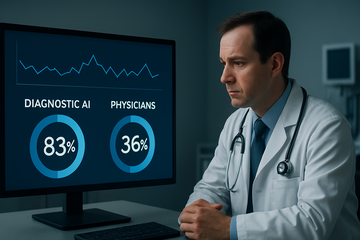
Microsoft's Diagnostic AI Beat Physicians 83% to 36% — and It Still Can't Be Sold, Deployed or Insured
Microsoft published the most aggressive diagnostic-AI result to date in Science on Oct 22, 2026: its Diagnostic Orchestrator (MAI-DxO) diagnosed 83% of 304 New England Journal of Medicine cases against 36% for generalist physicians with references, and 80.3% of emergency-department cases against 47%. The system has never run inside a clinic, ships as no product, and appears in no Microsoft revenue line — fiscal 2026 accounts still carry healthcare inside “Health and Life Sciences cloud services” with no separate figure. What decides deployment is law, not capability: California's SB 503 makes bias-mitigation documentation a compliance duty for clinical decision support from Jan 1, 2027, and Gov. Newsom's veto of AB 2575 on Sept 30 left clinicians who overrule AI without statutory cover. For investors the read-through runs through Azure rather than diagnostics: clinical AI is an Azure consumption story, a cost-of-care claim that squeezes testing volume downstream, and a capability bar that presses on AI-native vendors such as Lunit and iFLYTEK.

1Password Let AI Agents Log In Without the Password — Now the Human Approval Is the Product Nobody Priced
On October 22, 2026, 1Password shipped 1Password for Agents: an agent requests a credential, the user approves on their own device, and 1Password types the password and one-time code straight into the site’s login form, so the agent never holds the secret. That converts stored credentials into per-session delegated authority and makes the human approval the scarce, unmetered input in agent commerce. 1Password gives the consumer layer away free while more than 75% of its ARR comes from business, so the real trade is the enterprise machine-identity control plane where Okta, SailPoint, Palo Alto Networks and Microsoft already show bookings and ARR proof points. Courts and banks are writing the liability rules this layer needs — the Ninth Circuit has already held that an agent acting on a user’s instruction is the user — and delegated identity already carries private pricing at 15x–30x revenue, while the consumer approval step that makes it work remains unpriced.

OpenAI is renegotiating the AI funding ladder—because private marks are now the capex cycle’s earliest pricing
OpenAI is reportedly pushing a new ~$30B bridge round at a ~$1.25T valuation, below the ~$1.4T mark it was previously targeting. That downward private repricing matters for listed markets because it controls the timing—and credit structure—of the AI compute buildout upstream, before hyperscaler guidance catches up.
What to expect
Evidence-first notes with a visible point of view.
This section collects sharp takes on earnings, shareholder meetings, and market structure. Each new piece should make the thesis, the facts, and the implications obvious within the first few screens.
Expect direct analysis, not generic commentary.
Expect the data to be explicit and the argument to be easy to follow.