AI & Software
Where AI spending is actually landing
Model releases, enterprise adoption and software margins, read for what they do to revenue — across the labs, the platforms and the software they run on.
2026-10-21


2026-10-20

Microsoft Calls AI Agents Insider Threats. Four Buckets Now Compete for the New Liability Budget.
On October 19, 2026, Microsoft reclassified enterprise AI agents as insider threats and rolled out Project Perception plus Guardian Agents to police them, reframing agentic AI from a productivity story into an access-control, audit and insurance problem. With88% of enterprises already experimenting with agents and global cyber premiums projected to nearly double by 2030, the dollar flows migrate toward identity platforms, endpoint and network defenders, and specialty insurers writing affirmative AI cover while stripping generative-AI exclusions into base policies. Investors should treat Microsoft's announcement as a marker that determines the shape of the next security-spend cycle — not a productivity feature.

The AI Bust Won't Hit Where Consensus Is Looking — Allianz Isolates the Second-Order Channels Nobody Is Hedging
An Allianz Trade framework, formalized across its September–October 2026 publications, names the spillover routes an AI correction would actually travel — neo-cloud debt, IT distributors, builders, the grid, and household utility bills — and shows why the consensus equity hedge misses them. The IMF's October 2026 Global Financial Stability Report corroborates with a $1.4T circular-financing loop; CoreWeave's 2032 bond yield hit 14.8% on Oct 14, 2026, while CDS widened to ~1,000 bps. The asymmetry is the point: a $5B loss would sink a neocloud, while a $50B loss is absorbed by a hyperscaler.
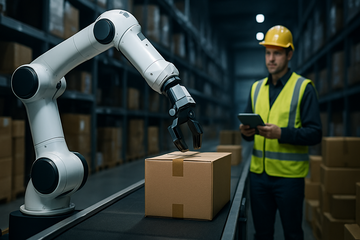
$1.45 Billion for a Robot Model With No Revenue — 23 Times Interlink's Entire Market Cap
Eka Robotics closed a $150 million Series A at a $1.45 billion post-money valuation on Oct 20, 2026, and in doing so put a software multiple on a stack where almost nobody earns software margins. NVIDIA's trailing gross margin is 74.7%; Symbotic's, selling fully deployed warehouse automation, is 21.6%; Teradyne's robotics segment lost $2.6 million before tax in Q2 2026 on $99.9 million of revenue. The mechanism is Eka's claim that force, not vision, is the control signal for manipulation — which pushes value toward whoever owns the simulation-to-deployment loop and toward tactile sensing content per robot, even as it deflates the arm. The investable consequence is a split, not a verdict on robotics: force-sensing suppliers and the simulator layer gain pricing power, while deployed-system integrators and vision-centric franchises lose it.

Hugging Face's Policy Chief Just Told the Industry Embedded AI Evaluators Won't Save It — And the Compliance Gap Now Belongs to Procurement
Hugging Face' Chief Policy Officer Irene Solaiman said at TechCrunch Disrupt 2026 that embedded AI evaluators are \"not an easy solution\" because trusting an evaluation requires reproducing it on the model itself — and that only works when the weights are open. With NVIDIA closing its $12.93B takeover of Hugging Face, the EU AI Act's Article 55 binding, and Chinese open-weight models already taking 41% of Hugging Face downloads, the bottleneck just shifted from model cards to third-party audit. The investable consequence: a fast-growing independent AI-evaluation market where Accenture, CrowdStrike, Microsoft, Salesforce, ServiceNow, Snowflake and Palantir all have a play — and where Western open-weight contenders like Meta finally have a procurement argument.

32% Down on Day One: Elice's KOSDAQ Crash Is Now the Tape Every Other AI-Data-Center IPO Has to Beat
Elice, the largest Korean AI data-center listing of 2026, fell as much as 33% on its KOSDAQ debut despite 408x retail oversubscription and a clean H1 P&L — the worst first-day drop in any Korea IPO above US$100M on record. The market isn't doubting AI; it's repricing the multi-trillion-dollar neocloud buildout that Elice sits on top of, and that re-pricing now sits ahead of DayOne's Nasdaq filing, Nscale's $35B target, AirTrunk's delayed Singapore trust and Firmus's scrapped Australian offering. HBM and GPUs (SK Hynix, Samsung Electronics, NVIDIA) still get paid per watt; the leveraged neoclouds that funded the build (CoreWeave) and the debut hopefuls priced at peak multiples are what investors are pulling away from.

Mamdani's 'Abdication' Line Just Raised the Discount Rate on Every NY Data Center Project — and the Winners Aren't Who You'd Expect
When Zohran Mamdani called federal AI oversight a \"complete abdication of federal law\" at the AI Now Institute's People's AI Assembly on October 19, 2026, he didn't just stake a campaign position — he converted New York's AI infrastructure risk from a regulatory gray zone into a voter-politics overhang that follows every Digital Realty and Equinix buildout into a higher cost of capital. With CoreWeave's $1.8B Kenilworth site already stripped of its $250M New Jersey tax credit and Governor Hochul's 50MW moratorium still in force, the investable takeaway is bifurcated: neoclouds and REITs with concentrated NY/NJ footprints take project-level hits, while diversified power-buildout beneficiaries — GE Vernova, Vistra, NRG Energy — capture demand redirected to friendlier geographies with even more aggressive capex curves.

New York’s “AI validation + incident reporting” playbook turns procurement into the enforcement layer Washington didn’t build
Mayor Zohran Mamdani’s administration and the New York City Council are pushing an AI governance model that looks less like moral exhortation and more like contracting terms: third-party validation, rapid incident notice, and enforceable local liability. For investors, the key is that this shifts bargaining power toward public-sector integrators and compliance tooling vendors that can operationalize “evidence-first” AI procurement faster than competitors.

OpenCode's 48-Hour Key Heist Costs the AI Labs a Rounding Error and Hands Security Budgets the Bill
OpenCode disclosed on October 17, 2026 that a 48-hour, agent-driven distillation attack drained third-party provider keys from 1.4% of its Console users; no model misbehaved, a decommissioned server holding other people's credentials did. The largest single reported loss was about $1,700 — roughly four parts per million of Alphabet's $445.9B in trailing revenue — so the labs' P&L barely notices. The bill lands where credential custody lives: identity, secrets management and agent-spend controls, where Palo Alto Networks is growing 24.5% a year and Okta is growing 5.3%.

Otter.ai's $320M Deal Sets a $30 Per-Seat Price on Standalone Meeting AI — and Bundled Incumbents Can't Match It
Otter.ai closed $320M from General Catalyst's Customer Value Fund on October 20, 2026 — its first large non-equity, revenue-linked facility aimed at doubling enterprise sales. With 35M users, 86% of the Fortune 500 already touching the product, and the deal earmarked to double or triple the sales budget, Otter underwrites a $30 per-seat price tier for standalone meeting AI that Zoom Communications's bundled AI Companion and Microsoft's $30 Copilot must now defend or surrender. The competitive pressure flows through Cisco's Webex, Salesforce's Slack base, and the NVIDIA-backed infrastructure stack underneath.

Anthropic's $2 Trillion IPO Puts Alphabet's $124 Billion Bet on Its Own Rival in the Open
Eric Schmidt's roughly 1% stake in Anthropic, reported on October 19, is the smallest interesting number on a cap table that already contains Alphabet, Nvidia, Amazon and Microsoft. The consequential facts are structural: Alphabet owns about 14% of Anthropic while selling it $200 billion of cloud, guaranteeing its data-center obligations, and competing with Claude — and it has already converted $98.0 billion of that position into reported profit while free cash flow went negative. When Anthropic prices, the prospectus, not the shareholder register, is where that overlap gets disclosed, and public shareholders will own the economics of the arrangement without the vote that could change it.

Tolan Raised $30M at a $268M Mark. Two Years Ago Google Paid $2.7 Billion for the Same Idea.
Portola, the maker of the Tolan companion app, raised $30 million on Oct 19, 2026 at a PitchBook-estimated valuation above $268 million — roughly 11x to 27x an undisclosed ARR that sits somewhere in the double-digit millions. Six days before that announcement, a court filing put a hard number on the other side of the same trade: The Walt Disney Company agreed to pay $20 million for a perpetual, nonexclusive license to Character.AI's intellectual property, two years after Alphabet paid $2.7 billion for a comparable license. The gap between those two prices is the real story. The companion-app layer is being valued on paying density while it loses money on inference, and the free tiers now shipping at Meta and Google confirm where the durable economics sit.

Washington Banned One AI Vendor. Chinese Models Already Take Two-Thirds of US Developer Tokens
The DHS order published October 20, 2026 pulls DeepSeek out of roughly 430 federal civilian agencies — and, more consequentially, out of any third-party product built on DeepSeek implementations. That vendor clause turns a model ban into a procurement certification regime, and it lands on a federal AI budget whose obligated value rose 966% in two years. Meanwhile Chinese open-weight models took 57% to 67% of tokens on OpenRouter in the week of September 14. The investable read is not DeepSeek's revenue line, which is small and mostly foreign. It is that excluding one vendor hands the surviving integrators a certified channel, and hands accredited testing labs a parallel one.

Yelp Is Shipping AI That Calls AI — and the Market Still Prices It Below 1x Sales
On October 20, 2026 Yelp began rolling out Check for Me, an agent that calls a restaurant on the consumer's behalf and texts back the live wait time. The awkward part is that Yelp's own AI already answers more than 1.5 million restaurant calls a year, so the first mass-market \"agent calls a business\" product may land mostly on an agent calling an agent — a handoff no vendor has made reliable. The economics underneath are already shifting: Other revenue nearly doubled year over year to $33 million in Q2 2026 while total revenue rose just 1.4%. Yelp's shares traded near $19.60 in mid-October against a 52-week high of $34.49, leaving a market value of roughly $1.1 billion — under 1x trailing sales, about 3.2x the midpoint of 2026 adjusted EBITDA guidance, and near 3.7x trailing free cash flow. The investable question is whether agent-to-agent becomes the default interface for local services, and who ends up owning both ends of that call.
2026-10-19

Behind Anthropic's $1B/50-Casualty Bill: A Federal Floor That Shields AI Labs and Leaves Deployers Holding the Bag
On Oct. 16, 2026, Anthropic quietly handed Congress an 'Advanced AI Framework' that only triggers federal action above $1B in damages or 50 deaths, and routes every enforcement decision through Commerce and a single D.C. federal judge. Insurance carriers had already approved more than 80% of carrier requests to exclude AI from commercial policies, and California SB 53 already obligates frontier developers only. The combination carves out a de facto safe harbor for the handful of frontier model developers while pushing healthcare AI, autonomous vehicles, surgical robotics, and AI-driven publishers toward a coverage gap with no federal backstop. The trade is a multiple stabilizer for Microsoft, Alphabet, and Amazon — and a margin and discount-rate problem for the deployer layer.

Anthropic Just Pledged 5% to a Public Benefit Fund — and 50.1% of the Vote to Its Founders
On Oct. 18, 2026, Anthropic committed 5% of its shares (subject to stockholder approval) to a new wholly-owned Public Benefit Fund LLC, with an additional 2% added at the board's discretion for every 50% increase in valuation. Combined with founder pledges to donate 80% of their equity and an employee match program covering half the workforce, roughly 20% of Anthropic is now earmarked for the public good. But the same proxy slate asks shareholders to grant the seven co-founders 50.1% voting control via a new Founder LLC — making the headline percentage only half the governance story. With Q3 revenue at $16.8B, an adjusted operating profit, and a Nasdaq listing targeted north of $2T before Thanksgiving, every piece of Anthropic's stack — from Amazon's AWS to Broadcom's TPUs to NVIDIA and SK Hynix's memory — repriced the moment the announcement hit.

A $55M Startup Just Matched GPT-6 Astra on Vision at 6% of the Price — And It's Built by the People Who Trained Gemini
On October 16, 2026, Elorian shipped Glimpse, a visual reasoning model that beats OpenAI's GPT-6 Astra on four of six frontier benchmarks while charging $0.60 / $3 per million tokens — 94% below Astra, 85% below Anthropic's Claude Opus 5.5, and 20% below Alphabet's Gemini 3.8 Flash. The startup is led by ex-Google DeepMind Gemini data lead Andrew Dai and ex-Apple multimodal chief Yinfei Yang, post-trained on an open-weights base model with a few hundred GPUs, and funded by NVIDIA, Menlo Ventures, Striker Ventures, Altimeter and Jeff Dean. The launch proves that the frontier multimodal moat is no longer compute — it's people — and it forces a repricing of every vision-API contract struck since GPT-6 Astra shipped September 3.

IBM's Q3 Print Has to Reconcile 'AI Budget Routing' With $13.6B of Free Cash Flow
IBM reports Q3 FY2026 on Oct 21 with consensus at $16.84B revenue and $2.87 adjusted EPS — a modest 3.1% top-line print after a Q2 that triggered a record 25% single-day stock crash on a 42% IBM Z revenue collapse. The bull case is that enterprise services and the z17 mainframe refresh are absorbing AI budgets customers are rerouting from traditional software; the cash flow reality is $13.63B in trailing free cash flow and management's reaffirmed full-year FCF target of roughly +$1B year-over-year. The print decides which version of IBM investors own: a slow-decay mainframe story trading near 15x trailing FCF, or an AI services platform with a compounding FCF trajectory.

Laplace Intelligence makes physical-AI safety a venture line — and forces NVIDIA, CrowdStrike and Palo Alto Networks to decide who owns it
A profitable University of Michigan spinout is selling automated red-teaming for robots and self-driving cars — a layer that sits between NVIDIA's Halos safety stack and the runtime-agent products CrowdStrike, Palo Alto Networks and Zscaler already ship. With ABI projecting 49M L3–5 AVs and Omdia 60M industrial robots by 2035, the validation piece is becoming its own market. Investors who treat this as 'just an AI safety startup' miss the trade: Laplace's Cosmos-based simulation is a high-margin adjacency to NVIDIA's automotive segment, and it is one quarter of revenue from being either acquired or absorbed.
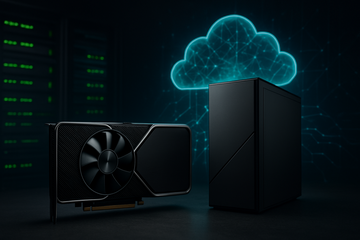
Nvidia Just Gave The Cloud‑vs‑On‑Device Inference Trade A New Anchor — Open Weights, Same Day, Both Ends Of The Stack
NVIDIA shipped open‑weight agent models on Oct 15, 2026 — Nemotron 3.5 Super VL (120B) for enterprise servers and Nemotron 3.5 Bolt for RTX Spark PCs — and three days later Microsoft, Dell, Lenovo and HP began moving that same stack onto desktops starting at $2,599.99. The combined move gives investors a hard anchor for the cloud‑vs‑on‑device inference trade: on‑premises GenAI already runs 4–17× cheaper than frontier APIs at high utilization, and Bolt‑sized models now run entirely inside a GeForce RTX box. The moat is software — NVIDIA's $4,500/GPU‑year AI Enterprise license, NIM and Dynamo — sold on commodity‑adjacent edge silicon.
What to expect
Evidence-first notes with a visible point of view.
This section collects sharp takes on earnings, shareholder meetings, and market structure. Each new piece should make the thesis, the facts, and the implications obvious within the first few screens.
Expect direct analysis, not generic commentary.
Expect the data to be explicit and the argument to be easy to follow.