AI & Software
Where AI spending is actually landing
Model releases, enterprise adoption and software margins, read for what they do to revenue — across the labs, the platforms and the software they run on.
2026-10-10


OpenAI's $20B Revenue Gap Just Hit Korea First — Exposing the Foreign-Carry Tail Behind the AI Trade
After OpenAI told investors its annualized revenue was ~$50B (vs the $68B widely reported), the KOSPI closed Oct 8 down 2.62% to 6,625.93 — Samsung Electronics -2.42%, SK Hynix -2.44% — with foreigners dumping 2.44 trillion won in a single session. The Oct 9 Hangul Day holiday freezes the tape until Monday Oct 13, but the mechanism is now visible: two Korean memory names make up ~52% of the index, so any US AI-capex wobble translates one-for-one into KOSPI losses. The numbers behind the names are record-breaking, which is exactly why the re-rating cuts so deep.
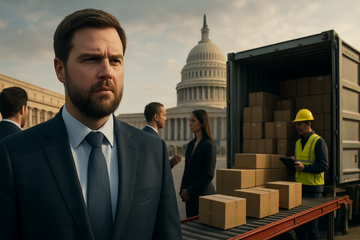
The Visa Data Doesn't Back Vance's Microsoft Story — But It Exposes a Different Problem
On Oct. 8, 2026, Vice President JD Vance accused Microsoft of replacing laid-off American workers with H-1B visa holders and pulled it — alongside Adobe and six Indian IT firms — from the PERM green-card program. The actual USCIS employer data tells a more complicated story: 80% of Microsoft's H-1B filings are status changes for existing workers, Amazon has three times as many approvals and was untouched, and Indian IT firms have been quietly cutting H-1B use for a decade. The real financial damage lands on the green-card pipeline, not new visas — a risk that hits the affected Cognizant, Infosys and Wipro ADRs harder than Microsoft itself.
2026-10-09

Firmus Just Killed Its A$5.5B IPO. The AI Data-Center Class Just Lost Its Public-Market Free Pass.
Firmus pulled what would have been Australia's biggest IPO in three decades after investors refused to underwrite an A$30.6B valuation for a company with a forecast $77M loss and no revenue. The move is the first hard 'no' in the 2026 AI-infra IPO class and resets the price public investors will pay for AI capacity builders — a bar Nvidia clears as chip supplier, but CoreWeave, Nscale, [Lambda], and [Crusoe] are about to be tested against.
119 Lawmakers Just Told Google to Keep Its Hands Off Spirit's Worker Files — and the Real Story Is the New Rulebook for AI Training Data
On October 8, 2026, a bipartisan group of 119 US lawmakers led by Rep. Steven Horsford and Sen. Elizabeth Warren wrote to Sundar Pichai demanding employee records be stripped from Alphabet's $10 million bankruptcy-court purchase of Spirit Aviation Holdings's internal archive. The bid — roughly 100 million emails, 500 million Microsoft Teams messages, and 30 million lines of code — was meant to feed Alphabet's frontier AI, but the letter is now forcing the Southern District of New York to define, for the first time, what a bankruptcy court owes the workers of a defunct company when their data becomes frontier-lab training fuel. With a hearing set for October 14, the precedent cuts across every Ch. 11 estate with a usable corporate corpus and every AI lab racing to buy one.

OpenAI’s $20B Revenue Gap Is a Reporting Dispute, Not a Demand Collapse
[OpenAI] told investors annualized revenue approached $50B at the end of September, versus earlier reports of $68B–$70B; the earlier comparison included partner-gross revenue that the OpenAI measure did not. Nvidia, Oracle and CoreWeave fell 3%, nearly 6% and nearly 8% on October 8, but the market traded a reporting-basis mismatch as lost demand. The real issue is funding credibility: $50B still represents a 14.6x run-rate valuation at the confirmed $730B pre-money valuation and 28x at the reported $1.4T bridge target.
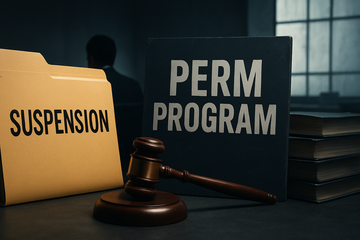
Microsoft and Adobe Just Lost Their Green-Card Pipeline — and So Did the AI Frontier-Lab Hiring Math
On October 8, 2026, the U.S. Labor Department suspended Microsoft, Adobe and six IT outsourcers from the PERM program while the administration opened J-1 fraud investigations at nine universities including Harvard, Stanford and MIT. The action is not a quota on individual visas — it is a program-wide shutdown of the permanent-labor channel that turns H-1B talent into U.S.-based AI researchers and engineers. With Microsoft already certified as the country's #1 PERM filer (1,504 in nine months), Indian IT firms cutting H-1B use 40% year-over-year, and OpenAI/Anthropic filings up 215% and 490% respectively, investors should price a measurable talent-cost step-up across Microsoft, Alphabet, Meta and NVIDIA — and treat the university probe as a parallel R&D-funding risk.
2026-10-08
Google's Free SynthID Verifier Hands Regulators the Only AI Detector That Scales — And That's the Real Threat to OpenAI and Anthropic
Google opened its SynthID Detector to everyone on October 7, 2026 — no account, no fee, covering images, video, and audio from Google, OpenAI, NVIDIA, Kakao, and (soon) Apple, and already processing more than 1 million checks a day. The site gives creators a verification utility on the surface, but underneath it makes Alphabet's proprietary watermark the de facto plumbing for EU AI Act Article 50 compliance — leaving Anthropic's C2PA-only bet on the outside and turning Google's tool into a regulated free toll-booth. For the listed AI stack, the question is no longer whether AI content will be marked; it is whether the marker that survives a regulator's desk reads 'Google.'

Healthleap's $38M AI Just Made Every Adult Inpatient a Daily Triage Decision — And UNH's 86.7% MCR, Epic's 43.7% EHR Grip, and the Nurse-Ratio Fight Are All Now on Notice
Healthleap closed a $38M round (Oct 7, 2026) on 50-hospital traction, with one Penn Medicine site alone producing $23.8M of annualized impact — 27% more severe-malnutrition diagnoses and 8,632 bed-days saved. The product writes daily nutrition-risk scores straight into the EHR flowsheet, sits upstream of CDI, and bills on a three-year, per-licensed-bed, outcome-based contract. For investors, the wedge is that frontline AI has stopped being a documentation tool: it now substitutes for the manual screening nurses used to do, funnels previously missed E43 claims into the $7,250-per-claim MCC bucket, and shortens the LOS that insurers like UnitedHealth, Elevance, and Humana pay for.
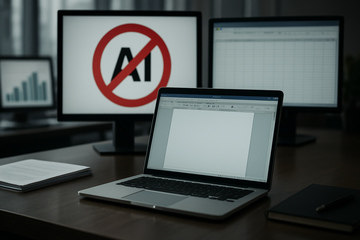
LibreOffice's 'No AI' Bet Just Crossed 2 Million Downloads — The First Clean Read on Productivity's Trust Ceiling
LibreOffice 26.8, released August 26, 2026, branded its absence of AI as an explicit selling point and crossed 2 million downloads within two weeks — the inverse signal that AI productivity has hit a user-side trust ceiling. Combined with Microsoft pulling Copilot Chat from Word/Excel/PPT in April, Adobe paying $4B+ to bundle Firefly free in Saudi Arabia, and OpenAI launching its own office workspace in late September, the value chain reads as a bifurcation: full-AI suites lose pricing power, and AI-optional tools capture the privacy/audit segment. The read for Microsoft, Adobe and Alphabet is that AI monetization now has to clear a higher trust bar, not just a feature checklist.
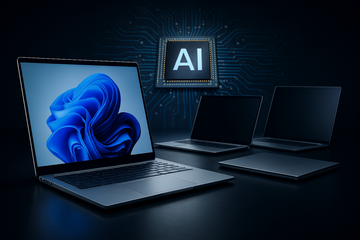
Microsoft Turns Windows 11 Into the AI PC's Distribution Surface — RTX Spark Laptops Start at $2,599
On Oct. 7, 2026, Microsoft fused Windows 11 26H2's new agent platform with NVIDIA's RTX Spark superchip, shipping Surface Laptop Ultra at $2,599 alongside RTX Spark models from HP, Dell, Lenovo, and ASUS — turning the OS itself into the AI PC's first real distribution surface and validating NVIDIA's on-device bet. Entry pricing starts at $2,599 with 128GB unified-memory flagships topping $5,899, just as Microsoft Windows OEM revenue slipped 7% in fiscal Q4 2026 and the broader PC market contracted 4.9% in calendar Q2 per IDC. The race now splits: memory-supply-led volume pain against an AI-PC premium cycle that Microsoft and NVIDIA just turned on.

Nous Research's $1.5B Puts the First Public Price on an AI Agent Layer That Hyperscalers Are Quietly Co-Owning
On Oct 7, 2026, open-source agent builder Nous Research closed a $90M Series B at a $1.5B valuation led by Robot Ventures, with NVIDIA, Microsoft M12 and Samsung Electronics on the cap table. At roughly 42x its $36M annualized revenue — versus 53–82x for Cognition, Sierra and Harvey — Hermes Agent is the cheapest seat at the 2026 AI agent category, and the only one financed by the same trio whose enterprise platforms it competes with. The deal forces enterprise buyers to choose between closed-stack agents (Salesforce Agentforce, Microsoft Copilot Studio, ServiceNow AI Agents) and a model-agnostic, self-improving harness running on their own infrastructure.

OpenAI's 1.2-Billion-User Bet — GPT-6 + Intelligent UI Converts a $70B Run-Rate Into a Distribution Platform
On October 7, 2026 OpenAI handed its most capable models and a new interactive format to all 1.2 billion ChatGPT weekly users, with GPT-6 Sol powering paid tiers and GPT-6 Luna unlocking the free tier at $0.10 per million input tokens. The 'Intelligent UI' surface transforms every ChatGPT answer into tappable, decision-shaped layouts that align with OpenAI's $1B-arr ads business — reframing the S-1 narrative from enterprise ramp to consumer distribution. The supply chain — NVIDIA Blackwell, Broadcom custom silicon, CoreWeave, TSMC, and Microsoft Azure — must now absorb a 44% faster 'GPT-6 Instant' running at 1.2B-WAU scale, with Alphabet Gemini's consumer parity making the launch a strategic stand-off.
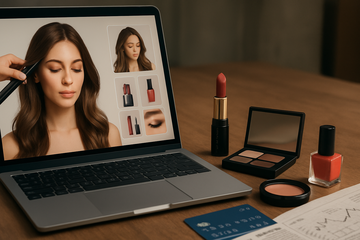
Pinterest's Beauty Guides Convert 640M Saved Pins Into a Checkout Surface — and Steal Beauty Budget From Meta Platforms and Alphabet
Pinterest launched Beauty Guides on October 6, 2026, turning hair and nail Pins into AI-generated salon playbooks with embedded shoppable products and a Sephora partnership attached to the Makeup Maximalism trend. The release turns Pinterest's 640M MAUs — already delivering 1.8% e-commerce conversion at CPMs roughly a third of Meta Platforms's — into a third consumer-AI conversion surface that the Alphabet search ad stack and Meta Platforms's social graph cannot replicate. The near-term squeeze lands on beauty incumbents The Estée Lauder Companies, Ulta Beauty and e.l.f. Beauty, whose customer-acquisition economics on Meta Platforms and Alphabet just got a substitute they can't reprice.

After Three Weeks of Branding, Trump's Super Intelligence Force Finally Meets to Set Real Federal AI Buying Rules
The four-leader SIF council convenes Thursday for its first working session — the first concrete policy-shaping moment after the Sept. 29 EO rename, the 'morally binding' tech-exec accord, and the Oct. 4 launch. Because the panel controls Palantir's and Oracle's federal procurement pipeline and sits over Nvidia's compute commitments inside the new Genesis Mission, the meeting's output — not the rebrand — will decide who wins the next federal AI dollars.
2026-10-07

Anthropic's $0 Quotation for Claude Team Doesn't Beat OpenAI's Compute Wall — It Reveals Who Actually Owns the AI Seat Race
On October 6, 2026, Anthropic opened a free year of Claude Team (five Premium seats, $100/month each) plus $1,000 in API credits and up to $45,000 in partner value — an Anthropic-side subsidy of roughly $7,000 to $8,500 per startup. The giveaway only works because Anthropic has booked more than 10 gigawatts of compute across Amazon, Google, and SpaceX, while OpenAI was forced to pause new $200 Pro sign-ups on September 10, 2026 for capacity reasons. The real beneficiaries are NVIDIA, Amazon, Alphabet, and Broadcom; the exposed names are Microsoft and Oracle, which back the rival stack.
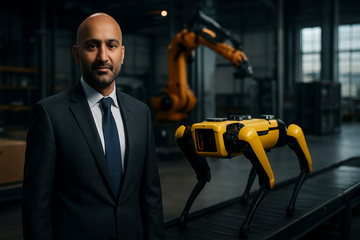
Boston Dynamics' New CEO Isn't a Roboticist — He's the Alexa Guy, and That Reshapes Hyundai's 2028 IPO Math
Hyundai Motor installed Rohit Prasad, the former Amazon Alexa and AGI chief who built the Nova foundation model family, as CEO of Boston Dynamics effective Oct. 7, 2026 — the first leader at the humanoid-robot maker with no robotics lineage. The hire trades 30 years of hardware DNA for a foundation-model and consumer-scale playbook, just as Hyundai Motor shelved a 2027 IPO window, opened a Georgia training center, and committed to a 30,000-robot annual production line by 2028. For investors, the question is no longer whether Boston Dynamics ships Atlas at scale but whether Prasad can convert Hyundai Motor's ₩6.1 trillion cumulative investment into the kind of software-defined, recurring-revenue robot business that justifies analyst valuations of up to ₩141 trillion by 2030.

Brookings Says AI Capex Now Exceeds the Railroad Mania — The 1873 Lesson Is About Who Carries the Debt, Not Who Builds the Chips
Brookings's new forecast puts U.S. AI infrastructure spending at $10.3 trillion from 2025 to 2032 — 3.6% of GDP per year, exceeding the railroad boom's 2.4% peak. The 1873 panic isn't an analog for AI demand; it's an analog for what happens when off-balance-sheet financing collapses. Power-grid OEMs, nuclear utilities, and freight rails are the modern 'rail steel,' and Blue Owl Capital sits where Jay Cooke's bondholders did.

Lambda's $14.5B Pre-Money Hands Public Markets a Live Neocloud IPO Price — and Asks Whether Two Customers Are Actually the Asset
Lambda is raising up to $4B at a $14.5B pre-money valuation from Coatue and Blackstone ahead of a planned 2027 IPO, after its contracted backlog tripled to $50B in three months. At roughly 12x forward revenue, the round prices Lambda inside CoreWeave's public multiple band — but with Microsoft and Anthropic already accounting for roughly $95B of disclosed Lambda-side commitments, the real question for public investors is whether they are buying GPU rack rental or a single-tenant compute offtake. The actionable trades live in the listed proxies: CoreWeave, Nebius, NVIDIA, Oracle, Applied Digital, Hut 8, Blackstone and Microsoft.
McDonald's just made algorithmic menu pricing a courtroom problem — and every franchised QSR inherits the brief
A DeKalb customer filed a Sherman Act §1 class action on Oct. 2, 2026 alleging that McDonald's's machine-learning pricing engine — in use since 2019, mandatory since January 2026 — turns 14,000 independently owned franchisees into an algorithmic price-fixing cartel. The suit lands one week after a Reuters investigation exposed a 21% menu-price gap between two Fresno locations and CEO Kempczinski's August disclosure that only 60% of stores follow the under-$3 menu guidance. With the Third Circuit reviving a parallel algorithmic-pricing case in July and the FTC weighing disclosure rules, the precedent threatens every franchised QSR whose menu prices move through a shared vendor.
OpenAI Plants Its Flag Inside Jira — and Resets the Enterprise Workflow Race
Atlassian and OpenAI expanded their partnership on Oct 6, 2026, pulling GPT-6 family models into Rovo, Jira, and Confluence through a spend commitment and the Atlassian MCP server — which already clears 15 million calls a day and 1 million monthly active users. The deal converts the engineering and IT workflow seat into a three-front fight: Microsoft Foundry wins a tailwind on Azure inference but loses ground on the agent-of-record layer; Salesforce Agentforce sees its engineering-desk ambitions narrowed; ServiceNow sits in the same crossfire with its own OpenAI deal. The central call: this is a Rovo-monetization inflection, not a defensive scramble — December's Rovo credit metering is the first concrete proof point.
What to expect
Evidence-first notes with a visible point of view.
This section collects sharp takes on earnings, shareholder meetings, and market structure. Each new piece should make the thesis, the facts, and the implications obvious within the first few screens.
Expect direct analysis, not generic commentary.
Expect the data to be explicit and the argument to be easy to follow.