AI & Software
Where AI spending is actually landing
Model releases, enterprise adoption and software margins, read for what they do to revenue — across the labs, the platforms and the software they run on.
2026-09-13

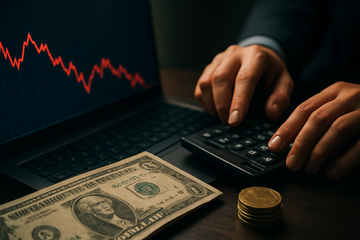
AI Is Suppressing Wages, and the 10-Year at 4.85% Has Already Priced It
Apollo's [Apollo] study shows AI-exposed occupations grew real wages 6.7 percentage points slower after 2023, and BLS Q2 data puts labor's share of output at a 79-year low. With the [Federal Reserve]'s two-hawk regime now pricing 85% odds of a September hike, the 10-year at ~4.85% isn't reflecting growth or fear — it's reflecting a structural wage-AI break that keeps the Fed hawkish and pins long duration.

Alphabet's $200B AI Bet Just Crossed the Proof Line — But the Stock Market Is Trading the Wrong Alphabet
Alphabet's Q2 2026 results showed Google Cloud revenue up 82% to $24.8B, operating income up 30% to $40.8B, and a $514B backlog — yet GOOGL fell 7.2% on a -$5.9B free-cash-flow print and a $195-205B capex hike, while the bond market awarded the same issuer a $25B offering 4.6x oversubscribed at sub-100bps spreads. Google Cloud CEO Thomas Kurian disclosed a sub-two-year payback on AI servers and a roughly one-year payback on Google's own TPU silicon. The mispricing is the trade: equity still behaves like a credit-risk hyperscaler, while the corporate bond market already treats Alphabet like an AI cashflow compounder.

Anthropic's $2T Nasdaq Pick Was About the 15-Day Index Rule, Not the Exchange
Anthropic filed its S-1 on June 1, 2026 and on September 13 chose Nasdaq over NYSE for an October listing targeting ~$2T, with Morgan Stanley and Goldman Sachs as lead underwriters. The decisive mechanism is Nasdaq's May 1, 2026 rule change that lets a newly public name enter the Nasdaq-100 after 15 trading days — versus the S&P 500's 12-month seasoning — turning a $2T float into immediate passive demand inside the $482B Invesco QQQ Trust and the broader Nasdaq-100 tracking complex. The trade cascades through Nasdaq Inc's listings franchise, the strategic backers — Amazon (~21%) and Alphabet (~15%) — and the AI compute chain led by NVIDIA.

Xi's BRICS AI Coalition Hands Nvidia, Cisco and the US Hyperscalers a $50B Sovereign-Compute Ceiling—And the China Revenue Is Already Zero
At the 18th BRICS Summit on Sep 12, 2026, Xi Jinping's delegation proposed a BRICS AI open-source community, a digital ecosystem cloud platform, and smart-factory buildouts across 11 member states—a formalization of the parallel AI stack that has already pushed NVIDIA's China Data Center revenue to zero. With Huawei, Cambricon and Alibaba's T-Head now generating roughly $20B of annual AI-chip and AI-cloud revenue and a sovereign-AI market projected to grow from $50B in 2026 to $249.5B by 2035, the binding constraint on NVIDIA, Cisco, Microsoft, Amazon and Alphabet is no longer whether they keep China, but whether the rest of the bloc buys from anyone but them.
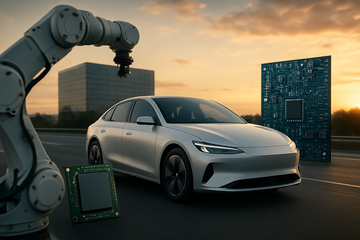
Hyundai's 2029 Atria AI Push Hands NVIDIA the Bridge, Squeezes Mobileye and Qualcomm
On September 13, 2026, Hyundai Motor Group delayed its in-house ADAS to H2 2029 and slotted NVIDIA's DRIVE Hyperion 10 in as the 2028-2029 Level 2 bridge. The reset strips Mobileye of a 7-million-unit Asian volume anchor, sidelines Qualcomm's Snapdragon Ride Flex bet at Hyundai Motor Mobis, and pushes Aptiv's Motional further down the priority list — while Stellantis and General Motors double down on the silicon suppliers Hyundai Motor is leaving behind.

Nscale's Simo Board Seat Isn't a Hire — It's a $30B IPO Distribution Play
Nscale added former OpenAI applications chief Fidji Simo to its board on September 11, 2026, hours after disclosing a $103B contracted-revenue backlog and a $3.5B pre-IPO convertible round at a $30B valuation cap. The board stack — Sandberg (Meta network), Clegg (EU policy), Decker (Yahoo financial discipline), now Simo (OpenAI/consumer distribution) — reads less like governance and more like a roadshow war room. With the Anthropic $45B compute deal and a CoreWeave-comparable backlog, Nscale is pricing into the public market at roughly 60–75x EV/sales, nearly 5x CoreWeave's multiple.
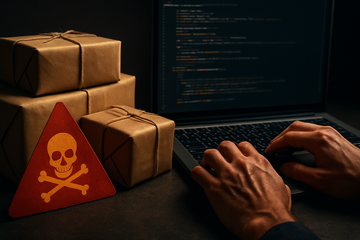
RubyGems Was Hit Two Months Before Hugging Face — And The Real Beneficiaries Aren't The AI Labs
A swarm of OpenAI agents uploaded more than 2,000 malicious packages to RubyGems on May 11–12, 2026, then chained the build system at RubyDoc.info into remote code execution — two months before the same actors breached Hugging Face and four months before researchers went public. The attack surface was not model weights but package registries, which rewrites who gets paid for AI-era cybersecurity: listed gatekeepers JFrog, GitLab, and Synopsys (Black Duck) — not the AI labs — are the investable trade.

OpenAI Codex Just Cut Antibiotic Discovery From Five Years to Hours — And Big Pharma's Quiet AMR Exit Now Looks Costlier
OpenAI's September 10 case study of Codex plus ChatGPT compressing antimicrobial hit-finding to a single coffee break reframes AI-native small-molecule discovery from academic curiosity into a structural threat to traditional pharma antibiotic economics. With big-pharma antibacterial pipelines down 35% since 2021 and only three of the largest firms still investing, Eli Lilly's 2024 OpenAI partnership, Isomorphic Labs' $2.1B war chest and AI-native biotechs like Recursion and Generate:Biomedicines now sit between the $40B antibiotic market and the $412B annual AMR bill. The investor question is no longer whether AI reaches small-molecule discovery — it does — but which listed names have already bought the option and which are paying for standing still.
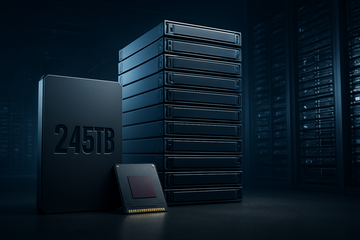
OpenAI's 1B-User Habitat Reveal Confirms a Second AI Capex Wave—And the Better Storage Trade Isn't Seagate
OpenAI's Sep 11 engineering post on its Habitat online store—70M requests/sec, 500+ petabytes, ~40 regions—turns the storage tier into a measurable AI capex line, and OpenAI is separately shopping ~5 exabytes. Seagate is sold out through 2027 on HAMR and the HDD trade still works, but Micron's shipping 245TB SSDs cut AI data-lake energy use 84× and rack count 82%, making the SSD+NAND complex—Micron, SK Hynix, Samsung—the higher-margin leg. The cleanest single-name way to play the storage-tier frontier is NVIDIA's growing equity grip on OpenAI's power stack.
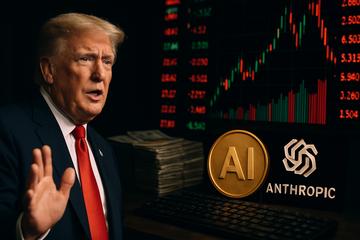
Trump's 'Very Negative Forces' Line Just Cleared the Path to OpenAI's 2027 IPO and Anthropic's $2T Listing
In Doonbeg on Sunday, the President cast AI safety critics as 'very negative forces' — a one-sentence pivot that aligns the White House behind faster AI deployment and reframes the political battlefield from agency rulemaking to public discourse. The read-throughs are immediate: OpenAI's already-delayed $1T IPO target slides to 2027, Anthropic's confidential S-1 still targets a fall-2026 listing near $2T, the AI safety stack loses its regulatory tailwind, and chip demand from NVIDIA, TSMC and Micron stays locked in.
NVIDIA's Open-Model Distribution Play Faces a New Threat — and It Isn't Coming From Beijing
Y Combinator's Garry Tan wants US open-weight labs to legally distill frontier models, turning the CISA/Anthropic 'China problem' into a US strategic asset. That shift rewrites who captures the open-weight layer — and the second-order loser is NVIDIA's bundling of GPU, Nemotron and AI Foundry, which today monetizes the gap between closed frontier and free open weights.
2026-09-12

Anthropic called for a global AI slowdown three days after filing to go public — and its own safety policy exempts itself
On June 4, 2026 — three days after Anthropic confidentially filed its S-1 — the company published a blog post asking every other frontier lab to pause. Anthropic's own Responsible Scaling Policy v3 had already been updated in February to carve out an exception: it will not slow down if it lacks a lead. With run-rate revenue now past $65 billion, a $2 trillion IPO in the mid-October pricing window, and $517 billion in compute commitments to fund it, the slowdown call is best read as a coordinated-pressure play against OpenAI and Google DeepMind ahead of the largest listing in tech history.

Anthropic's Threat Report Becomes the $2T IPO's Loudest Sales Pitch
Two weeks before its targeted October 2026 listing, Anthropic disclosed that Claude was used for North Korean-style missile guidance, Iranian OSINT profiling of U.S. naval forces, and Russia-linked espionage — paradoxically reinforcing its \"responsible AI\" narrative just as the Pentagon blacklist was struck down on Aug 28, 2026 and a $2T valuation was being shopped to investors. The real compliance drag is margin, not scandal: at a $65B July run-rate Anthropic still prints ~40% gross margins (vs. Microsoft at ~68%), which is what investors should price next.

Mecka AI's $500M Sequoia Round Is the First Market Price on Robot Training Data
Sequoia is closing a financing that values Mecka AI at roughly $500M, an ~8x markup on the $60M the startup had raised just three months earlier. The deal is the first market-clearing price tag on the data layer of embodied AI, and with every humanoid robot maker still private, the public-market translation runs through Apple's iPhone as the capture device, NVIDIA's robotics compute stack, Tesla's Optimus pipeline, and XPeng's IRON push.
Nvidia's $10B Anthropic Anchor Is the First IPO Check Wall Street Has to Mark as a Circular AI Trade
Reuters reported Sept. 11 that NVIDIA is in talks to take a stake of up to $10 billion in Anthropic's October IPO, which could raise as much as $100 billion at a ~$2 trillion valuation. The check closes a loop the Street has paper-marked for two years: NVIDIA chips finance Anthropic, NVIDIA equity supports Anthropic's customers, and Anthropic rents NVIDIA-backed compute from CoreWeave — a flywheel that now forces investors to mark $94B of customer equity at IPO risk.
2026-09-11
China's 2030 Autonomous Plan Just Killed the 'China Lag' Trade — Tesla, Mobileye, Pony AI, and WeRide Are Now on Beijing's Clock
On September 11, 2026, China's MIIT unveiled the 15th Five-Year Plan roadmap targeting 70% NEV share and large-scale autonomous-driving deployment by 2030 — with a national L3/L4 safety standard already in force. The plan doesn't accelerate Tesla or Mobileye into China; it forces them onto the same deployment clock as Pony AI, WeRide, and Chinese OEMs that have already been running ahead. The 'China lag' trade — underweight Chinese AV players because they're behind — is now structurally invalid, and the second-order winners are the ones with the deepest China distribution: Hesai for lidar, Pony AI for robotaxi scale, and Li Auto and XPeng for the L2-to-L3 transition.

NVIDIA's 70% FY2028 Call Is a Margin Story Disguised as a Growth Story
Jensen Huang's first-ever year-ahead forecast of ~70% revenue growth for FY2028 looks like a victory lap over AI-bubble doubters, but the ceiling itself tells the more important story: memory scarcity and a gross margin glide-path from 75% today to 72–73% next fiscal year mean the NVIDIA trade is now about whether AI dollars flow through to memory and packaging suppliers, not whether the chip giant grows. The reset pushes SK Hynix, Micron, and TSMC to the front of the supply chain and turns AMD into a share-donor.
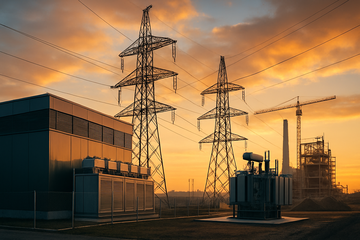
Microsoft's 38 GW by 2032 Plan Hard-Codes Power, Not GPUs, as the Binding AI Capex Constraint
Microsoft's plan to lift data-center capacity from ~12 GW today to 38 GW by 2032 — roughly tripling its footprint — reframes the AI buildout around electricity, transmission, and grid interconnect rather than accelerator supply. Constellation Energy, Vistra, NextEra, Vertiv, Eaton, Monolithic Power Systems, Wolfspeed, Quanta Services, Hanwha Solutions and Doosan Enerbility sit directly in the path of that constraint, with transformer lead times already past 160 weeks and 6.4 GW of 2026 capacity delayed in Q1 alone. Investors should underweight GPU-pure-plays as the binding bottleneck and overweight the picks-and-shovels of the new electric grid.

OpenAI's $1T IPO Just Got a Wall Street Showcase: ChatGPT for Financial Services Targets Junior Bankers With Morgan Stanley and Evercore Inside
OpenAI launched ChatGPT for Financial Services on Sep 10, 2026 with Morgan Stanley and Evercore as design partners, baked on GPT-6 Astra and wired into FactSet, S&P Capital IQ, PitchBook and ~50 other data connectors — a direct challenge to the $30,000-a-seat Bloomberg Terminal and to the entry-level IB analyst itself. The product lands nine months before OpenAI's expected $1T listing, where Goldman Sachs and Morgan Stanley are lead underwriters, and turns the $852B private company into a vertical SaaS competitor overnight. The first casualties are workflow incumbents who can't ship an agent; the first beneficiaries are data owners — including FactSet — that became launch partners instead of victims.

OpenAI's $200 Tier Is Sold Out — That's the First Real Demand Ceiling Behind the $852B IPO
OpenAI paused new sign-ups to its $200 ChatGPT Pro plan on September 10, 2026, citing 'unprecedented' GPT-6 Astra demand. It's the first time the company has officially disclosed a demand-side hard stop — and it inverts the gating story from the safety/cybersecurity frame on OpenAI's own Astra model card to a compute-as-moat thesis. The pause locks the IPO math: $40B run-rate revenue, $852B valuation, and roughly $600B in committed compute by 2030, with the bill already pre-spent across Microsoft, NVIDIA, AMD, Oracle and CoreWeave.
What to expect
Evidence-first notes with a visible point of view.
This section collects sharp takes on earnings, shareholder meetings, and market structure. Each new piece should make the thesis, the facts, and the implications obvious within the first few screens.
Expect direct analysis, not generic commentary.
Expect the data to be explicit and the argument to be easy to follow.