AI & Software
Where AI spending is actually landing
Model releases, enterprise adoption and software margins, read for what they do to revenue — across the labs, the platforms and the software they run on.
2026-11-04


Fal.ai Doubled to $16B Without Paying a New Multiple: Media Inference Is Priced Now, and the Next Leg Goes Upstream
fal.ai's $1.3 billion Series F, announced Nov 3, 2026, values the generative-media inference layer at $16 billion — double April's $8 billion mark, and the same 16-to-22-times revenue multiple the market has paid in every round while the revenue behind it compounded from roughly $25 million to roughly $800 million in run rate. That makes the layer priced rather than speculative, which relocates the incremental dollar: fal bills per second of video and per megapixel of image but pays for GPU-seconds, so volume, not price, is the only variable that can grow. NVIDIA, which took equity in the December 2025, April and November rounds, is paid on the hardware and on the toll; the labs whose models ride on fal's rails trade at 0.9 to 4.2 times sales against the rail's 20 times.

Alphabet's K-12 AI Ultimatum Adds No Revenue — It Defends a $63.4B Search Line
On November 3, Alphabet said K-12 student accounts would lose Gemini, Gemini Notebook, Gemini in Classroom and Google Search until district administrators turned them on, then softened the policy after Senator Bernie Sanders and New York Mayor Zohran Mamdani objected — but only in a way that keeps AI-generated summaries inside search. The classroom is the one distribution channel where the default costs Alphabet nothing, so the policy trades free default behavior for consent to AI rather than for revenue. With rivals giving classroom AI away through 2027 and 2028 while Alphabet buys the compute with $51.36 billion of quarterly capex, the payoff is cohort behavior carried into consumer search; the risk is a remedy or procurement rule that reaches education distribution.
2026-11-03
World Models Now Have a Price Range, Not a Price: $62.5 Million for Human Behavior, $1.03 Billion for Physics
42AI left stealth on November 2, 2026 with $62.5 million for a 'behavioral world model' that forecasts how individual traders will act, now running at ten brokerages. The money came from the founders and chairman Amir Gal-Or's Infinity Group over three years, not from venture investors, so the headline is an insider-set floor rather than the market's price for behavioral simulation — which is why the same class carries $2 billion at Simile and $1.03 billion at AMI Labs. Underneath the marketing, the company's own paper shows near-parity with frontier models on the imbalance-robust metric, so the moat is licensed data and regulated distribution, not compute. The investable read-through therefore runs to physical-AI and simulation budgets (NVIDIA, SK hynix, Bentley Systems) and to the listed risk-analytics and brokerage incumbents whose customers are now being modeled (Moody's, Nasdaq, Robinhood), not to the language-model trade.
The $187 Million Slopaganda Flood Pays Broadcasters, Not Platforms — and the Bill Lands on Agencies
AI-generated political advertising did not slow down when the rules arrived; it sped up. The Wesleyan Media Project counted more than $187 million across at least 289 AI-generated or AI-assisted ads through Oct. 29, 2026 — up from $137 million and 220 ads two weeks earlier — with only 27% carrying an AI disclaimer and more than 90% of the money coming from one side of the aisle. Alphabet, Meta Platforms, Reddit and X answered by making disclosure an advertiser-side obligation, which pushes compliance cost onto campaigns and agencies while the money rotates into broadcast inventory that never needs an AI label. The consequence is a rotation, not a windfall: Fox Corporation booked a record $350 million midterm political haul and premium CTV CPMs reached $43, while the verification layer that certifies delivery is being pulled out of public markets by Nielsen's $13.60-per-share take-private of DoubleVerify.
Apple's Memory Squeeze Just Cut Its Margin Guide to 45-46%. The Fix Points at a Toll on Every AI Lab
On his first earnings call as chief executive, John Ternus guided Apple's December-quarter gross margin down to 45-46% from 47.9% and blamed memory costs plus Siri AI ramp expense, while CFO Kevan Parekh said AI opens \"opportunities across third-party apps and partnerships.\" Read together, the two remarks say the memory squeeze, not Siri, is the real story, and that Apple intends to refill a roughly $1.6 billion-a-quarter gross profit hole with services revenue collected from the labs whose apps sit on its own store. The catch: a 30%-era toll is the one instrument Apple's pending Supreme Court case and the EU's new 5% out-of-store commission make hardest to use, while ChatGPT and Meta's Muse are building storefronts designed to route around any such fee. Memory makers have already been paid; the toll remains an option Apple has not priced.

Tinder DAUs Grew for the First Time in 3½ Years on $10 Million of AI Spend — Match Group's 14% EBITDA Jump Is Mostly a Base Effect
Match Group's third quarter looked like a margin story and was really an engagement story, and only one of the two is new. Revenue fell 2.5% to $891.2 million while adjusted EBITDA rose 14% to $344 million — but the GAAP line items show the profit came from a $55.8 million drop in general and administrative expense while research and development rose $14.8 million, the line where the roughly $10 million AI budget lands. The genuinely new information is engagement: Tinder's daily active users returned to year-over-year growth in September for the first time in three and a half years, and U.S. daily users grew in October. The unresolved information is monetization: 13.8 million payers, down 5%, at a company whose fourth-quarter guidance implies adjusted EBITDA falls 11%. Investors are being asked to pay a cash-flow multiple today for a user story management says converts in 2027.
Meta's $20 Billion Bond Is the AI Buildout's Honest Price Tag — and Its Own Project Debt Trades at 92 Cents
On November 2 and 3, 2026, Meta marketed at least $20 billion of investment-grade bonds — its first euro-denominated issue — and sold $15 billion of the dollar leg only after paying up with richer yields to win demand. That came six months after a $25 billion bond deal and a week after a $95 billion equity plan, and the reason for all of it is a cash-flow turn: third-quarter free cash flow was negative $2.12 billion on 26% revenue growth, and nine-month capital spending consumed 89% of operating cash flow. Meta's corporate credit is not what is at risk — what is repricing is the asset underneath it, where the project bonds backing Meta's Louisiana and Texas campuses trade just under 92 cents on the dollar. With AI issuance now roughly 18% of US investment-grade supply, fixed-income buyers have become the marginal price-setter for the entire AI buildout.

OpenAI Hired an Army Secretary. It Bought a Requirements Seat, Not Clearance — and Palantir's $953M Government Quarter Is the Number That Matters
OpenAI's November 2, 2026 hire of former Army Secretary Dan Driscoll as Senior Counselor for National Security Modernization is being read as the first frontier lab to buy defense credentials rather than lobbying access. The primary documents say something narrower: OpenAI's own War Department product deployment is accredited at Impact Level 5, its classified-network participation rides on partners that own the facility clearances, and the War Department says in writing that it is building 'an architecture that prevents AI vendor lock.' What Driscoll buys is a seat at the requirements table — and the money in that table still sits with the cleared integrator, where Palantir booked $953 million of U.S. government revenue in Q3 2026 alone against OpenAI's $200 million one-year defense award. The liability runs the other way: Anthropic's now-public S-1 puts export-control exposure and $895.4 billion of committed compute spend next to a $104 billion nine-month net loss, and OpenAI confirmed its own confidential S-1 in June.

OpenAI Scored AI at 80.6% on Everyday Tasks. An Independent Benchmark Published the Same Day Scored 12% — Insurers Should Price the 12%
OpenAI's LifeVal, published Nov 2, 2026, scores whether an AI assistant finishes everyday errands — childcare, school enrollment, groceries, government services — rather than advising on them, and OpenAI's own models reach 80.6% on it. But the task set, the task count and the grader are unpublished, and no rival lab appears on the chart, while SemiAnalysis' GDPx, released the same morning, puts the best model from any lab at 12.0% across 206 long-horizon tasks and deliberately excludes government, real estate and insurance. The engine behind both numbers is the price of an agent task — $53.99 for GPT-6 Astra on GDPx against a tax season OpenAI cut from 180 accountant-hours to 15 — which is why service delivery is about to be repriced. Owners of silicon and of the system of record keep their margin; vendors of human handling hours get squeezed.

Reddit Complies While It Sues: Australia's Case Prices US App-Store Rules, Not Reddit's Revenue
Reddit is fighting Australia's under-16 social media ban in the High Court while continuing to comply with it, and the arithmetic says both are cheap: the maximum civil penalty of A$99 million is about 2.2% of a year of Reddit's revenue, and the state being sued sits inside an international revenue line of just $176 million a quarter. What the case is really worth is a constitutional template, because Australia is rebuilding the same app-store age-verification architecture that Texas enforced in July 2026. Meanwhile the market has repriced Reddit on AI search referrals — a 29.22% single-day fall on Oct. 30, 2026 — leaving the regulatory option priced at close to nothing.

Tempus AI's First Adjusted Profit Runs on an $88.9 Million Data License — While Quest Diagnostics's Revenue Per Test Fell 4.2%
Tempus AI printed its first positive adjusted earnings per share, $0.07, on Nov. 2, 2026, and the engine is data licensing rather than test volume: data and applications revenue grew 33% to $108.1 million at a 72% gross margin, lifting company gross margin to 64.8% from 62.8% and carrying adjusted EBITDA to $25.6 million from $1.5 million. The licensing line itself, Insights, did $88.9 million of work at 29% growth, and the money behind it comes from multi-year minimum commitments — AstraZeneca alone has a $220 million minimum under a 2021 services agreement running through the end of 2026. That matters because Quest Diagnostics grew 10% on 14.5% more requisitions while revenue per requisition fell 4.2%, and Labcorp's diagnostics laboratories grew just 4.4% organically, immediately ahead of Medicare fee cuts of up to 15% a year that can begin on Jan. 1, 2027. The proof point is real but narrow: $41.5 million of the $65.1 million improvement in GAAP net loss came from non-cash marks on Personalis stock, stock-based compensation of $48.1 million now exceeds adjusted EBITDA, and Tempus must spend roughly $1.5 billion in cash to own the MRD engine behind a quarter of that growth.

Thomson Reuters' Raise Was Mostly a Print Deal — and the AI Toll Is Landing as Cost
Thomson Reuters grew organic revenue 10% in the third quarter of 2026 and raised full-year organic guidance to 8.5%–9.0%, yet most of that raise traces to the KKR print joint venture rather than to AI pricing, and the guidance for the three businesses that actually sell AI was left untouched. The AI toll is real and it is being collected — Reuters content licensing to AI platforms grew 12% organically and CoCounsel Legal now reaches a million professionals — but it is landing on the cost line at the same time: Legal Professionals margin fell 240 basis points to 46.6%, free cash flow fell 23% to $408 million, and the fourth-quarter guide now hinges on a 650 basis point sequential margin recovery. Investors should read this as evidence that professional research survived AI but changed hands and shape, and should own the vendors already collecting the toll rather than the ones still waiting for it.
2026-11-02

42AI's $62.5M Behavioral Round Came From the Founder's Family — While the Listed Ad-Tech Leader Sits 74% Below Its High
42AI, the Israeli startup that emerged from stealth on Nov 2, 2026 with $62.5 million for a behavioral world model, funded it with its founders' own money and the investment group chaired by the CEO's father — so the headline is a family commitment, not the market's price for a new category. The mechanism is a model that infers a specific customer's next decision from that customer's own transaction and support-call history, which is precisely the layer the listed market has been writing down: The Trade Desk sits 74% below its 52-week high on 3.0% revenue growth, and Similarweb trades at roughly 2.7 times sales while still losing money. For public investors the exposure is the compute and the buyer of record — NVIDIA, whose fiscal Q2 2027 revenue rose 105.9%, and Interactive Brokers, whose quarterly revenue grew 18.1% — plus the unresolved legal question of inferring motives from client records without explicit consent.

Less Than a Dollar a Barrel: ADNOC's OpenAI Pact Is a Capital Story, Not a Cost-Curve Story
Abu Dhabi signed four agreements with OpenAI on Nov. 2, 2026 — energy (ADNOC), government (machine-readable rules), investment (Mubadala) and a five-year enterprise-and-education framework through G42's Inception42. The energy agreement, which makes ADNOC the first energy company to deploy OpenAI's Frontier platform on in-country inference, changes ADNOC's own unit economics by cents rather than dollars: the $500 million of AI value ADNOC disclosed for 2023 works out to roughly 28 cents a barrel against Permian full-cycle breakevens of $62–64 a barrel. What it does change is the buyer — a state oil company with a $150 billion capex program and a sovereign balance sheet can sign for gigawatts of compute, which is why Gulf capital is now competing with hyperscalers for accelerators sold by NVIDIA and hosted by Oracle. For investors, the money sits in the power, silicon and oilfield-services chain, not in a re-rating of US shale.

Oracle's $20 Billion Raise and Anthropic's $895.4 Billion Book Are the Same Warning: The AI Buildout Now Runs on Other Companies' Balance Sheets
Oracle filed on Nov 2, 2026 to sell $10 billion of common stock alongside $10 billion of senior notes, and Anthropic's amended Form S-1 the same morning lifted its contracted compute obligations to $895.4 billion against $131.8 billion of cash. Neither buildout is financed by the customer paying cash on time: Oracle's new paper covers roughly three months of its own trailing capital spending, and Anthropic's $69.8 billion twelve-month bill is bridged by up to $42.0 billion of convertible notes from Broadcom, $6.2 billion of notes from Amazon and a warrant handed to Akamai. The picks and shovels are now being paid in equity and credit claims on their own customers, and that is where the margin is migrating.

Who's Funding Anthropic's $2 Trillion IPO? Asia's AI Winners Are Being Sold to Pay
Anthropic filed its S-1 on Oct. 26 for a Nasdaq listing marketed at up to $2 trillion, and Korean brokers now name the deal as one reason foreigners are liquidating Korean semiconductor shares to raise cash. Taiwan printed a record NT$302.56 billion foreign-selling session on Oct. 15, while the central bank put 2026 fund outflows at US$77.6 billion through Oct. 28. The money funding the largest AI listing in history is coming out of the AI complex itself, which makes Anthropic's clearing price an immediate input into TSMC, the memory complex and AI credit. The loop has a stress point: CoreWeave carries US$51.6 billion of debt against US$5.0 billion of equity.
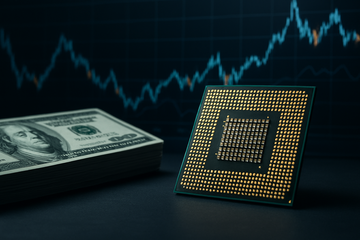
Seoul's $3.5 Billion Frontier AI Bet Is Less Than One Week of SK hynix Revenue — and Memory, Not Money, Is the Bottleneck
On October 5, 2026, South Korea's science ministry put 4.7 trillion won of state equity behind a frontier AI model starting in March 2027, with 3.85 trillion won of it earmarked for GPU capacity and roughly 29,000 government GPUs to be allocated by year-end. The cheque is small next to the industry it targets: it equals about 58% of one week of SK hynix revenue and 5% of what SK hynix alone returned to shareholders in 2026. The binding constraint is allocation, not money — SK hynix's long-term agreements already cover more than half of 2027-28 capacity and the shortage runs to 2030 — and on October 26, 2026 Washington denied Korea the licence exception covering semiconductor items, leaving the sovereign stack captive at home. The read-through investors are missing: a state-anchored Korean buyer for domestic HBM4 arrives while the memory complex runs at 80% operating margins on capacity that is already spoken for.
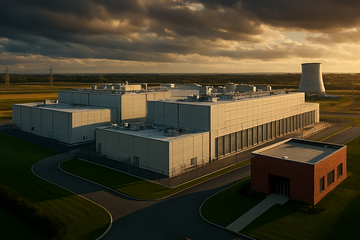
OpenAI's “AI Compute Campus” Push Is a Permit Strategy — and 843 Opposition Groups Say Why
OpenAI will relabel its data centers as “AI compute campuses” and push state legislation that gives residents a say in how projects are built, launching the push right after the Nov. 3 midterms. Read as strategy rather than branding, the campaign times a vocabulary push to the moment state lawmakers write the rules, in a year when 843 local opposition groups and roughly $200 billion of stalled projects have made site selection the binding constraint on AI capacity. For investors, the winners are the balance sheets that already own the permits, the power and the credit: the chip vendor whose balance sheet now backs the landlord's leases, the equipment makers, and the utilities whose rate base grows only if the compact holds. The label matters because the first public prospectus to use it will set the terms for everyone who follows.

Palantir Reports Tonight: The AI Skeptic Debate Turns on a $1.03 Billion Line Item, Not the $2.16 Billion Headline
Palantir reports third-quarter 2026 results after the close on Nov 2, and the headline the market will trade — revenue guided to $2.160–$2.164 billion — is not the number that settles whether the AI buildout is a durable annuity or a capex illusion. The deciding line is U.S. commercial revenue, which must clear roughly $1.03 billion to keep the company's own full-year guide of more than $3.424 billion reachable, a 35% sequential step-up from the $764 million booked in the second quarter. Palantir's cash flow shows why the two debates are not the same debate: trailing capital spending of $42 million against $3.36 billion of free cash flow, while the layer that owns the silicon burns cash at a rate that has Oracle's credit default swaps at a record 288 basis points. Read tonight as evidence on enterprise AI demand; treat the funding-cost question as unresolved.
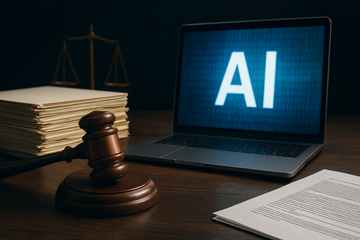
Publishers Just Moved the “AI Scraping” Fight Into Federal Court—Turning the AI Content Toll Into a Paywall Bypass Liability
A New York federal lawsuit accuses Brave of scraping publishers’ copyrighted pages, bypassing paywalls, and distributing the resulting content to downstream AI companies. The market impact is less about model training economics and more about who controls the “last-mile” web access layer—where Cloudflare, Akamai, and browser/edge security vendors can become the nearest courtroom winners or collateral damage.
What to expect
Evidence-first notes with a visible point of view.
This section collects sharp takes on earnings, shareholder meetings, and market structure. Each new piece should make the thesis, the facts, and the implications obvious within the first few screens.
Expect direct analysis, not generic commentary.
Expect the data to be explicit and the argument to be easy to follow.