AI & Software
Where AI spending is actually landing
Model releases, enterprise adoption and software margins, read for what they do to revenue — across the labs, the platforms and the software they run on.
2026-07-07


Broadcom's Apple Deal Shows the AI Memory Squeeze Is Repricing Consumer Hardware
Broadcom's July 6 extension with Apple through 2031 looks routine on the surface, but it is really a signal that AI-era memory inflation, foundry bottlenecks, and custom-silicon lock-ins are pushing cost pressure down into consumer hardware. Broadcom gets an annuity. Apple gets supply visibility. The rest of the stack gets repriced.

HBM, DRAM and Wafer Starts Are a Capital Allocation War
HBM is turning wafer starts, packaging, and clean-room space into a capital allocation war. The companies that can reserve capacity for the right memory mix get paid first; everyone else has to wait or pay up.

Solstice's Element Solutions Deal Turns AI Materials Into a Vertical Stack
Solstice's $14.5 billion Element Solutions acquisition is not just a chemicals merger. It is a bet that semiconductor fabrication, advanced packaging, thermal management, and data-center cooling are converging into one higher-value AI materials stack.
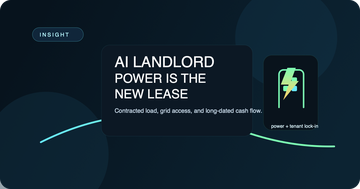
TeraWulf's Anthropic Lease Turns a Bitcoin Miner Into an AI Landlord
TeraWulf's 20-year Anthropic lease at Justified Data and the sale of its Abernathy joint venture turn a former bitcoin miner into a contracted AI infrastructure landlord. The real story is not hash rate; it is power, site control, and long-duration revenue visibility.
2026-07-03

Alphabet's AI Capacity Crunch Turns Google Into the Toll Booth of the AI Stack
Alphabet is lifting 2026 capex to $180 billion-$190 billion while AI Mode and AI Overviews already operate at consumer-web scale. The deeper story is that Google is no longer just monetizing AI demand; it is absorbing it through compute, network, and power investments that make Alphabet the bottleneck and the toll booth at the same time.

Bloom Energy's Brookfield Deal Turns AI Power Into Project Finance
Bloom Energy and Brookfield expanded their AI infrastructure partnership from $5 billion to $25 billion, and the market treated it as proof that AI power has become a financeable bottleneck. The real story is that data centers now need reliable megawatts fast enough that project finance, not just engineering, becomes the constraint.

Broadcom's AI Reset Shows Custom Silicon Is Still a Great Business, but a Harder Trade
Broadcom still posted 48% revenue growth and $10.8 billion of AI semiconductor revenue, but the stock slipped as investors focused on what comes after the easy part of the cycle: proving that custom silicon, networking, and software can keep compounding once the bar is already high.

Constellation Energy Shows Why AI Wants Firm Power, Not Just More Megawatts
Constellation ticked higher on July 2, but the real signal is structural: EIA expects U.S. electricity use to grow 1% in 2026 and 3% in 2027, while Constellation says data center power demand has tripled since 2014 and its 835 MW Crane restart for Microsoft shows why firm nuclear power is becoming an AI priority.
2026-07-02

The AI Trade Split in Two as Meta Rallied and Semis Slid
On July 1, Meta rallied more than 10% intraday while semiconductor stocks sold off and SOXX fell 6.48% on the day. The market was not dumping the whole tape; it was repricing the AI stack into winners that can monetize and suppliers that are already priced for perfection.

AppLovin's Open Access Bet Turns Adtech Into a Distribution Story
AppLovin's stock rose after Raymond James initiated coverage and the company opened AppLovin Ads to all advertisers. The deeper thesis is that self-serve access turns AppLovin from a managed performance platform into a broader distribution business.

Getty and Shutterstock's Breakup Shows AI Content Is a Rights Market, Not Just a Scale Market
Getty Images and Shutterstock are scrapping their merger after UK conditions made the deal uneconomic, and Shutterstock shares dropped roughly 30%. The deeper read is that AI-generated content has made rights, regulation, and distribution more important than simple scale.

Meta's Cloud Pivot Turns Excess AI Compute Into a Monetization Test
Reuters reported that Meta is building a cloud business to sell excess AI computing capacity, and the stock jumped more than 10% intraday. The deeper story is that AI infrastructure is starting to behave like an asset with resale value instead of just a cost center.
2026-07-01
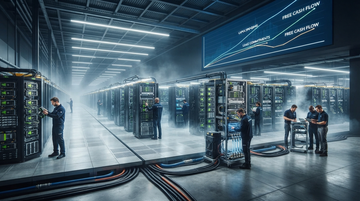
The AI Capex Boom Is Turning Into a Depreciation and Free-Cash-Flow Test
Alphabet, Amazon, Meta, and Microsoft are all spending at a pace that looked absurd two years ago. The real question is no longer who can spend the most, but who can turn that spending into durable free cash flow before depreciation and lease commitments eat the story.

Anthropic's Sonnet 5 Is a Pricing Reset for Enterprise AI
Anthropic's June 30 launch of Claude Sonnet 5, paired with Claude Science and temporary launch pricing of $2 per million input tokens and $10 per million output tokens, signals that enterprise AI is moving from benchmark theater to workflow economics.
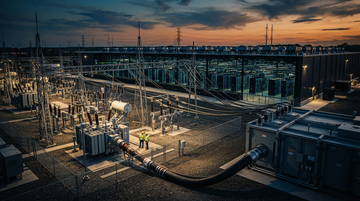
Data Center Power Is Becoming the Real AI Scarcity Asset
The IEA and EIA now describe data centers as one of the biggest drivers of future electricity demand. The scarce input is no longer only GPUs: it is grid capacity, interconnection speed, substation gear, and politically permitted electrons.

DeepSeek's DSpark Shows Open-Source Inference Is Becoming Part of the Moat
DeepSpec says DSpark is the same checkpoint with an added speculative-decoding module, while DeepSeek-V4-Pro ships 1.6T parameters, 49B activated, 1M-token context, 27% FLOPs, and 10% KV cache versus V3.2. The read-through is that inference efficiency is now a core product feature, not a postscript.

Gemini Omni Makes Video the New Google AI Funnel
Google says Gemini Omni can create and edit video from multimodal inputs and is rolling into the Gemini app, Google Flow, and YouTube Shorts. That pushes the AI fight from chat UI into creator tools, media production, and cloud distribution.

HBM Squeeze Battle Is No Longer Just About HBM
TrendForce says suppliers are prioritizing HBM and advanced-layer NAND, squeezing mature-node supply and pushing prices up across the memory stack. Samsung's HBM4E and Micron's latest cash generation show the market has moved from a shortage trade into a capacity-allocation regime.

Liquid Cooling Is Becoming the Default Thermal Stack for AI Data Centers
NVIDIA, Supermicro, Vertiv, and Dell are all describing 100kW+ racks, 120-132kW liquid-cooled designs, and large efficiency gains. The read-through is that liquid cooling has moved from an optional upgrade to the default thermal stack for AI factories.
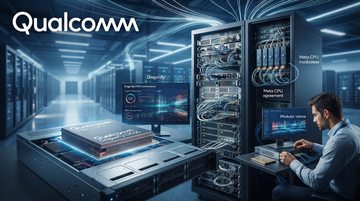
Qualcomm's AI Pivot Is Now a Stack Bet, Not a Press Release
The Meta CPU agreement, Modular acquisition, and Dragonfly roadmap suggest Qualcomm is trying to become an edge-to-cloud AI platform rather than just a handset chip vendor.
What to expect
Evidence-first notes with a visible point of view.
This section collects sharp takes on earnings, shareholder meetings, and market structure. Each new piece should make the thesis, the facts, and the implications obvious within the first few screens.
Expect direct analysis, not generic commentary.
Expect the data to be explicit and the argument to be easy to follow.