AI & Software
Where AI spending is actually landing
Model releases, enterprise adoption and software margins, read for what they do to revenue — across the labs, the platforms and the software they run on.
2026-07-15

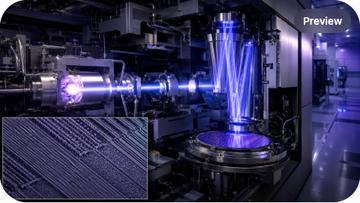
EUV Lithography Deep Dive: Why ASML and the ~5,000 Engineers at Veldhoven Run the Binding Constraint for Every AI Chip on Earth - and Why High-NA EUV Is the 2026-2028 Race
EUV lithography is the binding constraint of the entire leading-edge semiconductor industry, and the supply chain is a monopoly: ASML is the only merchant EUV supplier, with ~5,000 engineers at Veldhoven, ~$30B in 2025 EUV revenue, and a 100% market share. This is a full-stack deep-dive into EUV: light source (laser-produced tin plasma), collector mirror (Zeiss), reticle stage, wafer stage, pellicle, photoresist, masks, the High-NA EUV roadmap (ASML's TWINSCAN EXE:5000 in 2026-2027), the customer base (TSMC, Samsung, Intel, SK hynix), the ~$200M per system price tag, and the read-through for the 2026-2028 AI capex stack.

Frontier Model Tier Deep Dive: How OpenAI, Anthropic, Alphabet, Meta, xAI, and DeepSeek Are Reshaping the $400B AI Foundation Model Market - Benchmarks, Revenue, Profit, Growth, and Focus Areas
The frontier model market in 2026 is a $400B+ revenue cohort with 5 credible frontier labs (OpenAI, Anthropic, Alphabet Gemini, Meta Llama, xAI Grok) and 1-2 emerging challengers (DeepSeek, Mistral). The frontier tier is now defined by 100T+ parameters, 1M+ token context windows, multimodal training, and reasoning-specialized architectures. This is a full-stack deep-dive: benchmark performance (SWE-bench, MMLU, GPQA, FrontierMath, HLE), revenue ($13B OpenAI / $5B Anthropic / $3B Gemini), profit path (Anthropic turning profitable, OpenAI $5B loss in 2025, xAI burning $10B+/yr), growth rates (200%+ YoY for Anthropic, 100%+ for Gemini), focus areas (OpenAI agentic + ChatGPT, Anthropic coding + enterprise, Gemini search + Workspace, Meta open-source + ads, xAI real-time + X, DeepSeek cost-efficient open-weight).
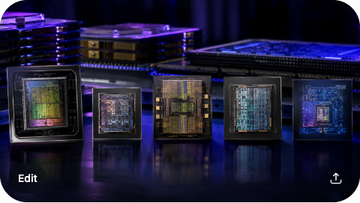
GPU / NPU / ASIC / TPU / CPU Deep Dive: How Nvidia, AMD, Broadcom, Alphabet, Apple, and Intel Are Reshaping the $400B AI Compute Market - Performance, Bottlenecks, Supply Chain, and Demand
The AI compute market in 2026 is a $400B+ market segmented into 5 binding architectures: GPU (Nvidia H100/H200/B100/B200/GB300 + AMD MI300/MI325/MI350), NPU (the cleanest single on-device AI accelerator for Apple Neural Engine + Qualcomm Hexagon + Intel NPU), ASIC (Broadcom custom ASIC for hyperscalers + Marvell custom silicon), TPU (Alphabet TPU v5/v6/v7), and CPU (Intel Xeon + AMD EPYC + Apple M-series). This is a full-stack deep-dive: performance benchmarks (FP8 / FP16 / BF16 / INT8 / FP4 throughput), the HBM + CoWoS + SiP supply chain, the top experts, the customer base, the capex, and the read-through for the AI capex cycle.
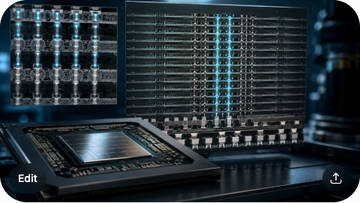
HBM Deep Dive: How SK hynix, Samsung Electronics, and Micron Built the Single Most Concentrated AI Supply Chain of the Cycle - and Why the 2026-2028 Capacity Is Already Sold Out
HBM (High-Bandwidth Memory) is the binding AI accelerator supply chain constraint, and the 2026-2028 supply is already spoken for. SK hynix leads with ~52% HBM market share, Samsung Electronics is at ~20%, and Micron is at ~28% with the cleanest 2026 ramp. This is a full-stack deep-dive into HBM: TSV technology, stack height (HBM2/2E/3/3E/4/4E), 12-Hi/16-Hi stacks, base die logic process, the HBM3E race, capacity sold out through 2026, top experts at SK hynix's M16, expansion capex, the customer concentration (Nvidia, AMD, Broadcom), and the read-through for the 2026-2028 AI capex cycle.
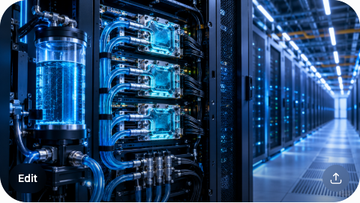
Liquid Cooling Deep Dive: How Vertiv, Boyd, Rittal, CoolIT Systems, and Asetek Built the Most Concentrated AI Data Center Thermal Stack of the Cycle
Liquid cooling is the binding AI data center thermal stack of the cycle - air cooling is no longer sufficient for AI accelerators >700W TDP, and the 2026-2028 liquid cooling demand is the cleanest single read on the AI capex cycle's thermal leg. Vertiv leads with ~30% liquid cooling share, Boyd at ~10%, Rittal at ~10%, CoolIT Systems (the cleanest pure-play, recently acquired by Eaton) at ~8%, and Asetek at ~5%. This is a full-stack deep-dive into liquid cooling: cold plate (DLC) vs immersion (single-phase + two-phase) vs rear-door heat exchanger (RDHx), the coolant chemistry (PG-25, dielectric fluids), the customer base (Microsoft, Alphabet, Amazon, Meta), the top experts, the capex, the 2026-2028 supply-demand, and the read-through for the AI capex stack.
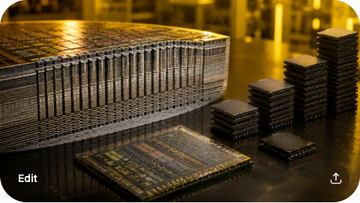
NAND Flash Deep Dive: How Samsung Electronics, SK hynix, Kioxia, Sandisk, and Micron Run the Only Memory Market That Stopped Behaving Like a Commodity
NAND flash is the only memory sub-segment where AI demand did not just lift ASPs - it broke the commodity cycle itself. Sandisk and Micron reported datacenter-grade NAND revenue inflection in 2026, Samsung Electronics and SK hynix are running near-full-utilization, and Kioxia is the latest target of a $15-20B IPO/pre-IPO secondary at a ~$20B mark. This is a full-stack deep-dive into the NAND industry: cell architecture (SLC/MLC/TLC/QLC/PLC), node roadmap, capital intensity, controller + firmware stack, top experts, expansion difficulty, debt load, customer concentration, and the read-through for Apple, Nvidia, the AI capex stack, and the 2026-2030 storage market.

Optical Module Deep Dive: How Coherent, Lumentum, Innolight, Eoptolink, and Source Photonics Run the $40B 800G / 1.6T Optical Module Cycle - and Why 3.2T CPO Is the 2027-2028 Binding Test
Optical module is a $40B/year market in 2025 that is structurally being reshaped by the 800G / 1.6T cycle and the emerging 3.2T co-packaged optics (CPO) cycle. The 5 leading-edge optical module suppliers are Coherent, Lumentum, Innolight, Eoptolink, and Source Photonics. This is a full-stack deep-dive: 800G / 1.6T / 3.2T optical module + EML + DML + silicon photonics (SiPh) + CPO + linear pluggable optics (LPO) + tunable laser + EDR / FR / DR / SR / LR / ER / ZR reach classes, the EML + SiPh + CPO technology stack, the Nvidia + Broadcom + Cisco + hyperscaler customer base, the 2025-2028 capex, the top experts, and the read-through for the AI capex cycle.
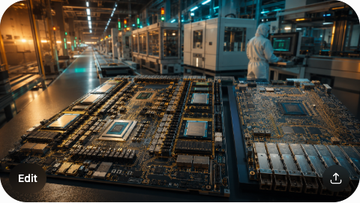
PCB Deep Dive: How Nvidia AI Server Boards, Unimicron + Shennan Circuits Substrate-Like-PCB, and the 800G / 1.6T Switch Era Are Reshaping the $80B Global PCB Market
PCB (Printed Circuit Board) is a $80B/year global market in 2025 that has been structurally reshaped by the Nvidia AI server board cycle. The 5 leading-edge PCB suppliers are Unimicron, Shennan Circuits (the cleanest China PCB exposure), Tripod Technology, Shinko Electric, and Ibiden. This is a full-stack deep-dive: substrate-like-PCB (SLP) + high-density interconnect (HDI) + any-layer HDI (aHDI) + modified semi-additive process (mSAP), the 800G / 1.6T switch PCB cycle, the 224 Gbps PAM4 signaling, the Nvidia GB200 NVL72 / GB300 / Rubin class boards, the customer base (Foxconn + Quanta + Wistron + Inventec + Wiwynn), the capex, and the read-through for the AI server cycle.
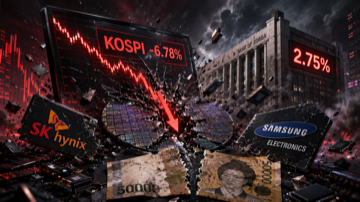
SK Hynix's 10% Single-Day Crash Made Korea the First Asia Tape to Reprice the Micron Memory Sell-Off
SK Hynix shares plunged over 9% in Seoul on July 16, 2026, reversing the prior session's 8% rally, as the Micron -8% sell-off in the U.S. overnight spilled into Asia. The Kospi dropped 6.78% to 6,790.23, with Samsung Electronics -7%, Seoul Semiconductor -5%, and Tokyo Electron -5%. The Bank of Korea simultaneously hiked rates 25bp to 2.75% - the first hike since January 2023 - against a backdrop of June CPI at a three-year high of 3.2% and a won near 1,484. The combined tape is the cleanest stress test of the AI-memory trade outside the U.S. since the 2024 cycle peak.
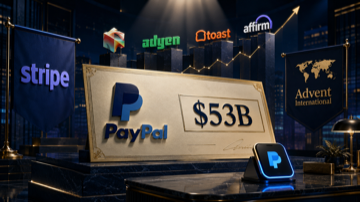
Stripe and Advent's $53B Bid for PayPal Is the First Mega-Deal That Says Fintech M&A Is Back
Stripe and Advent International made a $53 billion all-cash takeover offer for PayPal at $60.50 per share on July 15, 2026, sending PYPL up 17.20% to close at $55.52 on 72.5 million shares - roughly 7x its 10-day average volume. The bid is the first mega-deal of the post-SpaceX IPO window and re-prices the entire fintech M&A funnel: Block, Adyen, Robinhood, Toast, Payoneer, and Western Union all move with this trade. The bid premium, the consortium structure, and the unanswered response from PayPal's board all signal that fintech consolidation is no longer theoretical.
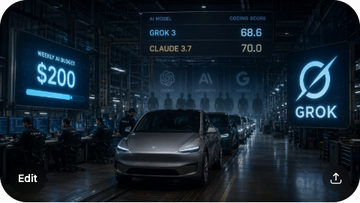
Tesla Just Capped Engineers' AI Spending at $200/Week - And Then Musk Mandated They Use His Own Grok Model That Ranks 9th
Electrek reported on July 10, 2026 that Tesla implemented a $200 weekly cap on third-party AI spending - notably exempting xAI's Grok - and Elon Musk then sent a memo instructing Tesla employees to switch to Grok, the AI model from his xAI company (now merged into SpaceX). Grok 4.5 ranks 9th on multi-domain leaderboards with a coding score of 68.6 (the lowest among compared models), trailing OpenAI (GPT-5.6 Sol/5.5/5.6 Terra/5.4), Anthropic (Claude Fable 5, 4.8 Opus, 4.7 Opus), and Google (Gemini 3.1 Pro). Tesla engineers reportedly prefer Anthropic's Claude for daily development work. The read-through is direct for Tesla, Anthropic, OpenAI, Alphabet, Meta, and the entire enterprise AI cohort now navigating self-dealing concerns.

Trump vs Hochul's NY Data-Center Moratorium Is the First Real Test of Whether AI Capex Has a Political Ceiling
President Trump publicly slammed New York Governor Kathy Hochul's new executive order barring for up to a year the construction of data centers that use 50+ MW of power, the first state-level moratorium of its kind in the U.S. Trump wrote on Truth Social that New York 'has made a terrible decision' and urged the state to change policy 'IMMEDIATELY.' The moratorium is the first concrete political constraint on the AI capex stack from a U.S. state, and the read-through is direct for Microsoft, Alphabet, Amazon, Meta, Nvidia, Equinix, Digital Realty, and every AI-infrastructure issuer with a NY exposure.
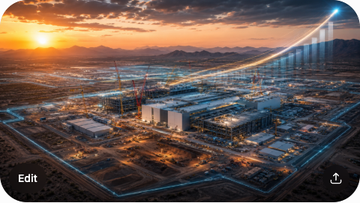
TSMC Pledges Additional $100B for Arizona on Top of Existing $165B - Q2 2026 Net Profit Jumps 77% YoY - The Largest Single CHIPS-Era Capex Announcement in History
CNBC reported on July 15, 2026 that TSMC announced an additional $100B Arizona investment on top of its existing $165B US commitment, on the back of Q2 2026 net profit surging 77% YoY. The new incremental US commitment brings TSMC's total US investment to $265B across three Arizona fabs, making it the largest single CHIPS-era capex announcement in history. The Q2 2026 net profit beat consensus by ~10%, and the $100B incremental capex signals 3-5 year demand visibility for AI training + inference. The read-through is direct for Nvidia, AMD, Apple, Broadcom, Qualcomm, Intel, Applied Materials, Lam Research, KLA, ASML, Samsung Electronics, SK hynix, and the entire US chip sovereignty thesis.

Warsh Just Turned the Fed From a Single-Mandate Inflation Fighter Into a Multi-Task Force Monetary Experiment
CNBC reported on July 15, 2026 that Fed Chair Kevin Warsh used two days of congressional testimony to launch a multi-pronged review of how the Fed measures inflation, restore money-supply reporting, and convene an all-bullish AI task force - all while CPI and PPI both printed unexpected declines. Fed Governor Lisa Cook pointed to AI spending as a potential inflation driver and warned 'inflation risks now outweighing employment risks.' The Fed meets in two weeks and markets are split on whether rates rise, hold, or fall - and the read-through is direct for every rate-sensitive sector, every AI capex issuer, and the bond market that is now repricing the Fed governance premium.
2026-07-14
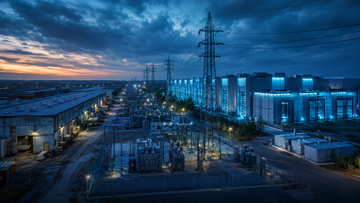
CleanSpark's $6.6 Billion Lease Turns a Bitcoin Miner Into a Power-and-Compute Landlord
CleanSpark's July 14 SEC filing disclosed a 20-year data-center lease covering 175 megawatts of critical IT load, approximately $6.6 billion of initial-term rent, and about $330 million of average annual net operating income. The market's 8.7% midday response is not just an AI enthusiasm trade: it is a vote that contracted rent from investment-grade compute demand can deserve a very different multiple from volatile bitcoin-mining cash flow.

Hundreds of Economists Are Telling the Market What the AI Trade Does Not Want to Hear
AP reported on July 13 that hundreds of economists signed a joint letter calling for immediate action on AI's economic impact and job-displacement risks. The market is still pricing AI as a productivity story. The economists are forcing a parallel conversation about labor-market disruption, antitrust, and AI-specific regulation that can change the political risk premium on the entire AI trade.
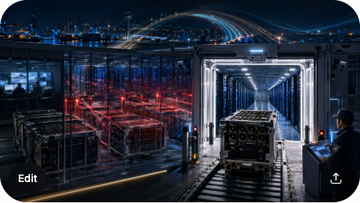
Nvidia's Asia Buyer Crackdown Turns Export Compliance Into a Moat
Nvidia is halving its list of authorized Asian buyers and tightening checks across Singapore, Malaysia, and Japan. The immediate effect is less channel freedom, but the deeper read is that compliance is becoming part of Nvidia's pricing power and its geopolitical firewall.

AI Agents Are About to Kill the SaaS Seat - and Sierra Just Made the Outcome-Pricing Bet Public
CNBC reported on July 14, 2026 that Sierra co-founder Clay Bavor said AI agents are moving from demos into real business workflows - customer service, sales, and support - and that outcome-based pricing could challenge the way software companies get paid. Sierra is the cleanest publicly-discussed example of the AI-agent outcome-pricing model, and the read-through is direct for Salesforce, ServiceNow, Snowflake, MongoDB, Datadog, and the entire enterprise-software seat-based cohort that has been the dominant pricing model for two decades.
2026-07-13
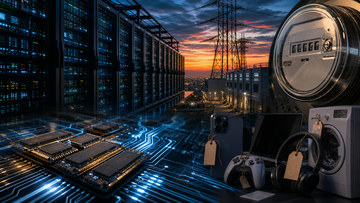
Massive AI Buildout Is Turning Into an Inflation Test Before It Becomes a Productivity Story
The AI spending boom is no longer just a future-growth story. With $720 billion of expected data-center investment, sharply higher memory-chip costs, and visible consumer price increases for laptops and consoles, the market now has to decide whether AI is adding durable productivity or leaking into the inflation data first.
AI Semiconductors Are in a Valuation Reset, Not a Demand Collapse
The July selloff in SK Hynix, Samsung Electronics, Micron, and the broader chip complex looks like a thesis break only if you stop at the tape. The better read is a crowded AI trade digesting geopolitics, index concentration, and expectations that had run ahead of near-term proof.
What to expect
Evidence-first notes with a visible point of view.
This section collects sharp takes on earnings, shareholder meetings, and market structure. Each new piece should make the thesis, the facts, and the implications obvious within the first few screens.
Expect direct analysis, not generic commentary.
Expect the data to be explicit and the argument to be easy to follow.