AI & Software
Where AI spending is actually landing
Model releases, enterprise adoption and software margins, read for what they do to revenue — across the labs, the platforms and the software they run on.
2026-07-19

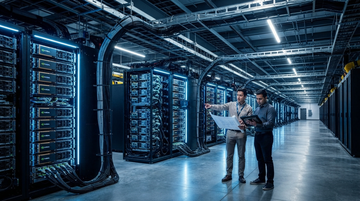
Meta's Potential $10 Billion Anthropic Lease Could Turn AI Compute Into a Wholesale Market
A two-year, $10 billion compute lease would turn Meta from a pure consumer-platform capex story into a capacity market. That changes the valuation question for Meta, Amazon, Microsoft, Google, SK Hynix, and Samsung Electronics.

SpaceX's Pentagon AI Deal Turns Defense Compute Into a New Cloud Test
The Pentagon is reportedly considering a multibillion-dollar compute deal with SpaceX, which means defense AI is no longer just about models and chips. It is about who can deliver cheap, secure, and scalable data-center capacity without depending only on the usual cloud giants.
2026-07-18

Amazon, Alphabet, Microsoft, and Meta Are Turning AI Capex Into a Return-on-Compute Test
The latest capex debate is not about whether the hyperscalers are spending enough. It is about whether the next dollar of AI infrastructure produces a return that is high enough to justify the power, memory, and financing burden.

CXMT's Mega IPO Is Draining Liquidity From China and Repricing Hong Kong Tech
CXMT's $8.6 billion listing is not just a memory-chip event. The bigger market signal is that a giant domestic IPO can pull liquidity out of mainland China and into a policy-backed industrial story, forcing Alibaba, Tencent, and other Hong Kong tech names to reprice against a tighter cash pool.
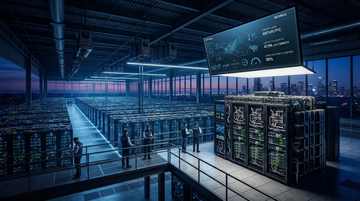
Meta's Anthropic Lease Turns AI Compute Into a Wholesale Market
A potential $10 billion deal to rent compute to Anthropic would move Meta one step closer to treating its AI infrastructure like a saleable utility. That changes the market's question from 'is Meta overinvesting?' to 'can Meta monetize spare capacity better than the cloud incumbents?'

Meta's AWS Poach Turns AI Infrastructure Into a Cloud-Business Trial
Hiring a senior Amazon Web Services executive is a small headline with a large read-through: Meta is no longer just buying compute, it is starting to organize itself like a compute platform. That changes the valuation debate around AI capex, cloud economics, and what counts as a durable moat.

Nvidia Barely Kept the Market Cap Crown Over Apple, and That Turns the AI Trade Into a Cash-Conversion Test
The intraday fight between Nvidia and Apple is not just a market-cap headline. It is the market asking which mega-cap can still justify a premium when AI capex, memory costs, and valuation crowding are all rising at once.

Retail Sales and Jobless Claims Say the U.S. Consumer Is Slowing, Not Breaking
June retail sales rose only 0.2% and initial jobless claims fell to 208,000, which is a mixed signal in the best possible sense: spending is still holding up, layoffs are still low, and the Fed still has room to stay patient.

The SOX Bear Market Is Not the End of AI, It Is the Start of a Capital-Discipline Regime
When the Philadelphia Semiconductor Index drops more than 20% from its high, the market is not saying AI demand vanished. It is saying the cost of owning the AI supply chain is now high enough that only the cleanest cash converters deserve a premium.

The SOX Bear Market Is Splitting AI Toll Collectors From AI Beta
When the semiconductor index falls into bear-market territory, the market is not dumping AI. It is sorting the AI stack into companies that toll the buildout and companies that are still being priced like pure beta.
2026-07-17
Alphabet's Gemini 3.5 Delay Turns AI Leadership Into a Readiness Test
Google's months-long delay of Gemini 3.5 Pro is more than a product hiccup. It shows that in the current AI cycle, model readiness, coding performance, and developer trust matter as much as training scale, and the stock is starting to price that reality.
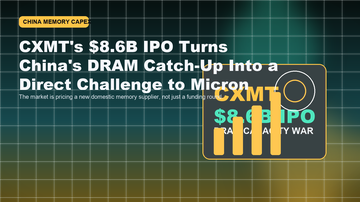
CXMT's $8.6B IPO Turns China's DRAM Catch-Up Into a Direct Challenge to Micron
China's ChangXin Memory Technologies is using a blockbuster IPO to turn AI demand into domestic DRAM capacity. That is not just a China story; it is a direct pricing challenge for Micron, SK Hynix, and Samsung Electronics.

Moonshot AI's Kimi K3 Turns the Chip Selloff Into a Margin Test for Nvidia, Broadcom, and Micron
The latest semis drawdown is not only about one Chinese model launch. It is a repricing of how much margin the AI stack can still support when benchmark pressure, export-control risk, and crowded positioning all hit at once.
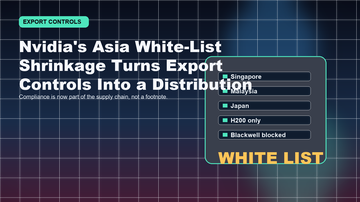
Nvidia's Asia White-List Shrinkage Turns Export Controls Into a Distribution Moat
By cutting the number of authorized Asian buyers by more than half, Nvidia is making compliance part of the supply chain. That sounds bureaucratic, but it is actually a moat: fewer customers, tighter verification, and a more controllable route to China.

TSMC's Record Earnings Selloff Exposes the Three Fault Lines the AI Trade Can No Longer Ignore
TSMC delivered a record quarter on July 16, 2026, but the stock still sold off. That disconnect is the story: the AI semiconductor cycle is still strong, yet the market is now pricing margin compression, higher capex, and a broader repricing of AI infrastructure risk.
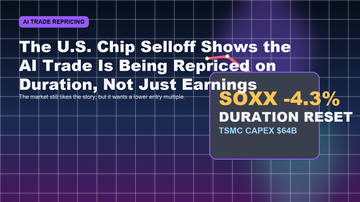
The U.S. Chip Selloff Shows the AI Trade Is Being Repriced on Duration, Not Just Earnings
Even after strong results from TSMC, the market started selling the names that had benefited most from the AI spend cycle. That is a duration reset, not an earnings collapse, and it changes how investors should size the entire semiconductor basket.
2026-07-16
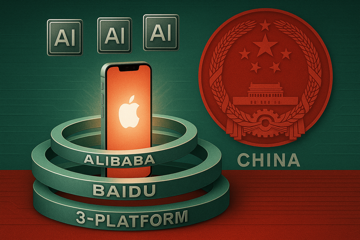
Apple's China AI Approval Is Now a 3-Platform Race - Alibaba, Baidu, and Huawei Just Became the Most Important AI Cohort in the World
CNBC reported on July 16, 2026 that Hong Kong-listed shares of Alibaba rose 5% and Baidu rose 4% after the Cyberspace Administration of China included Apple Intelligence on a list of seven approved AI service providers for iPhone users in China, alongside Huawei and homegrown AI models. The approval opens the door for Baidu's AI chip unit Kunlunxin - targeting a Hong Kong IPO at a $50B valuation - and creates a 3-platform China AI race. The read-through is direct for Apple, Baidu, Alibaba, Huawei, Tencent, and the entire China AI-cohort.

The July 16 Semiconductor Slide Shows the AI Trade Is Repricing Cash Discipline, Not Just Growth
Semiconductor stocks fell even after strong results from TSMC, which tells you the market is no longer rewarding AI growth in isolation. It now wants proof that the capex cycle, margin math, and export-control risk can all coexist without breaking returns.
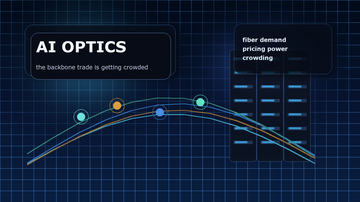
Corning and Coherent Show the AI Optics Trade Is Starting to Behave Like a Crowded Winner, Not a Fresh Frontier
The July 16 market slide hit optical networking names even as AI infrastructure spending remains strong. Corning and Coherent both sagged inside a broader AI selloff, which suggests the market is no longer paying up just for exposure to the backbone of the AI buildout. Investors now want proof of pricing power, not just a good seat in the supply chain.
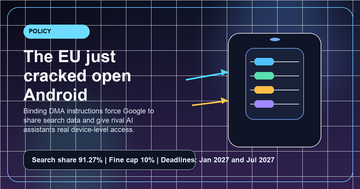
The EU Just Forced Alphabet to Open Android and Search Data to Rival AI Assistants
On July 16, 2026, the European Commission issued binding DMA guidance that forces Google to share certain search data with competitors and to give rival AI assistants equal access to Android features such as voice activation and background task execution. The immediate issue is regulatory, but the real issue is distribution: if Android stops being a closed assistant funnel, Google has to defend default behavior instead of assuming it. That changes the read-through for Alphabet, rival AI assistants, and every company trying to win the mobile entry point.
What to expect
Evidence-first notes with a visible point of view.
This section collects sharp takes on earnings, shareholder meetings, and market structure. Each new piece should make the thesis, the facts, and the implications obvious within the first few screens.
Expect direct analysis, not generic commentary.
Expect the data to be explicit and the argument to be easy to follow.