AI & Software
Where AI spending is actually landing
Model releases, enterprise adoption and software margins, read for what they do to revenue — across the labs, the platforms and the software they run on.
2026-08-12


Spotify’s “AI Persona” Label Turns AI Music Into a Distribution Problem—Before UMG/WMG Can Even Standardize a Rulebook
Spotify will show an “AI Persona” badge on some artist profiles and, by default, exclude labeled AI Personas from editorial and algorithmic recommendations starting mid‑September 2026. The move creates a distribution firewall that changes how AI music wins audiences—shifting value away from platform reach, and toward compliance and explicit listener opt-ins long before labels align on standardized handling.
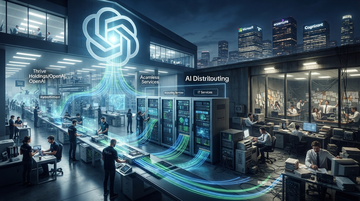
Thrive Holdings’ $2B OpenAI-backed raise turns “enterprise AI” into a priced roll-up game—who still gets left behind
Thrive Holdings’ plan to buy and rewire accounting and IT services firms with OpenAI-backed teams effectively creates a new class of “AI distribution capacity” priced like software services. That shifts the enterprise AI battlefield from pilots and consulting logos to roll-up economics—pressuring outsourcers and analytics platforms that can’t attach a clear, repeatable AI margin to existing workflows.
2026-08-11

Aug 10–14 AI-Infra Earnings Is the First “Build-vs-Buy Audit” for the Hyperscaler Cloud Race
Between Nebius, CoreWeave, and Super Micro Computer, investors get a rare same-window read on how much margin and contracted demand the AI infrastructure stack can actually monetize. The cluster matters because it turns the “data-center financing is the bottleneck” thesis into an earnings-testable build-versus-rent problem—starting with Nebius’s $7–$9B ARR target and >3GW contracted power, and flowing into CoreWeave’s and Supermicro’s ability to keep gross profit quality intact as 2027 backlog visibility becomes the market’s next currency.

Anthropic just made “AI text provenance” a product feature—and turned watermarking into a distribution moat
Anthropic says new Claude models released in the EU on/after Aug. 2, 2026 will embed imperceptible watermarks in generated text and add signed provenance metadata to supported files. That self-imposed compliance step shifts the “audit trail” burden from regulators to model providers, and it pressures competitors like OpenAI and Google to either match the feature or face a tightening compliance gap in enterprise procurement.
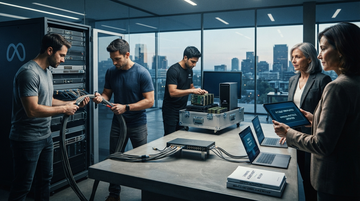
Meta's $2B Manus unwind breaks the “acqui-hire always wins” rule for frontier agents
Meta is dismantling its acquisition path for agent startup Manus and Manus says it will resume independent operations. The key investment signal: hyperscaler “personal intelligence” spend can hit regulatory/compute boundary conditions that venture-style founders are no longer trapped inside—so risk reprices across AI acqui-deals that rely on fast talent capture.

Section 230 Just Stopped Being a Shield: 9th Circuit Lets “Thousands” of Social‑Media Addiction Suits Proceed Against Meta, Alphabet and Snap
A 9th Circuit ruling removes a key procedural barrier—holding that Section 230 is a defense to liability, not a basis to shut the case down at the outset—so multistate addiction litigation can move toward bellwethers and force-shaping settlements. The earlier, court-backed numbers (Meta $6M federal/US jury verdict context and New Mexico’s $567M order) now sit behind a litigation pipeline measured in thousands, meaning legal reserves and “first-to-settle” leverage may reprice quickly.

NVIDIA's $500B Wall Street syndicate reframes AI capex ownership: bankers—not GPUs—become the gatekeeper
A reported Nvidia partnership with Apollo, BlackRock, Blackstone, Brookfield, Goldman Sachs, and KKR targets >$500B of third‑party financing for AI infrastructure, shifting the “capex stack” from Nvidia’s balance sheet to Wall Street underwriting. For investors, the key is not Nvidia’s chips—it’s how financeable-asset structure (and who prices risk) changes hyperscaler ROI, network/equipment throughput, and ultimately who captures the margin.

OpenAI’s $7B employee tender is the first real “liquidity-at-AI-scale” stress test—and it points to lower, not higher, private-market premiums
A reportedly completed ~$7B employee liquidity event at an ~$852B valuation gives the clearest measurable proof so far of how much cash private AI shareholders can actually convert without going public. The implied lesson for [Anthropic] and [xAI] comps is that the “private AI > public SaaS” premium only survives if the next tenders clear at scale—because employee sell windows are where valuation stories meet settlement risk.

OpenAI’s Commercial Operator Leaves as the Company Moves From Funding to Scaling Infrastructure
OpenAI’s Brad Lightcap said he is leaving the company to “start something new,” after shifting from COO to leading “special projects” in April. The timing matters: OpenAI is also reported to have completed a roughly $7B employee tender and has publicly framed the Stargate buildout as a massive, compute-heavy scaling program—raising the odds that commercial execution will increasingly depend on new leadership during a costly ramp.
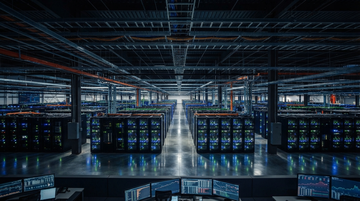
SEC exempted certain data-center securitizations—so the “ABS-like” buyer universe can expand overnight
A July 29, 2026 SEC staff determination says certain data-center securitizations are not “asset-backed securities” under Exchange Act §3(a)(79), removing a stack of ABS-specific disclosure and risk-retention requirements. For AI infrastructure financing, that effectively widens the capital pool for data-center project paper—shifting more build funding toward the balance sheets and financing channels most comfortable with operating-asset-backed structures like Equinix.
2026-08-10

Akamai’s Q2 proves edge security is the revenue bridge to AI inference—CIS growth is measurable, but the linkage is still the debate
In Akamai Q2 2026 results (quarter ended June 30, 2026), Security revenue grew 10% YoY to $604M while Cloud Infrastructure Services (CIS) grew 39% YoY to $99M—plus $2.8B+ in signed multi-year CIS contracts YTD. The company frames CIS growth as “AI infrastructure” positioning, but it did not quantify an explicit dollar “AI inference” contribution in the earnings materials reviewed, so investors must underwrite the security→inference attachment story more than they can spreadsheet it.

Anthropic turns $30B run-rate into a cyber “industry operating system” with Project Glasswing
Anthropic disclosed a revenue run-rate above $30B and simultaneously launched Project Glasswing, a large, partner-wide defensive cybersecurity effort centered on access to Claude Mythos Preview. The strategic signal isn’t just that Anthropic has “AI security capability”—it’s that Anthropic is trying to convert enterprise trust and regulated buyer demand into a repeatable, credit-funded product line that rides on cloud + security vendor distribution.

Claude Code flips auto/agent mode to default—so integrators, not end-users, inherit the operational liability
Starting August 14, Anthropic will run Claude Code in auto mode by default for Pro, Max, and Team plans, routing more permission decisions to model-based classifiers instead of step-by-step human approvals. The key shift is liability distribution: when coding agents start acting with less friction, the blast-radius now moves toward enterprise integrators and IDE/toolchain owners, even as Anthropic reports auto mode blocking 89% of dangerous commands in a 1,053-tester study.

Appaloosa’s Q2 pivot bets the AI capex chain is still mispriced—and its “walk-away-from-banks” move tightens the signal
Appaloosa Management (David Tepper) reportedly rotated its Q2 2026 13F exposure toward AI infrastructure—highlighting a sharp add to Micron and a larger position in Amazon, with Taiwan Semi also pushed into core territory—while exiting bank holdings entirely. The investable takeaway isn’t “AI good, banks bad”; it’s that memory + foundry + hyperscaler demand signals can re-rate margins and capex intensity even when financials look safer on paper.

Atlassian's Cloud +31% delivers the AI “attach” proof the enterprise SaaS market has been waiting for
In Q4 FY2026, Atlassian posted $1.766B revenue (+28% YoY) with Cloud revenue at $1.213B (+31% YoY) and $4.8B in RPO (+44%). The key investor takeaway isn’t another AI feature demo—it’s that Cloud acceleration is happening alongside AI-led product momentum, which changes how investors underwrite the monetization timeline from “promises” to “line-item traction.”

China’s “domestic capital” AI doctrine makes US AI capex less dollar-dominant—look for memory suppliers to win while GPU capex gets quietly rerouted
Beijing’s $28T-style push to fund AI via onshore markets (with CXMT as the prototype) changes how capital is allocated: fewer “must-spend” dollar capex cycles for the US hyperscaler stack, more onshore production funding for bottleneck components. In parallel, DeepSeek’s reported fundraising pause highlights the other side of the doctrine—AI funding is now market-conditional, not subsidy-automatic.

The Real Bottleneck Isn’t Rack Cooling—It’s the IP Stack Behind the Thermal Interface That Makes AI Chips Work
Discovered Materials’ AI-driven “whack-a-mole” approach to finding cooler thermal materials highlights how fast the industry has to iterate to avoid thermal throttling. But the investable constraint is upstream: the process, deposition, and materials IP that can manufacture new thermal interface layers reliably at scale—where Applied Materials sits and where materials suppliers like Shin-Etsu Chemical and Tokyo Ohka Kogyo are built to monetize.

Fisher’s AI-Infrastructure Crowding Trade Is Real—But It’s the “Grid-to-Aircraft-to-Network” Link That Should Matter for Investors
Fisher Asset Management’s latest 13F (quarter ended June 30, 2026) shows aggressive positioning across AI’s “real economy” buildout—power and electrification via GE Vernova, aerospace platforms via GE Aerospace, and enterprise/data-center connectivity via Cisco Systems, alongside the usual AI compute core. The investable takeaway is not that AI exists—it’s that Fisher is paying up for the bottlenecks and replacement cycles that sit between AI demand and the supply chain that fulfills it.

Intel selling $15B of new stock turns the turnaround rally into dilution math
Intel’s proposed $15B common-stock offering (plus a $2.25B underwriter option) gives management capital for capex/working capital—but it also means investors are funding the foundry ramp with fresh share issuance at a high-price tape. The market implication is straightforward: even if foundry timelines improve, per-share economics get worse until operating leverage arrives.

Alphabet's talent exodus risk: investors should watch whether CEO-level AI capex and recruiting intensity rise after Jeff Dean-style departures
When Jeff Dean and other senior Google AI researchers left to launch [Discovery Loop], the headline wasn’t just a startup story—it was a signal that top-model talent can be a bottleneck that forces hyperscalers to spend more to stay competitive. Alphabet already shows heavy reinvestment capacity, but the market should now price in whether leadership churn increases hiring and compute-cost pressure at the company level.
What to expect
Evidence-first notes with a visible point of view.
This section collects sharp takes on earnings, shareholder meetings, and market structure. Each new piece should make the thesis, the facts, and the implications obvious within the first few screens.
Expect direct analysis, not generic commentary.
Expect the data to be explicit and the argument to be easy to follow.