AI & Software
Where AI spending is actually landing
Model releases, enterprise adoption and software margins, read for what they do to revenue — across the labs, the platforms and the software they run on.
2026-08-13


Amazon turns Twitch into default AI training data—and the legal risk shifts from “opt-in consent” to a copyright compliance cliff
Twitch has added a “Training for Generative AI” setting that’s on by default, letting Amazon use stream content to train generative AI unless creators actively opt out. The move doesn’t just expand training data—it raises a sharper copyright/consent question because livestream platforms are high-frequency, expressive, and often reused downstream, while opt-out rates are structurally low.
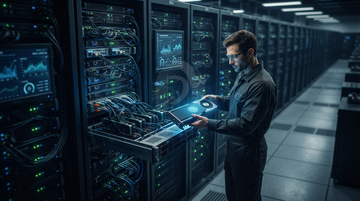
Anthropic’s Decart talks point to a new AI moat: buying inference-efficiency, not just more compute
Anthropic is reportedly in early talks to acquire Decart AI in a deal discussed at around $6 billion, with Decart focused on inference and training performance optimization across chips. If completed, the acquisition would shift Anthropic from “GPU procurement” toward “system-level utilization,” where small gains in latency and throughput can compound into materially more usable capacity for its Claude workloads.

Cognition’s reported ~$40B round reframes coding agents as an engineering-substitution bet—not an “AI tool” upgrade
A reported valuation jump toward ~$40B for Cognition’s autonomous coding agent strengthens the market’s willingness to price software labor displacement as a near-term product economics problem. The investor question is no longer “can agents write code?”—it’s whether agentic workflows keep converting into repeatable buyer spend faster than enterprise engineering teams can adapt.

IBM just built an enterprise OpenAI channel—contradicting its own “AI shifts money from software to infrastructure” warning
IBM announced a new enterprise go-to-market partnership that embeds OpenAI’s frontier models into IBM Consulting’s delivery platform and scales deployment through “thousands” of trained consultants. That directly tests—and could weaken—IBM’s July guidance narrative that AI spending is routing away from software and toward infrastructure.
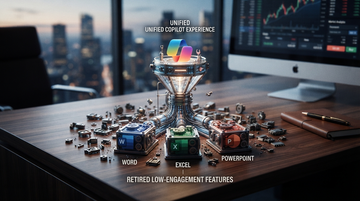
Microsoft is consolidating Copilot and retiring “low-engagement” features—turning a broader AI bet into a tighter monetization funnel
Microsoft says it is merging consumer and Microsoft 365 Copilot into a unified experience and retiring features like Group Chat, Podcasts, and Deep Research for consumer users as of Aug. 18, 2026. The strategic signal is not just UI cleanup: it points to a distribution-and-adoption reality check that could reshape how AI software features win seats, data access, and recurring revenue across the Microsoft stack.

OpenAI’s “Testing Ads in ChatGPT” Turns the Free Tier Into a Live Pricing A/B Lab—And the Ad Market Just Got a New Distribution Toll Booth
OpenAI’s Aug 11 update confirms ChatGPT Ads are expanding beyond the U.S., with ads served at the bottom of answers for logged-in Free and “Go” users while Plus/Pro/Business/Enterprise stay ad-free. Mechanically, the program is built as a controlled monetization experiment—privacy-limited, topic- and history-matched, and measured primarily via aggregate ad engagement—meaning the real competition isn’t only for ad budgets, but for the right to arbitrate “intent” across the conversation. For investors, the signal is that OpenAI is converting the consumer AI funnel into a third ad-ecosystem alongside Google’s search ads and Meta’s social ads.
2026-08-12

Anthropic’s unreleased Claude jumped the “Riemann zeta” lower bound to 67.2%—and the moat is shifting from demos to math-proof cadence
Anthropic says an unreleased Claude research version advanced a long-standing Riemann zeta bound from 41.6% to 67.2%, then produced a Lean formalization that passed validation checks. The valuation implication is bigger than the headline: the lab is turning mathematical reasoning into something closer to a publishable, verification-ready workflow—exactly the kind of capability that justifies “frontier science” spending at $965B valuation levels.

Apple's Sept. 1 handoff to John Ternus reframes the next power test: will hardware engineering steer the services flywheel—or risk it?
Apple will transition CEO power to [John Ternus] on Sept. 1, while Tim Cook becomes Executive Chairman. That leadership split forces investors to re-check Apple’s services-led narrative through a hardware lens—because the CEO’s job now likely starts with product-cycle timing, silicon/UX integration, and supply-chain execution rather than just monetization and ecosystems.

Blacksmith’s near-10x re-rating doesn’t prove “AI tests AI” is a moat—yet it does prove CI cost and test latency became investable infrastructure
Blacksmith’s valuation jump (reported alongside its $10M Series A) is best read as proof that the software supply chain is being re-priced for an AI era: build, test, and feedback loops matter more than ever. The key investor question isn’t whether AI-generated code needs testing—it’s whether Blacksmith’s “CI for faster, cheaper, observable runs” can compound into a durable workflow lock when AI tools push code frequency up and failure modes change.

Burry’s 13F Signals a “Consensus AI Basket” Risk — He Put Size Behind NVIDIA, Palantir, and (Separately) Oracle
In Scion Asset Management Michael Burry’s latest mandatory 13F (period ended Sep. 30, 2025) reported put options worth $912.1M against Palantir and $186.6M against NVIDIA. But the same filing did not list Oracle, meaning “ORCL short-basket” claims can’t be treated as coming from that specific 13F document—Oracle exposure appears to be from a different disclosure window.

CoreWeave proves $104B backlog can still lose $626M—because the AI cloud “toll booth” is a financing story before it’s a cash story
In its Q2 2026 update, CoreWeave more than doubled revenue to $2.58B and reported an approximately $104B revenue backlog, yet also posted a $626M net loss and guided full-year 2026 revenue to $12.4B–$13.2B. The gap implies that the economic conversion of signed commitments into cash is being delayed by build-and-finance timing—so 2026 looks like a construction bill, not a backlog monetization victory.

Hazeltree’s “Doubled Short” AI Reading Can’t Be Verified—So the Crowding Claim Stays Unpublished
I could not locate a primary Hazeltree July report (or a load-bearing excerpt with the exact “doubled their short AI bets in July” figure) that is accessible from open sources in this run. Without that verified July metric and the specific AI/semis basket it references, I can’t responsibly quantify the two-sided “squeeze risk” or name the affected listed tickers and supply-chain links with evidence.

J.P. Morgan Just Raised the S&P 500 to 8,000—But Its 20x Multiple Hides a $400 EPS Requirement
On Aug 10, 2026, J.P. Morgan lifted its year-end 2026 S&P 500 target to 8,000 from 7,800, explicitly linking the upgrade to AI-driven demand visibility and elevated index profits. However, if the market really earns a ~20x earnings multiple, the implied earnings power needed is closer to ~$400 EPS than the ~$365 EPS embedded in the call—tightening the margin for error and shifting where investors should watch first.

Lovable forces a public-market rethink: who owns the “AI app tier” at a $13.3B private valuation?
Lovable’s announced $400M Series C at a $13.3B valuation—along with scale claims like 60M projects and 900M monthly app visits—puts the “AI app tier” firmly into public-markets debate. The pricing pressure is less about whether AI can build apps, and more about who captures distribution, workflow lock-in, and monetization as app creation shifts from developer tools to end-user deployment.

Lumentum turns “1.6T is coming” into Q4 revenue—making optical capacity conversion the new proof point investors should price
Lumentum’s fiscal Q4 2026 delivered a record $1.006B in revenue and $3.23 non-GAAP diluted EPS, while full-year revenue rose to $3.014B—nearly tripling year over year. The key signal is not just growth; it’s that optical networking hardware (including the company’s optical communications engine) is translating hyperscaler throughput plans into measurable quarterly dollars, giving the 800G/“1.6T” AI interconnect narrative a company-level anchor.

Made by Google 2026: Pixel’s Gemini on-device push turns every new phone into a distribution channel—potentially compressing app-store bargaining power
Google’s Made by Google 2026 lineup puts Gemini “Intelligence” directly into Pixel 11, Pixel Watch 5, and a new Pixel Tag experience, with explicit on-device compute claims tied to a new TPU. If this improves response speed and lowers friction for everyday actions, it can shift user time from third-party apps toward Google-first workflows, pressuring platforms built around app discovery and extensions.

OpenAI’s Linux Desktop App Push Turns the Developer OS into the Last AI Distribution Frontier (and Bypasses Both Apple and Microsoft)
OpenAI’s ChatGPT desktop app is now in preview on Linux, bundling ChatGPT, ChatGPT Work, and Codex in a packaged install for mainstream Linux distributions. The strategic shift matters less because “Linux is niche,” and more because it attacks distribution control at the OS layer—where both Apple and Microsoft typically set rules—while pulling more developer workflows into the same subscription funnel.
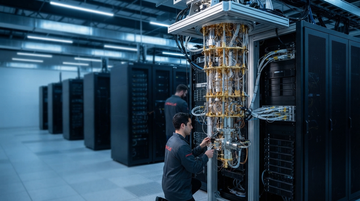
Oracle’s Quantinuum quantum-cloud deal is a tell: hybrid AI compute beats a “quantum hedge,” and cost-out is funding the path
Oracle and Quantinuum plan to deploy Quantinuum Helios inside Oracle Cloud Infrastructure (OCI) to sell “hybrid quantum-AI” access rather than a standalone quantum bet. At the same time, Oracle’s latest 10-K shows large, AI-aimed restructuring charges—supporting a view that Oracle is cost-out funding the expensive, classical compute required while quantum matures.
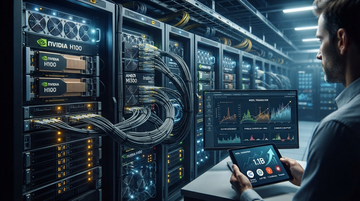
River AI’s $1.1B Round Turns Custom-Model Training Into a Co-Op Between NVIDIA and AMD
River AI says it raised $1.1B in a round led by General Catalyst and AMP PBC, with strategic participation from both NVIDIA and AMD Ventures. The bigger signal isn’t just the money—it’s River’s pitch that enterprises can train and deploy custom frontier “open-weight” models via an API in minutes, forcing chip vendors to compete on not only hardware, but end-to-end training workflows.

Sandbar’s Stream Ring reframes the AI wearable race: the “voice interface” wins only if inference cost and privacy both survive the finger
Sandbar’s Stream Ring bets that voice—not screens—will be the interface layer for mainstream AI wearables, and it tries to make the experience feel “always available” without becoming always-listening. The key investor takeaway is not the ring form factor; it’s how Sandbar structures the voice workflow to control privacy risk and reduce the on-device vs. cloud inference cost curve. If other wearable makers copy the same interaction economics, the winners may be the companies supplying edge compute, audio capture, and low-latency on-device inference rather than the model providers.
What to expect
Evidence-first notes with a visible point of view.
This section collects sharp takes on earnings, shareholder meetings, and market structure. Each new piece should make the thesis, the facts, and the implications obvious within the first few screens.
Expect direct analysis, not generic commentary.
Expect the data to be explicit and the argument to be easy to follow.