AI & Software
Where AI spending is actually landing
Model releases, enterprise adoption and software margins, read for what they do to revenue — across the labs, the platforms and the software they run on.
2026-08-19


2026-08-18

Baidu's Q2 bet: defend AI Cloud pricing—then monetize Apollo Go scale
Baidu’s Q2 release is the first major China platform checkpoint on whether enterprise ERNIE/cloud economics can hold up as open-weight competitors reset inference expectations. The swing factor is Apollo Go: if robotaxi ride growth keeps compounding, it can offset AI Cloud pricing pressure and broaden Baidu’s monetization beyond search.
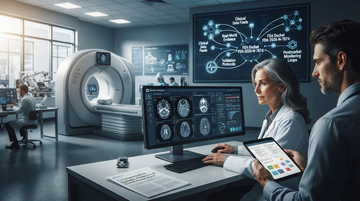
FDA’s generative-AI device rulemaking starts Aug. 18: compliance costs will concentrate in companies that already run “real-world” validation
On Aug. 18, 2026 the FDA opened the formal public-feedback phase for regulating generative-AI-enabled medical devices, centered on risk assessment, premarket “competency assessment,” and postmarket monitoring. The near-term market impact is less about who gets first approvals and more about who can afford the validation tax—making established medtech platforms with existing QA and clinical-feedback loops structurally advantaged versus AI-native startups.

Google's $10M Spirit data buy exposes the “crown-jewel” playbook for airline bankruptcies
Google agreed to pay $10 million to acquire deidentified Spirit Airlines business data in a bankruptcy auction—an unusually small price for an unusually large, decision-relevant dataset. The financial tell isn’t the amount; it’s the asset class: operational and enterprise workflow history is now monetized the way equipment was, with AI buyers effectively competing for “institutional memory.”
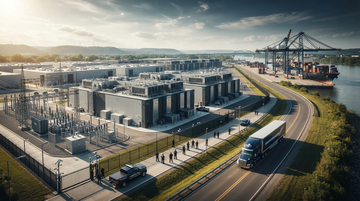
OpenAI’s PORTS-Pike move reframes frontier AI as critical-infrastructure security work—where “workload reliability” can become a contractable capability
OpenAI’s Aug. 17, 2026 announcement ties frontier compute to the PORTS-Pike data-center campus in Pike County, Ohio, with a 20-year tenant deal and a capacity ramp starting in 2028. The strategic significance isn’t the data center itself—it’s how the announcement’s emphasis on resilient, qualification-driven infrastructure and longer “mean time between interruptions” mirrors how U.S. port operators are expected to document and plan cyber risk under Coast Guard guidance.

OpenAI’s “ChatGPT for Teens” shifts the legal center of gravity from feed algorithms to product controls
OpenAI’s new teens experience pairs age-prediction with default “reduced sensitive content,” crisis escalation rules, and parent/guardian “linking” that does not expose chat transcripts. For investors, the strategic punch is that it treats COPPA-style compliance as a product feature—reducing the kind of teen-exposure risk courts have been punishing in social-media ad and recommendation feeds.

Perplexity’s Airtel giveaway in India grew users fast—yet the real test is whether free cohorts will keep paying after the free year ends
Perplexity’s 12-month free Perplexity Pro offer through Bharti Airtel put tens of millions of Indians in front of AI-search—creating a scale shock that matters for “distribution economics” in price-sensitive markets. But the monetization evidence so far is mixed: in-app purchase revenue rose during the promotion, while the harder conversion question—what happens after auto-renewal/cancellations and the free-year expiration—still has to resolve.

Relay shutdown becomes Google’s first “browser-agent” hire—automation is consolidating at the interface, not the model layer
AI workflow startup Relay is shutting down in August–September 2026 and its founder is rejoining Google to lead Chrome product and developer relations. Read alongside Alphabet’s scale and operating cash generation, the move signals that the most durable agent economics are shifting toward the browser runtime—where permissions, distribution, and user intent all meet.

AI Isn’t “killing” staffing—at least not yet; it’s reshaping it into a higher-churn, higher-tech matchmaking business
The staffing industry’s rally contradicts the simplistic “AI replaces recruiters” narrative. Evidence from ManpowerGroup’s Employment Outlook Survey and the direction banks are taking on AI labor suggests a more nuanced model: AI can compress hiring timelines and shift tasks toward agile reskilling, which can increase demand for staffing intermediaries rather than eliminate it.
2026-08-17
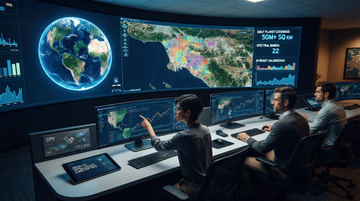
Geospatial Analytics Just Became the New “Recurring Receipts” Layer—Defense-Grade AI-Ready Satellite Feeds Shift the Margin Map
A newly disclosed, eight-figure defense intelligence “AI-ready” subscription underscores a shift: Earth-observation value is moving from raw imagery to analytics-ready data products. The result is a toll-booth dynamic—who owns calibration/consistency and who owns the downstream intelligence workflow determines whether satellite economics get upgraded or commoditized.

Anthropic’s “crisis of trust” frames the IPO risk investors still may be missing
Anthropic CEO Dario Amodei ties the latest AI backlash to a trust problem—“ordinary people don’t trust companies, governments, or the tech industry”—not just to safety messaging. That framing matters at Anthropic’s $965B post-money valuation after its $65B Series H: if enterprise buyers and regulators treat AI spend as a reputational risk, adoption can slow even when model performance improves.

ByteDance’s MPA truce turns AI copyright from lawsuits into a “licensing sooner-or-later” market test
ByteDance’s Aug. 17, 2026 pact with the Motion Picture Association (MPA) is framed as new guardrails for its Seedance/Seedream generators in TikTok, CapCut, and Dreamina—but it does not disclose a resolved licensing or training-data fix. For studios and frontier labs, the deal is still strategically important: it’s the first widely reported “template” showing how an entrenched rights holder can shift AI disputes toward process, refusals, and eventual paid access as liability pressure rises.
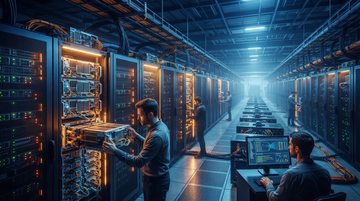
Groq’s $350M Pivot to a “Neocloud” Turns the Inference Margin Question Into a Land-Grab
Groq says it raised $350M in a Series A led by Disruptive, with planned NVIDIA participation, while scaling toward 200MW of inference capacity in 2027. The move reframes the neocloud war: instead of trying to win on silicon alone, Groq is positioning its LPU advantage to capture a larger share of the inference supply chain—pressuring chip-only economics and intensifying the NVIDIA/CoreWeave-style model in inference-first workloads.

Calm tapes can be a trap: when options volatility stays low but AI/tech positioning turns defensive, the gap can widen before the air pocket
In late August 2026, Reuters-style 13F behavior shows investors trimming or de-emphasizing parts of tech while still expressing an AI bias, and Bloomberg highlights how “calm” pricing can coexist with rapidly shifting options sentiment. Using listed megacap AI beneficiaries’ fundamentals as a sanity check, this article maps what would confirm de-risking early: widening positioning-vs-price divergence, deteriorating risk premia, and stress signals in financing and liquidity exposure—before price fully breaks.

Nvidia’s “$1T through 2027” target resets the AI capex scare into a system-scale test
Nvidia says it now sees at least $1T in AI-chip demand through 2027—framed as a doubling from an earlier ~$500B view. Investors should treat the Aug. 26 quarter as the feasibility checkpoint: can memory, advanced packaging, power, and networking expand fast enough to convert that visibility into shipments without forcing an avoidable margin or cash crunch?

OpenAI’s S-1 turns Apple’s injunction battle into a measurable IPO risk—and Astra makes the timing matter
OpenAI’s SEC S-1 and its public comments around the Astra model shift the market conversation from “private-valuation hype” to a disclosed, litigation-shaped timeline risk. Meanwhile, Apple’s push for a preliminary injunction in its trade-secrets fight signals that product and deployment schedules can be gated fast—turning legal uncertainty into a priced factor for the next wave of AI listings.

Tesla’s Cybercab goes from promise to pavement—employee rides at Giga Texas force a new robotaxi timeline investors can’t ignore
Tesla says Cybercab employee rides will begin soon at Giga Texas, with Tesla framing the first live “test” as a factory-first rollout rather than an immediate public service expansion. That matters because it shifts the robotaxi bet from only economics-at-scale to the operational reality of collecting production-grade autonomy data, de-risking failures, and coordinating insurance/regulatory pathways quarter by quarter.

Wispr’s $280M at a $2B valuation bets voice will replace the keyboard’s role in AI—not by speech recognition, but by editing-free “voice-to-outcome”
Wispr’s new $280M Series B at a $2B valuation positions the company as an AI interface layer, not a dictation add-on. The valuation implies investors expect voice to become the next default input surface for AI experiences—and that the winning economics will come from end-to-end writing/workflow conversion, not just transcription accuracy.
2026-08-16
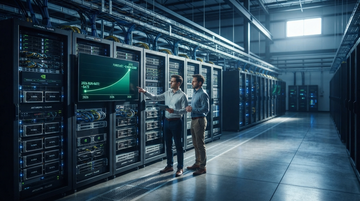
Anthropic’s IPO valuation is being priced off a 2028 revenue number—not today’s run-rate
Reuters reports that Anthropic’s IPO valuation hinges on a specific 2028 revenue forecast of roughly $190–$200B, far above today’s ~$47B run-rate. That shifts the investment question from “Is Claude growing?” to “Can a four-year revenue ramp survive competitive, pricing, and compute constraints?”
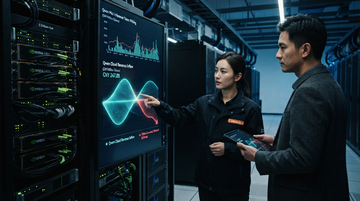
Alibaba’s next quarter tests whether Qwen monetization can offset a China demand drag
Alibaba BABA is set to report its June-quarter results on Aug 20, 2026—making it the first major China-tech earnings print where Qwen’s shift from “open” to commercial terms shows up in financials. Investors will be watching whether higher cloud/AI monetization can outrun consumer softness and whether capex discipline keeps free cash flow from staying negative while Washington export controls keep margins and deployment optionality under pressure.
What to expect
Evidence-first notes with a visible point of view.
This section collects sharp takes on earnings, shareholder meetings, and market structure. Each new piece should make the thesis, the facts, and the implications obvious within the first few screens.
Expect direct analysis, not generic commentary.
Expect the data to be explicit and the argument to be easy to follow.