AI & Software
Where AI spending is actually landing
Model releases, enterprise adoption and software margins, read for what they do to revenue — across the labs, the platforms and the software they run on.
2026-07-13


AI Data Centers Are Hitting the U.S. Grid Before They Hit Scale
Meta's expanded Louisiana build shows hyperscalers are still willing to spend at a shocking scale, but the real bottleneck is now transformers, interconnection queues, and local resistance. The winners are shifting from pure compute landlords to whoever can finance electricity.

OpenAI's Leadership Turnover Shows the Commercial Engine Is Still Not Settled
Fidji Simo's step-back and the latest safety-team departure show OpenAI is still rearranging who owns product, safety, and monetization. That matters because the company is trying to behave like a platform while its executive map keeps changing.
2026-07-11

Apple's OpenAI Lawsuit Turns AI Hardware From a Growth Story Into a Trust Risk
Apple's lawsuit against OpenAI is more than a legal skirmish. It turns OpenAI's hardware ambitions into a trust and timeline problem, and it reminds investors that the next phase of AI competition is about supply-chain control, employee mobility, and who gets to own the device layer.
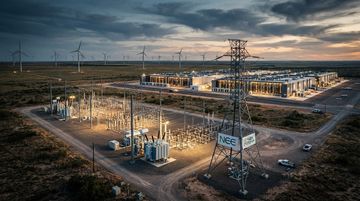
AI Power Demand Meets Subsidy Cuts: Why Clean Power Prices Are Repricing Fast
The clean-power market is getting squeezed from both ends: AI data centers need more electricity, while post-July-4 subsidy changes make new projects more expensive. That combination can reprice utilities, developers, and grid-linked stocks fast.

DeepSeek's Inference Chip Is China's Quietest Threat to Nvidia
DeepSeek moving into inference silicon is not a training-story gimmick. It is evidence that China wants more control over the lowest-margin, highest-volume part of the AI stack, which matters for Nvidia's long-term pricing power.

Google's AMIE Turns Healthcare AI Into Disease-Management Infrastructure
Google says AMIE can reason through longitudinal disease management as well as, and in some respects better than, clinicians in a new Nature study. The market implication is that healthcare AI is moving beyond one-off diagnosis into workflow infrastructure for follow-up, triage, and plan quality, which matters for Alphabet, virtual-care vendors, and payer care-management stacks.

Meta's AI Push Is Finally Becoming a Revenue Story
Muse Spark 1.1, the Meta Model API, and Iris chip production together turn Meta's AI spend from a cost concern into a monetization plan.
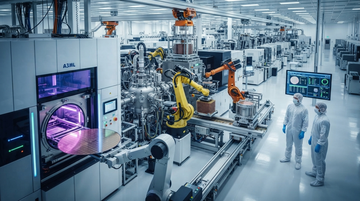
Meta's DSA Problem Reintroduces a Regulatory Discount to the Stock
The European Commission's preliminary DSA finding turns Meta's engagement design into a valuation issue, not just a compliance headline.
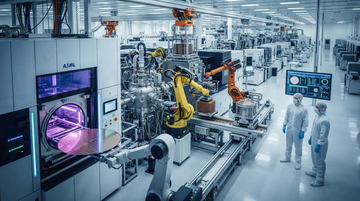
Meta's Iris Chip Plan Turns Semicap Equipment Into the Next AI Toll Booth
Meta's move toward in-house AI chips is less about replacing Nvidia than about widening the wafer-fab equipment market. The real beneficiaries are the toolmakers and the power chain behind the fabs.

Nvidia Shrugs Off Meta's New AI Chip Because the Spend Cycle Still Expands
Meta's Iris chip and model-API push are real competition, but they are also proof that AI spend keeps widening the supply chain rather than shrinking it. The market is still paying for more compute, not less.

Oracle's Credit Downgrade Turns AI Capex Into a Bond-Market Problem
S&P cut Oracle to BBB-, showing that AI infrastructure spending can damage credit quality even while the stock still finds buyers.
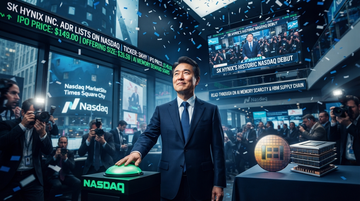
SK Hynix's Nasdaq Debut Is a Read-Through on AI Memory Scarcity
The largest foreign listing in U.S. history is really a pricing signal for HBM, packaging, and AI supply chains.

SK hynix Debut Turned the AI Memory Trade Into a Market-Wide Vote
The largest foreign ADR listing ever did more than reward one chipmaker. It re-priced memory scarcity, lifted U.S. indexes, and forced investors to ask whether AI supply still justifies premium multiples.
2026-07-10

Europe's Addictive-Design Case Puts Meta's Engagement Flywheel on Trial
The European Commission's preliminary DSA finding is not really about a fine. It is about whether Meta can keep maximizing session length, autoplay, and infinite scroll without changing the product architecture that drives ad yield.

OpenAI and Anthropic Are Turning Credits Into the New AI Customer Acquisition Weapon
OpenAI's GPT-5.6 pricing and Anthropic's Sonnet 5 rollout show the frontier model race has moved from benchmark bragging rights to subsidy design. The market read-through is that the next AI winners may be the platforms that can monetize cheaper inference, not just the labs that ship the loudest launch.
2026-07-09
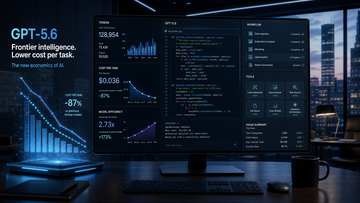
GPT-5.6 Turns Frontier AI Into a Cost-Per-Task War
OpenAI says GPT-5.6 cuts task time, token use, and cost while lifting coding, knowledge-work, and cyber benchmarks. The market read-through is bigger than one model launch: frontier AI is getting cheaper to deploy, which changes the budget math for enterprise software and cloud buyers.

GPT-5.6 Reprices Frontier AI
OpenAI says GPT-5.6 cuts task time, token use, and cost while lifting coding, knowledge-work, and cyber benchmarks. The market read-through is bigger than one model launch: frontier AI is getting cheaper to deploy, which changes the budget math for enterprise software and cloud buyers.
2026-07-08

Costco's June Sales Show the Consumer Still Pays for Value
Costco reported June net sales of $29.24 billion, up 10.6% year over year, while 44-week sales reached $250.43 billion, up 10.1%. The data says the U.S. consumer is still spending, but only when the value proposition is obvious, which keeps Costco in a stronger position than most retailers when prices, mix, and tariffs keep grinding on margins.
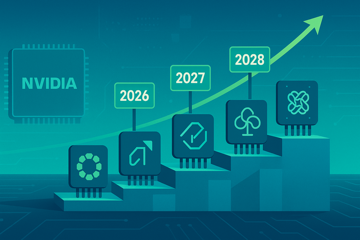
The 2026-2028 AI Chip IPO Pipeline Is Now 5 Names Deep - SambaNova, Rebellions, Tenstorrent, Cerebras, and Baidu Kunlunxin
CNBC reported on July 8, 2026 that SambaNova CEO Kunle Olukotun said the company is 'strongly considering' an IPO, likely in the U.S. - joining Rebellions (targeting a South Korea IPO in 2026) and Baidu Kunlunxin (targeting a Hong Kong IPO at $50B). The 2026-2028 AI chip IPO pipeline now has 5 names, and the read-through is direct for Nvidia, AMD, Broadcom, TSMC, ASML, and the broader AI capex stack that depends on the GPU-vs-custom-chip competition.
2026-07-07
What to expect
Evidence-first notes with a visible point of view.
This section collects sharp takes on earnings, shareholder meetings, and market structure. Each new piece should make the thesis, the facts, and the implications obvious within the first few screens.
Expect direct analysis, not generic commentary.
Expect the data to be explicit and the argument to be easy to follow.