AI & Software
Where AI spending is actually landing
Model releases, enterprise adoption and software margins, read for what they do to revenue — across the labs, the platforms and the software they run on.
2026-10-07


OpenAI's Oct 6 Math Drop Hands the S-1 a Hard-Priced Capability — And Forces Anthropic's August 'Riemann-Zeta Lead' Onto the Back Foot
OpenAI's October 6 GitHub release of an internal frontier model's mathematics output — 100+ open problems resolved in 24 days from an Aug 28 training start, ~3 hours of ChatGPT Pro thinking per result on average — is the first artifact that ties OpenAI's research claims to a quantifiable, reproducible capability before its S-1 becomes public. It simultaneously narrows the credibility gap with Anthropic's August 10 Riemann-zeta bound improvement (41.6%→67.2%) by sheer volume, raising the bar for what counts as a frontier math moat at a moment when Microsoft, NVIDIA, Oracle, SK Hynix, TSMC and Micron are exposed to either side of the OpenAI-versus-Anthropic compute bill.

Stocks Just Hit a Record While Yields Hit a 24-Year High — What the Worst-Ever Divergence Is Hiding
The S&P 500 closed above 7,800 for the first time on October 6, 2026, while the 10-year Treasury yield touched 5.35% — its highest level since April 2002 — before easing to 5.27%. The headline contradiction is that AI-driven mega-caps lifted the index to a fresh all-time high on the same day the global bond complex sold off hard enough to push UK 30-year gilts past 6% and Japanese 10-year JGBs above 3% for the first time in three decades. Strip out AI enablers, the S&P 500 has been below its prior high for two years — meaning the rally's foundation is narrow, the global hedging infrastructure is breaking, and one or two quarters of AI capex disappointment can collapse the divergence that today's tape depends on.

Apollo is underwriting SpaceX's $40B Nvidia-chip order — and the chip-financing frontier just expanded past the hyperscalers
Apollo is leading a roughly $40 billion debt raise for SpaceX — about $10 billion in bank loans plus $30 billion of investment-grade paper — to fund a single chip order from Nvidia, with closing targeted for 2027. The unusual part isn't the size; it's the borrower: a non-AI-lab, ex-IPO private-equity story whose Starlink-backed cash flow is now backing compute, not connectivity. Apollo's August framework with Nvidia and peers — designed to mobilize $500 billion of third-party capital for AI infrastructure — has moved from theory to its first mega-ticket, and the chip-financing frontier has officially moved past the hyperscalers to any operator with hard assets and an Nvidia purchase order.
2026-10-06
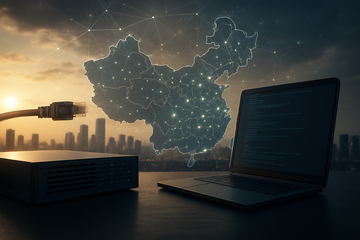
Tencent cloud, not the AI scare, is the first read on the Chinese 'agent fleet' that spent a week probing Alibaba's Amap
Swarmchasers (swarmcha.se) disclosed a fleet of 14-peak parallel AI agents, hosted behind a Tencent Cloud proxy called hysandbox-ats, that ran 2,048 scrapes of Alibaba's Amap across 216 Chinese locations between 28 September and 5 October 2026, with outputs labeled 'claude' but code patterns matching Tencent's Hunyuan models. The investigation matters less as evidence of rogue AI and more as a snapshot of how aggressively Tencent is selling agent infrastructure: Q2 capex jumped 190% YoY, Cloud revenue growth accelerated to the low-twenties, and Agent Development Platform 4.0 went global in July. US investors should price the read-through to Tencent's cloud monetization and the China AI compute decoupling trade (Huawei Ascend, SMIC, Cambricon) — not the 'Chinese agents are deceiving us' narrative.

Mistral's 1T Open-Weight 'Le Chonk' Slashes Frontier Output Pricing ~24x — and Hands Closed Labs a $0.68 Problem
Mistral Large 4 — a 1-trillion-parameter, 49B-active MoE under Apache 2.0, trained on 3,800 NVIDIA Grace Blackwell — launched October 6, 2026 at $0.68 input / $2.09 output per million tokens, roughly 24x cheaper than OpenAI's GPT-6 Astra on output. Backed by a Samsung-led €3B Series D and a multibillion-dollar Microsoft Azure expansion, the model re-prices frontier inference and tightens the squeeze on OpenAI (~$70B ARR) and Anthropic ($65B+ ARR). NVIDIA is the clearest winner; closed-frontier pricing power is the clearest loser.

OpenAI's EU Watermark Just Split AI Into Regional and Global Compliance Camps — And the Detection Numbers Decide Who Wins
OpenAI's October 5 EU-only text watermark for ChatGPT and Codex makes regional compliance the cheapest path, but Anthropic's mandatory global rollout on every future Claude model and Google's pre-existing SynthID-Text deployment in Gemini mean the industry has fragmented into two architectures. With EU AI Act fines of up to €15 million or 3% of global turnover on the line and ~190 signatories now bound by the Code of Practice, 'compliance by jurisdiction' becomes a permanent S-1 disclosure item — and the lab whose watermark actually survives a paraphrase challenge wins the regulatory and the procurement race.

OpenAI Just Made ChatGPT Image Generation the New Ad Inventory — and Alphabet, Adobe, and Anthropic's IPO Are in the Crosshairs
OpenAI's October 5, 2026 launch of visual ads alongside ChatGPT image-generation results converts its 1.2 billion weekly reach into a high-intent ad surface. The format hits Alphabet's image-search visual ad moat directly, sidelines Midjourney and Adobe Firefly after OpenAI cut off competitor ad placements in September, and hands Anthropic a 'we don't put ads in image gen' wedge ahead of a possible $2 trillion IPO — while OpenAI itself races to close the gap between a $1 billion ad run rate and a $2.5 billion 2026 target.
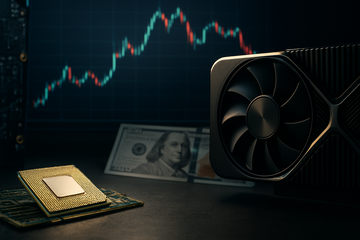
Reflection's Beam hits Chinese frontier parity with 3–4× less inference compute — and resets the US frontier's price list
On October 5, 2026, NVIDIA-backed Reflection AI unveiled Beam — a 501B-parameter sparse Mixture-of-Experts with just 23B active — claiming parity with Z.ai's GLM-5.2 on advanced reasoning at roughly 3–4× lower inference compute, with weights due under Apache 2.0 later this month. The launch positions a $4.7B US private entrant between Anthropic's premium APIs and the Chinese open-weight stack from Alibaba's Qwen, DeepSeek, and Moonshot. For investors, the read-through runs through NVIDIA's compute stack — TSMC wafers, SK Hynix HBM, Micron memory — and the Nebius and SpaceX GPU contracts Reflection has locked through 2029.
2026-10-05

Altman's 'close partner' line reset Cerebras — and re-priced the AI inference pecking order
Sam Altman's Oct. 3 reassurance put ~$4B back into Cerebras after a 20% post-IPO wipeout triggered by reports that OpenAI tapped Nvidia for GPT-6.1 Sol's Ultrafast mode. The line matters because it confirms a two-track compute stack —750MW of Cerebras wafer-scale systems for OpenAI's high-speed inference, Nvidia GPUs for the latency-tolerant tier — not a displacement story. That re-rates AMD's July disaggregation deal with Cerebras as a credible threat to Nvidia's networking moat, and it puts a $25.4B RPO floor under a stock that had lost 60% of its value since May.

Anthropic's $100M Engineer Academy Is a Pre-IPO Moat Disguised as a Training Program
Anthropic committed $100M on Oct. 2 to certify 10,000 Frontier Deployed Engineers by end-2027, drawing cohorts from Accenture, [Deloitte], [McKinsey] and the same Fortune 500 buyers already on its $2.16B cloud-marketplace contracts. With the IPO roadshow launching in mid-October and the prospectus hinging on $190-200B of 2028 revenue, the academy is a structural lock-in on the engineers who decide where the next trillion dollars of enterprise AI spend lands.

Barclays Just Handed Anthropic Its First Universal-Bank Reference — And the $2T IPO Math Just Shifted
On October 1, Barclays widened its Anthropic partnership to run Claude across software engineering, Global Markets email triage, and a colleague knowledge assistant already used by 16,000 staff — the first time a tier-one universal bank has formally anchored Anthropic for core workloads. The deal re-prices Anthropic's pre-IPO channel mix: after Charles Schwab for wealth custody and OpenAI for investment banking with Morgan Stanley, Claude now owns the wholesale bank. For Amazon, Alphabet, Nvidia and Broadcom, every Barclays query is another credit of training-grade and inference-grade compute flowing back to their multi-billion-dollar Anthropic infrastructure bets.

EliseAI's $4B Round Puts a 20× ARR Multiple on the Line — and Vivmark Residential's 184,000 Units Are Why It Might Hold
EliseAI closed a $350M Series F at $4B on Sept. 29, 2026 — a roughly 1.8× step-up from its $2.2B Series E thirteen months earlier, but a clean ~4× step from its $1B Series D in Aug. 2024. At $200M ARR, the round prices a 20× multiple on a vertical-AI vendor whose single largest demand engine just became the Vivmark Residential merger of AvalonBay Communities and Equity Residential. The investable question is whether the data flywheel compounds in EliseAI's favor — or whether RealPage and the cap-rate math on Zillow's rentals segment leave the multiple stranded.

Morgan Stanley's NVDA Top Pick Meets $947M of Insider Selling: The AI Capex Credibility Test
Morgan Stanley reinstated NVDA as its top semiconductor pick on Oct 2, 2026 with a $300 price target after meetings with Jensen Huang and Colette Kress, sending the stock to a $237.88 intraday record and a $5.7T market cap. Director Mark Stevens had already sold ~$947M of NVDA in the prior two months and Michael Burry's Q3 2025 13F still carries a $186.6M put position — the gap between sell-side endorsement and insider behavior is the live AI capex test. Bulls have Q2 FY27 revenue of $96.22B and hyperscaler capex guided to $720–745B for 2026; bears flag the insider distribution, the 24.9x forward P/E, and the circular financing behind NVDA's biggest customers.

SpaceX's SI rebrand splits the public space trade — Rocket Lab lags, EchoStar and AST SpaceMobile catch the bid
Musk's October 4 confirmation that SpaceX will rename its AI unit SpaceXSI is more than a label change — it lands inside the same five-day window as Trump's Super Intelligence executive order, the Pentagon's Project Meridian appointment and a new federal Super Intelligence Force, giving SpaceX the only policy-aligned SI brand in the constellation. Morgan Stanley still values SpaceX at $300 against a ~$167 print, leaving roughly 80% upside concentrated in the AI/SI segment the market has yet to credit. The rebrand is doing exactly what the federal SI push was designed to do: pull capital toward SI-aligned suppliers and away from pure-launch names, which is why Rocket Lab is sliding 1.9% today while EchoStar, AST SpaceMobile, Planet Labs and Iridium catch the bid.

Why Nation-State AI Espionage Became Cybersecurity's New Floor — And Three Stocks That Will Never Look Cheap Again
A Sept. 8 CISA/NSA/FBI advisory named six Chinese AI labs in an industrial-scale distillation scheme, and Anthropic's Sept. 10 threat report put a Chinese state actor on 80–90% AI-driven automation. The cyber-vendor trade just shifted from 'incident response' to 'state-actor defense floor.' CrowdStrike, Palo Alto Networks and Okta — all up 12–15% on the Sep. 14 AI safety-warning rally — now carry a structural bid. Pull-through runs to defense primes (Leidos, Palantir, Lockheed Martin), identity governance (SailPoint), and the frontier-AI S-1 channel where Anthropic disclosed 'catastrophic or existential risks.'

TikTok Just Made Social Commerce the Real Agentic Battleground — and Stripe Won the First Round
On October 5, 2026, TikTok rolled out an AI Shopping Assistant and Buy Direct one-click checkout to US users, partnered with Shopify, Salesforce, Shoplazza, and Stripe — putting the largest social-discovery graph in the world ahead of OpenAI's now-defunct Instant Checkout, Alphabet's Universal Commerce Protocol, and Amazon's Alexa for Shopping in the race to own the agentic commerce entry point. The read-through is decisive: chat-first agentic commerce failed because intent has to exist first; TikTok is the place intent gets made, and the winners are whoever owns that feed, whoever processes that tap, and whoever sits between the two.
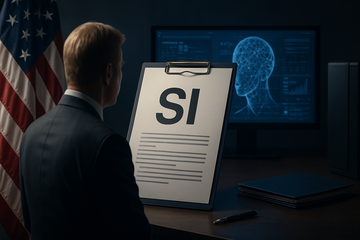
Trump's 'Super Intelligence Force' Gives Federal AI Vendors a Phrase for Contracts — Not a New Procurement Map
President Trump's October 4 launch of a Jay Clayton-led Super Intelligence Force gives Palantir, Oracle, and Nvidia a single federal term — 'SI' — they can stamp on existing contracts and task orders, but it does not authorize new budget, new solicitations, or new vendors. The procurement map underneath is the same $90.7B Department of Defense pipeline (98.9% of all 2026 federal AI contract value), the same May 1 Classified Networks AI agreements covering eight vendors, and the same Oracle-led Stargate buildout that already triggered a force-majeure notice in late September. For investors, the takeaway is that the charter resolves regulatory-uncertainty risk for incumbents while leaving the actual spending flows intact — and at Palantir's 144x trailing EV/Sales, that resolution is largely priced in.
2026-10-04

AI Agents Are Flooding the SMS Inbox—Meta's Per-Message Billing on WhatsApp AI Reveals the Real Gatekeepers
TechCrunch's October 3 catalog of text-message resident AI agents marks the end of the standalone-app era for consumer AI and the start of an inbox-native distribution war. With Meta now charging $2 per million tokens for WhatsApp Business Agent replies and per-message fees for service messages starting October 1, the new toll booth sits on the message thread, not the app icon—and Apple, Twilio, and the U.S. carriers are about to learn whether they collect, route, or lose the traffic.
Credo's 8% rally on a 29K-payroll miss is the AI capex trade's loudest 'no-landing' vote
On Friday, Credo Technology jumped 8.1% intraday after the September BLS print missed by ~60K jobs and pushed the implied probability of another Fed hike in October down 43.7 points. The market is voting that AI infrastructure has decoupled from the labor cycle: hyperscaler capex is structural, not cyclical, and a stalled macro will pull forward rate cuts rather than derail spending. We unpack the mechanism, Credo's specific leverage, and what the read-through means for Nvidia, Broadcom, Marvell and the hyperscalers underwriting the buildout.

Google Froze Its OSS Bug Bounty Until 2027 — and the AI-Slop Wave That's Rewriting Who Gets Paid to Find Flaws
On October 1, 2026, Alphabet suspended product-flaw submissions to its Open Source Software Vulnerability Reward Program after a flood of AI-generated reports buried its maintainers — the same pattern that already killed the curl bug bounty, paused HackerOne's Internet Bug Bounty, and forced Node.js to drop its program. The move exposes the structural fragility of volunteer-triage disclosure economics and tilts demand toward enterprise security vendors — Microsoft, Cloudflare, CrowdStrike, Palo Alto Networks — and AI-native scanning startups that can absorb the noise human programs can't. Investors should treat the pause as a leading indicator: when the largest open-source bug bounty in the world can't keep up with AI slop, the money follows platforms, not researchers.
What to expect
Evidence-first notes with a visible point of view.
This section collects sharp takes on earnings, shareholder meetings, and market structure. Each new piece should make the thesis, the facts, and the implications obvious within the first few screens.
Expect direct analysis, not generic commentary.
Expect the data to be explicit and the argument to be easy to follow.