Consumer
What households are actually spending on
Traffic, pricing power, trade-down and inventory across retailers, restaurants and brands — who is holding margin, and who is buying volume.
2026-11-03


2026-11-02

42AI's $62.5M Behavioral Round Came From the Founder's Family — While the Listed Ad-Tech Leader Sits 74% Below Its High
42AI, the Israeli startup that emerged from stealth on Nov 2, 2026 with $62.5 million for a behavioral world model, funded it with its founders' own money and the investment group chaired by the CEO's father — so the headline is a family commitment, not the market's price for a new category. The mechanism is a model that infers a specific customer's next decision from that customer's own transaction and support-call history, which is precisely the layer the listed market has been writing down: The Trade Desk sits 74% below its 52-week high on 3.0% revenue growth, and Similarweb trades at roughly 2.7 times sales while still losing money. For public investors the exposure is the compute and the buyer of record — NVIDIA, whose fiscal Q2 2027 revenue rose 105.9%, and Interactive Brokers, whose quarterly revenue grew 18.1% — plus the unresolved legal question of inferring motives from client records without explicit consent.

The Agent Fee Is the Prize, Blocking Is the Defense — and JPMorgan Chase's New Terms Send the Fraud Bill to Shared Passwords
Retail and banking have split into two camps on AI shopping agents: platforms that charge for the transaction, and platforms that refuse it. OpenAI already takes 4% of ChatGPT checkout sales on top of Shopify's fees, while Amazon and JPMorgan Chase shut the door and push the risk onto the customer who shared a password. Detection is the weak link — third-party tools catch only 3.1% to 14.8% of disguised agents — so whoever owns the consent layer will own the transaction. For investors the near-term money is in the rails and in the platforms building gates; the near-term risk sits with anyone whose revenue depends on a checkout they did not build.

Publishers Just Moved the “AI Scraping” Fight Into Federal Court—Turning the AI Content Toll Into a Paywall Bypass Liability
A New York federal lawsuit accuses Brave of scraping publishers’ copyrighted pages, bypassing paywalls, and distributing the resulting content to downstream AI companies. The market impact is less about model training economics and more about who controls the “last-mile” web access layer—where Cloudflare, Akamai, and browser/edge security vendors can become the nearest courtroom winners or collateral damage.
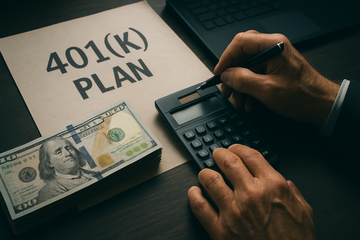
The IRS Sets the Withdrawal Amount at 75 — and the Biggest Savers Are Converting It Away
A November 1, 2026 explainer made a tax mechanic visible: once a 401(k) holder turns 75, the IRS — not the owner — sets the size of every annual withdrawal, and missing it costs a 25% excise tax. The same rule that forces the withdrawal creates the incentive to route around it, and the savers with the largest balances are converting to Roth before the first distribution rather than drawing one down, splitting America's $51.2 trillion retirement market into two opposite flows. The consequence for investors is specific: custodians collect the relocated assets, annuity writers collect the forced withdrawals, and the negative equity-fund flow tape is mostly a wrapper rotation rather than retirees fleeing stocks.
Twilio Beat on EPS by 12% and Fell 15%: Carriers Repriced the Toll Before Agents Reprice the Volume
Twilio's third quarter was a record on every line — $1.56 billion of revenue, $1.65 of non-GAAP EPS, $369.6 million of free cash flow — and the shares still fell 15.2% to $205.03 because Q4 organic growth was guided to 11–12% against 16% in Q3. The reason is mechanical rather than mysterious: $53 million of new U.S. carrier pass-through fees landed in the quarter, roughly $245 million is expected for 2026, and that alone cuts about 200 basis points of gross margin while adding no software margin at all. The market is no longer paying for messaging volume; it is paying for who sets the toll on an agent-driven conversation, and in 2026 that is the three national carriers plus the two platform owners. At roughly 26 times trailing free cash flow, the price still assumes the toll is temporary, which is the assumption worth testing.
2026-11-01
Crocs' 25% Earnings Jump Was Mostly a Court Refund and a Buyback: Only the Brand's Own DTC Channel Still Keeps the Full-Price Consumer
Crocs' shares closed at $150.26 on Oct 29, 2026, up 25.5% after a quarter in which revenue rose 4.6% and adjusted EPS of $3.69 beat a $3.30 consensus. But $64.07 million of non-recurring IEEPA tariff refunds accounted for 614 of the 770 basis points of GAAP gross-margin expansion, and roughly 53% of the adjusted EPS increase came from an 11.2% smaller share count. The durable signal is where the profit landed: enterprise direct-to-consumer revenue grew 6.9% while Crocs Brand wholesale slipped 0.5%, and management is now deliberately moving North American volume out of its own channel and into wholesale. In the same window, DICK'S Sporting Goods cut FY2026 EPS guidance to $11.00-$12.00 and its shares fell about 31%, while off-price TJX raised margin guidance on 4% comparable sales and banked a $219 million net refund benefit. With DRAM and NAND prices rising double digits every quarter and device units set to fall, the household budget funding branded footwear is the contested resource — and this quarter the branded-direct model kept it.

DoorDash counted 'several hundred' AI-agent orders against 993 million — the first hard volume check on a $93 billion agentic-payments market
On its third-quarter earnings call on Oct 29, 2026, DoorDash said third-party AI agents have produced 'maybe several hundred orders in total' against 993 million orders placed in the quarter — fewer than one agent order per million. It is the first company-sourced demand figure for agentic commerce, and it arrives while Visa, Mastercard, Shopify and Walmart have all shipped agent infrastructure without disclosing a single agent transaction. The rails are being built for a buyer who has not shown up, so the money is still accruing to whoever owns the checkout. DoorDash's own answer was not an agent: a $17 billion agreement to buy Maplebear, the operator of Instacart, at a 26% premium.

Meta's Ads Now Match Alphabet's Search Line — the AI Ad Dividend Has a New Owner
In one quarter, Meta's advertising revenue ($63.06B) came within $289 million of Alphabet's entire search business ($63.35B), because AI recommendation is monetizing outcomes while AI answers are quietly consuming the clicks search sells. Meta's auction cleared 14% higher prices on 10% more impressions; Alphabet's cleared 4% higher cost per click on only 8% more clicks, even as query growth hit a five-year high. The market is already repricing that divergence, but it is still paying for the wrong layer: the incremental ad dollar is captured by platforms and chipmakers, and funded at both companies by negative free cash flow ($85.3B of combined quarterly capex, -$10.2B combined free cash flow).
2026-10-31
Apple's Nov. 2 Print: Consensus Wants $113 Billion, but the 47%–48% Margin Guide Hides a 160-Basis-Point Step-Down
Apple reports fiscal Q4 2026 on Nov. 2 with consensus at $112.95 billion of revenue and $1.98 of EPS, inside the upper third of its own guided range, so the September quarter is close to mechanical. The number that decides the stock is gross margin: Apple's 47%–48% guide carries about one point of tariff refunds, June's 50.1% carried two, and stripping both leaves underlying margin roughly 160 basis points lower in a single quarter. The mechanism is a quarterly memory contract reset — Apple has already accepted 2027 DRAM near $2.00 per gigabit, up 30% to 40% — so the bill peaks in the March 2027 quarter, and John Ternus's first December-quarter guide is the first chance to price it. Meanwhile the memory makers capture the inflation at 80% to 87% margins while Apple pushes the cost onto its panel suppliers and onto consumers.

China's Record 22% Auto Collapse Is a Subsidy-Formula Failure — and 8.2 Million Exports Now Set the Floor Under US Prices
China's passenger-vehicle market is on course for its worst year ever: the China Passenger Car Association now forecasts 18.5 million units in 2026, down 22%, below even the 19.29 million trough of 2020. The cause is policy arithmetic — the 2026 trade-in subsidy pays a percentage of the car's price under an unchanged cap, so the buyer of a RMB 70,000 car collects RMB 8,400 where the old fixed rule paid RMB 20,000, and new-energy purchase-tax relief was halved on January 1 after pulling 2025 demand forward. Capacity with no home is going overseas, with 8.21 million vehicles shipped in nine months, up 65.8%, which flattens prices in third markets and queues Chinese plants in Mexico and Canada. BYD and Geely Automobile are converting that into record export earnings, while SAIC Motor, General Motors, Ford and Tesla carry the cost of the adjustment.
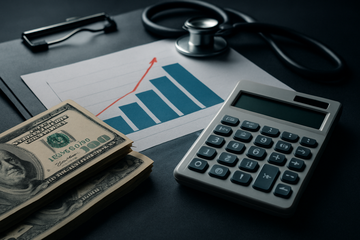
Wages Grew at Their Slowest Pace in Five Years. Benefits Grew Faster.
The Q3 employment cost index, released October 30, shows private-sector compensation up 3.4% over the year, but the composition flipped: wages and salaries added 3.1% while benefit costs added 3.9%, the second consecutive quarter in which benefits outran pay. The engine is employer health insurance, up 6.4% over the year, with single-coverage premiums rising 8.5% and family premiums 7.6% — the largest increases since 2010. That complicates the December hike rather than confirming it, because the Fed's own September minutes show the hawkish case resting on tariffs, energy and AI-linked goods rather than wages. It also reshapes where margin relief lands: Walmart's US operating expenses deleveraged 72 basis points on healthcare and claims costs, HCA Healthcare held salaries and benefits to 43.2% of revenue, and Delta Air Lines saw salaries rise 9% against a 3.1% national wage print.

Self-Storage Just Beat and Raised — and the AI Buildout Is Starving Its Supply
All three major self-storage landlords raised 2026 guidance inside five days, and CubeSmart's Q3 print on Oct. 29 was the cleanest: $0.66 of FFO per share against a $0.65 consensus, same-store NOI up 2.1% and occupancy up 60 basis points. The engine is supply, not consumers —2026 deliveries are the smallest since 2016 while AI campuses bid up the same land, labor and power. The fashionable \"storage land is an AI-campus option\" story turns out to be real but narrow: two Pennsylvania land deals 60 miles apart price the same asset 23x apart, so the trade is the NOI inflection, and at 16.5 times guided FFO the equity has already paid for it.
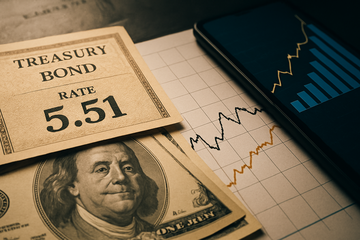
The 5.51% I-Bond Beats the 4.94% 10-Year — and Vanishes in Real Terms
Treasury's Oct. 30 reset hands savers a 5.51% inflation-linked, tax-deferred yield while the 10-year note yields 4.94%, and the headline inversion dissolves once you convert to real terms: the bond's guaranteed 1.40% fixed rate sits 152 basis points below the 2.92% real yield the market demands on 10-year TIPS. What actually survives is the tax treatment — roughly 45 basis points at a 22% federal bracket, closer to 70 for a top-bracket saver in a state that taxes interest — plus a new anchor for deposit pricing. This is not a repricing of federal funding: savings bonds are 0.5% of debt held by the public and each saver can buy only $10,000 a year. The investable consequence is which balance sheets absorb the squeeze: deposit-funded lenders and money-fund sponsors on one side, core-deposit banks and inflation-protected fund vehicles on the other.
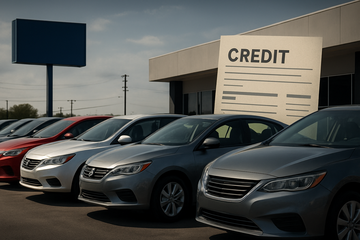
Car-Mart's 82% Collapse Is a Credit Migration, Not a Credit Crunch: Subprime Credit Moved, and $30,000 New Cars Are Now the Tightest Thing on the Lot
America's Car-Mart sold 2,450 retail vehicles in the quarter ended July 31, 2026, down 81.9% year over year, and its Form 10-Q carries a liquidity and going-concern note. In the overlapping quarter, Credit Acceptance originated $3.46 billion of subprime loans, up 51.0%, and wrote business for 12,093 dealers. Subprime lending did not shrink; it moved off dealer balance sheets that reserved 24.74% of net receivables against losses onto lender balance sheets that reserve 3.07%. Because a lender rather than a dealer now holds the paper, a deep-subprime buyer can be financed into a $25,000 new car instead of a $19,000 used one, which is why cars priced at $30,000 or less carry just 63 days of supply against 82 days for the market. The bill arrives in 2027 as gross profit per unit, not as unit sales.
2026-10-30

Royal Caribbean Locked 2027 Fuel at $405 a Ton. Carnival Pays $896 — and the Hedge Book Decides Who Owns 2027
Brent closed at $112.21 on Oct 30, 2026, up 73% from a year earlier, and the three big cruise operators are now running three different fuel books. Royal Caribbean has already bought 53% of its 2027 consumption at roughly $405 a metric ton and will book a $159 million unrealized hedge gain within twelve months of Sep 30, 2026; Carnival hedges nothing, paid $826 a ton in its fiscal third quarter and $896 a ton guided for its fourth, and declined to guide 2027 at all; Norwegian Cruise Line bought protection late and dear at $559 a ton on the thinnest earnings base in the group. Run each company's own 10% fuel test across 2027 and earnings at risk range from about $68 million at Royal Caribbean to roughly $243 million at Carnival — so the 2027 margin race is fought in the hedge book, not at the booking window.
OpenAI Doubled ChatGPT's Usage Limits After a Revolt — and Its $500 Tier Now Gives Back $500 in Free API Credits
OpenAI cancelled the 50% usage cut it had announced for ChatGPT Pro 200 on Sept. 29, 2026, then doubled Work and Codex allowances on every paid Pro tier and on Business Premium effective Oct. 29 — a month-long retreat from a price-discrimination move it never had to test, because it cut quantity rather than price. A day before the reversal it began handing Pro and Business subscribers API credits worth exactly their subscription price ($100, $200 or $500 a month), so the top rung of the ladder now works as a pre-sold block of inference capacity. The money follows the compute: Microsoft booked $10 billion from OpenAI arrangements in a single quarter against a $38 billion cap, Anthropic's Oct. 26 S-1 prices frontier AI on consumption rather than subscriptions, and the compute chain — NVIDIA, SK hynix, Oracle, CoreWeave — is where the margin sits.
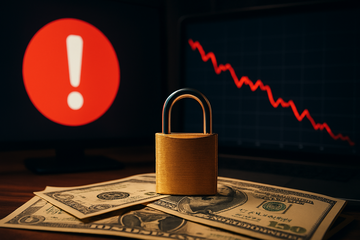
Reddit's Login Gate Is the First Real Price on Human Data — and the Market Just Marked It Down 28%
Reddit will test a logged-in-only experience in select markets outside the US from Q4 2026, and the equity is being repriced for what that costs: shares traded at $93.60 at 11:24 a.m. ET on October 30, a new 52-week low, after an 18% after-hours drop on the company's warning that daily uniques could fall by a double-digit percentage in Q4. The gate itself is cheap for the advertising business — logged-out visitors are 59% of the 130.3 million daily audience but the app and logged-in cohort produce more than 80% of revenue — so the real question is what Reddit can charge for the human data behind the wall. Data licensing grew 35% to $48 million in Q3 2026 on two counterparties, while Getty Images' Chapter 11 filing and Shutterstock's collapsing data business show that only live, attributable conversation earns a premium. At roughly 12.5 times trailing free cash flow with $3.03 billion of cash and marketable securities, the tollbooth option is close to free — if the audience does not melt down first.

The 22% Social Security Cut Nobody Prices: $345 Billion a Year With No Buyer, and Who Catches It
The 2026 trustees put a date and a percentage on the trust-fund cliff: the OASI fund empties in the fourth quarter of 2032 and pays 78 cents on the dollar of scheduled benefits, while CBO models a 26% cut by mid-2032. Priced against today's retirees that is roughly $345 billion a year, 1.1% of GDP, and it evaporates — no bondholder, no fund, no offsetting receiver. Households can absorb 0.2% of their financial assets, which is exactly why Washington defers and why the guarantee migrates to private insurers, where retail annuity sales just set a record $464.1 billion. The investable question is therefore not the 2032 date but who is paid to stand behind retirement income in the meantime, with the November 3, 2026 midterms as the first catalyst.

OpenAI's roll-up bought ADT for $10 a share — the house just became an AI agent's execution layer
Thrive Holdings, the OpenAI-backed holding company Joshua Kushner spun out of Thrive Capital, agreed on Oct. 29, 2026 to take ADT private for $10.00 a share in cash — roughly $7.6 billion of equity and $15.3 billion of enterprise value, financed by Apollo-managed funds with no financing condition and expected to close in the first quarter of 2027. The strategic prize is physical: 6.1 million monitored homes, UL-listed monitoring centers, a dealer installation network and a human dispatch chain that an AI agent can act through. But the price tells you what the market thinks of the software story: 5.7x trailing EBITDA against roughly 4.8x before the bid, so about $2.4 billion of enterprise value sits above the pre-deal multiple — the AI option was bought nearly free. That leaves the hard part: recurring monthly revenue of $360 million is shrinking, gross customer revenue attrition has risen to 13.1%, and the announcement promises unchanged data policies and no new data sharing — so the payoff has to come from cheaper monitoring and better retention, not from selling household data.
What to expect
Evidence-first notes with a visible point of view.
This section collects sharp takes on earnings, shareholder meetings, and market structure. Each new piece should make the thesis, the facts, and the implications obvious within the first few screens.
Expect direct analysis, not generic commentary.
Expect the data to be explicit and the argument to be easy to follow.