Consumer
What households are actually spending on
Traffic, pricing power, trade-down and inventory across retailers, restaurants and brands — who is holding margin, and who is buying volume.
2026-10-27


A Judge Let Eli Lilly's Ads Keep Running. Novo Nordisk's Own Numbers Say Ads Were Never the Problem.
On October 26, 2026, U.S. District Judge Zahid Quraishi denied Novo Nordisk's request to block Eli Lilly's weight-loss commercials — the opposite of the trade many read into the case — and in doing so found the ads had at most 'a negligible market impact' on Novo's prescriptions. The real driver of U.S. obesity share is price and format, not comparative claims: Novo Nordisk's US Wegovy injectable sales fell 17% at constant exchange rates in H1 2026 while it cut sales and distribution costs 16.5%, even as Eli Lilly bought 37% US volume growth with a 3% price cut. For investors the ruling is a footnote; the damage is being taken downstream, where cash-pay gross margin fell to 64%, while the suppliers of doses and components get paid regardless of whose commercial runs.

Syngenta's $66 Billion Ask Puts 15x EBITDA on Ag Chem While Corteva Trades at 3x
Syngenta's advisers are targeting at least $66 billion for a Hong Kong listing priced at 15 to 20 times 2026 EBITDA, after a confidential filing that would make it the city's largest IPO since 2010. The ask sits far above every listed comparable: Corteva trades near 3 times trailing EBITDA and FMC's trailing EBITDA is negative, while Nutrien is on 7 times and CF Industries under 5. The deal is therefore a referendum on whether ag chemicals can re-rate above their own cycle, and it hands a Chinese state owner a $5 billion to $10 billion partial exit at a multiple no Western peer can match.

Walmart Gave AI Agents a Spending Cap and a Login — Which Makes the Retailer, Not the Model Lab, the Owner of the Transaction
On October 21, 2026, Walmart said third-party AI assistants could shop Walmart and Sam's Club on a customer's behalf inside a customer-set spending limit, with approval required by default and no card data ever handed to the agent. The mechanism is a Model Context Protocol gateway, per-agent profiles, and terms that block non-compliant agents — the point-by-point answer to the three objections Amazon used to shut Meta's Muse out of its own store. The prize is attribution: agent checkouts convert at roughly one-third of click-outs, so the value of agent traffic depends entirely on whoever keeps the receipt and can price the ad against it, which is the retailer. For investors the trade is authorization — networks and checkout layers get paid on every delegated purchase, platforms risk losing the impression, and brands lose the customer relationship they used to own.
2026-10-26

Record Diesel Is Now a Delivery Fee: The Crack Spread Reaches the Front Door Before the Fed's December Hike
Diesel at $6.276 a gallon in the week ending Oct. 19, 2026 — a quarter of a dollar below the record set the week ending Sept. 21 — is being priced into holiday delivery fees, not just into pump prices: FedEx, UPS and Amazon Shipping all switched on holiday surcharges between Oct. 25 and Oct. 26, on top of fuel charges that reset weekly against the national diesel average. The engine is a refining constraint, not an oil price. The diesel crack spread has held above $100 a barrel since Sept. 1 for the first time in 2026 and stood at $113.24 on Oct. 20, while September producer prices showed gasoline up 20.3% in a month and final demand up 6.3% from a year earlier. That print is why the Fed raised rates on Sept. 16 to 3.75%-4.00% and why every economist polled expects another quarter-point on Dec. 9. The money has one destination: refiners booked $8.8 billion of refining operating income in a single quarter at a $39.24-a-barrel margin, while carriers, truckers and retailers carry the rest of the crack on their price tags.
Grok Shipped Seven Minutes of AI Video. A Finished Minute Now Costs More Than 175x What It Sells For
xAI's Grok Imagine published Episode 1 of an AI-generated Odyssey series on Oct 23, 2026 — 7 minutes 12 seconds, made with a partner studio and a director, three months after promising a full-length feature. The runtime is the headline; the unit economics are the story. Generating a finished minute costs $13 to $220 at the model layer, while the only AI-native feature sold to consumers prices at $9.99 for 135 minutes, or seven cents a minute, so a finished minute costs at least 175x what it fetches. The margin in this chain is accruing upstream and to rights holders — NVIDIA's data-center revenue reached $89.0 billion last quarter and Micron earned an 86.8% gross margin — while the studio layer is still waiting for a buyer. For investors, generative video is a compute-and-rights trade today, not an entertainment trade.

Agentic Commerce Will Not Be Settled on Oct. 29 — Mastercard's Growth Mix Will, and the Market Already Paid $93 Billion for It
Mastercard reports third-quarter 2026 results before the open on Thursday, Oct. 29, and the print cannot settle whether agentic commerce adds volume: neither network discloses agent-initiated transaction counts, and Mastercard's own research puts routine agent buying at roughly one in ten shoppers only by 2030. What Oct. 29 can settle is the growth mix — currency-neutral value-added services revenue grew 18% in the June quarter against 8% for the payment network — and the stock has already re-rated from roughly 28 times to roughly 34 times trailing earnings since June 30 even as Brent closed at $116.72 and the 10-year sits near 5% with every economist polled expecting a December hike. Visa prints on Oct. 27 and American Express already said on Oct. 23 that the premium consumer is still spending, so a soft mix on Oct. 29 lands on an expensive stock with no macro excuse left.
4,300 Failed Price Checks in 23 States: Dollar General's October Settlement Is the Playbook Every Grocer Now Faces
New York's attorney general settled with Dollar General on October 13, 2026 for $1.875 million over shelf-versus-register overcharges, and the size of the payment is the least important part of the deal. What the company agreed to build — scheduled shelf-tag updates, independent secret-shopper audits and reformatted receipts at more than 600 stores — is a compliance architecture other state prosecutors can lift wholesale, and it is now the working template for grocers, clubs and quick-service chains. With the disclosed enforcement bill at roughly 0.8% of trailing operating profit but the pricing file under a microscope in a growing list of states, the trade is not the fine. It is whether a trade-down retailer can still raise shelf prices without documenting, in its own systems, the case against it.

Verizon raised guidance a third straight quarter without raising capital spending — the AI backhaul bill is being paid by copper retirement
Verizon reported third-quarter 2026 net income of $5.3 billion, adjusted earnings of $1.31 a share and free cash flow of $7.8 billion, then lifted full-year guidance for a third consecutive quarter while holding 2026 capital spending at $16.0 billion to $16.5 billion — a range below every year since 2023. The funding comes out of the legacy network: AT&T is running copper service down to 1% of eligible customers, counting on $4 billion of annual savings by the end of 2028, and moving half of a new wholesale fiber platform to GIP and CPP Investments in a joint venture that closes in the first half of 2027. Meanwhile Verizon has ordered more than 80 million miles of fiber from Corning for 2027 through 2032 and sold Google more than $1 billion of dark fiber. The capital is rotating out of the carriers' build programs and into the fiber supply chain and contracted hyperscaler demand.
2026-10-25

2026-10-24
American Express Won on Credit, Lost 3.7% on Earnings Quality, and the Agentic Toll Is Still Not in the Billings
American Express reported third-quarter 2026 net income of $3.71 billion on Oct. 23, beat the $4.51 adjusted EPS consensus with $4.68, and still closed 3.68% lower at $313.22 while Visa slipped 0.6% and Mastercard fell 0.5%. The market was not selling credit: AmEx wrote off 1.8% of consumer balances, held total delinquencies in a 1.2%-1.3% band for a fifteenth quarter, and grew net card fees by more than $400 million — it was selling earnings quality, with reported EPS up 31% on a $982 million travel-stake gain and an 18.1% tax rate against adjusted EPS up 13% on revenue that missed by about $54 million. The agentic-payments leg investors keep pricing is real in standards and absent in numbers: the only published agentic rails have settled roughly $15.0 million across 109.6 million transactions, so the investable expression sits in fee-and-credit compounders and the trust layer, not in an agentic revenue line that no network yet reports.
Alimentation Couche-Tard Is Buying 2.76 Billion Gallons Below Its Own IPO Mark, Days Before the Pump Price Becomes a Ballot Issue
Alimentation Couche-Tard has offered $7.5 billion to $8 billion for Cumberland Farms, the convenience-store group formerly known as EG Group — 11% to 17% below the roughly $9 billion valuation the owners were carrying into a Nasdaq listing they have since postponed. What matters is not the $8 billion but what sits underneath it: West Texas Intermediate at $103.44 and the national pump price at $4.2957 a gallon have turned the price at the pump into an election variable days before the November 3 midterms, while the target's own gallon count has fallen for three straight years. At roughly 19 times FY2025 adjusted EBITDA once $5.79 billion of target debt is added, the bid is a leveraged bet that the political fix arrives through new refining capacity rather than through a lower pump price.
Etsy Just Banned AI-Generated Recipes. Its Sellers Grew 5.9% Last Quarter While Its Buyers Fell 0.4%
Etsy's October 22 ban on AI-generated patterns, recipes and bot-built listings is the first large marketplace to police the artifact rather than the disclosure, and it is also an admission that supply-side AI is degrading the search index it monetizes. The mechanism is visible in the June quarter: active sellers grew 5.9% to 5.71 million while active buyers slipped 0.4% to 87.0 million, so listings are compounding faster than the demand that has to sort them. Because Etsy takes 25.9 cents on every dollar of GMS and roughly half of its recent take-rate expansion came from ad impressions on a growing listing pool, cleaning that pool is a deliberate trade of near-term inventory for long-term conversion. The first read on whether that trade works arrives with the October 28 print, and the first read on its cost arrives in February 2027.

Kering's 16.6% Crash Killed the 'Luxury Is Immune' Trade: China's Luxury Dollar Is Rotating, Not Vanishing
Kering closed at €178.12 on October 23, 2026, down 16.6% in its worst trading day on record, after third-quarter revenue of €3,345 million slipped 1% on a comparable basis — a small miss that exposed a larger problem: Asia-Pacific retail fell 8%, Mainland China was named the main headwind, and management conceded that footfall, not price, is the binding constraint. What broke was the narrative: after promising a return to growth in February and declaring 'back to growth' in July, Kering dropped its growth objective, raised its closure target from 100 to at least 125 net stores, and answered a demand question with a footprint question. The evidence says the Chinese luxury hole is brand-selective rather than universal, with American houses, quiet-luxury labels and gold jewellery absorbing spend that European logos are not winning, so 'luxury is immune to the oil shock' was never a sector hedge, only a brand-selection trade. The read-through is constructive for Ralph Lauren, Prada Group, Chow Tai Fook Jewellery and Simon Property Group, and uncomfortable for Capri Holdings and Estée Lauder, which report next.
Nine Lines Reopen, the 50% Wall Stays: Trump's Canada Rollback Is Priced by One Senate Race
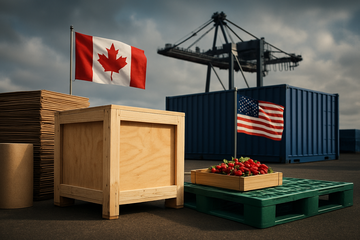
On October 23 the White House carved nine categories of Canadian goods — plywood sheets, corrugated paper, packing crates and boxes, refrigeration equipment, machinery, plastic bags, seaweed and algae — out of the 50% Section 338 tariff while adding certain valves, carpets and waste products to the list, effective October 30. No rate moved: the 50% statutory ceiling under 19 U.S.C. 1338, the Section 232 metals and lumber duties, and Canada's C$27.6 billion counter-tariff list all stay in force, so autos, dairy, alcohol and aluminum remain shut. The exclusions map precisely onto the inputs Maine's blueberry, potato and apple growers need from Canada, and Sen. Susan Collins' race against Troy Jackson — tied 49-49 in a poll taken Oct. 16-20 — is the clearest reason the list moved when it did. The investable consequence is asymmetry, not détente: US buyers of Canadian crates, machinery and refrigeration get relief, Canadian retaliation keeps squeezing US exporters, and non-US suppliers of beer, wine and farm equipment take share in a market where US brands are being delisted.

Trump's Economy Approval Just Fell to a Net -31 — Which Puts the Record Refining Spread in the Crosshairs Before Nov. 3
Economic approval has collapsed to a net -31 — 34% approve, 65% disapprove — the lowest of either term, with gasoline at $4.29 a gallon and headline CPI at 3.7%. The president has already ruled out the only lever that moves pump prices, saying oil will not come down until after the Nov. 3 election, so any pre-election relief has to arrive as a transfer rather than a price cut: IEEPA tariff refunds already banked in Target and PepsiCo numbers, and an Oct. 22 housing order that trims mortgage fees but leaves the rate above 7%. That makes Valero Energy's record $39.24-a-barrel refining margin the political target, leaves Delta Air Lines with a $4.25-a-gallon fuel bill it cannot pass on, and hands builders like D.R. Horton an order aimed at the wrong variable. The investable read: own the transfer, fade the spread, and treat mid-November's spending prints as the real referendum.

Volvo's Autonomy Push Is Funded by a China Demand Hole: SEK 3.7 Billion Q3 Loss, SEK 8.9 Billion Cash Burn
Volvo Cars expanded its autonomy partnership with NVIDIA on Oct. 15, then reported on Oct. 23 a core operating loss of SEK 3.7 billion, EPS of SEK -1.63 and China revenue down almost 50%. The hole is structural rather than seasonal: Greater China deliveries fell 40.6% and the ICE base that carried the region's margin halved, while the units that survived were the low-priced electrified ones. With free cash flow at SEK -8.9 billion and net cash of roughly SEK 1 billion, a door-to-door autonomy stack is now being funded out of a shrinking revenue base, which turns seat economics into the real story. NVIDIA is insulated by scale, Mobileye and Autoliv are levered to the volume that just vanished, and Polestar is the second casualty.
2026-10-23

Airlines Absorbed $6.1 Billion of Extra Fuel in One Quarter: The Elasticity Test Says Cost Shock, Not Demand Shock
US carriers took roughly $6.1 billion of additional fuel expense in the third quarter of 2026 and pushed most of it into fares — airline fares rose 22.4% year over year in September and Southwest Airlines's average fare jumped 26.9% to $231.69 — yet United Airlines recovered only 72% of its $1.8 billion fuel increase and three of the four big carriers cut guidance. The mechanism matters more than the headline: airlines hedge crude rather than jet fuel, so the record $57-a-barrel crack spread passed straight through to fuel bills and was collected by refiners, where Valero Energy earned a $39.24-a-barrel refining margin and a record $6.8 billion quarter. Because capacity was rationed rather than demand destroyed — load factors moved half a point — this is still a cost shock, but the balance sheets that can carry it are unevenly distributed, and the same fuel spike is moving freight off trucks onto rails.

Canva's First Image Model Attacks Adobe's Seat Pricing From Below — and the Real Story Is Cost, Not Quality
Canva's in-house image model, released Oct. 22, 2026, lands fourth on the DesignArena leaderboard behind three OpenAI models — which is precisely why it matters. Canva built it because its own AI bill had broken the SaaS economics of a free-to-create design: cost of goods to serve went from cents per month to many more cents, and the company cut its 2026 growth guide from 30% to 20% while its backers marked it down 17% to $34.9 billion. The model is a margin repair that also creates a new supply line, because Canva now sells the same generation capability it used to rent from OpenAI, Alphabet, ByteDance and Meta through its Connect API and a coming MCP server. For investors the read-through is that creative software is unbundling from the seat to the asset: Adobe is absorbing inference inside its cost of subscription revenue (+24% year over year against 13% revenue growth), Figma has already halved the price of its own AI credits and warns in its 10-K that customers may move off seats entirely, and NVIDIA and Amazon get paid to serve whatever model wins.
2026-10-22

Claude Duet Reads 6,000 Apps but Cannot Move Your Money: Anthropic's Pre-Filing Agent Sends the Toll to Plaid and Visa
Anthropic's Claude Duet, launched Oct. 21, 2026 as a US-only research preview days before its public S-1 is expected to land, turns a chat window into an always-on agent that reads email, calendars and business ledgers, then pays merchants through Stripe Link or Shop Pay. The asset it assembles is not a better model but a permission graph: more than 6,000 connectors, a live Intuit integration and a Plaid bank rail that ChatGPT and Meta's Muse also rent. Because Anthropic blocks transfers between accounts and securities trading, banks capture nothing while the aggregator and card networks capture the toll, which is why Visa and Nvidia sit on the winning side of this launch and the software an agent merely reads, Intuit and HubSpot, have already been repriced.
Musk Put $1 Billion Into Skydance. The $47 Billion Equity That Built the Deal Is Already 35% Underwater.
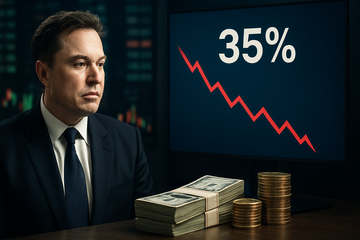
Elon Musk's reported $1 billion investment in Skydance Corporation lands 16 days after the $110 billion Warner Bros. Discovery merger closed, and it lands on a capital stack whose equity has already lost $16.2 billion in value. Skydance raised $47.01 billion of private equity at $12.00 a share on October 6 and now trades at $7.86, so the syndicate that financed the deal — the Ellison family, RedBird, board member Laurene Powell Jobs and now Musk — sits on a 34.5% paper loss that Musk's cheque covers by about 6%. The market's reaction makes the point: the stock rose 10.9% on October 21 on reports of a SpaceX business tie-up, then round-tripped the entire move on October 22 when the cash actually arrived. Investors should treat Skydance's equity as a thin option on a deleveraging plan, and should locate the real balance-sheet risk with the Ellison family and Oracle rather than with Musk.
What to expect
Evidence-first notes with a visible point of view.
This section collects sharp takes on earnings, shareholder meetings, and market structure. Each new piece should make the thesis, the facts, and the implications obvious within the first few screens.
Expect direct analysis, not generic commentary.
Expect the data to be explicit and the argument to be easy to follow.