Consumer
What households are actually spending on
Traffic, pricing power, trade-down and inventory across retailers, restaurants and brands — who is holding margin, and who is buying volume.
2026-10-21

A rare airline quarter where revenue surged and the stock still lost money: Alaska Air Group shows fuel math—not demand—decided the GAAP bridge
In Alaska Air Group’s Q3, revenue rose 14% on only a 2.4% capacity build, yet GAAP still landed on a $147M net loss. The key investor takeaway is that management’s Q4 fuel guidance implies a larger loss risk even as unit economics improved—while Hawaiʻi demand softness was explicitly called out as an operational drag.
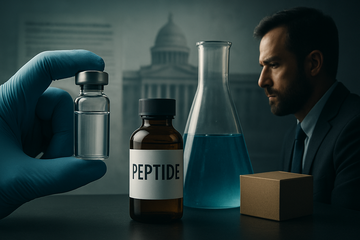
The $2–3B Peptide Marketplace: Washington Is Building the Channel the FDA Is Prosecuting, and Hims & Hers Owns the Toll Booth
HHS and the FDA filed an 'Interim Access Policy for Compounding Using Certain Peptides' with the White House on Oct. 14, 2026, and on Oct. 20 HHS Secretary Robert F. Kennedy Jr. said the administration wants a regulated peptide marketplace with factory inspections — six weeks after the FDA started posting warning letters against the online peptide sellers. The mechanism is enforcement discretion, not approval: no peptide becomes legal, but qualified pharmacies can compound six of them without being targeted, and state boards plus marketplace operators become the de facto regulators. For Hims & Hers, which is already validating peptide APIs in Menlo Park and plans to sell peptides before year-end, that is a distribution channel into an estimated $2–3B market; for Novo Nordisk and Eli Lilly, the immediate threat is nil because compounded GLP-1s stay out of scope — the risk is the template. The first checkpoint is the Nov. 9 Hims & Hers print.

Housing Starts Missed for a Third Straight Month at 1.22 Million — With December's Hike Priced In, Only Spec-Light Builders Keep Their Margin
September housing starts came in at 1,221,000, about 6% below the 1.3 million consensus and a third straight monthly decline, while builder sentiment fell to 29, the lowest since June 2012, and futures kept roughly an 89% probability on a December Fed hike with the 10-year Treasury near 5.08% and the 30-year mortgage at 7.52%. That is a rate-lock regime, not a volume regime: the margin now belongs to the builders with the least finished spec to discount, not the ones with the most land. D.R. Horton closed 23,983 homes with roughly 7,600 finished homes unsold, and Lennar printed a 15.8% home-sale gross margin while spending 12% of sales price on incentives, about $44,600 a home. No cut repairs this, because the binding constraint is the roughly $890-a-month gap between a pre-2022 mortgage and today's rate, and a resale market that has stopped turning over.
Netflix's Cash Utility Rests on a $2.8 Billion Breakup Fee — and the Ad Engine Just Missed by $300 Million
Netflix beat on third-quarter earnings, then guided fourth-quarter revenue to $13.44 billion and earnings to $0.67 a share — both below consensus — and cut its 2026 advertising forecast to about $2.7 billion from about $3.0 billion. The defense that carried the stock through a 25% drawdown, that Netflix is a self-funding cash utility, does not survive the balance sheet: trailing free cash flow of $11.4 billion contains a $2.8 billion termination fee from the abandoned Warner Bros. Discovery deal, nine-month buybacks of $10.8 billion have outrun cash generation of $9.5 billion, and net debt has risen $4.8 billion in two quarters. With advertising now the only second monetisation cycle Netflix has, and Alphabet's Asia-Pacific ad base alone running at roughly $77 billion a year, the ad tier has to work — and it just missed by $300 million.
2026-10-20

Equifax Cut $80M From Its Own Revenue Guide and Rose 11%: The Credit Tollbooth Is Paid for Margin, Not Stress
Equifax reported Q3 2026 revenue of $1.693 billion (up 10%) and adjusted EPS of $2.26 on Oct 20, 2026, then trimmed full-year revenue guidance by $80 million to a $6.661 billion midpoint while leaving the adjusted EPS midpoint essentially untouched at $8.50 — and the shares closed up about 11% at $176.54. The mechanism is cost-out and pricing, not credit stress: the AI savings target doubled to $150 million, the EBITDA margin guide excluding FICO royalties rose to +100 basis points, and a $0.99 VantageScore mortgage score is moving the score royalty from Fair Isaac to the bureau owners. Meanwhile the lenders whose credit was supposedly deteriorating reported cleaner consumer credit — JPMorgan's card net charge-off rate at 2.91%, Wells Fargo's consumer charge-off rate down to 0.70% — so nobody was paid for stress. The investable read: this is a margin-and-rate trade, not a hedge against consumer credit, and TransUnion's Oct 27 print plus Fair Isaac's early-November fiscal Q4 are the next tests.
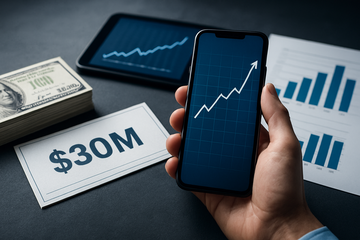
Tolan Raised $30M at a $268M Mark. Two Years Ago Google Paid $2.7 Billion for the Same Idea.
Portola, the maker of the Tolan companion app, raised $30 million on Oct 19, 2026 at a PitchBook-estimated valuation above $268 million — roughly 11x to 27x an undisclosed ARR that sits somewhere in the double-digit millions. Six days before that announcement, a court filing put a hard number on the other side of the same trade: The Walt Disney Company agreed to pay $20 million for a perpetual, nonexclusive license to Character.AI's intellectual property, two years after Alphabet paid $2.7 billion for a comparable license. The gap between those two prices is the real story. The companion-app layer is being valued on paying density while it loses money on inference, and the free tiers now shipping at Meta and Google confirm where the durable economics sit.

Yelp Is Shipping AI That Calls AI — and the Market Still Prices It Below 1x Sales
On October 20, 2026 Yelp began rolling out Check for Me, an agent that calls a restaurant on the consumer's behalf and texts back the live wait time. The awkward part is that Yelp's own AI already answers more than 1.5 million restaurant calls a year, so the first mass-market \"agent calls a business\" product may land mostly on an agent calling an agent — a handoff no vendor has made reliable. The economics underneath are already shifting: Other revenue nearly doubled year over year to $33 million in Q2 2026 while total revenue rose just 1.4%. Yelp's shares traded near $19.60 in mid-October against a 52-week high of $34.49, leaving a market value of roughly $1.1 billion — under 1x trailing sales, about 3.2x the midpoint of 2026 adjusted EBITDA guidance, and near 3.7x trailing free cash flow. The investable question is whether agent-to-agent becomes the default interface for local services, and who ends up owning both ends of that call.
2026-10-19
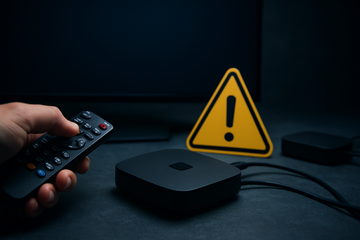
The Dumb-TV Rebellion Hits Where Roku's 90% Platform Revenue Lives
Consumers are using AI agents to strip ads, ACR tracking, and bloatware from Roku, Amazon Fire TV, and Alphabet Google TV devices — threatening the connected-TV ad model that delivered 90% of Roku's Q2 2026 revenue ($1.22B of $1.35B). Texas has already forced Samsung Electronics and LG Electronics to halt ACR without express consent, and open-source projects like 'dumbtv' and 'cleanyourtv' are packaging the work into one-click tools. The investor question is which platform's revenue mix is most exposed — and the answer is Roku, by a wide margin.

Three Earnings, One Verdict: AI Capex Will Decide Whether This Week's Beats Actually Matter
Tesla, Netflix and American Express all have clean fundamental stories to tell in the week of Oct. 20 — but the multiple-expansion trade they need is hostage to hyperscaler commentary on Oct. 28–29. After Alphabet raised its 2026 capex guide to $195–$205B in July and saw its stock sold off 5%, the market has a template: a clean consumer beat can still be punished if Microsoft, Alphabet and Amazon re-accelerate infrastructure spend while the 10-year Treasury sits at 5.09%.

Tesla's Q3 is the capex receipt Musk has to honor — and the SpaceX merger is the fallback he's keeping warm
Tesla reports Q3 2026 on Wednesday after the bell with the Street expecting ~$27.8B in revenue and ~$0.30 in EPS, but the print only matters as the first public test of Musk's $25B+ AI capex plan, which already pushed Q2 to a $1.1B free-cash-flow burn. After Barclays reactivated the TSLA-SpaceX merger timeline on Oct 14 — with a Dec 6 AGM finish line — the merger has stopped being gossip and started being the funding fallback if Cybercab revenue and Terafab capacity don't arrive on time. Investors should watch three numbers Wednesday: free cash flow, the [SPCX] mark-to-market swing on Tesla's $2B stake, and any shift in capex guidance toward the $30B credit lines Reuters confirmed on Sept 29.
2026-10-18

Disney's $200M Character.AI deal breaks the acqui-hire mold: workforce 9x the IP value
On Oct. 18, 2026, Delaware bankruptcy filings revealed Walt Disney will spend about $200M total to absorb Character.AI — roughly $20M for a non-exclusive technology license and $180M over three years to hire 66 of the bankrupt startup's 86 employees. The structure inverts Google's 2024 IP-heavy $2.7B arrangement with the same company: talent, not technology, captures the value, and the platform itself is wound down. For investors, the deal formalizes a court-tested playbook for distressed AI startups where the buyer with the deepest talent pocket — not the deepest IP pocket — wins the assets.
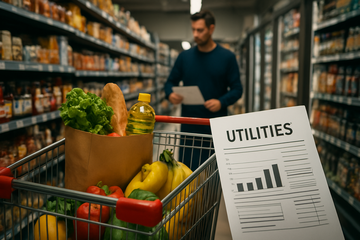
Inflation Is Retreating From the Store — But 'Biggest Bills' Holdouts Now Decide Sector Margins
About60% of the CPI basket still prints above 3% — and almost all of those line items live in four sectors with inelastic demand: hospitals, auto parts, apartments, and utilities. The investor read is that consumer-margin dispersion in 2027 will be decided less by the Fed and more by who can pass through these 'biggest bills' without losing volume.

Salesforce and Walmart Are the AI Trade's First Two Substitutes — Barclays Just Cut Five Names to Make Room
The same week Wall Street logged its worst stretch since June, two upgrades and five downgrades drew the first concrete map of where capital rotates when the AI trade stops working. BofA double-upgraded Salesforce on rare evidence that AI entrenches enterprise platforms rather than disintermediating them, while Deutsche Bank turned bullish on Walmart as sticky inflation redrew consumer demand. Barclays countered with equal-weight cuts on Dell, HPE, NetApp, HubSpot and monday.com — five names whose AI theses had stalled under the weight of CoreWeave's $50B debt and a hot CPI print.
2026-10-17
KFC's Coca-Cola Switch Costs PepsiCo $50M-$500M. The Read-Through Is the Trade.
KFC ended a 40-year fountain monopoly on Oct 15, 2026, but analyst estimates put PepsiCo's direct revenue hit at 0.2%-3% of segment sales. The investable question: does Coca-Cola's win crack PepsiCo's other restaurant accounts, or does Yum Brands' parallel 10-year Taco Bell renewal prove the lock-in is more durable than the headline?

Trump's Loan Cap Pushed Grad Students Into 16% Private Debt — Sallie Mae and Capital One Are on Opposite Sides
The One Big Beautiful Bill Act capped federal graduate and professional borrowing on July 1, 2026, pushing a generation of med-school, law-school, and doctoral students into private credit at double-digit rates — and former U.S. Bankruptcy Judge Sarah Sharer Curley is warning that personal filings will rise as a result. The trade splits cleanly across sectors: Sallie Mae and SoFi collect the displaced demand at high yields, while Capital One and Synchrony Financial carry the most direct exposure if those borrowers convert to credit-card stress. Bankruptcy filings are already up 12.2% over the trailing year on Administrative Office of the U.S. Courts data — the OBBBA cohort has not yet started defaulting.
2026-10-16
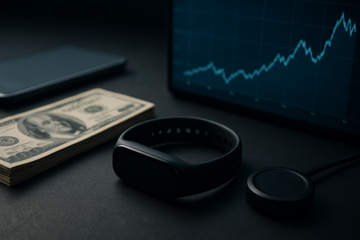
Amazon's $75 Bee Is Cheaper Than Every AI Wearable That Died — That's the Margin Test
On Oct 15, 2026, Amazon re-launched its Bee AI wearables at $74.99 — undercutting Friend 2.0 ($249), Plaud Note ($159), and even the original Bee ($49.99 with a $19/month plan was the floor). Panos Panay used the same day at TechCrunch Disrupt to declare a 'post-app' era, but the more interesting signal is the price: Amazon is now betting that Bee Pro at $11.99/month — bundled with Amazon's free-with-Prime Alexa+ — can subsidize hardware on a product line that lost >$25B from 2017 to 2021. The bet sits on a model layer that's still consolidating: Amazon wound down most of its Nova lineup in July to focus on a single frontier model, while Apple and Alphabet have already locked in their Alphabet Gemini-powered Siri. For investors, Bee is a 53%-gross-margin Prime retention tool disguised as a $75 wearable.

Rivian's Third-Party AI Agent Bet Hands the Software Stack a New Lever — and Lands the Same Day Volvo Doubled Down on Nvidia
Rivian CEO RJ Scaringe told TechCrunch Disrupt on October 15, 2026 that future Rivian vehicles will run AI agents from Anthropic, OpenAI, and Meta, framing the in-house Rivian Assistant as a router rather than a destination. The same day, Volvo Cars deepened its decade-long Nvidia tie-up, and the gap between the two strategies — Rivian's vertical-plus-frontier-models stack vs. NVIDIA's full-stack offering — is now the clearest fault line in the embedded-AI race. With Q2 FY2026 gross profit hitting a record $179M, $5.3B of cash, and an R2 mass-market launch underway, the agent announcement turns the question from \"Will Rivian's software catch up?\" to \"How much software margin can Rivian capture before the frontier labs dictate the UX?\"

Tesla's Flying Roadster Moved Tokenized TSLA 8x More Than Tesla Stock Itself — the Trade That Just Opened
Tesla finally unveiled a SpaceX-powered, thruster-equipped Roadster at its McGregor, Texas rocket facility on Oct 15, 2026 — with production not until 2028. The bigger event: TSLAx on Kraken's xStocks spiked 3.4% on a 115% volume jump over 24 hours, while TSLA equity rose 0.4% on 9% of its normal trading volume. A $29.5B-per-month tokenized-stock market has decoupled from equities on single-name catalysts, and the cross-asset trade — not the car — is the new structural bet on Tesla.
2026-10-15

Figma Rebuilt Itself as the Agent Canvas — 80% Adoption Isn't Enough for a Stock Down 68%
On Oct 14, Figma launched code layers, Figma Specs, and 20 new MCP integrations — the clearest repositioning in design software from a seat-based tool to an agent substrate. Eighty percent of its customers paying more than $10,000 a year already consume AI credits weekly, and 20% of them use only the Figma agent — early signs that outcome-based monetization is working. But trailing stock-based comp hit $3B, GAAP operating margin is -32%, and the stock sits ~68% below its post-IPO peak, because the market can't yet price a design-tool vendor competing head-on with Salesforce Agentforce, ServiceNow, Microsoft 365 Copilot agents, and Anthropic's Claude Cowork for the agent substrate layer. Whether design-system data is defensible enough to make Figma the Oracle of agent UI is the 2027 question.
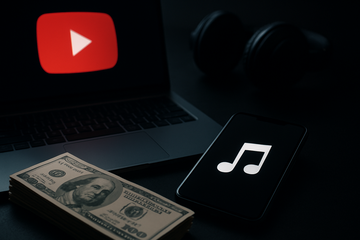
YouTube Just Made Itself the AI-Music Gatekeeper — and Refused to Pull the Royalty Lever
On Oct 14, 2026, Alphabet put AI-generated music into a three-tier labeling system across YouTube Music and the main app — and, unlike Spotify, Deezer, and Tidal, explicitly left labeled tracks monetizable. YouTube is now simultaneously the largest music-streaming discovery platform (125M+ paid subs; 2.2B monthly users watching music) and the operator of Content ID, the industry's only scale audio-fingerprint database. That combination turns a disclosure feature into a margin decision for Universal Music Group, Warner Music Group, and Sony Music — and a structural moat against every streaming rival running away from AI rather than absorbing it.
What to expect
Evidence-first notes with a visible point of view.
This section collects sharp takes on earnings, shareholder meetings, and market structure. Each new piece should make the thesis, the facts, and the implications obvious within the first few screens.
Expect direct analysis, not generic commentary.
Expect the data to be explicit and the argument to be easy to follow.