Capital Markets
Deals, listings and the cost of money
IPOs, mergers, buybacks and credit issuance — what the terms of a deal say about what this market is willing to fund right now.
2026-09-22

Accelevation's $5.4B IPO Tests the One AI Trade Wall Street Hasn't Priced: the Rack-Builder
Accelevation filed to price 30 million shares at $20–$24 on Sept. 22, 2026, targeting a $5.37 billion market cap — the first standalone US listing of a vertically integrated power-distribution and white-space manufacturer built specifically for AI data centers. Its $1.1 billion backlog and 32% gross margin sit between Crusoe's $30.9 billion private mark and Vertiv's $96 billion public valuation, putting the multiple for the rack layer of the AI build on the tape for the first time.

Iambic's $461.8M Filing Plants Frontier-AI Compute on the Biotech Cap Table — and the S-1 Burn Curve Is the Cleanest 2026 Read Yet
Iambic Therapeutics filed an S-1 on September 21, 2026 with NVIDIA and Qatar Investment Authority already on the cap table, raising $461.8M in private rounds across a multi-trillion-dollar pharma-roster of partners. The thesis the market has been inferring from private markups on Isomorphic Labs and CuspAI is now testable on a public exchange: AI compute dollars are landing inside clinical-stage biotech, and the IAMB, biotech plus BRVE/LTGO read-throughs set the price discovery for the first priced frontier-AI biotech IPO.

Nasdaq Set a Record Six Days Into the Most Hawkish Fed in Three Years — And Chip Stocks Did All the Heavy Lifting
The Nasdaq Composite closed at a record 27,122.09 on September 21, just six trading sessions after Chair Kevin Warsh' first25bp rate increase since 2023 lifted the funds rate to 3.75–4.00% with a unanimous 12-0 vote and a hawkish dot plot. Chips carried the tape: Meta' September 8 launch of its Muse personal AI agent triggered a 4.3% surge in the Philadelphia Semiconductor Index, a12% jump in Intel, a 17% surge in Arm Holdings, and pushed Advanced Micro Devices past $1 trillion in market value for the first time. Meanwhile, a four-day slide in Brent crude to $100.40 — driven by signals that Donald Trump will meet Iran's president at this week's UN General Assembly — drained the inflation impulse Warsh was trying to contain. The message is that the market is pricing structural forces ($1 trillion in global AI investment, hyperscaler capex running at 93% of operating cash flow) more heavily than the policy rate, leaving duration, oil, and select chip names mispriced versus the Fed's own path.
Trafigura's $1.1B Bet Puts Nth Cycle on the NYSE at $585M — Now the Market Has to Price the First US Critical-Minerals Refining IPO
Burlington-based Nth Cycle, the first US refiner turning scrap batteries into battery-grade nickel and lithium at scale, locked a $1.1B, 10-year binding offtake with Trafigura and a US Department of Energy grant of up to $100M before pricing its NYSE debut at a $585M enterprise value. The tag sits between Albemarle's 2.3x and MP Materials's 30x trailing EV/Revenue — and that gap captures the question every US critical-minerals name now faces: whether the 'domestic refining premium' is worth a 3x uplift over a global commodity refiner. The SPAC closes in Q4 2026 and is the first live test of whether Western capital will pay a structural premium for non-Chinese processing.
Seoul's $350B US Investment Debuts With a Money-Losing Gas Plant — and That Changes the Calculus for Korean EPCs
South Korea's trade ministry has confirmed the $22.3B Encinal, Texas gas-fired power plant as the inaugural project under its $350B US investment pledge, but President Lee and Prime Minister Han have publicly flagged commercial-viability concerns — and lawmakers just demanded the project briefing be pulled. The deal's structure (an I-SPV with Lewis Energy as project owner, offtake tied to ERCOT or captive AI data centers) hands EPC work to Doosan Enerbility, Hyundai E&C, KEPCO E&C and Samsung E&A, while the same package's contemplated follow-on — up to eight US nuclear reactors — is itself a contested Westinghouse-vs-APR1400 design fight. For investors, the read-through is asymmetric: the deal tape is not a tailwind for Korean industrials, it is a proof-of-concept that the chaebol money is being deployed at returns below the listed companies' own hurdle rates.
2026-09-21
Unitree's $35 billion wipe just wrote the new rulebook for every Chinese humanoid IPO
After Unitree Robotics lost more than half its market value in the month after its Shanghai debut, China's CSRC began informally vetting humanoid IPO candidates on three points — recurring revenue, a path to narrowing losses, and real industrial demand. The guidance puts 28 queued listings in limbo, advantages profitable parts suppliers like Leader Harmonious Drive Systems and Shenzhen Inovance Technology, and pressures unprofitable pure-plays from UBTECH Robotics to AGIBOT.
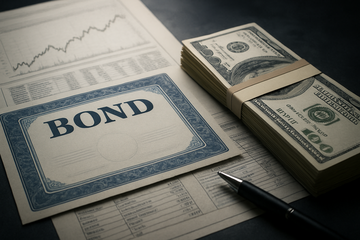
SoftBank's $10B Junk Bond Just Put OpenAI on the High-Yield Tape
On Sept 20, 2026, SoftBank Group opened a $10B USD-denominated senior unsecured offering — priced in junk territory and led by Citigroup and JPMorgan — to fund the third $10B tranche of its $30B OpenAI follow-on. The bond doesn't just refinance a bridge loan: it converts Masayoshi Son's largest private-equity bet into a publicly traded credit obligation, joining roughly $500B of AI-related debt already issued in 2026. With OpenAI's compute bill pinned to NVIDIA, Oracle, TSMC, and the SK Hynix HBM line, this is the moment AI capex moved decisively off the equity tape and onto the high-yield market — and the holders of that paper now own a piece of the Stargate buildout.
2026-09-20

Anthropic's Pre-IPO Model Drop Is a $2T Valuation Lever, Not a Marketing Cadence
A Sept 18 Reuters exclusive — Anthropic is weighing a fresh model release ahead of its mid-October listing — resets the framing of Fable 5.1 from choreography to coercion. With OpenAI's GPT-6 Astra already capturing roughly 13% of enterprise AI spend on Ramp versus about 8% for Claude, a launch days before pricing is what defends the $100B raise at a $2T valuation. The release is therefore the most concrete supply-chain signal of the cycle: NVIDIA's reported $10B anchor stake makes the supplier ecosystem — TSMC, SK Hynix, Broadcom, ASML, Amazon — explicit.
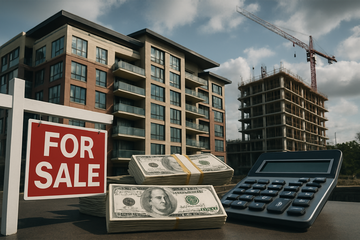
Condo sellers can't find bidders at any price — the freeze is asymmetric, and the damage runs through HOA balance sheets, Fannie/Freddie, and the $400B builder complex
August 2026 existing-condo sales fell to a 360,000 SAAR — the weakest in over a decade — while listings get pulled at near-record rates because owners of older buildings carry HOA fees more than double those of newer stock. Fannie Mae and Freddie Mac eliminated their fast-track condo review on August 3, 2026, raising the cost of capital for every project that fails the new insurance, reserve, and master-policy checks. The spillover lands on private mortgage insurers (MGIC Investment, Radian Group), on condo-heavy builders (Lennar, Toll Brothers, PulteGroup, D.R. Horton), on the rental landlords (Invitation Homes, Blackstone) now sitting on assets they can't refinance, and on the HOA managers (FirstService) whose books are deteriorating fastest where the freeze is deepest.

Bowman's Stress-Test Finale Resets the Capital Math — Banks Win, Critics Sue
Michelle Bowman's Sept 18 London speech locks in a stress-test rewrite that halves SCB volatility, opens the black box on models and scenarios, and queues up a 4.8% aggregate capital cut for the largest U.S. banks. The reform arrives10 days after a Better Markets lawsuit sought to derail it — and four days before Bank of America's CEO warned Q3 investment-banking fees would fall 10%+. Investors who already priced the June 24 buyback green-light now have to weigh whether the procedural transparency is enough to survive court, or whether the real-economy warning is what matters next.

The ten-day AI sprint broke the enterprise IT budget cycle — and these vendors already booked the orders
Between Sept. 1 and Sept. 12, 2026, Anthropic, OpenAI, Alphabet, Meta Platforms, and Manus all shipped major frontier releases — then Anthropic's CEO asked the industry to slow down. The cadence now outruns the average IT refresh cycle, but NVIDIA, SK Hynix, ServiceNow, Salesforce, Microsoft, and Oracle have already booked revenue that decouples from the model-by-model churn. The trade is not who wins the model race; it's who sits between the model and the IT department.
2026-09-19
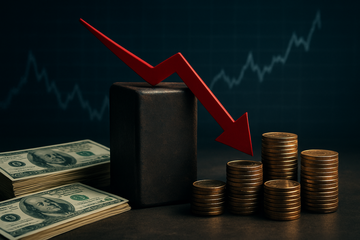
$278B of Burn vs. $122B Raised: OpenAI's 2027 IPO Just Became a Funding Test
The Financial Times' September 18, 2026 disclosure — $278 billion in cumulative negative free cash flow over 2026–2030 against $122 billion raised in March and $856 billion in committed compute spend — reframes the OpenAI IPO from a valuation argument to a capital-markets question. With OpenAI on track to exhaust that round by 2028, listed suppliers NVIDIA, Oracle and Microsoft now carry more exposure to the outcome than any future public-market investor in OpenAI ever will.

Paramount-WBD's $110B Math Hinges on a Weekend Settlement With California
Paramount Skydance is in advanced talks with California Attorney General Rob Bonta to settle the 12-state antitrust suit blocking its $110 billion acquisition of Warner Bros. Discovery, with Reuters reporting a deal could come as soon as this weekend. What California demands — structural divestitures rather than behavioral promises — determines whether CNN, TBS, and TNT stay in the combined company, whether the Oct. 1 $7 million-a-day ticking fee activates, and whether the merger clears the June 4, 2027 finish line. The DOJ's recent endorsement of a $1.88 billion bond demand against the states has flipped the leverage, putting a hard price tag on each additional day of delay.
2026-09-18

2026-09-17

Holtec Pulled Its $900M Nuclear IPO One Day Before Pricing — The SMR-to-Data-Center Story Just Met the Public Markets
Holtec Nuclear suspended the year's most-watched pure-play nuclear listing on September 16, 2026, after its $900M, $15-$18 range failed to find a clearing price against a 35%-off-the-high nuclear ETF, a -36.7% post-IPO X-Energy, and a -20.6% post-IPO Standard Nuclear. The signal is not that hyperscalers have stopped buying power — Microsoft, Meta and Walmart keep signing PPAs — but that the public market is no longer willing to underwrite multi-year SMR capex at 17x revenue with 2029 NRC approvals and zero commercial reactors in service. Pre-revenue reactor developers NuScale and Oklo are down 85% and 82% from their 52-week highs; the real test now is whether the upcoming Westinghouse IPO at a rumored $30B can clear.

The World Bank Just Tripled Its Private-Capital Pull to $112B — and the EM-Debt Tape Still Hasn't Priced It
On September 17, 2026 the World Bank Group reported $112B of private capital mobilized in FY2026 — more than triple the $35B of FY2022 and 62% above the $69B of FY2025 — driven by IFC's new origination-to-distribute factory and a guarantee platform that's now scaling toward $20B a year. With the same institutional buyers rotating out of US munis (where tax-exempt yields just hit ~5.00% and supply is a record $565B) and into EM debt yielding 7.26%, the marginal EM-credit buyer has changed hands — but the spread tape still widened 9 bps in July. The investors already inside the pipeline — BlackRock, Goldman Sachs, Brookfield Asset Management, Allianz, Legal & General — own the upside before the rest of the market catches up.
2026-09-16

A $22B bank 'chip loan' to Blackstone's Alphabet JV lands the same day Warsh hikes — turning AI compute into the Fed's newest collateral class
Ten banks are underwriting $22 billion for Crux AI, the Blackstone–Alphabet TPU cloud venture — a bank-led, asset-backed structure with chips, not corporate guarantees, on the hook. Hours later, the Fed under Kevin Warsh raised rates 25 bps to 3.75%–4.00% and penciled in two more hikes, putting a rate-sensitive funding leg at the center of the AI buildout. The combination quietly rewrites who funds hyperscaler capex: a new Broadcom-anchored collateral class that Wall Street banks — led by Morgan Stanley and including JPMorgan, Citi, BofA, Goldman Sachs and Wells Fargo — now bear directly, with the Fed setting the marginal price.
Microsoft vs. Anthropic's \"Consciousness\" — The Personality Clash Reshapes a $2 Trillion IPO and Microsoft's Silicon Bet
Microsoft AI CEO Mustafa Suleyman's public rebuke of Anthropic's Claude \"constitution\" — escalated this month with a 37-page Humanist AI Code of Conduct that rejects model \"legal personhood\" — landed directly between Anthropic's mid-October IPO at a $2 trillion target and Microsoft's Maia 300 chip reveal in September. The spat is the first open personality clash between the two labs and exposes a structural tension: Microsoft is simultaneously Anthropic's $30 billion Azure customer, an equity investor, and now its loudest philosophical critic. Investors should read the spat as positioning trade, not personality drama — the moat it's defending is Anthropic's enterprise share, and the silicon it's threatening is Nvidia's.

OpenAI's $1.2T Pre-IPO Round Resets the Ceiling — And the S-1 Math Has to Catch Up
Financial Times reports OpenAI is weighing a private round at roughly $1.2 trillion — a 41% step-up from the $852B post-money mark set in March on the same ~$40B annualized revenue base. The implied 30× sales multiple now sits a wide band above Anthropic's ~20.5× and the largest listed AI peers, while $38.5B of 2025 net losses and a $300B Oracle Stargate commitment keep the burn-to-revenue ratio near one-to-one. For public investors, the question is no longer whether the AI premium survives a listing — it's who gets paid in the meantime.
2026-09-15

What to expect
Evidence-first notes with a visible point of view.
This section collects sharp takes on earnings, shareholder meetings, and market structure. Each new piece should make the thesis, the facts, and the implications obvious within the first few screens.
Expect direct analysis, not generic commentary.
Expect the data to be explicit and the argument to be easy to follow.