Capital Markets
Deals, listings and the cost of money
IPOs, mergers, buybacks and credit issuance — what the terms of a deal say about what this market is willing to fund right now.
2026-10-17

2026-10-16

The 146% → 45% Quarter: How Anthropic's Sequential Deceleration Reset Its IPO Price
Anthropic's Q3 2026 revenue climbed 45% sequentially, a sharp deceleration from Q2's 146% surge, and pre-IPO investors are now negotiating toward $1.5T instead of $2T (Reuters, Oct 15, 2026). The tempering isn't sentiment — it's the slope: a company committed to $518B in cloud and compute spend, losing $1.76 on every dollar of revenue, has less margin for the math to bend the wrong way. For investors, the read-through cascades through Microsoft, Alphabet, Amazon, NVIDIA, and the leveraged AI-infrastructure trade.

Anthropic Hands METR the Keys — And Why a $2T Listing Needs Them
Six METR researchers are now sitting inside Anthropic on company laptops with access roughly on par with Anthropic's own risk-assessment teams, and Anthropic cannot veto what METR publishes. Three days after a Singapore government safety MOU and four days after a separate self-replication warning went out, this is the offensive safety story a $2 trillion pre-Thanksgiving IPO needs to paper over a $42 billion 2025 net loss, an ~12-fold revenue surge resting on ~$7.3 billion of compute, and a customer concentration that has the SEC asking questions.
Bessent's Twist Failed. Wall Street Is Already Pricing in Intervention #2.
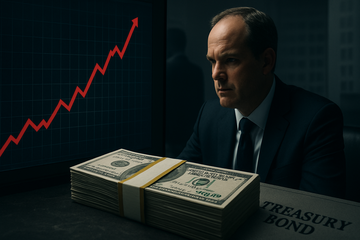
Treasury Secretary Scott Bessent's August buyback 'twist' did nothing to tame long-end yields — the 30-year touched 5.69% on Oct. 7 and sat near 5.43% on Oct. 15. Citi now expects 20- and 30-year auction sizes to be cut by $3 billion each at the Nov. 4 refunding, likely offset by more T-bills or a new one-year SOFR-linked FRN. The trade runs straight through JPMorgan Chase and Bank of America net interest income — and the $725 billion hyperscaler AI capex math now being financed by Microsoft, Alphabet, Amazon, Meta Platforms, and Oracle.

Simons Just Put OpenAI and Anthropic at the Same Table With Mathematicians — Weeks Before the IPO Bell
The Simons Foundation's Oct 15, 2026 $15M math initiative gives two pre-IPO AI labs a managed seat at the math community's trust layer at exactly the moment their S-1 filings are most exposed. The structure — equal $5M commitments, Simons as neutral award manager, AI compute access bundled in — and the foundation's prior ownership of the Lean proof-assistant stack turn a small philanthropy into a credibility instrument for a $2T-class IPO race.

AI's Quarter of Reckoning: Hyperscaler Capex Becomes the Story the Tape Has to Hear
With the Oct 16 Reuters Week Ahead framing the AI rally as \"wobbling,\" five marquee reporters — Netflix on Oct 20, Tesla and Meta on Oct 21, Alphabet and Microsoft on Oct 28 — step into a market already pricing doubt. TSMC's $46.7B print and ASML's €11.7B quarter confirm the silicon side; the test now is whether Meta's $130–145B, Alphabet's $195–205B, Amazon's ~$220B and Microsoft's ~$190B of 2026 capex can be defended as productive before data-center debt service and AI ROI skepticism collide. Q3 reframes from \"beat-and-raise\" to \"capex-confession\" — discipline moves the tape first, growth story second.

Banga's $19 Billion Critical-Minerals Plan Pulls the Refiners and Project-Finance Banks the DFC Couldn't Reach Into the Tent
World Bank Group president Ajay Banga announced a $19 billion critical-minerals financing target for fiscal 2026–2030 — roughly five times the $3.6 billion deployed in fiscal 2021–2025 — anchored to IFC direct loans, MIGA guarantees, and a fresh slate of country compacts with 20 mineral-rich developing economies. The mandate reaches a layer the DFC's $3 billion program didn't: refining IPOs like Nth Cycle, commodities traders like Trafigura, and project-finance banks like HSBC, Deutsche Bank, and Standard Chartered, which the IFC and MIGA now routinely co-lend with. Investors should track the first multi-billion-dollar IFC package and the first MIGA-backed trade-finance facility that flows from the compacts as proof the 5x target is real.
2026-10-15

Anthropic's $16.8B Quarter Has the Street Asking the Wrong Question — the $2T Math Is Already Done
Anthropic told prospective investors at its Oct. 14 San Francisco investor day that Q3 2026 revenue hit $16.8 billion, up 45% from $11.6 billion in Q2 and $4.7 billion in Q1 — and that the quarter was profitable on an adjusted basis and free-cash-flow positive. The number clears the runway for a November IPO at a target valuation north of $2 trillion, but it also forces a harder question: if Anthropic is on track for ~$110 billion of annualized revenue by year-end, what does that imply about OpenAI's ability to hit its own $200 billion 2028 forecast, and which buy-side funds that anchored the $42 billion Broadcom bridge, the $30 billion Azure commitment, and the $518 billion compute buildout are now exposed if the IPO prints below the marketed range?

Figma Rebuilt Itself as the Agent Canvas — 80% Adoption Isn't Enough for a Stock Down 68%
On Oct 14, Figma launched code layers, Figma Specs, and 20 new MCP integrations — the clearest repositioning in design software from a seat-based tool to an agent substrate. Eighty percent of its customers paying more than $10,000 a year already consume AI credits weekly, and 20% of them use only the Figma agent — early signs that outcome-based monetization is working. But trailing stock-based comp hit $3B, GAAP operating margin is -32%, and the stock sits ~68% below its post-IPO peak, because the market can't yet price a design-tool vendor competing head-on with Salesforce Agentforce, ServiceNow, Microsoft 365 Copilot agents, and Anthropic's Claude Cowork for the agent substrate layer. Whether design-system data is defensible enough to make Figma the Oracle of agent UI is the 2027 question.
UBS's $16 billion Swiss capital bill just turned Basel endgame into a relocation auction — and eight foreign banks are already in the room
Switzerland's upper house voted 29–16 on Sept 23 to make UBS back 90% of its foreign units with common equity, adding $16B of CET1 at the parent and $33B in total since the Credit Suisse deal. UBS has replied with the loudest lever a global systemically important bank can pull: an open threat to redomicile via US acquisition, European merger, or holding-company move. With at least eight foreign banks — Morgan Stanley, Deutsche Bank and JPMorgan Chase among the named suitors — already in the room and US Basel III requirements heading the opposite direction, the question for investors is no longer how much capital a G-SIB has to hold, but where the world's largest wealth manager will park its $1.7 trillion balance sheet.
2026-10-14
Anthropic's Self-Replication Warning Just Turned AI Safety Into a Financial-Stability Problem — and Forced a $2T IPO to Argue With Itself
Anthropic's own frontier-red-team research (Oct 12, 2026) shows small open-weight models can already self-replicate end-to-end across simulated IoT botnets, with end-to-end capability plausibly arriving on real devices by year-end. Two months after the FSB told the G20 frontier-AI cyber risk is the most immediate concern for the financial system, and three weeks after Anthropic warned in its own S-1 that its models could 'resist shutdown' or 'resemble blackmail,' the company has put $2T of IPO math and $518B of compute commitments on the same page as a capability threshold that may not wait for a regulator to define it. The trade is no longer 'safe vs. fast' — it is which listed names sit on the right side of the perimeter.
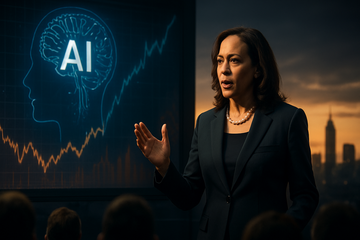
Harris's 'Window Closing' Warning Hits a $3.6 Trillion AI-IPO Cohort Exactly Where Its Risk Factors Already Live
On Oct. 14, 2026, former Vice President Kamala Harris warned in Seoul that 'the window is shutting' for AI safeguards and pressed the United States to engage China on shared AI rules — reframing frontier-AI safety as a US-China bargaining chip weeks before the November midterms. The warning lands directly on the combined ~$3.6 trillion public-market pipeline of Anthropic, OpenAI and SpaceX/xAI, with Anthropic's leaked S-1 already devoting roughly a third of its prospectus to 'catastrophic or existential risks' and warning that 'Washington could tank our business.' The investor question is no longer whether policy lands in the risk factors — it does — but which side of a cooperative-versus-controlled AI trade the supply chain ends up on. NVIDIA, TSMC, SK Hynix, Amazon, Alphabet, Broadcom and Microsoft set the speed limit and carry the heaviest exposure.

LSEG Just Paid 24x EBITDA for a $145M Credit-Data Asset — and SPGI and Moody's Now Have to Match It
LSEG's £3.5B offer for Permira-owned Octus at roughly 17x forward EBITDA hands it the proprietary sub-investment-grade and private-credit dataset the ratings duopoly could not replicate — at the moment SPGI's stock trades22% below its 2025 high on AI-pricing fears and private-credit AUM has crossed $2T. The deal compresses the credit-data funnel to four toll-takers and forces SPGI and Moody's into a consolidation race at exactly the wrong time for their multiples.
Hot CPI Just Flipped December Into the Fed's Base Case — and the Nasdaq's 1.9% Selloff Is Only the Opening Trade
September CPI reaccelerated to 3.7% year-over-year (from 3.4% in August) and core to 2.6% (from 2.4%), with both prints running 0.1 percentage point above consensus and a 5.2% energy surge supplying the bulk of the headline. Markets responded by lifting the 10-year Treasury yield to 5.30%, jumping the December 9 FOMC hike probability to 76-87%, and sending the Nasdaq Composite down 1.9% with semis and AI infrastructure bearing the brunt. The Fed's own September dot plot already projects 4.1% by year-end 2026, and today's data pushes that path toward the high end — meaning the Apple/Microsoft/NVIDIA cohort is now repricing not for one more 25bp, but for a terminal rate the market had largely written off six weeks ago.
2026-10-13

Bumble Goes Private at $1.3B — A Sequoia-Backed Vehicle Is Buying Blackstone Out at 7% of Match Group's Sales Multiple
Bumble closed up 56% at $5.94 on October 13, 2026 after Ithaca Holdings — a vehicle built by Sequoia's Ravi Gupta and former Meta executive John Hegeman — agreed to take it private at $6.05 a share, a 138% premium to the unaffected October 9 close. The $1.3B all-cash deal values Bumble at roughly 1.5x trailing revenue, against Match Group's ~13.9x EV/Sales, because Bumble's paying users are falling 16.4% a year while Match's Hinge is growing 22%. Blackstone — long the controlling shareholder — is on the selling side, exiting a stake it once valued Bumble at $14 billion for in 2021. The market is repricing the dating-app subscription model on payer-count trajectory, not ARPPU.
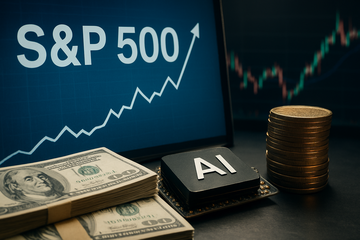
Q3 S&P 500 EPS Is Tracking 30% — But Half of That Came From AI Capex You'll Keep Paying For
The Q3 2026 setup looks like a banner print: FactSet sees 29.5% S&P 500 earnings growth and Reuters cites a 30.6% consensus, with JPMorgan results kicking off on Oct 13. Goldman Sachs estimates that almost half of 2026 S&P 500 EPS growth traces to AI investment, and that the four biggest hyperscalers are on pace for $800B in 2026 capex — a 94% jump. The cushion between those two numbers is what's getting thin: Q2 cash-flow statements already show Alphabet and Amazon printing negative free cash flow and Meta FCF down roughly 80% year over year. This Q3 reporting cycle is the last chance for clean AI tailwind before D&A and interest expense start compounding into 2027 and 2028 prints.

JPMorgan's Trading Boom Is the Only Floor Under the Banks This Print — Provisions Just Confirmed the Trade
With JPMorgan Chase, Goldman Sachs, Wells Fargo and Citigroup all reporting before the bell on Oct. 13, the print-day setup looks like a record $47B Q2 trading haul fading into a ~19% sequential drop — but still up ~13% YoY — while Wells Fargo's consumer charge-off rate keeps drifting lower. The real signal is whether the 'trading saves the day, provisions stay benign' trade keeps working as the 10-year sits at its highest yield since 2002 and the KBW Bank Index enters prints down 9.7%.
2026-10-12

Aon Just Told Wall Street Its M&A Business Flipped. The Quiet Map for the AI Deal Spree Is Willis Towers Watson, Aon plc, and Marsh & McLennan.
Aon plc told investors on its Q2 2026 call that M&A services had shifted from a Q2 headwind to a H2 tailwind, with announced transactions up more than 60% year over year. The same deal wave is feeding Willis Towers Watson's franchise growth and underwriting fresh off Marsh & McLennan's record $91.6 billion in 2025 transactional risk limits placed — meaning the AI deal economy is quietly lifting three old-line insurance brokers whose Wall Street narrative still runs on rate cycles and Insurify disruption.

Amazon's $7B Decart bid moves the AI inference moat from a private-lab capex line to a public hyperscaler — Anthropic's $2T IPO just lost its efficiency story
Amazon is in talks to acquire Decart for around $7B, per the WSJ, after Anthropic walked away from a $6B offer in September following due diligence. The price — a 75% markup on Decart's $4B private mark in May — reprices the inference-efficiency software layer at a moment when AWS is the only hyperscaler to own both the silicon (Trainium3) and the optimizer. For Amazon, $7B is rounding error against a $2.8T market cap and a Q2 2026 quarter that produced $42.2B in AWS revenue. For Anthropic, the asset that would have anchored its pre-IPO compute-cost narrative now ships to the buyer whose chips Anthropic has already committed 5GW and 1 million Trainium2 units to — a costly structural inversion ahead of an October listing that wants a $2T valuation on $4.6B of 2025 revenue.

Google's $21 Gemini Agent Squeezes OpenAI's $60 ChatGPT Enterprise — and Hands Anthropic a Free Distribution Channel Before Its IPO
On October 8, 2026, Google launched a single universal Gemini agent for businesses, undercutting ChatGPT Enterprise by up to 65% on per-seat economics while quietly routing Anthropic's Claude through the same surface — compressing OpenAI's quote-only enterprise tier just as Anthropic prepares a $65B-run-rate IPO. Cloud demand is real: Alphabet's Q2 2026 Google Cloud revenue jumped 82% YoY to $24.8B with operating income tripling, and capex doubled to $44.9B. The investable read runs through Alphabet, Microsoft, NVIDIA, Salesforce, and ServiceNow — each positioned differently in a market where the 'agent' is becoming the new seat.
What to expect
Evidence-first notes with a visible point of view.
This section collects sharp takes on earnings, shareholder meetings, and market structure. Each new piece should make the thesis, the facts, and the implications obvious within the first few screens.
Expect direct analysis, not generic commentary.
Expect the data to be explicit and the argument to be easy to follow.