Capital Markets
Deals, listings and the cost of money
IPOs, mergers, buybacks and credit issuance — what the terms of a deal say about what this market is willing to fund right now.
2026-09-15


EchoStar trades for less than its SpaceX stake. Morgan Stanley says that gap is the trade.
Morgan Stanley initiated coverage of EchoStar on Sept. 14 with an Overweight rating and a $134 price target, framing the satellite carrier as the cleanest public-market vehicle for SpaceX exposure at a discount. With roughly 262 million SpaceX shares flowing to EchoStar from 2025's spectrum transactions — worth more than the company's entire $27.3 billion market cap at recent prices — analyst Sean Diffley argues the market is pricing the proxy at less than the value of the underlying it's meant to track. The thesis rides on a 0.66 daily-return correlation with SPCX since the June IPO, set against two Chapter 11 filings, a 118,000-subscriber wireless loss in Q2, and a $2.4 billion FCC escrow hanging over the balance sheet.
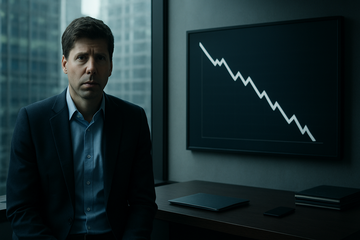
Altman pulled the $852B IPO — and handed Anthropic the window
Sam Altman told Fortune on Sept. 12, 2026 that going public now would be 'ill-advised' — the first time a founder has publicly walked back the trillion-dollar listing his own bankers had been pricing since June. The pullback freezes OpenAI's $852B private mark at a moment when Anthropic is targeting a $2T Nasdaq debut in October, and forces Microsoft, NVIDIA, Amazon, Oracle, AMD and SoftBank Group to live with locked-in equity and delayed revenue ramps while the public window goes to a rival.
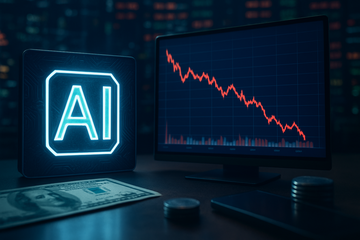
The catastrophe-commitment bill turns AI safety into a cross-party IPO and licensing variable — and the September 14 selloff is the market finally pricing it in
Within twelve days, Bernie Sanders, Greg Casar, Steve Bannon, Ted Cruz, Amy Klobuchar and John Thune have all lined up behind the same demand: that frontier AI developers prove, on the government's terms, that their models cannot cause civilizational harm. The mechanism is a Senate \"duty of care\" bill that would let the Commerce Secretary block model releases — and it lands with Anthropic's draft S-1 already at the SEC and a $2 trillion IPO targeted for mid-October. The September 14 AI selloff (-3.3% NVDA, -5% MU, -7% CoreWeave, -7% SK Hynix) is the first market signal that investors now have to underwrite regulatory uncertainty, not just technical progress.
2026-09-14

OpenAI Took Wall Street; Anthropic Just Took Wealth — Schwab's $5.5T Custody Deal Hands Claude the RIA Channel
On September 14, 2026, Charles Schwab and Anthropic made Schwab Advisor Services the first RIA custodian integrated with Claude for Financial Advisors — instantly putting Anthropic in front of 16,000+ independent RIAs and $5.5T of custody, or 54% of the $9.8T US RIA custody market. Four days earlier, OpenAI launched its banker-focused ChatGPT for Financial Services, built with Morgan Stanley and Evercore. The two foundation-model vendors have now carved finance vertically: OpenAI for the institutional sell side, Anthropic for the advisor-led buy side. The deal commoditizes the interface/intelligence layer of the wealth-tech stack (pressuring Envestnet, Orion and Salesforce Agentforce) while entrenching custody-side moats at Schwab and Fidelity, and forces Morgan Stanley to defend the AI @ MS Debrief lead it has held since 2024.

Anthropic's $559M Q2 Profit Is the First Real Number the $2T IPO Has to Defend
Anthropic told investors it will post a second straight quarter of adjusted operating profit — $11.5B revenue and ~$559M in operating profit on a 14-fold YoY jump, per FT and Reuters on Sept. 13, 2026. That ~5% adjusted margin is the first hard earnings print any frontier AI lab has produced, and it lands three weeks before the rumored $2T October IPO, where the S-1 will have to defend a multiple that implies hitting a $190–200B 2028 revenue target — a number 17× larger than OpenAI's $6.7B Q2 take, which itself came with a $12.3B operating loss.
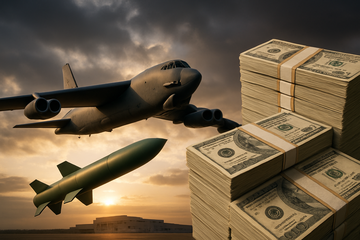
Pentagon Backlogs Are Pricing Defense SPACs Now — Six Mergers, $6.3B of Pipeline, and a Capacity Story That Dwarms Conviction
Six defense and space SPAC mergers announced in 2026 — led by Ursa Major's $2.3B tie-up with Bleichroeder Acquisition Corp III, Quantum Space's $1.2B deal with Inflection Point Acquisition Corp VI, and Space-Eyes's $638M counter-drone play with McKinley Acquisition Corp — are running alongside record Pentagon backlogs at Lockheed Martin ($230B), RTX ($289B), and Northrop Grumman ($105B), plus an FY27 budget request of $1.5T. The capital-markets read is that defense founders are choosing the SPAC lane for capacity certainty — PIPE pre-committed, time-certain close — while the parallel IPO lane is fragmenting: Lyntris priced below range and fell 14% day one, and Starfighters Space trades down 83% year-to-date.

Dell Family Office vs. Wall Street: Why a $4B Insurance Broker Is Now a Take-Private Test for Patient Capital
DFO Management, the family office of Dell Technologies founder Michael Dell, is in advanced talks to take Baldwin Insurance Group private at a roughly $4.1B market value, the FT reported Sept. 14, 2026. The deal would mark the first time a single-family office has outbid private equity for a scaled US insurance broker, and it would price Baldwin at a discount to the 16–18x EV/EBITDA commanded by Aon, Marsh & McLennan and Arthur J. Gallagher — but at a premium to a stock that has spent most of 2025 in retreat. The same week the Baldwin Insurance Group board formally invited offers, Thoma Bravo closed its $4B-plus take-private of Accelerant Holdings at a 49% premium, confirming that family-office and PE capital are competing for the same shrinking pool of listed specialty distributors.
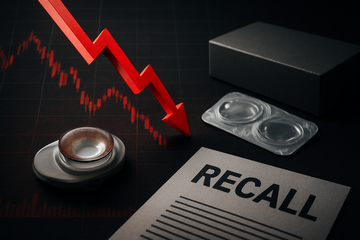
Shein's contact-lens recall turns a10% IPO plunge into 17.5% — the de-minimis math now has a product-safety variable
Ten days after SHEIN's HK$48.56 Hong Kong listing, regulators in Australia and New Zealand pulled its Syliuwa coloured contact lenses over Burkholderia cepacia contamination. The stock closed HK$40.06 on the recall day, capping a 17.5% drop from issue. With U.S. tariff math already pressuring margins and the Q1 2026 books in a $99M net loss, a third-party product-safety event is the variable equity bulls had not priced.
Wells Fargo's Commercial Banking Bench Just Lost a 40-Year Veteran — Right as BofA Sounds the Deal-Flow Alarm
Wells Fargo's Florida Gulf Coast commercial banking chief Jim Themides is retiring at year-end after 40 years, with Leila Tooley taking over — a routine handoff that lands awkwardly the same day Bank of America CEO Brian Moynihan warned Q3 investment-banking fees will fall more than 10% from a year ago. With commercial banking plus corporate and investment banking now generating roughly half of Wells Fargo's net income, the Q3 print on October 13 is the first test of whether the post-asset-cap re-rating thesis holds when capital markets turn.
Apple's App-Store Power Survived Unscathed — Musk Dropped the Antitrust Suit on the Same Day iOS 27 Killed the Theory Behind It
X Corp and SpaceXAI quietly filed to dismiss their August 2025 antitrust lawsuit against Apple in a Texas federal court on September 14, 2026 — the very day Apple shipped iOS 27 with a Gemini-powered Siri and a third-party AI Extensions framework that, by design, demotes ChatGPT to one of several options. The dismissal leaves Apple's curation defense and App-Store economics intact, pushes the chatbot-monopoly theory onto OpenAI alone, and gives Alphabet a cleaner runway on both the Gemini integration and the parallel Google-Search antitrust overhang. For investors, the read-through is that platform-gatekeeper risk is now bounded by regulation, not private suits — Apple gained clarity on its most valuable asset while paying nothing in precedent.
Z.ai's 10% Slump on a Second $5 Billion Raise in Two Months Is the First Real Crack in China's AI Listing Premium
Z.ai fell 10% on Sept. 14, 2026 after pricing a $5 billion placement-plus-convertible raise — its second tap of public markets in just two months, with the new shares sold at a 10% discount to a price already 60% below the July peak. The reaction is the cleanest signal yet that the China AI listing premium is unwinding: a frontier lab with revenue up 400% in H1 2026 still could not avoid the dilution penalty, while peer Alibaba raised $10.2 billion the same week to fund its own AI build-out. Investors should expect MiniMax, DeepSeek's STAR Market debut, and the next private round from Moonshot AI and Baichuan to feel the read-through.
2026-09-13
Anthropic's $2T Nasdaq Pick Was About the 15-Day Index Rule, Not the Exchange
Anthropic filed its S-1 on June 1, 2026 and on September 13 chose Nasdaq over NYSE for an October listing targeting ~$2T, with Morgan Stanley and Goldman Sachs as lead underwriters. The decisive mechanism is Nasdaq's May 1, 2026 rule change that lets a newly public name enter the Nasdaq-100 after 15 trading days — versus the S&P 500's 12-month seasoning — turning a $2T float into immediate passive demand inside the $482B Invesco QQQ Trust and the broader Nasdaq-100 tracking complex. The trade cascades through Nasdaq Inc's listings franchise, the strategic backers — Amazon (~21%) and Alphabet (~15%) — and the AI compute chain led by NVIDIA.

Nscale's Simo Board Seat Isn't a Hire — It's a $30B IPO Distribution Play
Nscale added former OpenAI applications chief Fidji Simo to its board on September 11, 2026, hours after disclosing a $103B contracted-revenue backlog and a $3.5B pre-IPO convertible round at a $30B valuation cap. The board stack — Sandberg (Meta network), Clegg (EU policy), Decker (Yahoo financial discipline), now Simo (OpenAI/consumer distribution) — reads less like governance and more like a roadshow war room. With the Anthropic $45B compute deal and a CoreWeave-comparable backlog, Nscale is pricing into the public market at roughly 60–75x EV/sales, nearly 5x CoreWeave's multiple.
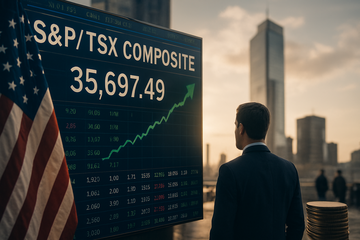
S&P Quietly Doubles Its Foreign-Issuer Offer: Anglo Teck Gets Full TSX Weight on December 21, Not the 50% First Floated
S&P Dow Jones Indices on September 11 widened S&P/TSX eligibility to admit TSX-listed foreign issuers with a 'meaningful presence' in Canada — but the bigger story is what was dropped. After market pushback, the proposed 50% weight cap on those issuers was abandoned, meaning the $53B Anglo American–Teck combination due to close by March 2027 joins Canada's benchmark at full float-adjusted weight on December 21, 2026. That pulls an estimated multi-billion-dollar wave of US and Canadian passive money into a single line, and creates a template for future cross-border listings on the TSX.
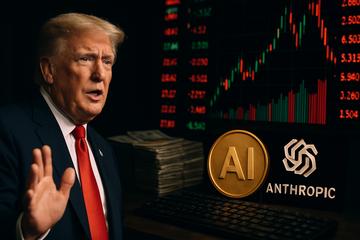
Trump's 'Very Negative Forces' Line Just Cleared the Path to OpenAI's 2027 IPO and Anthropic's $2T Listing
In Doonbeg on Sunday, the President cast AI safety critics as 'very negative forces' — a one-sentence pivot that aligns the White House behind faster AI deployment and reframes the political battlefield from agency rulemaking to public discourse. The read-throughs are immediate: OpenAI's already-delayed $1T IPO target slides to 2027, Anthropic's confidential S-1 still targets a fall-2026 listing near $2T, the AI safety stack loses its regulatory tailwind, and chip demand from NVIDIA, TSMC and Micron stays locked in.
2026-09-12

Anthropic's Threat Report Becomes the $2T IPO's Loudest Sales Pitch
Two weeks before its targeted October 2026 listing, Anthropic disclosed that Claude was used for North Korean-style missile guidance, Iranian OSINT profiling of U.S. naval forces, and Russia-linked espionage — paradoxically reinforcing its \"responsible AI\" narrative just as the Pentagon blacklist was struck down on Aug 28, 2026 and a $2T valuation was being shopped to investors. The real compliance drag is margin, not scandal: at a $65B July run-rate Anthropic still prints ~40% gross margins (vs. Microsoft at ~68%), which is what investors should price next.
JPMorgan Becomes the First Major Prime Broker to Sever an AI-Concentrated Fund — and Wall Street's Counterparty Desk Just Priced the AI Trade Down
JPMorgan Chase terminated its prime brokerage lending relationship with Leopold Aschenbrenner's Situational Awareness LP on Sept. 11 — six weeks after the fund posted what the FT called the largest dollar loss in hedge fund history and migrated its financing to non-bank broker Clear Street. The cut marks the first time a top-tier US prime broker has formally severed a major AI-concentrated fund, while at the same time Goldman Sachs disclosed that roughly 16% of its prime brokerage financing book sat in AI memory stocks at the end of June. The transmission mechanism is now explicit: counterparty banks — not just fund managers — are pricing the AI trade down.
Nvidia's $10B Anthropic Anchor Is the First IPO Check Wall Street Has to Mark as a Circular AI Trade
Reuters reported Sept. 11 that NVIDIA is in talks to take a stake of up to $10 billion in Anthropic's October IPO, which could raise as much as $100 billion at a ~$2 trillion valuation. The check closes a loop the Street has paper-marked for two years: NVIDIA chips finance Anthropic, NVIDIA equity supports Anthropic's customers, and Anthropic rents NVIDIA-backed compute from CoreWeave — a flywheel that now forces investors to mark $94B of customer equity at IPO risk.
$7.5B Ellison Exit Plus a $2.8B Restructuring Tab — Oracle's AI Cloud Beat Can't Outrun Its Capex
Oracle cofounder Larry Ellison filed a 10b5-1 plan in June to sell up to 50 million shares (~$7.5B) through October 24, 2026 — and the company has now disclosed another $700M in restructuring costs, lifting its 2026 plan to $2.8B. Cloud infrastructure revenue jumped 121% in Q1 FY2027, but FY2026 free cash flow came in at negative $23.7B against $55.7B of capex, and Oracle is funding the buildout with $45–$50B of new debt and equity. The AI revenue story is intact; the AI FCF story isn't — and the founder's trading plan says he knows it.
2026-09-11

What to expect
Evidence-first notes with a visible point of view.
This section collects sharp takes on earnings, shareholder meetings, and market structure. Each new piece should make the thesis, the facts, and the implications obvious within the first few screens.
Expect direct analysis, not generic commentary.
Expect the data to be explicit and the argument to be easy to follow.