Latest
The day's market news, with the argument attached
New notes every trading day on earnings, policy and market structure. Each one opens with the conclusion, then the evidence, then the companies it hits.
2026-08-17


The US long-end is no longer a “Fed story”: global duration supply is steepening the curve into the next leg higher
The latest term-premium decomposition shows the 10-year risk premium elevated even after expectations of policy settle, consistent with a rising “duration supply” regime. When the Treasury curve keeps steepening, the market implication is that global buyers (and JGB holders) are repricing the US long end as a cross-border portfolio decision—pressuring duration-heavy AI compounders even without a Fed shock.

Groq’s $350M Pivot to a “Neocloud” Turns the Inference Margin Question Into a Land-Grab
Groq says it raised $350M in a Series A led by Disruptive, with planned NVIDIA participation, while scaling toward 200MW of inference capacity in 2027. The move reframes the neocloud war: instead of trying to win on silicon alone, Groq is positioning its LPU advantage to capture a larger share of the inference supply chain—pressuring chip-only economics and intensifying the NVIDIA/CoreWeave-style model in inference-first workloads.

H World shows “soft-consumer” may be a rate story—economy midscale RevPAR still reads like services demand is holding
In H World’s Q2 update (reported Aug. 17, 2026), China’s blended H World China ADR rose and RevPAR expanded, but the damage shows up more clearly in occupancy and the economy segment’s same-hotel RevPAR trend. The cleanest read for domestic services is that midscale/upper-midscale RevPAR was less negative than economy, implying pricing power is doing more work than demand collapse.

Crude can stay near $82 while Hormuz convoys slow—because the tape is priced by global balances, not one strait
Even with renewed tanker attacks around the Strait of Hormuz and stalled US–Iran talks, crude can trade in a “calm” range when markets believe supply buffers and demand destruction are doing the heavy lifting. Investors should watch for the moment the disruption shows up in inventories, freight/insurance spreads, and refinery throughput rather than in headlines—because that’s when US-listed shipping-linked names and refiners tend to re-price.

Hydro-Québec and Newfoundland lock in firm hydro for the U.S. Northeast—at a price that forces utilities to model higher “AI firm-power” costs
A new Hydro-Québec–Newfoundland and Labrador Churchill Falls framework would replace the old 1969 economics with a much higher long-term effective purchase price and a defined path to deliver up to 985 MW of firm transmission capacity through Quebec to U.S. markets. For power buyers chasing AI-driven reliability, the deal matters less as headlines about volume and more as a supply-side pricing signal that can tighten what “firm” gets priced like.

Calm tapes can be a trap: when options volatility stays low but AI/tech positioning turns defensive, the gap can widen before the air pocket
In late August 2026, Reuters-style 13F behavior shows investors trimming or de-emphasizing parts of tech while still expressing an AI bias, and Bloomberg highlights how “calm” pricing can coexist with rapidly shifting options sentiment. Using listed megacap AI beneficiaries’ fundamentals as a sanity check, this article maps what would confirm de-risking early: widening positioning-vs-price divergence, deteriorating risk premia, and stress signals in financing and liquidity exposure—before price fully breaks.

Keysight’s Q3 print is a live test for whether 1.6T optical designs are actually clearing validation—before the “shipping” headline hits revenue
Keysight’s communications-solutions orders are one of the earliest demand signals in the AI networking supply chain, because hyperscalers and optical-module makers must validate stressed electrical/optical designs on Keysight test platforms before 1.6T systems ship. With Keysight reporting this week, the key question isn’t “is AI spend real?”—it’s whether design-validation orders are accelerating fast enough to confirm the optical rally hasn’t priced only aspirations.

L3Harris’ CEO ouster turns governance into a throughput risk test as defense primes hit the ramp’s output ceiling
L3Harris LHX abruptly replaced CEO Christopher Kubasik with insider Sam Mehta after a board investigation found Kubasik engaged in conduct inconsistent with the company’s Code of Conduct. The company said the conduct was unrelated to financial reporting, controls, customer relationships, or operational performance—yet the leadership continuity shakeup lands precisely as defense primes face execution pressure that is harder to absorb than it is to budget.

Medicare Advantage plan exits are the “recovery” trade’s first true stress test—CMS 2027 rate math tightens while only consolidators can recapture
Humana’s announced 2027 Medicare Advantage plan exits (impacting ~600,000 members) show how quickly “margin recovery” can turn into a footprint problem once bids get too close to the cost line. CMS’s 2027 payment framework still projects a 2.48% average MA rate increase, but key risk-adjustment changes (especially exclusions tied to unlinked chart review records) can make plan-level economics diverge—rewarding consolidators who can recapture volume and punishing retreaters who can’t.

Nike at an 11-year low signals a turnaround multiple reset—not just bad quarters
When Nike breaks to an 11-year low, the market stops rewarding the margin-discipline story and begins pricing a structurally lower earnings power. The financial footprint behind that repricing is clear in FY2026 profit compression and a weaker cash profile versus the better periods earlier in the decade—raising the burden of proof for any “back to premium margins” narrative.
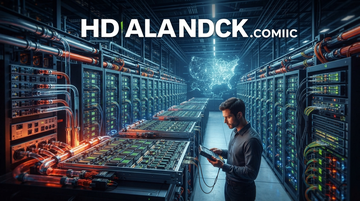
Nvidia’s “$1T through 2027” target resets the AI capex scare into a system-scale test
Nvidia says it now sees at least $1T in AI-chip demand through 2027—framed as a doubling from an earlier ~$500B view. Investors should treat the Aug. 26 quarter as the feasibility checkpoint: can memory, advanced packaging, power, and networking expand fast enough to convert that visibility into shipments without forcing an avoidable margin or cash crunch?

OpenAI’s S-1 turns Apple’s injunction battle into a measurable IPO risk—and Astra makes the timing matter
OpenAI’s SEC S-1 and its public comments around the Astra model shift the market conversation from “private-valuation hype” to a disclosed, litigation-shaped timeline risk. Meanwhile, Apple’s push for a preliminary injunction in its trade-secrets fight signals that product and deployment schedules can be gated fast—turning legal uncertainty into a priced factor for the next wave of AI listings.
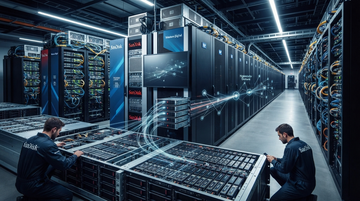
SanDisk’s “$94B backlog + 80% gross-margin” promise turns NAND into a contracting business—but the key test is whether the pricing floor survives
Western Digital’s SanDisk business claims multi-year visibility through a very large contracted backlog and an 80% gross-margin target through 2030. For investors, the trade is no longer “is NAND still commodity,” but “do hyperscalers sustain committed demand without forcing renegotiations, and does the cost stack keep up with 80% economics?”

ATE is the real AI bottleneck: Advantest and Teradyne own the “last meter” on shipping HBM-heavy silicon
As HBM stacks and chiplet complexity multiply test vectors, test floor throughput and “known-good” screening—not EUV—can become the binding constraint on how fast AI chips convert into shippable units. Teradyne and Advantest are positioned as critical enablers because they sell the platforms (and test pattern memory/architecture) that make high-throughput memory and compute testing feasible.

Tesla’s Cybercab goes from promise to pavement—employee rides at Giga Texas force a new robotaxi timeline investors can’t ignore
Tesla says Cybercab employee rides will begin soon at Giga Texas, with Tesla framing the first live “test” as a factory-first rollout rather than an immediate public service expansion. That matters because it shifts the robotaxi bet from only economics-at-scale to the operational reality of collecting production-grade autonomy data, de-risking failures, and coordinating insurance/regulatory pathways quarter by quarter.

Wispr’s $280M at a $2B valuation bets voice will replace the keyboard’s role in AI—not by speech recognition, but by editing-free “voice-to-outcome”
Wispr’s new $280M Series B at a $2B valuation positions the company as an AI interface layer, not a dictation add-on. The valuation implies investors expect voice to become the next default input surface for AI experiences—and that the winning economics will come from end-to-end writing/workflow conversion, not just transcription accuracy.

WuXi AppTec double-from-panic signals the market is treating the BIOSECURE tail-risk as temporarily paused—not structurally dead
A D.C. court preliminarily blocked the U.S. Department of Defense from enforcing its Section 1260H “Chinese military company” designation of WuXi AppTec as litigation proceeds. That legal reprieve, paired with ongoing operating momentum, helps explain why shares can re-rate quickly—but it also suggests investors may be pricing a “timed relief” window rather than the end of U.S.–China biotech de-risking once the BIOSECURE timeline turns.
2026-08-16
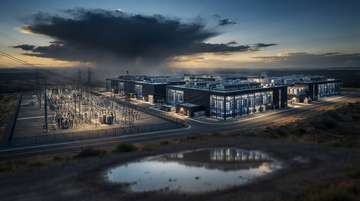
The unpriced line item in AI data-center finance: insurers/reinsurers are underwriting grid-interruption and residual-value “tails” that lenders can’t see
Insuring a $20B+ data-center build is not just a property issue—it’s a business-interruption and residual-value “tail-risk” problem shaped by grid strain and catastrophic concentrations. Swiss Re’s AI data-center risk research ties construction limits and BI severity directly to how insurers ration capacity, which can change project finance math even when property damage itself looks insurable.
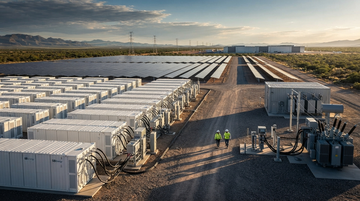
Nvidia’s $3B SB Energy bet highlights the missing “grid-firming” link in AI power
Nvidia’s reported move to invest up to $3B into SB Energy underscores that AI data-center growth is constrained less by chips than by 24/7 power availability. The real supply-chain margin sits in grid-scale storage, power-electronics, and fast interconnection—areas where equipment and energy-storage firms can see order-flow spillover once projects lock fuel (or storage) and transmission timelines.

The transatlantic bottleneck for AI isn’t fiber—it’s who gets to land it
Google’s new transatlantic subsea buildout shows how AI demand is now translated into physical route control: its Nuvem system targets ~384 Tbps across 16 fiber pairs and lands at the Atlantic “gateways” it chooses. In the U.S., FCC licensing and the ownership/architecture of cable landing stations then shape which ecosystems can absorb that capacity first—creating a new competitive edge for operators that sit closest to landing points like Equinix, and a new risk for traffic planners that assume capacity availability is purely a “cable count” problem.
What to expect
Evidence-first notes with a visible point of view.
This section collects sharp takes on earnings, shareholder meetings, and market structure. Each new piece should make the thesis, the facts, and the implications obvious within the first few screens.
Expect direct analysis, not generic commentary.
Expect the data to be explicit and the argument to be easy to follow.