Latest
The day's market news, with the argument attached
New notes every trading day on earnings, policy and market structure. Each one opens with the conclusion, then the evidence, then the companies it hits.
2026-08-03


AMD's $11.2B Quarter Is the Easy Print — Helios, the Anthropic 2GW Deal, and a 64x Forward P/E Decide Whether This Rally Has a Second Half
Advanced Micro Devices reports Q2 2026 on Aug 4 with $11.2B revenue and ~$1.61 non-GAAP EPS already in the guide, but the real test sits in the data-center mix and gross margin trajectory now that the $5B/Anthropic 2GW MI450 deal (Jul 22), Helios rack-scale launch (Jul 23) and $14B/Core Scientific 2.5GW data-center pact (Jul 28) have reset the 2027–2028 setup. Stock has run +120–160% YTD to ~$476 against a 64x forward P/E — almost 3x NVIDIA's 22x — so the print must validate that MI450 ramp economics can absorb Blackwell-style gross-margin compression rather than replicate it.

AstraZeneca–Bristol Myers’ alleged $400B oncology tie-up isn’t about synergy—it’s about buying back the “patent-cliff premium” investors demand
If the reported AstraZeneca–Bristol Myers Squibb (BMS) $400B megadeal ever advanced, the first re-pricing would be in oncology patent-cliff expectations: BMS’s revenue concentration in Opdivo and Eliquis LOE risk would effectively get capitalized into the combined group. The deal logic is strongest for BMS because Eliquis exposure is structurally harder to replace than label-expanding immuno-oncology, which forces a buyer-of-last-resort dynamic that would ripple into how investors price other “patent cliff” stories.

Berkshire’s Abel week is a value-rotation tell: cutting Chevron yet elevating Alphabet into a “virtual monopoly” position
In Greg Abel’s first-week-era moves, Berkshire reduced Chevron exposure while pushing Alphabet into a new top-5 “virtual monopoly” role—using concentration to express a new conviction stack rather than pure cash-and-yield defensiveness. For active managers, the investable takeaway is that Berkshire’s re-rating map is shifting from “dividend insulation” toward “moat + compounding” inside the public-equity sleeve, even when it means exiting parts of the energy/cash yield complex.

Boeing's 737 MAX 7 gets FAA type-certificate clearance—so airline delivery conversion can finally stop being a “regulatory option” and start being cashflow
The FAA issued an amended type certificate and updated the Production Limitation Record for the Boeing 737 MAX-7 on Aug 3, 2026—clearing the last big certification overhang that kept 737 MAX 7 deliveries from being a straightforward sales-and-delivery story for carriers. For investors, the key shift is that the remaining uncertainty moves from “will it be certified?” to “how fast will Boeing and the supply chain convert order book into aircraft + acceptance slots,” which should reprice near-term delivery timing risk for Alaska Air Group and Southwest Airlines and flow through to suppliers like Howmet Aerospace.

Copper Foil Is the New US IPO “Test of Trust” for China’s AI Compute Supply Chain
Londian Wason [FOIL] is using a US listing to formalize access to Western capital for a bottleneck material: electrolytic copper foil that feeds both LiB and PCB-grade conductors used in high-performance computing. In its F-1, it frames AI/high-speed computing PCBs as requiring lower-roughness foil (RTF/HVLP) and highlights a scale where PCB-grade remains far smaller than LiB—so investors should watch whether the market can re-rate the PCBs growth story before certification and customer concentration risks show up.
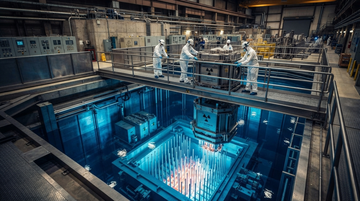
Curium’s Lantheus bid is really an isotope-capacity bet—because radiopharma growth is constrained by reactors, not chemistry
Curium’s reported pursuit of Lantheus shows radiopharma is shifting from “drug + distribution” to “drug + isotope throughput.” The investment implication is that bidders can gain durable advantage only by securing upstream nuclear capacity and locking down downstream commercial pull.

Eli Lilly's “cancer win” narrows the addressable audience—and that’s the real 2027 oncology TAM reset
Lilly’s latest oncology positive readout is a genuine efficacy win, but it’s tethered to a biomarker-defined subgroup (RET fusion–positive NSCLC), which shrinks commercial TAM versus “all-comers.” That subgroup math forces a sharper rerate framework for Eli Lilly, changes the opportunity-cost lens on Bristol-Myers Squibb, and matters disproportionately for smaller targeted-oncology platforms like Arvinas and Black Diamond Therapeutics.

Brussels Raises the Cost of AI Distribution—But Big Tech Can Absorb What Frontier Labs Cannot
The EU AI Act’s transparency rules began applying on 2 August 2026, forcing providers and deployers to disclose AI interaction and label synthetic content. The immediate burden is operational rather than a guaranteed 7% revenue hit: Article 50-related violations fall under a ceiling of €15 million or 3% of worldwide turnover, while the larger 7% ceiling applies to prohibited practices. That asymmetry favors diversified platforms such as Microsoft, Alphabet, and Amazon over private frontier labs whose Europe-specific revenue is not disclosed.

JPMorgan Chase's $750B housing signal shifts mortgage REIT math and homebuilder unit paths through 2035
JPMorgan Chase says it will deploy over $750B through 2035 to expand U.S. housing supply, homeownership, and mortgage lending. The supply impulse is real, but the tradable read-through hinges on rate-cut timing because mortgage-spread and funding-cost dynamics drive mortgage REIT earnings and lock in homebuilder lot economics.

The July Jobs Report Must Clear a 57,000 Payroll Bar—But the 4.70% 10-Year Has Already Priced a Hawkish Rebound
The Federal Reserve’s 9–3 hold on July 29 was more hawkish than the headline: three officials wanted an immediate hike, and Chair Kevin Warsh said higher underlying inflation would trigger tightening. July payrolls therefore matter through wages and labor supply, not merely the job count. A hot combination would validate the 68% prediction-market odds of a 2026 hike and pressure duration-sensitive assets; a weak, broad-based report would challenge a 10-year Treasury yield already at 4.70%.

KKR’s $19.2B infrastructure close marks the LP “go-ahead” for AI power + data-center deals (and it changes the deal math)
KKR’s KKR Global Infrastructure Investors V closing at $19.2B is the clearest public confirmation that large LP capital is willing to fund long-duration AI-adjacent infrastructure. The investable takeaway: this capital should compress the risk premium—and therefore improve entry valuations—for equity, credit, and lease/contract structures that sit between hyperscalers and the grid.

Marriott.'s Middle East RevPAR hit confirms Iran-war hotel damage—now guidance risk spreads across the hotel value chain
In its Q2 report, Marriott showed Middle East & Africa RevPAR fell sharply and said the conflict impact is continuing into the third quarter—turning the Iran/Hormuz shock into a measurable earnings drag, not just a narrative risk. The key investor takeaway is that RevPAR declines in a specific geopolitical corridor can quickly propagate from corporate travel cuts to regional profitability, then to group/OTA booking behavior—making “Middle East exposure” a portfolio-level question for hotel operators and online travel channels.

Novo Nordisk ‘claws back’ into obesity because the market is shifting from injections-only to pills-and-next-gen demand
Novo Nordisk’s obesity narrative is being re-rated around oral GLP-1 execution (including Wegovy pills) rather than only injection leadership—exactly the demand shift that can loosen Lilly’s pricing power. The setup matters because Eli Lilly still trades like a monopoly ($40.8x trailing P/E), while the Reuters-driven “pipeline reset” forces investors to price a wider share of the obesity wallet into Novo’s future.

US regulators aren’t just policing fair lending—they’re forcing banks to prove where “community development” grant money actually goes
The OCC/FDIC proposal ties CRA-adjacent fair-lending scrutiny to a concrete “credit-allocation” proof: banks must demonstrate that most community development grant funds are spent in the relevant communities—and that grant recipients don’t run high overhead. The economic effect is simple: this rule shifts cost and compliance burden toward relationship banks that rely on mission spending, compressing the returns on “CRA-style” balance-sheet and programmatic allocations.

Okta Paid Nearly $200M for the Missing Layer in AI Security
Okta is buying Permiso Security to extend identity protection from login and access control into the behavior of human, machine, and agentic identities. The reported price is nearly $200 million, but the more important signal is strategic: the security platform that owns post-access telemetry may control the next AI-security budget.

OpenAI’s “abundant intelligence” is a capex doctrine—and the bill routes through Nvidia, Oracle, and the AI power grid
OpenAI’s Jul 31 “Building abundant intelligence” framing reads less like a product roadmap and more like a compute-scale-out discipline: plan infrastructure years ahead, measure success by useful work per cost, and keep pushing the capability-per-dollar frontier. When you combine that with OpenAI’s explicit GPT-5.6 cost cuts and its Nvidia partnership commitment to deploy at least 10 GW starting in 2H’26, the likely winners are the suppliers who monetize GPU scale, cloud capacity, and (most underpriced) reliable power.

Palantir’s guide raise is the market’s first “AI budgets are real” signal—because it’s coming through the U.S. commercial line
Palantir’s latest guidance raise is most investable when you treat it as evidence that AI deployments are moving from one-off pilots into contracts that show up in forward revenue. The clearest through-line is the uplift in Palantir’s U.S. commercial revenue guide, which makes the AI/defense thesis a budget-and-execution story—not just a demo-market story for software vendors.

Shein’s $64B-to-$40B cost reset is a stealth IPO pricing experiment—where late backers (not founders) take most of the markdown
Shein is reportedly considering a mechanism that lowers late-stage investors’ “cost base” toward a ~$40B IPO valuation, after those investors bought at an up-to-$64B valuation. The design matters because it shifts the economic pain away from the IPO float and onto backers, creating a transferable template for how other late-stage private names may manage Q3 marks and public-market translation risk.

Snap’s Q2 World Cup “ad beat” survives the ARPU stress test—up to the point where the math is still quarter-specific
Snap’s Q2 revenue inflection looks real on a top-line read, but the durability question is the split between unit economics and temporary demand/event lift. The quarter’s fundamental financial direction is still dominated by advertising volatility and profitability pressure, so investors should treat the World Cup headline as a signal—not proof—of sustained AI-driven routing gains.

Tom Lee’s 2027 “best year” only works if mega-caps keep leading while SpaceX-or-Fed shocks don’t reprice risk—here’s the trade book
Tom Lee’s bullish 2027 setup is best understood as a conditions trade: mega-caps must keep capturing AI earnings momentum while the market digests massive tech IPO supply and avoids a Fed-led tail unwind. The concrete test is whether leadership stays narrow (NVDA/META/GOOGL/AXP/CVX) or spreads into the small-cap bridge—because if it doesn’t, “best year” becomes a liquidity/valuation story rather than an earnings story.
What to expect
Evidence-first notes with a visible point of view.
This section collects sharp takes on earnings, shareholder meetings, and market structure. Each new piece should make the thesis, the facts, and the implications obvious within the first few screens.
Expect direct analysis, not generic commentary.
Expect the data to be explicit and the argument to be easy to follow.