Latest
The day's market news, with the argument attached
New notes every trading day on earnings, policy and market structure. Each one opens with the conclusion, then the evidence, then the companies it hits.
2026-09-14

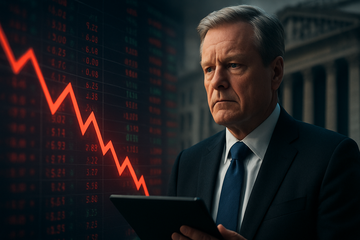
One Word Sank Bank Stocks Monday: BofA's CEO Just Admitted the Q2 Capital-Markets Boom Is Over
Bank of America CEO Brian Moynihan told the Barclays conference Q3 investment-banking fees will fall10%+ year over year and sales & trading revenue will be \"flat\" — the first hard CEO-level guidance from a top US bank that both capital-markets engines decelerated at once. With industry Dealogic data confirming IB fees are down roughly 10%, a $1 trillion OpenAI IPO now pushed to 2027, and a macro stack of Fed hike odds at 88% and oil above $103, the Monday selloff in financials looks like a leading read on a sector-wide Q3 earnings reset, not a one-bank story.

The CLARITY Act's 60-Vote Cliff Hits Tuesday. Coinbase and Circle Are Already Past It.
Polymarket prices the Digital Asset Market Clarity Act (H.R. 3633) at 29% to clear the Senate in 2026, and the math — 53 Republicans, two probable GOP defections, and only two Democrats offering conditional support — explains why. The real investment story is structural: Coinbase's $292M Q2 stablecoin revenue and Section 404's preserved activity-based rewards survive either outcome, and Circle's Arc network launches Sept. 16 with BlackRock, Visa, and Mastercard as validators — so the binary vote risk masks a more nuanced trade for COIN and CRCL, with the banks standing as the underappreciated winners either way.
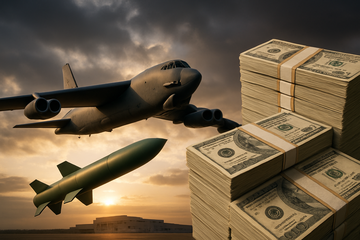
Pentagon Backlogs Are Pricing Defense SPACs Now — Six Mergers, $6.3B of Pipeline, and a Capacity Story That Dwarms Conviction
Six defense and space SPAC mergers announced in 2026 — led by Ursa Major's $2.3B tie-up with Bleichroeder Acquisition Corp III, Quantum Space's $1.2B deal with Inflection Point Acquisition Corp VI, and Space-Eyes's $638M counter-drone play with McKinley Acquisition Corp — are running alongside record Pentagon backlogs at Lockheed Martin ($230B), RTX ($289B), and Northrop Grumman ($105B), plus an FY27 budget request of $1.5T. The capital-markets read is that defense founders are choosing the SPAC lane for capacity certainty — PIPE pre-committed, time-certain close — while the parallel IPO lane is fragmenting: Lyntris priced below range and fell 14% day one, and Starfighters Space trades down 83% year-to-date.

Dell Family Office vs. Wall Street: Why a $4B Insurance Broker Is Now a Take-Private Test for Patient Capital
DFO Management, the family office of Dell Technologies founder Michael Dell, is in advanced talks to take Baldwin Insurance Group private at a roughly $4.1B market value, the FT reported Sept. 14, 2026. The deal would mark the first time a single-family office has outbid private equity for a scaled US insurance broker, and it would price Baldwin at a discount to the 16–18x EV/EBITDA commanded by Aon, Marsh & McLennan and Arthur J. Gallagher — but at a premium to a stock that has spent most of 2025 in retreat. The same week the Baldwin Insurance Group board formally invited offers, Thoma Bravo closed its $4B-plus take-private of Accelerant Holdings at a 49% premium, confirming that family-office and PE capital are competing for the same shrinking pool of listed specialty distributors.

Exxon's 264,000-bpd Joliet Refiner Just Went Dark — and the Curve Can't Afford to Lose Another Drop
Exxon Mobil's 264,000-bpd Joliet, Illinois, refinery tripped offline on a power outage Sunday at 3:30 p.m. CT, knocking ~10% of Midwest finished-product supply out of action while diesel cracks already sit above $100/bbl and the Saudi East-West pipeline remains dark. The outage stacks on top of a Strait of Hormuz disruption, a 5–6 week Saudi pipeline repair, Trump's public push on Volodymyr Zelensky to spare Russian diesel, and 280,000 bpd of West Coast capacity already gone — turning any unplanned US drop into a crack-spread accelerant. Refiners running full tilt are the cleanest expression: Marathon Petroleum booked $24.84/bbl R&M margin in Q2 versus $6.79 a year ago, and the seven-stock US refining complex is up 80–190% YTD with another leg higher priced in if Joliet stays down past the IIR estimate of end-of-week restart.

Samsung and SK Hynix Just Said 'No' to KEPCO's $19B Power Deal — and Korea's AI Chip Dream Is Now Hitting a Wall It Can't Code Its Way Around
Korea Electric Power Corporation wanted Samsung Electronics and SK Hynix to prepay 25 trillion won (~$18.7B) for five years of electricity to fund the transmission grid feeding Yongin and Honam. Both chipmakers refused on September 13-14, 2026, citing memory-cycle uncertainty, not affordability. The refusal exposes a structural mismatch: Korea is on track to build roughly 1.3 quadrillion won of fabs roughly a decade faster than the grid that must power them, while KEPCO carries 210.7 trillion won of debt and burns11.5 billion won a day in interest. Investors who priced the Korean AI story as a chip race now have to price it as a power-and-grid race, with Korean grid-equipment names — not the chipmakers themselves — the cleanest beneficiaries.

The $48.7B Kenvue Bid Now Hinges on a Brand-by-Brand EU Carve-Out — Feminine Hygiene Is the Lever
Kimberly-Clark's $48.7 billion acquisition of Kenvue is down to a 15-day clock in Brussels. With the European Commission's preliminary review ending September 29 and Kimberly-Clark already 'readying concessions' (Reuters, Sep 14), the deal's binding constraint is no longer premium or financing — it is which Carefree, Stayfree and o.b. assets Kimberly-Clark must divest to clear the EU's only true horizontal overlap, feminine hygiene, where Kimberly-Clark's U by Kotex already runs against Kenvue. Australia's identical prescription (Carefree/Stayfree forced sale, Sep 2) and Essity's rapid purchases of Edgewell's NA portfolio ($340M, Feb 2026) and Kenvue's Brazilian Carefree/Sempre Livre/o.b. ($284M, Aug 2026) sketch the divestiture template and the buyer universe. For investors, the EU decision sets the precedent for the next US-EU consumer-health merger wave and decides whether Kimberly-Clark keeps the bulk of a category it already controls in roughly half its markets.

Lilly Drops a Bombshell at Morgan Stanley: Zepbound Now Holds 30%+ of New Starts in the Oral GLP-1 Category
Eli Lilly used today's Morgan Stanley healthcare fireside chat to claim Zepbound now controls more than 30% of new starts inside the oral GLP-1 category, framing Foundayo as the funnel and tirzepatide as the destination. The disclosure reframes the Novo Nordisk vs Lilly pill war: Foundayo's $98M Q2 looks small next to oral Wegovy's ~$496M, but Lilly's broader tirzepatide franchise is converting oral starts into injectable revenue at a pace that compresses the strategic value of a stand-alone pill.

Moonshot's $2B Target Is the First Real Test of Chinese Open-Weight AI — On Borrowed Silicon
Moonshot AI is targeting $2 billion in annualized revenue by year-end 2026, roughly double its August 2026 run-rate of ~$1 billion after July's Kimi K3 launch. The training compute, however, rides on 20,000 Nvidia Hopper chips leased through Alibaba Cloud — a stack the US government has already accused Moonshot of illicitly sourcing. With Anthropic's distillation allegations, OpenAI's 2030 compute target cut in half, and Huawei's domestic chip ramp accelerating, the real question is whether Moonshot can compound to $2B before the silicon and legal constraints bind.

Saudi Just Yanked 4% of Global Oil at $102 Brent. The Curve Says This Is a Spike—Unless the Pipeline Doesn't Restart in 3 Days
Saudi Aramco's East-West pipeline shutdown, triggered by Iraqi-launched drone strikes on September 10–11, has pulled 4–5 mb/d — 4–5% of global supply — off the market while Brent trades ~$107 on the front month and Dec 2027 already discounts to $78. The deep backwardation argues for a fast spike, not a new floor: Saudi Arabia repaired a missile hit on the same pipeline in just 3 days in March 2026, and IEA data shows effective Saudi spare capacity at exactly 0 mb/d. The market is pricing in repair — duration of the outage is the single binary catalyst.
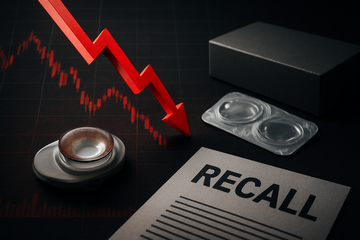
Shein's contact-lens recall turns a10% IPO plunge into 17.5% — the de-minimis math now has a product-safety variable
Ten days after SHEIN's HK$48.56 Hong Kong listing, regulators in Australia and New Zealand pulled its Syliuwa coloured contact lenses over Burkholderia cepacia contamination. The stock closed HK$40.06 on the recall day, capping a 17.5% drop from issue. With U.S. tariff math already pressuring margins and the Q1 2026 books in a $99M net loss, a third-party product-safety event is the variable equity bulls had not priced.

The Tariff Dodge Is Unraveling: Why US Firms Are Quietly Heading Back to China
Tariff-rate convergence between China and its substitutes, plus a 21% drop in US manufacturing construction since June 2024, has flipped the post-2018 playbook. Alliance Consumer Group has already pulled sourcing back to its old Chinese supplier; German FDI in the US fell ~67% YoY in H1 2026; Chinese greenfield into the US collapsed to $80M. The 'reshoring supercycle' thesis breaks — and the capex math for 'Reshoring' stocks from Apple to Roche has to be repriced.
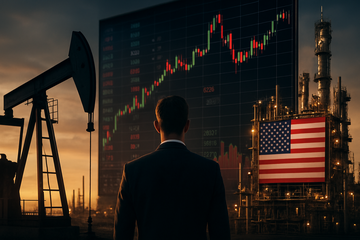
From sanctions to shareholding: Trump's Venezuela template puts Iran's 208 billion barrels on the table
On September 13, President Trump explicitly framed the Iran endgame as 'keeping the oil like Venezuela' — a state-shareholding template, not a sanctions regime. The September 2 Venezuela deal hands U.S. operators majority control of 65 billion barrels at low-cost off-take, with Chevron pledging $7 billion to double output to 600,000 bpd. Applied to Iran's 208.6 billion barrels (per OPEC's 2026 bulletin), the template rewrites Chevron's barrel math, flips the oilfield-services cycle, and gives U.S. Gulf refiners a heavy-crude cost basis the market has not priced.
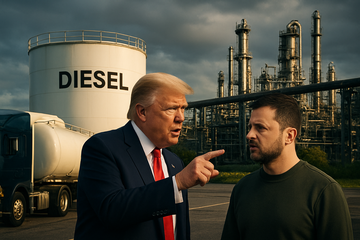
Trump Tells Zelensky to Spare Russian Diesel — Right as Marathon Petroleum, Valero and Phillips 66 Pocket a $5.1B Quarter
On Sept. 13, 2026, President Trump publicly told Ukraine to 'stop knocking out diesel fuel in Russia,' even as the U.S. diesel crack spread hit a record $108/bbl and the three largest independent refiners booked combined Q2 refining-segment income north of $15B. The call reframes diesel from a Russia-Ukraine story into a U.S. policy lever — and ties the U.S. refiner P&L, Saudi pipeline flows, and any Trump-Putin-Xi deal into a single crude-distillate trade. The squeeze itself is bigger than Kyiv: the IEA says the U.S.-Iran war has removed more supply, with the Strait of Hormuz historically carrying 20% of global oil and the Saudi East-West pipeline now offline after a Sept. 11 Houthi drone strike.

Wells Fargo's Commercial Banking Bench Just Lost a 40-Year Veteran — Right as BofA Sounds the Deal-Flow Alarm
Wells Fargo's Florida Gulf Coast commercial banking chief Jim Themides is retiring at year-end after 40 years, with Leila Tooley taking over — a routine handoff that lands awkwardly the same day Bank of America CEO Brian Moynihan warned Q3 investment-banking fees will fall more than 10% from a year ago. With commercial banking plus corporate and investment banking now generating roughly half of Wells Fargo's net income, the Q3 print on October 13 is the first test of whether the post-asset-cap re-rating thesis holds when capital markets turn.
Apple's App-Store Power Survived Unscathed — Musk Dropped the Antitrust Suit on the Same Day iOS 27 Killed the Theory Behind It
X Corp and SpaceXAI quietly filed to dismiss their August 2025 antitrust lawsuit against Apple in a Texas federal court on September 14, 2026 — the very day Apple shipped iOS 27 with a Gemini-powered Siri and a third-party AI Extensions framework that, by design, demotes ChatGPT to one of several options. The dismissal leaves Apple's curation defense and App-Store economics intact, pushes the chatbot-monopoly theory onto OpenAI alone, and gives Alphabet a cleaner runway on both the Gemini integration and the parallel Google-Search antitrust overhang. For investors, the read-through is that platform-gatekeeper risk is now bounded by regulation, not private suits — Apple gained clarity on its most valuable asset while paying nothing in precedent.
Z.ai's 10% Slump on a Second $5 Billion Raise in Two Months Is the First Real Crack in China's AI Listing Premium
Z.ai fell 10% on Sept. 14, 2026 after pricing a $5 billion placement-plus-convertible raise — its second tap of public markets in just two months, with the new shares sold at a 10% discount to a price already 60% below the July peak. The reaction is the cleanest signal yet that the China AI listing premium is unwinding: a frontier lab with revenue up 400% in H1 2026 still could not avoid the dilution penalty, while peer Alibaba raised $10.2 billion the same week to fund its own AI build-out. Investors should expect MiniMax, DeepSeek's STAR Market debut, and the next private round from Moonshot AI and Baichuan to feel the read-through.
2026-09-13
AI Is Suppressing Wages, and the 10-Year at 4.85% Has Already Priced It
Apollo's [Apollo] study shows AI-exposed occupations grew real wages 6.7 percentage points slower after 2023, and BLS Q2 data puts labor's share of output at a 79-year low. With the [Federal Reserve]'s two-hawk regime now pricing 85% odds of a September hike, the 10-year at ~4.85% isn't reflecting growth or fear — it's reflecting a structural wage-AI break that keeps the Fed hawkish and pins long duration.
Alphabet's $200B AI Bet Just Crossed the Proof Line — But the Stock Market Is Trading the Wrong Alphabet
Alphabet's Q2 2026 results showed Google Cloud revenue up 82% to $24.8B, operating income up 30% to $40.8B, and a $514B backlog — yet GOOGL fell 7.2% on a -$5.9B free-cash-flow print and a $195-205B capex hike, while the bond market awarded the same issuer a $25B offering 4.6x oversubscribed at sub-100bps spreads. Google Cloud CEO Thomas Kurian disclosed a sub-two-year payback on AI servers and a roughly one-year payback on Google's own TPU silicon. The mispricing is the trade: equity still behaves like a credit-risk hyperscaler, while the corporate bond market already treats Alphabet like an AI cashflow compounder.
Anthropic's $2T Nasdaq Pick Was About the 15-Day Index Rule, Not the Exchange
Anthropic filed its S-1 on June 1, 2026 and on September 13 chose Nasdaq over NYSE for an October listing targeting ~$2T, with Morgan Stanley and Goldman Sachs as lead underwriters. The decisive mechanism is Nasdaq's May 1, 2026 rule change that lets a newly public name enter the Nasdaq-100 after 15 trading days — versus the S&P 500's 12-month seasoning — turning a $2T float into immediate passive demand inside the $482B Invesco QQQ Trust and the broader Nasdaq-100 tracking complex. The trade cascades through Nasdaq Inc's listings franchise, the strategic backers — Amazon (~21%) and Alphabet (~15%) — and the AI compute chain led by NVIDIA.
What to expect
Evidence-first notes with a visible point of view.
This section collects sharp takes on earnings, shareholder meetings, and market structure. Each new piece should make the thesis, the facts, and the implications obvious within the first few screens.
Expect direct analysis, not generic commentary.
Expect the data to be explicit and the argument to be easy to follow.