Latest
The day's market news, with the argument attached
New notes every trading day on earnings, policy and market structure. Each one opens with the conclusion, then the evidence, then the companies it hits.
2026-09-13

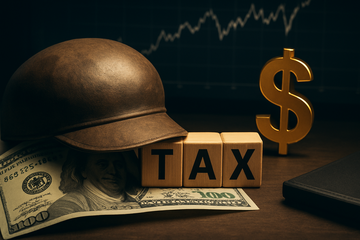
Bipartisan Cap-Lift Puts ~$3T of New Payroll Tax on the Table — Bond Yields Have Moved the Wrong Way
Senators Warren and Moreno's plan to scrap the $184,500 Social Security payroll tax ceiling picked up public GOP support from Reps. Tom Cole and Lloyd Smucker this week, but the 10-year Treasury still closed at 4.97% on Sept. 11 and the 30-year hit 5.27% in July. With the 2026 Trustees Report projecting Q4 2032 OASI depletion and a 4.42%-of-payroll 75-year shortfall, even a full cap removal — Tax Foundation scoring puts it at $3.2T conventional / $1.5T after economic feedback — covers roughly two-thirds of the gap. The market hasn't priced the deficit math yet; that's the trade.
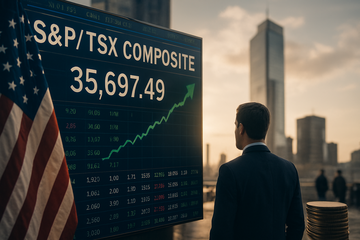
S&P Quietly Doubles Its Foreign-Issuer Offer: Anglo Teck Gets Full TSX Weight on December 21, Not the 50% First Floated
S&P Dow Jones Indices on September 11 widened S&P/TSX eligibility to admit TSX-listed foreign issuers with a 'meaningful presence' in Canada — but the bigger story is what was dropped. After market pushback, the proposed 50% weight cap on those issuers was abandoned, meaning the $53B Anglo American–Teck combination due to close by March 2027 joins Canada's benchmark at full float-adjusted weight on December 21, 2026. That pulls an estimated multi-billion-dollar wave of US and Canadian passive money into a single line, and creates a template for future cross-border listings on the TSX.
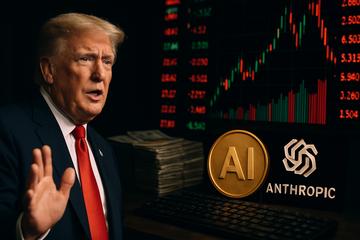
Trump's 'Very Negative Forces' Line Just Cleared the Path to OpenAI's 2027 IPO and Anthropic's $2T Listing
In Doonbeg on Sunday, the President cast AI safety critics as 'very negative forces' — a one-sentence pivot that aligns the White House behind faster AI deployment and reframes the political battlefield from agency rulemaking to public discourse. The read-throughs are immediate: OpenAI's already-delayed $1T IPO target slides to 2027, Anthropic's confidential S-1 still targets a fall-2026 listing near $2T, the AI safety stack loses its regulatory tailwind, and chip demand from NVIDIA, TSMC and Micron stays locked in.

VIX Crashed 11% to 15.84 — Into a 90%-Priced Fed Hike and Brent Above $100
On Sept. 11, 2026 the Cboe Volatility Index closed at 15.84, down 11.21% on the day, even as August CPI printed a hotter-than-expected +0.4% MoM, CME FedWatch lifted Sept. 16 hike odds from ~70% to ~90%, and Brent held above $100. With 30-day realized vol near 9.2%, the S&P 500 actually rose 0.86% that session, an overshoot that signals hedgers are cutting insurance into the regime where it has historically paid off most. The Volmageddon-style short-vol trade is back, and the listed ways to play both sides sit at Virtu Financial, Cboe Global Markets, Flow Traders and Man Group.
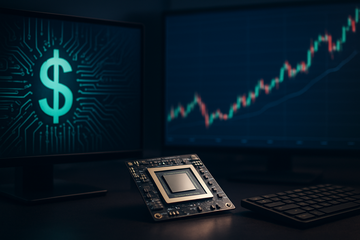
NVIDIA's Open-Model Distribution Play Faces a New Threat — and It Isn't Coming From Beijing
Y Combinator's Garry Tan wants US open-weight labs to legally distill frontier models, turning the CISA/Anthropic 'China problem' into a US strategic asset. That shift rewrites who captures the open-weight layer — and the second-order loser is NVIDIA's bundling of GPU, Nemotron and AI Foundry, which today monetizes the gap between closed frontier and free open weights.

CFTC Yen Positions Just Flipped Net Long—A 103,000-Contract Reversal That Hands the AI Carry Trade a Two-Way Tail
Speculators flipped to a net long yen position of +10,796 contracts in the week to September 8, reversing the prior week's -92,227 and ending a seven-month run of bearish bets. The shift signals the carry trade is no longer one-way—but a crowded long position is its own risk, leaving both NVIDIA-led AI equities and Mitsubishi UFJ Financial Group's megabank peers exposed to renewed yen volatility into the Bank of Japan's December rate decision.
2026-09-12

Anthropic called for a global AI slowdown three days after filing to go public — and its own safety policy exempts itself
On June 4, 2026 — three days after Anthropic confidentially filed its S-1 — the company published a blog post asking every other frontier lab to pause. Anthropic's own Responsible Scaling Policy v3 had already been updated in February to carve out an exception: it will not slow down if it lacks a lead. With run-rate revenue now past $65 billion, a $2 trillion IPO in the mid-October pricing window, and $517 billion in compute commitments to fund it, the slowdown call is best read as a coordinated-pressure play against OpenAI and Google DeepMind ahead of the largest listing in tech history.

Anthropic's Threat Report Becomes the $2T IPO's Loudest Sales Pitch
Two weeks before its targeted October 2026 listing, Anthropic disclosed that Claude was used for North Korean-style missile guidance, Iranian OSINT profiling of U.S. naval forces, and Russia-linked espionage — paradoxically reinforcing its \"responsible AI\" narrative just as the Pentagon blacklist was struck down on Aug 28, 2026 and a $2T valuation was being shopped to investors. The real compliance drag is margin, not scandal: at a $65B July run-rate Anthropic still prints ~40% gross margins (vs. Microsoft at ~68%), which is what investors should price next.
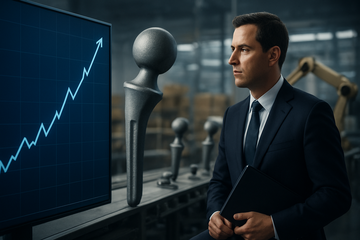
Apollo's $20B DePuy Bid Pays Less Than Half Stryker's Sales Multiple — And the Orthopedics Map Just Shifted
Apollo Global Management is in talks to buy Johnson & Johnson's DePuy Synthes orthopedics unit for roughly $20 billion, valuing the $9.3 billion-revenue business at about 2.1x sales — a sharp discount to Stryker's roughly 4.0x and roughly in line with the public Zimmer Biomet multiple. The deal would let Johnson & Johnson exit its slowest-growing medtech franchise at a take-private premium, hand Apollo Global Management a seat at the orthopedics top table backed by $1.05T in AUM, and re-rate the cost-of-capital math for every large-cap medtech in the Stryker-Zimmer Biomet competitive orbit. The near-term read is concrete: Stryker inherits a slower-moving rival; Zimmer Biomet faces a private-equity operator with both incentive and balance sheet to grab share; the contract manufacturers and hospital systems tied to DePuy's $9.3B book get a new negotiating counterparty.

Arizona just opened a state-level liability lane on hair-relaxer cancer — and L'Oréal's €44B group is the test case
Arizona Attorney General Kris Mayes filed the first state consumer-fraud suit against L'Oréal on September 10, 2026, alleging the company concealed cancer risks tied to its Dark & Lovely, Optimum and Mizani relaxers. With 12,129 federal MDL plaintiffs already lined up for a January 2027 bellwether trial and the EU banning 12 cosmetic substances months ahead of any FDA action, L'Oréal's €16B Consumer Products division now sits at the center of a liability template that drags in Godrej Consumer Products, the private Wella Company (now filing for a US IPO), and global peers Coty, Estée Lauder, and Procter & Gamble.

Boeing's New SPEEA Deal Adds ~$300M a Year in Labor Cost — A Tax Worth Paying to Save $2.5B
On September 11, 2026, Boeing submitted a revised final contract offer to 17,000 SPEEA-represented engineers and technicians, and the union's negotiation team unanimously recommended ratification. The deal swaps a 3%-retroactive wage structure for a 10%-immediate guaranteed bump plus 4% in March 2027, lifting Boeing's labor cost curve but pulling the company back from a strike that, on 2008 precedent, would have erased roughly $1.3B of free cash flow per month and pushed the 737-7/737-10/777-9 certification path further out. With a record $715B backlog, a $631M Q2 FCF beat, and a fresh debt-funded production ramp, the trade favors equity holders over debtholders — but barely.

Data Centers Are Too Big for Today's $66B Cat Bond Market — So Reinsurers Are Building the Bridge
Munich Re, Swiss Re, Aon, Arthur J. Gallagher and Marsh McLennan are quietly positioning to become the first risk-transfer channel for hyperscale AI data centers, with the inaugural cat bond or sidecar expected inside 12–18 months. The catalyst is structural: a single hyperscale campus now carries $20–30B of insurable value — beyond any one carrier's appetite — and data-center insurance premiums need to roughly double to $24B by 2030 per Swiss Re. The first buyers of that risk are reinsurers and ILS managers, not capital-market lenders, because fire, water, power-outage and business-interruption losses still cannot be modeled at bond-grade resolution; the inaugural structures will be parametric sidecars and inland- nat-cat portfolios, not indemnity covers on a single GPU hall.

Druckenmiller Dumped Broadcom, Intel, and Micron. The Chip He Bought Instead Says the AI Trade Has Two More Years Left.
Stanley Druckenmiller's Q2 2026 13F cut Broadcom, Intel, and Micron — chips that already printed their 2025–26 melt-up — and opened a new position in AMD and a fresh miner-to-AI cluster in Bitdeer, Riot Platforms, Hut 8, and IREN. The chip he kept (a 19% larger TSMC stake) is the real tell: hyperscaler capex is heading toward $700 billion in 2026, and Druckenmiller is positioning for the picks-and-shovels picks, not the names that already cycled.

Judge Illston kills the FEMA halving — restoring the math for $758M of NFIP reinsurance and $570M of disaster-recovery contracts
U.S. District Judge Susan Illston ruled on September 12, 2026 that DHS broke post-Katrina law by ordering FEMA to slash its workforce in half — a liability finding that, with remedies due next month, preserves the federal catastrophe backstop reinsurers and disaster-recovery contractors had been quietly pricing for a 2027 alternative scenario. Disaster-recovery firms Jacobs Solutions and Tetra Tech get back the federal revenue base that was on the chopping block; RenaissanceRe, Everest and Arch Capital keep the stable treaty assumptions their January 2027 books were written against; and the $758M National Flood Insurance Program private-reinsurance renewal stays on track. Primary carriers AIG, Travelers and Allstate face a softer 2027 pricing story because the cost-shift onto private capital that market chatter had been pricing has just been defused — quieter underwriting, slower top-line.

Ford's 223,500-F-150 fuel-tank recall lands on a $17.6B warranty pile — but Tesla's 1.2M probe is the bigger cost-of-quality unknown
Ford's NHTSA recall of 223,472 2023–2027 F-150s for improperly secured fuel tanks adds an estimated ~$110M of strap-replacement work to a Q2 2026 warranty reserve of $17.6B — manageable against a reserve where pre-existing-warranty accruals fell two-thirds in H1 2026. The cleaner peer isn't Tesla's 1.2M-unit suspension probe, still in preliminary evaluation with zero crashes but five times the vehicle count; the closest template is General Motors's L87 engine recall, which has already booked $700M in warranty claims and expanded to ~998K trucks. The supply-chain angle runs through Magna International, a Tier 1 fuel-tank supplier exposed to F-150 strap-replacement volume.
JD.com's $500K SEC fine — the first 'sham transactions' case against a Chinese ADR — exposes a $160M gap auditors have to defend
On Sept. 11, 2026 the SEC hit JD.com-owned Dada Nexus with a $500,000 cease-and-desist for fabricating online advertising and marketing transactions across four quarters ending Sept. 2023, overstating net revenue and operating costs by more than $160 million. The penalty is token; the precedent is not — it is the first 'sham transactions' settlement against any Chinese ADR under the SEC's new Cross-Border Task Force, and it sets a quantifiable compliance template auditors will now apply to Alibaba, PDD Holdings, Baidu, NetEase and the rest of the US-listed China complex.
JPMorgan Becomes the First Major Prime Broker to Sever an AI-Concentrated Fund — and Wall Street's Counterparty Desk Just Priced the AI Trade Down
JPMorgan Chase terminated its prime brokerage lending relationship with Leopold Aschenbrenner's Situational Awareness LP on Sept. 11 — six weeks after the fund posted what the FT called the largest dollar loss in hedge fund history and migrated its financing to non-bank broker Clear Street. The cut marks the first time a top-tier US prime broker has formally severed a major AI-concentrated fund, while at the same time Goldman Sachs disclosed that roughly 16% of its prime brokerage financing book sat in AI memory stocks at the end of June. The transmission mechanism is now explicit: counterparty banks — not just fund managers — are pricing the AI trade down.

Mecka AI's $500M Sequoia Round Is the First Market Price on Robot Training Data
Sequoia is closing a financing that values Mecka AI at roughly $500M, an ~8x markup on the $60M the startup had raised just three months earlier. The deal is the first market-clearing price tag on the data layer of embodied AI, and with every humanoid robot maker still private, the public-market translation runs through Apple's iPhone as the capture device, NVIDIA's robotics compute stack, Tesla's Optimus pipeline, and XPeng's IRON push.

Nvidia's $10B Anthropic Anchor Is the First IPO Check Wall Street Has to Mark as a Circular AI Trade
Reuters reported Sept. 11 that NVIDIA is in talks to take a stake of up to $10 billion in Anthropic's October IPO, which could raise as much as $100 billion at a ~$2 trillion valuation. The check closes a loop the Street has paper-marked for two years: NVIDIA chips finance Anthropic, NVIDIA equity supports Anthropic's customers, and Anthropic rents NVIDIA-backed compute from CoreWeave — a flywheel that now forces investors to mark $94B of customer equity at IPO risk.
$7.5B Ellison Exit Plus a $2.8B Restructuring Tab — Oracle's AI Cloud Beat Can't Outrun Its Capex
Oracle cofounder Larry Ellison filed a 10b5-1 plan in June to sell up to 50 million shares (~$7.5B) through October 24, 2026 — and the company has now disclosed another $700M in restructuring costs, lifting its 2026 plan to $2.8B. Cloud infrastructure revenue jumped 121% in Q1 FY2027, but FY2026 free cash flow came in at negative $23.7B against $55.7B of capex, and Oracle is funding the buildout with $45–$50B of new debt and equity. The AI revenue story is intact; the AI FCF story isn't — and the founder's trading plan says he knows it.
What to expect
Evidence-first notes with a visible point of view.
This section collects sharp takes on earnings, shareholder meetings, and market structure. Each new piece should make the thesis, the facts, and the implications obvious within the first few screens.
Expect direct analysis, not generic commentary.
Expect the data to be explicit and the argument to be easy to follow.