Latest
The day's market news, with the argument attached
New notes every trading day on earnings, policy and market structure. Each one opens with the conclusion, then the evidence, then the companies it hits.
2026-09-12


Apollo's $20B DePuy Bid Resets Orthopedic Valuations—Stryker's Premium Just Became a Moat
Apollo's reported $20B equity / $28B enterprise bid for Johnson & Johnson's DePuy Synthes prices the largest US orthopedic franchise at ~2.15x equity-sales—roughly half of Stryker's FY2025 5.84x multiple, and barely above Zimmer Biomet and Globus Medical trading levels. The deal crystallizes a two-tier orthopedic industry: one premium player (Stryker, with 3,000+ Mako systems installed) and a compressed cluster of private-equity-vulnerable tier-2 OEMs competing on cost, scale, and partial robotic systems. Contract manufacturers like Integer Holdings and the merged Tecomet/Orchid platform become the read-through winners as cash-strapped OEMs outsource more.

$166B Tariff Refund Reflux Has Peaked — Quietly Voids Trump's $5,000 Dividend Math And Forces a Treasury Re-Price
Tariff refunds under the post-IEEPA Supreme Court order have crossed from net-negative to net-positive in August 2026, the first time since the refund portal opened. Roughly $115B has already gone back to importers, with ~$100B still owed — a sum larger than every realistic2026 tariff-revenue forecast. Trump's floated $5,000-per-adult 'dividend' would cost ~$1.3T against ~$300B in current-law customs receipts, and the refund taper means those receipts will fall further as the year closes. The implication for equities: front-loaded cash beneficiaries (Nike, Apple, Walmart) have already booked most of their gains, while importers still holding large IEEPA receivables — and the entire fiscal baseline the dividend pitch rests on — face a re-price.
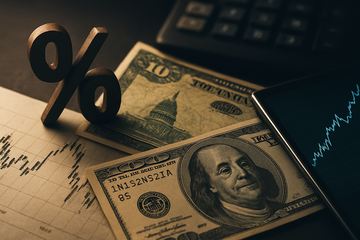
The 5% Wall Held: How a 4.98% Touch, a Hot CPI, and a Priced-In Fed Hike Gave Bessent His Biggest Reprieve Yet
On September 11, 2026, the 10-year Treasury yield touched 4.98% after a +3.4% YoY August CPI print — and pulled back to 4.93% without ever printing 5%. The intraday ceiling held even as Polymarket priced an 80% probability of a 25 bp Fed hike at the September 16–17 meeting. That combination — hot data, a hawkish Fed, and a bond market that refused to break — is the new regime boundary, and it changes the math on AI-capex discount rates, mortgage-REIT book values, and bank net-interest margins all at once.

Tesla's Oct 1 Roadster reveal is a capex-mix test, not a launch — and Cybercab/Optimus already lost the funding race
Tesla confirmed a \"10.01\" Roadster reveal Saturday, but the second-gen supercar isn't shipping until 2027 or 2028 — well after Cybercab started production at Giga Texas and Optimus ramps toward ~2,500 robots/week by year-end. With Q2 free cash flow at -$1.09B and full-year capex guided above $25B, the Roadster's only near-term financial role is re-anchoring the brand narrative while the $25B checks go to robotaxis and humanoids. Investors should read Oct 1 as a marketing event, not a capex trade, and watch the Q3 capex split between Cybercab lines and the new Optimus factory as the real mix signal.

Trump's $500 ACA Refund Is the Headline — the Real Margin Story Is a 60-Basis-Point User Fee Cut Markets Haven't Priced
The September 10 announcement of $500 refund checks to ~1M unsubsidized ACA enrollees grabbed the headlines, but the bigger investor story is already locked in: CMS's May 2026 final rule cut the federally-facilitated exchange user fee from 2.5% to 1.9% of monthly premiums for 2027, redirecting an estimated $500M+ per year of insurer expense into margin. Combined, the two interventions cushion Centene, Oscar Health, and the rest of the ACA marketplace complex against a brutal 2026 enrollment year, with the largest pure-play leverage at Oscar Health and the largest footprint lift at Centene.
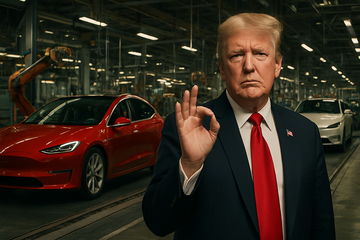
Trump's 'OK' to Chinese cars built in the US just turned Ford and GM's ban push into defense — BYD and Geely own the move
President Trump told Fox News on Sep 12, 2026 that he would welcome Chinese automakers building cars in the US, nine days after the Alliance for Automotive Innovation — Ford, GM, Stellantis, Toyota, Honda, BMW, Volkswagen, and Volvo — asked Congress to permanently ban them. The 'localize-or-stay-out' bargain replaces the import-threat frame: BYD and Geely can clear it with capex, while Transportation Secretary Duffy's parallel Sep 8 letter attacking Ford's existing CATL, Geely, and BYD links leaves US automakers caught between the new opening and the old pressure.

Trump Tied Oil's Clock to November 3 — The Term Curve Already Priced a Different One
On September 9, 2026, President Trump said the Iran war will end \"immediately after\" the November 3 midterms and that oil prices will \"tumble\" the day after voters decide. But the WTI futures strip is still priced for a disruption that ends in months, not weeks, with December 2026 contracts trading roughly $40 below mid-2026 delivery — a backwardation that implies traders expect a Hormuz exit, not a midterm detonation. For the listed names with the most exposure to a six-month-versus-six-week divergence — Exxon Mobil, Chevron, the oilfield services trio of SLB, Halliburton and Baker Hughes, and the refiners Marathon Petroleum and Phillips 66 — the trade is not which side wins the war but whether November actually collapses the geopolitical risk premium the way the calendar suggests it should.

TSMC's $16.35B August Print Just Locked In Q3 — and Settled the AI Demand Debate
TSMC's August 2026 revenue of NT$514.81B (US$16.35B) jumped 53.3% year-over-year and 10.1% sequentially — the largest single month in the company's history. With July plus August already covering roughly 68% of TSMC's Q3 guidance midpoint, the September leg only needs to print near the recent run-rate for the beat to land. The unaudited monthly tape — published 36 days before the October 16 Q3 release — is the cleanest signal yet that the AI buildout is still expanding at the leading edge, with direct read-throughs to Nvidia, AMD, ASML, Applied Materials, and HBM suppliers SK Hynix and Micron.

UAE's €40B German AI Bet Steals Sovereign Capital From the U.S. Power Wall
On September 10, 2026, the UAE pledged €40 billion ($46.4B) to Germany — anchored by ~1 gigawatt of new data-center capacity and 29 corporate MoUs worth €9.4B — the first sovereign capital deployment large enough to re-price the transatlantic AI compute map. With nearly half of 2026 U.S. data-center projects already delayed or cancelled by grid bottlenecks, the package quietly opens a European fast lane for NVIDIA-powered capacity, the Equinix/Digital Realty colocation duopoly, and Vertiv-grade power infrastructure, while pressuring U.S. hyperscalers to reprice their own European expansion roadmaps.
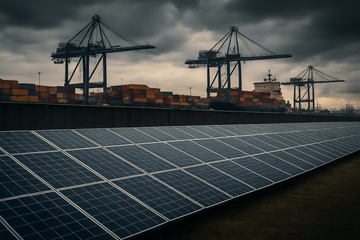
U.S. Just Put a ~250% Tariff Wall Around Indian Solar — Project IRRs, Not Polysilicon, Are the Story
On September 11, 2026, the U.S. Department of Commerce finalized AD/CVD duties stacking up to 249% on Indian solar cells, 268% on Indonesian, and 219% on Lao — combined with Section 232 minimum import prices taking effect December 4. The decisive channel is downstream: U.S. utility-scale project IRRs re-rate on module cost, domestic manufacturers like First Solar pull forward a $14.4B backlog, and Indian cell makers — already operating at 160 GW of capacity against 45-50 GW of domestic demand — face a hard pivot away from the U.S. market.
2026-09-11
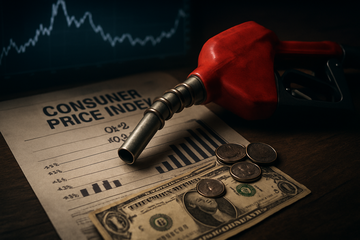
Hotter Core CPI Just Sealed the September Hike — and the Tape Stopped Pricing the Soft Landing
The August CPI landed with core 0.1pp above forecast at +0.3% MoM, shelter reaccelerating to +0.3% and gasoline driving a +0.4% headline print. Combined with the +162K August jobs beat and the +5.4% YoY PPI jump a day earlier, this is the third hawkish data point in eight days — markets now price roughly 89% odds of a 25bp hike at the September 16 Federal Reserve meeting. JPMorgan Chase, Bank of America, and Exxon Mobil screen as the cleanest beneficiaries; D.R. Horton, American Tower, and NextEra Energy are the cleanest losers.

Bayer's $7.25B Roundup Deal Lands in Judge Boyer's Courtroom Monday — and the Verdict Reshapes Every Ag-Chem and Product-Liability Balance Sheet
On Sept. 14, a St. Louis state court will weigh final approval of Bayer's $7.25 billion Roundup class settlement — a deal that converts seven years of mass-tort exposure into a 21-year payout stream capped at the company. A 'no' from Judge Timothy Boyer throws65,000 claims back into individual trials and reignites a breakup debate that pushed Bayer AG below €14. A 'yes' locks in Corteva's and FMC's relative valuation cushion, validates the carve-out structure of Ruveon LLC, and sets the template for Johnson & Johnson's $5.5 billion talc class deal and 3M's $10.3 billion PFAS program. The hearing is short-term; the cash-flow math is long-term; and the spillover is structural across every U.S. pesticide and consumer-product docket.

Barington Lights a Fuse at Bath & Body Works — the Stock at 5x EBITDA Is the Real Headline
Bath & Body Works trades at 5.3x trailing EBITDA and a 29% free-cash-flow yield — multiples usually reserved for broken companies, not a brand that just printed $0.62 of adjusted EPS and grew its digital business for the first time in five years. Barington Capital's roughly one million-share stake (about 0.5% of shares outstanding) is the catalyst, but the thesis it lights up is bigger: any mid-cap consumer-discretionary name whose stock has decoupled from cash generation is now a take-private candidate, whether or not the activist is at the table. Investors should expect a Barington letter to BBWI's board within weeks — and read the read-through to Macy's, Victoria's Secret, Tapestry, and the wider specialty-retail cohort that is trading at the same deeply discounted multiple.

China's 2030 Autonomous Plan Just Killed the 'China Lag' Trade — Tesla, Mobileye, Pony AI, and WeRide Are Now on Beijing's Clock
On September 11, 2026, China's MIIT unveiled the 15th Five-Year Plan roadmap targeting 70% NEV share and large-scale autonomous-driving deployment by 2030 — with a national L3/L4 safety standard already in force. The plan doesn't accelerate Tesla or Mobileye into China; it forces them onto the same deployment clock as Pony AI, WeRide, and Chinese OEMs that have already been running ahead. The 'China lag' trade — underweight Chinese AV players because they're behind — is now structurally invalid, and the second-order winners are the ones with the deepest China distribution: Hesai for lidar, Pony AI for robotaxi scale, and Li Auto and XPeng for the L2-to-L3 transition.
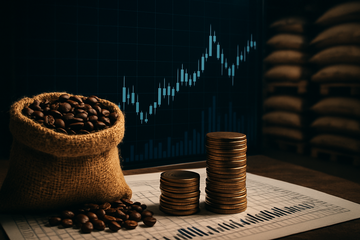
Coffee's 'Invisible Glut' Just Punched Through $3 — Why the J.M. Smucker, Keurig Dr Pepper, Starbucks Margin Trade Just Reopened
Arabica has fallen roughly 25% from its July spike of $3.57/lb to ~267 cents on the ICO composite as Brazilian export shipments surge and ICE-certified stocks remain near a 26-year low — the classic 'invisible glut' where origin warehouses bulge while exchange-licensed warehouses stay tight. With the 40% US tariff on Brazilian coffee removed in November 2025 and Brazil's 2026/27 harvest forecast at a record 66.7 million bags (+18% YoY), the deflationary tailwind now flows directly to roasters who locked in hedges at the peak. J.M. Smucker posted 37.1% coffee-segment margins in Q1 FY2027, Starbucks expanded operating margin 430 bps thanks to tariff refunds, while Keurig Dr Pepper's US Coffee segment still absorbed a 36% GAAP operating-income drop — and the EUDR compliance cliff on December 30, 2026 will decide who keeps the gains.

Colgate's $1B+ Personal-Care Carve-Out Is the First Real Test of Whether a US Mega-Staples Can Cut Itself in Half
Colgate-Palmolive is exploring the sale of Softsoap, Irish Spring, and Speed Stick for more than $1B combined, with Goldman Sachs running the process. The brands are the weakest slice of a US personal-care unit that has produced two straight quarters of negative North America organic growth (Q1 2026: -2.2%, Q2 2026: -3.0%) and a 7% drop in personal-care operating profit in 2025. If the deal closes, it sets the template US consumer staples have avoided since Haleon's 2022 GSK spin and Unilever's December 2025 ice-cream separation — and hands the most obvious buyer, Church & Dwight, a turnkey soap-and-deodorant platform in a single transaction.

The Defense Production Act Just Entered the Refining Business — Refiners Want the Money for Retrofits, Not New Plants
The White House is weighing a wartime industrial statute to expand US oil refining — the same Defense Production Act (DPA) that already authorized $1.5 billion of Venezuelan crude and overrode California to restart a pipeline. The mechanism would shift refining capex from market returns to defense-procurement logic, with loans, loan guarantees, and purchase commitments under Title III, allocation orders under Title I, and antitrust-immune coordination under Title VII. Refiners told the White House to skip the new build: at 98% utilization and a $30 billion Brownsville project on the table, federal money is more useful retrofitting existing plants than financing greenfield. The supply-chain beneficiaries sit upstream of the refiners — engineering, process licensing, and rotating equipment vendors — rather than the refiners themselves.

Mokha falls, Brent tops $109: the Red Sea shipping premium just got its own chapter
Yemen's Houthi rebels seized the strategic port of Mokha on September 9–10, 2026 — pushing hostile fire within 75 km of the Bab el-Mandeb Strait — and markets repriced in real time: Brent crude spiked12% to an intraday $109.62 a barrel, VLCC day-rates held above $100,000 (with the Middle East-to-China benchmark near $800,000), and southern Red Sea war-risk insurance jumped from 0.3% to 1–2% of hull value. The transmission runs through US-listed VLCC operators (Frontline, DHT Holdings, International Seaways) on the revenue side and global brokers (Aon, Arthur J. Gallagher, Marsh & McLennan) on the pricing side, while Saudi exports fall to a 10-year low of 3.2 million barrels a day.

Inditex plans 20 US projects by 2027 as Shein's IPO opens flat — the new map for fast fashion, mall REITs, and DTC peers
Inditex (IDEXY) will roll out 20 US projects across Zara, Bershka, and Massimo Dutti by end-2027, including new Zara stores in Denver, Phoenix, and Pittsburgh — its most concrete US commitment to date. The push lands as Shein (625.HK) closed its Hong Kong debut down ~10% on a ~$26.5B valuation, roughly 70% below its 2022 private-market peak. For Simon Property, Macy's, Kohl's, Reformation, American Eagle, Urban Outfitters, and TJX, the math now has two simultaneous signals: a physical-first incumbent is going on offense in the US at the exact moment its digital-born rival re-enters the public market from a position of weakness.

NVIDIA's 70% FY2028 Call Is a Margin Story Disguised as a Growth Story
Jensen Huang's first-ever year-ahead forecast of ~70% revenue growth for FY2028 looks like a victory lap over AI-bubble doubters, but the ceiling itself tells the more important story: memory scarcity and a gross margin glide-path from 75% today to 72–73% next fiscal year mean the NVIDIA trade is now about whether AI dollars flow through to memory and packaging suppliers, not whether the chip giant grows. The reset pushes SK Hynix, Micron, and TSMC to the front of the supply chain and turns AMD into a share-donor.
What to expect
Evidence-first notes with a visible point of view.
This section collects sharp takes on earnings, shareholder meetings, and market structure. Each new piece should make the thesis, the facts, and the implications obvious within the first few screens.
Expect direct analysis, not generic commentary.
Expect the data to be explicit and the argument to be easy to follow.