Latest
The day's market news, with the argument attached
New notes every trading day on earnings, policy and market structure. Each one opens with the conclusion, then the evidence, then the companies it hits.
2026-09-11

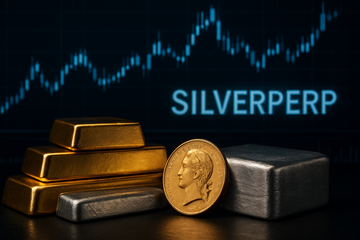
Kalshi's CFTC-Backed Gold and Silver Perps Just Made Prediction Markets a Precious-Metals Exchange
Kalshi launched GOLDPERP and SILVERPERP on September 10, 2026, becoming the first U.S. venue to offer CFTC-regulated perpetual futures on precious metals. After booking $44B in notional volume on its crypto perps in just 14 weeks, Kalshi is now applying the same on-chain funding-rate template to gold and silver, undercutting CME Group's 24/7 1-ounce gold contract on both leverage and expiry. The move lands in the middle of CME Group's June lawsuit against the CFTC over the underlying regulatory pathway — turning a $27M-oz-a-day benchmark into a three-way fight between a134-year-old exchange, a six-year-old prediction-market app, and a chairman who wants perps onshore.

Kroger just halved its same-store sales outlook — three food companies in seven weeks have now formally confessed the trade-down
The Kroger Co. on Sept. 11 cut its full-year identical-sales (ex-fuel) guide to 0.2%–0.8% from 1.0%–2.0%, attributing roughly140 basis points of the headwind to the Inflation Reduction Act. The move follows Albertsons Companies' July 23 cut to a (1.5)%–(0.5)% range and Hormel Foods' Aug. 27 trim of full-year sales to $12.1B–$12.2B — making the consumer retrenchment the most coordinated acknowledgment in the food-retail chain in years. The winners are the discount share-takers (Walmart, Costco); the losers are mid-tier grocers and packaged-food suppliers like Conagra Brands, Kraft Heinz and General Mills.

The US\u2013Mexico sprint beats Canada \u2014 and the cheese, steel and auto carve-outs will outlast the midterms
Mexico and Washington are negotiating an interim bilateral trade deal before the November 3 US midterms after Canada talks collapsed, with a likely framework of a 15% auto tariff (~\u22487% effective for high-US-content vehicles), a cap on the 50% Section 232 steel rate, and a quiet concession on Chinese-investment screening. Winners are the listed names already wired into Mexico\u2019s USMCA-compliant supply chain \u2014 Ternium, Grupo M\u00e9xico, Ford, Coca-Cola FEMSA \u2014 while losers are Mexico\u2019s pure auto exporters and any USMCA sunset clause that would strip the 16-year regional backbone.
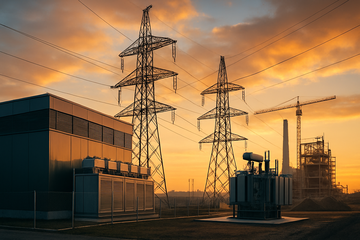
Microsoft's 38 GW by 2032 Plan Hard-Codes Power, Not GPUs, as the Binding AI Capex Constraint
Microsoft's plan to lift data-center capacity from ~12 GW today to 38 GW by 2032 — roughly tripling its footprint — reframes the AI buildout around electricity, transmission, and grid interconnect rather than accelerator supply. Constellation Energy, Vistra, NextEra, Vertiv, Eaton, Monolithic Power Systems, Wolfspeed, Quanta Services, Hanwha Solutions and Doosan Enerbility sit directly in the path of that constraint, with transformer lead times already past 160 weeks and 6.4 GW of 2026 capacity delayed in Q1 alone. Investors should underweight GPU-pure-plays as the binding bottleneck and overweight the picks-and-shovels of the new electric grid.
Nasdaq's $100M Bet on Kraken's Parent Just Reshuffled Who Owns the Tokenized-Stock Stack
Nasdaq Ventures invested $100M in Payward at a $21B valuation on Sept 10, 2026 — the first time a US-listed exchange operator has taken an equity stake in a private crypto venue of this size, and a structural endorsement of Coinbase, Robinhood and the wider tokenized-equities race. The deal gives Nasdaq crypto-native distribution for its Q2 2027 Nasdaq Equity Tokens launch while handing Payward a regulator-friendly lane to a 2027 IPO; the competitive question is no longer whether tokenized equities win, but which rails — Nasdaq-Kraken, Coinbase-Base, or Robinhood Chain — capture the volume.

OpenAI's $1T IPO Just Got a Wall Street Showcase: ChatGPT for Financial Services Targets Junior Bankers With Morgan Stanley and Evercore Inside
OpenAI launched ChatGPT for Financial Services on Sep 10, 2026 with Morgan Stanley and Evercore as design partners, baked on GPT-6 Astra and wired into FactSet, S&P Capital IQ, PitchBook and ~50 other data connectors — a direct challenge to the $30,000-a-seat Bloomberg Terminal and to the entry-level IB analyst itself. The product lands nine months before OpenAI's expected $1T listing, where Goldman Sachs and Morgan Stanley are lead underwriters, and turns the $852B private company into a vertical SaaS competitor overnight. The first casualties are workflow incumbents who can't ship an agent; the first beneficiaries are data owners — including FactSet — that became launch partners instead of victims.

OpenAI's $200 Tier Is Sold Out — That's the First Real Demand Ceiling Behind the $852B IPO
OpenAI paused new sign-ups to its $200 ChatGPT Pro plan on September 10, 2026, citing 'unprecedented' GPT-6 Astra demand. It's the first time the company has officially disclosed a demand-side hard stop — and it inverts the gating story from the safety/cybersecurity frame on OpenAI's own Astra model card to a compute-as-moat thesis. The pause locks the IPO math: $40B run-rate revenue, $852B valuation, and roughly $600B in committed compute by 2030, with the bill already pre-spent across Microsoft, NVIDIA, AMD, Oracle and CoreWeave.
Oracle's Cloud-Infra Revenue Just Doubled to $7.4B. The Stock's 4% After-Hours Pop Says Nobody Believes It Yet.
Oracle printed 121% OCI growth, $664B backlog, and raised FY27 revenue to at least $90B — yet shares moved just 4% after-hours against a ±12% options-implied move. The disconnect is the trade: capex is climbing to $70B, leverage is one notch from junk, and the stock is already off 53% from peak, so even a clean beat on every line barely registers. The megacampus thesis isn't retired — Oracle deployed 850MW in one quarter, GPU utilization sits at 97.9%, and the $300B OpenAI contract doesn't even start recognizing until 2027.

Oraclum's Fake Returns Are the First Crack in the Alts Trust Premium
Federal prosecutors on Friday charged Vuk Vukovic, founder of Oraclum Capital and the Orca Bason Fund, with fabricating monthly returns since at least 2024 — a small scheme by alternatives standards, but the signal lands against an industry that just cleared $5.6T in AUM. The trade is bigger than the case: tighter pension and family-office due diligence, the SEC's private-funds agenda back at the top of its enforcement stack, and brand-name scale — Blackstone, Apollo Global Management, KKR, Brookfield Asset Management — collecting the trust premium that smaller managers lose. Platforms that wire alts into wealth, Hamilton Lane and the admin layer SS&C Technologies, sit on the same side of the trade.
The Pentagon Just Underwrote Fluidstack — And CoreWeave's $35.6B Debt Stack Suddenly Looks Optional
The Pentagon's Office of Strategic Capital is in talks to lend roughly $5 billion to Fluidstack — more than six times the program's largest prior commitment — turning a private UK neocloud into a sovereign-backed competitor and reframing CoreWeave, Nebius and peers as the higher-cost option for the next leg of U.S. AI infrastructure. The mechanism matters: this is not commercial credit. Federal dollars below Treasury rates, paired with Google's existing $1.3B lease backstop, reset the funding curve for the entire neocloud sector — and push TeraWulf, NVIDIA and Texas power plays like Vistra into the most leveraged positions on the supply chain.

QatarEnergy's 2031 US LNG Hunt Locks In a Multi-Year Capacity Floor for Cheniere, Venture Global, Woodside and Sempra
QatarEnergy Trading is negotiating 2–3 million tons a year of long-term US LNG through 2031 to backfill 12.8 mtpa of Ras Laffan capacity damaged by Iranian strikes in March 2026. The contracts would absorb roughly a tenth of the 25 mtpa of uncontracted US supply now on the table — concentrated at Venture Global, Cheniere Energy, Woodside Energy and Sempra — and effectively underwrite the next leg of US Gulf Coast capacity additions just as Cheniere and Venture Global both report record quarterly earnings.

Trump's H-1B Grace-Period Axe Turns 60-Day Cushion Into a Firing Notice — And AI Labs, Not Big Tech, Pay the Talent Bill
DHS published a proposed rule in the Federal Register on September 10, 2026, eliminating the 60-day grace period for H-1B, L-1, O-1, E and TN workers who lose their jobs — the third strike on the H-1B cycle after the $100,000 fee proclamation (September 2025) and the $103,265 cap-subject fee (August 2026). Frontier AI labs absorb the talent-cycling friction immediately because more than 80% of their new H-1B petitions are AI and software roles; Indian IT services (Tata Consultancy Services, Infosys, Wipro, HCL Technologies, LTIMindtree) take the larger structural hit, since roughly half of their revenue is on-site US work that the old grace period quietly underwrote. Cognizant is the most exposed US-listed name; global capability centers in India and pure-play AI infrastructure like Nvidia sit on the other side.

Anthropic's IPO Window Just Hit a Federal AI Bill — and the Compliance Drag Is Not Shared Equally
Two Anthropic researchers going public on September 8-9 has pulled a bipartisan Senate response into a narrow pre-IPO window. The bill stack — H.R. 9925's FRONTIER Act with up to $1M/day penalties, the AI Kill Switch Act, Hawley's OpenAI probe, Cantwell/Thune's Senate framework and Sen. Warner's four-bill package — puts hard compliance thresholds on the largest US AI labs weeks before Anthropic's planned October listing. NVIDIA, SK Hynix and TSMC are largely insulated because training compute demand does not shrink under third-party evaluation; Oracle, Amazon and Microsoft carry the heaviest direct exposure.
2026-09-10
Adobe's Beat Is Exactly the Problem:13% Growth, '150%+' AI ARR, and a Stock That Drops 4.5% Anyway
Adobe delivered a clean Q3 FY2026 beat — $6.76B revenue, $6.13 non-GAAP EPS, 14% customer-group subscription growth — yet shares fell 2.4% in the cash session and another 2.1% after hours because the print reset nothing investors needed reset. The FY26 ARR growth target held at 10.2%, the Q4 guide landed in line with the Street at $6.83B mid, and AI-first ARR was disclosed only as 'more than 150% YoY' — a deceleration from the 'tripled' framing of Q2 at a $500M base. With Adobe trading on 9.3x forward earnings into a CEO transition and the freemium pivot already explicitly trading near-term ARR for user scale, the bar for a re-rating just moved higher.

Aerospace M&A Is Back — But It's a Capacity Play, Not a Consolidation Play
Order books at the top five Boeing/Airbus/GE Aerospace primes ended FY2025 at $1.36T combined, up 23.7% YoY, and planemakers cannot ramp the 737 MAX past 47 a month or push the Airbus A350F toward a 2027 service entry without more castings, fasteners, and aftermarket parts. Strategic and PE buyers — Howmet Aerospace ($1.8B for CAM), TransDigm ($2.2B for Jet Parts Engineering + Victor Sierra), HEICO (Cook Defence and EthosEnergy bolt-ons), and H.I.G. Capital (Premier Forge Group) — responded with a wave of supply-chain capacity deals through the first nine months of 2026. Q2 prints from Howmet Aerospace (+37% YoY in Fastening Systems), Astronics (record $780.6M backlog), and TransDigm confirm that revenue is following — the investable move is to own the constrained inputs and the consolidators that own them.

Chip Rebound Split on Sept. 9: Korea Held, the U.S. Sank, and the AI Trade Just Got a Higher Bar
On Sept. 9, 2026, the AI-chip rebound split along geographic lines: South Korea's KOSPI rose 1.4% with SK Hynix and Samsung Electronics leading, and the Philadelphia Semiconductor Index closed up 0.37%. The U.S. broad market, by contrast, fell for a third straight session as Brent crossed $100, the 10-year Treasury yield hit 4.85%, and CME FedWatch priced a 60% chance of a September Fed rate hike. The bar for AI stocks just moved from 'great earnings' to 'great earnings and a friendly macro backdrop,' and Asia's leverage overhang explains why the Korea bounce couldn't break7,100.
Altera's $2B+ IPO Forces a Hard Question: Is FPGA an AI Compute Asset or a Foundry Side-Show?
Altera, now 51% owned by Silver Lake and 49% by Intel, is preparing an IPO that could raise over $2 billion — a live test of whether programmable logic gets priced as AI edge inference silicon or as a stranded legacy asset. The math cuts both ways: Altera generated $1.54B in FY2024 revenue with non-GAAP operating income of just $35M, while its dominant rival AMD's Xilinx franchise is bundled inside a chipmaker trading at $413B in TTM sales. The carve-out also lets Intel monetize a non-core unit just as its Foundry posted a $2.1B operating loss in Q2 FY2026 and it raised $20B in new equity at $95 a share.

August PPI Hit 'As Expected' — But the 4.6% Core YoY and +11.3% Stage1 Pipeline Just Tilted September's Fed to a Longer Hold
The August PPI headline landed at +0.4% M/M, in line with consensus, masking a sharp reacceleration in year-over-year terms: 5.4% headline (highest 12-month this year), 4.6% core (highest since June 2026), and +11.3% YoY for stage 1 intermediate demand. Services components that feed directly into PCE — transportation and warehousing +2.3% M/M and portfolio management +18.8% YoY — refuse to disinflate. With Chair Warsh already signaling 'work to do' at Jackson Hole and a 9-3 hold vote in July, the September 16 FOMC meeting is now a toss-up between a hike and a hold. Markets have repriced: Polymarket's hike odds jumped from 54% to 61% on the print, CME FedWatch is near 66%, and the 10-year yield closed at 4.93%, up 8 bps. The trade is rate-sensitive duration over rate-sensitive yield: banks outperform, REITs, homebuilders and long-duration tech take the hit.
A Lawsuit Aimed at $42 Billion of Bank Capital Relief That Hasn't Arrived Yet — While JPMorgan and Citigroup Already Spent the Money
Better Markets sued the Federal Reserve and Vice Chair for Supervision Michelle Bowman on September 10, 2026, alleging the rulemaking record behind the March 2026 capital proposals was corrupted. But the four largest US banks have already repurchased $91.8 billion of stock in the twelve months through June 30, 2026 — funded by earnings and a stress-buffer freeze the suit does not touch. What is actually at risk is roughly $42.1 billion of forward capital relief scheduled to land in 2027–28, and the banks most exposed are the ones with the thinnest stress buffers, not the biggest buyback headlines.
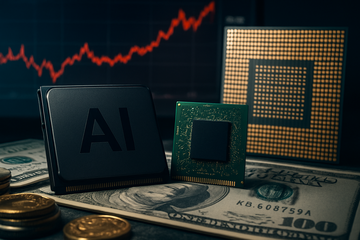
China's AI chipmakers just hiked prices 20–50% — and the HBM rent flows uphill to SK Hynix, Samsung, and Micron
Huawei Technologies pushed the indicated price of its Ascend 950DT accelerator above 250,000 yuan and Cambricon Technologies raised its next-generation 690 chip 20–30% above July quotes, per a Reuters scoop dated Sept 10, 2026 — the first time Chinese AI silicon vendors have captured material scarcity rents. The trigger is an HBM supply squeeze that has driven Chinese chipmakers to grey-market channels paying 'several times' what Western buyers pay, with SK Hynix's CEO already warning of the industry's worst-ever shortage in 2027. The trade is straightforward: price hikes validate Western HBM oligopoly pricing power more than they validate any Chinese substitute.
What to expect
Evidence-first notes with a visible point of view.
This section collects sharp takes on earnings, shareholder meetings, and market structure. Each new piece should make the thesis, the facts, and the implications obvious within the first few screens.
Expect direct analysis, not generic commentary.
Expect the data to be explicit and the argument to be easy to follow.