Latest
The day's market news, with the argument attached
New notes every trading day on earnings, policy and market structure. Each one opens with the conclusion, then the evidence, then the companies it hits.
2026-09-09

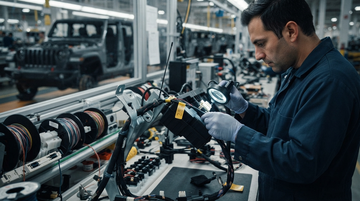
Jeep TPMS recall shows how one “minor” wiring/monitoring flaw can re-rank auto OEM cost-of-quality risk
A NHTSA recall covering 78,989 model-year 2024–2025 Jeep Wranglers ties the problem to a remote-start antenna cable that can prevent the TPMS warning light from illuminating as intended—an explicit Federal Motor Vehicle Safety Standard (FMVSS) compliance failure. For investors, the signal isn’t the fleet size; it’s the mechanism: a monitoring function built from distributed sensors + connectivity + validation can turn into recurring warranty/quality cost if similar integration escape-rates exist across variants and ADAS-rich trims.
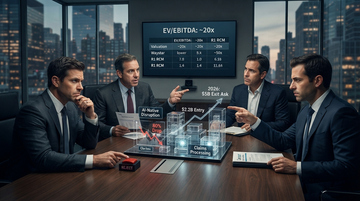
Lyric's $5B price tag tests whether healthcare software PE exits still clear at 20x
TPG is testing the healthcare-software exit market with a reported $5B sale of Lyric, the payment-integrity platform it bought from UnitedHealth Group for $2.2B in 2022. At ~$250M of EBITDA the ask is 20x — roughly 40% above where Waystar trades and well above the 14.3x [R1 RCM] took in late 2024 — and prospective buyers are openly flagging AI-native disruption and the 80% collapse at peer Claritev as reasons to push back. The outcome will set the ceiling for a backlog of healthcare-IT exits sitting in PE portfolios.

Trump's Disclosed Energy Stocks Are Up $15.5M Since the Iran War Started — The Disclosure the Market Hasn't Priced
As President Trump escalated the U.S. war with Iran through 2026, his disclosed oil and gas portfolio climbed about 39% from the start of the year, paper-gaining as much as $15.5M by Aug. 17. The same nine companies he disclosed holding reported a combined $47.6B in Q2 profit — roughly triple the year-earlier quarter — while Trump himself controlled every major lever that moved crude: SPR releases, sanctions waivers, and Strait of Hormuz blockades. The transparency gap is the governance story equity investors must now underwrite, with periodic disclosure rules that allow 45 days of trading between reportable events.

US blocks Canadian motorcycles (over 800cc), plus key dairy and most alcohol—making trade “permissioned” substitution the real battleground
The White House issued import exclusions aimed at specific Canadian product HTS codes, with effect for goods imported on or after September 29, 2026—rather than applying a single broad price-only tariff. For investors, the market effect is likely to be less about macro price levels and more about who can quickly source “like goods” outside Canada, re-paper distribution contracts, and manage short-cycle inventory and compliance risk.

Port of LA's 3-month record is a tariff-and-fuel arbitrage clock — and it's already winding down
The Port of Los Angeles just posted its busiest three consecutive months in history — 2.9 million TEUs across June, July and August 2026 — but every container in that record represents a holiday good pulled forward to dodge August's new 10–12.5% tariffs and the Iran-war diesel surge past $5.85/gallon. Retailers and freight bellwethers caught the arbitrage: Walmart booked $2.9B in IEEPA tariff refunds, Target absorbed a $994M refund benefit, and J.B. Hunt printed 22% intermodal growth. The catch: NRF forecasts September imports to drop 5.7% YoY and October 13.2% — meaning Q4 freight volumes, fuel surcharge revenue, and the trade-deficit tailwind all reverse together.
2026-09-08
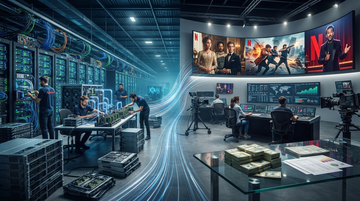
Ackman Sold Alphabet for Netflix. The Real Rotation Is From AI Capex to Cash Flow
Pershing Square exited Alphabet and initiated Netflix during the first half of 2026, while Berkshire Hathaway committed another $10 billion to Alphabet. The split is less a referendum on artificial intelligence than a disagreement over when investors get paid: Alphabet is converting cash into infrastructure, while Netflix is converting scale into margins, advertising revenue, and buybacks. The trade favors cash-flow visibility over maximum AI optionality, but the price is greater exposure to content commitments and streaming execution.
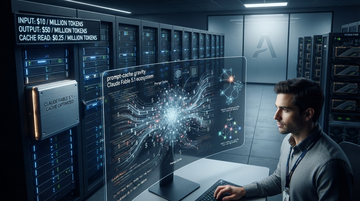
Anthropic’s Claude Fable 5.1 turns agent economics into the product: the near-term moat is “prompt-cache gravity,” not just model quality
Claude Fable 5.1 and its pricing changes reframe agent rollouts around unit economics: Anthropic cut cache-read costs to $0.25 per million tokens (and describes up to ~45% savings for “highly agentic tasks”). The investor question for a future IPO-style narrative becomes whether enterprises will buy the compute-efficiency and enterprise-governance package—then scale agent usage faster than rivals can match.

Anthropic turns “frontier safety” into an operational bill: fewer safeguard false alarms + customer-held monitoring make rollout faster—and change which security vendors win
Anthropic’s Claude Fable 5.1 package tightens how cyber and bio misuse is detected, while explicitly trading some conservatism for fewer false positives (e.g., “60% fewer false positives” in cybersecurity) and moving monitoring data into customer-controlled infrastructure via Enterprise Frontier Safeguards (EFS). For investors, the signal isn’t just better alignment—it’s shorter enterprise evaluation cycles, fewer interrupted workflows, and a clearer cost model for mitigation, which can favor security-and-cloud platforms built for auditability over generic “AI safety” messaging.
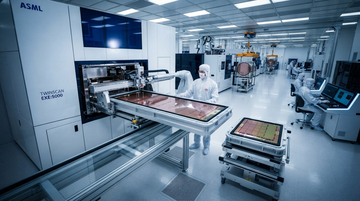
ASML and TSMC's 12-Inch Photomask Reset Ends a 30% High-NA Throughput Penalty—Who Refits, Who Loses
On September 8, 2026, ASML and TSMC launched a 'Large Mask Consortium' with Samsung and Intel to move EUV photomask format from 6×6 inches to 6×12 inches, with a pilot line by 2031 and advanced-node production by 2033. The shift eliminates the reticle-stitching penalty that costs High-NA scanners ~30% of wafer output on large AI dies—taking wafer throughput from roughly 125 wph back to 175 wph on a single shot. Every mask-blank, pellicle, writer, and inspection tool not redesigned for the new format loses access to a fab-spending cycle anchored on AI accelerators; the established Japanese duopoly that already dominates EUV blanks and pellicles emerges with the strongest moat.

China Owns 95% of Humanoids and the PLA Is Now Buying — The Pentagon's 1260H List Is the Tell
Reuters' September 7 review confirmed the PLA has moved from humanoid research to active procurement — a humanoid tender in May 2025, a National University of Defense Technology \"embodied perception and dexterous operation\" tender four months later, and a roughly $300,000 data-labelling system funded in June 2026. China already builds about 95% of the world's humanoids (BofA Global Research), Norinco's Fuxi teleoperated robot is moving from demo to doctrine, and the Pentagon added Unitree Robotics to its Section 1260H list in June. The read-through runs in two directions: Chinese suppliers (Unitree, Inner Mongolia First Machinery, UBTech, Shenzhen Inovance, Estun Automation) collect a defence-anchored valuation premium, while US-allied component makers (Harmonic Drive Systems, Renesas, NVIDIA) and US peers (Tesla, Hyundai Motor) face a buyer that has already started the procurement clock.

California’s 2026 “Billionaire Tax” revives the market’s hidden fear: forced selling at fixed valuation dates
A proposed California ballot initiative would levy a one-time 5% tax on billionaires’ net worth, with payment stretching into 2027–2031 and a structure that can push owners toward “forced-selling” dynamics despite “fair market value” language. The investable takeaway is less political than mechanical: when liquidity rather than fundamentals drives selling calendars, mega-cap holders’ near-term positioning risk can reprice even before any law passes.

WaFd at 0.98x tangible book just sold majority control to a private bank at 1.79x — the new regional-bank M&A playbook
On Sept. 7, 2026, WaFd and EverBank announced a $3.9B all-stock reverse merger in which EverBank's private-equity-backed shareholders will own 59.2% of the $75B-asset combined bank, even though WaFd is the surviving public entity. The deal prices WaFd's book at 1.79x tangible equity versus WaFd's standalone 0.98x — a re-rating that already explains why mid-cap regionals from KeyCorp to Webster Financial are now read-through targets, with $135M of cost synergies and 29% EPS accretion underwriting the premium.
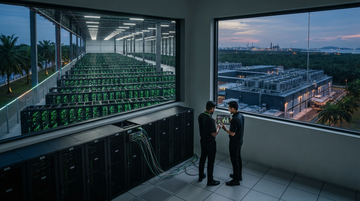
OpenAI's Malaysia Bet With Firmus Just Made the US Hyperscaler Capex Trade a Two-Region Story
Nvidia-backed NVIDIA partner Firmus has signed OpenAI as anchor tenant for two Malaysian AI factories, lifting its contracted capacity above 900 MW days before a planned A$15–30 billion ASX float. The deal is the first credible proof that the AI build-out has a second, cheaper geography: Malaysia's medium-voltage industrial power runs ~6.7¢/kWh against PJM's ~8.99¢/kWh in Northern Virginia, and PJM capacity prices have gone from $29/MW-day to $329/MW-day in two auctions. For Microsoft, Oracle, Amazon and Alphabet, the trade is no longer
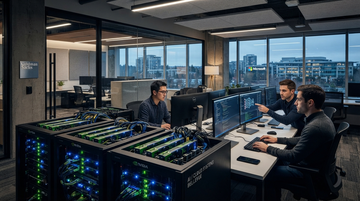
Goldman’s Bellevue AI engineering office turns “frontier talent” into a recurring cost line — and it reframes the GPU debate
Goldman GS opening a dedicated Bellevue AI/cloud engineering office signals that the scarcest input for frontier-style systems is not only compute, but also the teams that can ship and maintain production-grade models. For investors, the key read-through is that software engineering talent is becoming a structural cost driver for bank and big-tech AI platforms — which can tighten margins even as revenues scale.
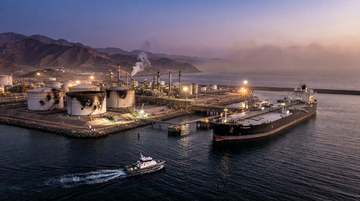
Saudi Infrastructure, Not Hormuz: Why Brent's Six-Week High Reframes the Oil Trade
Iran-aligned Houthis struck Saudi Aramco's southern facilities on Sept 7-8, 2026, and Brent pushed through $97.31 to settle at a six-week high. With the East-West pipeline already maxed at 7M bpd and the 400,000-bpd Jizan refinery shut since July 27, the trade is no longer about Hormuz risk premium — it's about Saudi infrastructure resilience, Red Sea tanker re-routing, and the oil-services names embedded in Aramco's capex. Tankers and Middle-East-tied service companies are the cleanest expression; Saudi Aramco itself barely moved.

Intel’s momentum spike is being “bought” twice: with capex now and dilution later—can free cash flow catch up?
Intel’s turnaround narrative is strengthening on revenue growth and execution, but the company is also reshaping its equity base through a large common-stock offering sized to fund the AI build-out. The investable question is whether improvements translate into near-term free cash flow offsets, rather than getting swallowed by capex and share-structure math.

Brent Won't Break $100 as Iran Declares a Gulf 'Exclusion Zone' — The War-Risk Premium Has Quietly Migrated to Tankers and Diesel
Iran's Sept. 7–8 announcement of a new Persian Gulf 'exclusion zone' has not pushed Brent above $100 — and the Sept. 8 Reuters explainer asked exactly why. The answer is structural: a 5–7 million bpd supply loss is being absorbed by Saudi and UAE spare capacity, US pipeline bypass, and a Strategic Petroleum Reserve now at a four-decade low, while the war-risk premium is showing up in VLCC day-rates and a diesel crack spread that has already printed above $100/bbl. The trade is no longer in the front-month — it sits in crude tanker operators and US independent refiners, with Frontline, International Seaways, Valero, and Phillips 66 the cleanest exposures.
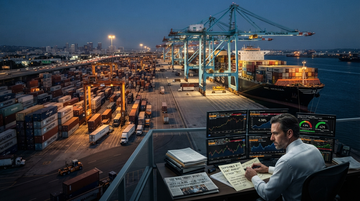
162K jobs + a trade ultimatum = the September $1T debt-market stress test for equities and credit
The August jobs shock (162,000 new jobs) tightened the market’s odds on a September Fed move, while a trade ultimatum tied to rate cuts raised the risk that funding-liquidity conditions—not just “rate direction”—dominate September. With U.S. debt interest costs running at over $1T a year and the 10-year yield pressing toward 5%, investors should treat this month as a stress test for term premium and credit transmission into risk assets.

DOJ’s “private liquidity” fraud theory could quickly re-rate secondary-market carry—because it attacks price discovery, not just paperwork
A DOJ case involving Linqto frames pre-IPO “liquidity” as criminal pricing conduct in markets where buyers cannot verify prices. The core investor shock is that secondary carry now depends on trust in secondary pricing models, so discounts can widen faster than fundamentals change.

Mistral's $24B Round Prices Europe at 60x Revenue — Triple OpenAI's Multiple
Mistral AI closed a €3B Series D at a €21B valuation on September 7, 2026, led by Samsung Electronics with the EU-backed Scaleup Europe Fund co-leading — the largest equity round ever by a privately owned European tech company. The price implies roughly 60x current ARR ($400M, per Sacra) and ~24x management's $1B 2026 target, against 21x for OpenAI and 15x for Anthropic on their respective run rates. Investors are paying a sovereign-AI premium for European data-residency demand, with NVIDIA, ASML and Samsung locked in across compute, lithography and customer adoption.
What to expect
Evidence-first notes with a visible point of view.
This section collects sharp takes on earnings, shareholder meetings, and market structure. Each new piece should make the thesis, the facts, and the implications obvious within the first few screens.
Expect direct analysis, not generic commentary.
Expect the data to be explicit and the argument to be easy to follow.