Latest
The day's market news, with the argument attached
New notes every trading day on earnings, policy and market structure. Each one opens with the conclusion, then the evidence, then the companies it hits.
2026-09-17


Lennar's Profit Halved Hours Before the Fed Pushed Mortgages Past 7%
On the same Wednesday — Lennar reporting a 52% net-earnings collapse as ~12% incentives and a 170bp home-sales margin squeeze offset flat deliveries, the Fed delivering its first rate hike since 2023 and sending 30-year mortgages to 7.19% — the #2 U.S. builder showed exactly how exposed housing is to the bond market. The margin trade spills straight into building-products suppliers, mortgage insurers, and mortgage REITs, and Lennar's own Q4 guidance concedes the worst hasn't landed yet.
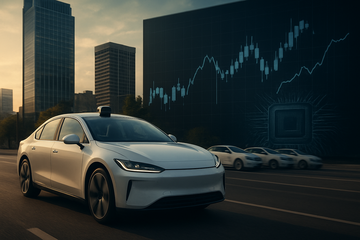
Bolt's 25,000-Vehicle Robotaxi Pact Doesn't Cover [Lucid Group]'s $1.5B-a-Quarter Burn — Or the PIF's 9% PIK Clock
[Lucid Group] and Estonia's Bolt announced a non-binding September 17, 2026 plan for at least 25,000 autonomous vehicles across Europe — but the fleet rides on a Midsize platform now pushed to 2H 2027, no cash changed hands, and [Lucid Group]'s $1.48B quarterly free-cash burn still outruns every robotaxi pipeline on the books. The deal makes Bolt a three-stack AV aggregator riding on [NVIDIA] Hyperion across Pony.ai, Stellantis and Lucid, while Saudi PIF's 9% PIK preferred dividend compounds on a 56.85% stake that needs at least two more funding rounds before any of these fleets hit the road.
Huang's 'Twice as Many Chips' Call Forces the AI Capex Trade to Pick Between Volume and ASP
Seven days after telling the Goldman Sachs Communacopia conference that fiscal 2028 revenue would grow about 70%, Jensen Huang told Bloomberg in Scotland on Sep 17, 2026 that2027 chip sales will double 2026's. Those two statements do not reconcile cleanly: doubling units against an average selling price that has already lifted from $19K to $27K implies revenue growth well north of 100%, which leaves either an upside surprise or a margin squeeze — and forces a re-rating question for Nvidia, a real ASP-vs-custom-silicon read for Broadcom, and a volume-leverage question for TSMC, Micron and the neocloud cohort.
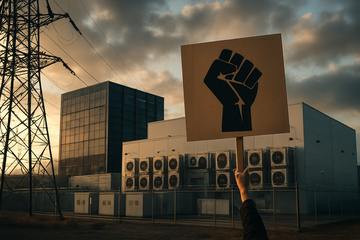
Silicon Valley's AI Data-Center Buildout Just Hit Its First Real Municipal Wall — and the Permitting Risk Is Bigger Than the Power Risk
San Jose is drafting the strictest municipal data-center standards in California while residents circulate a petition with 800+ signatures, Santa Clara has already turned away a major project over grid strain, and Microsoft's 99-megawatt Alviso campus and Alphabet's hidden 250-megawatt North San Jose R&D build are the proximate triggers. PG&E has a 12.7-gigawatt data-center pipeline but only 490 megawatts — 3.9% — under signed interconnection agreements, proving the bottleneck moved from megawatts to municipal consent. The trade isn't power scarcity anymore; it's permitting at the densest cluster of AI demand, and it shifts the investable map toward Bloom Energy, Vertiv, and the few hyperscalers with permits already in hand.

Tesla Sold Forum Mobility a Megacharger Network — the $0.08/kWh Fee Is Where the Real Money Is
Forum Mobility is now installing Tesla's MCS Megachargers at its Port of Long Beach depot, putting a third-party fleet operator on Tesla's commercial charging stack and attaching a recurring per-kWh fee to every Forum truck on the road. The deal pairs with a 500-truck Einride order and a 370-unit WattEV buy to push Tesla Semi bookings past1,000 units since volume production began in April, and Tesla's own Q2 2026 10-Q now flags 'public Megacharger' deployment as a line item — proof that the trucking growth story has migrated from the truck itself to the megawatt-class hardware and software sold around it. For investors, the read-through is to Tesla Services & Other revenue (up 50% YoY to $4.58B) and to the second-order beneficiaries — battery cell suppliers and US-listed truck competitors — rather than to Tesla's auto margins.

The World's Top-Performing Sovereign Fund Just Warned of a US Pullback — and It's Sitting on US$31.7B of NVIDIA
The Guardians of New Zealand Superannuation — ranked first by Global SWF over 20 years — delivered a 14.2% return for fiscal 2026, then publicly flagged that US equity returns are 'close to double' their long-run average and are due 'some reversion to the mean.' With NZ$31.7B of US stocks anchored by NVIDIA, Apple, Microsoft, Alphabet and Amazon, the warning hits the heart of the AI mega-cap trade that has carried the S&P 500 to a CAPE above 40 — the second-highest reading in history. The investor question is no longer whether official-sector money is leaning against US tech, but who replaces it on the way down.

Trump's 'Hostile Act' Tariff Threat Pulls the EU Into the US-Canada Trade War — Three Trade Floors Now Sit on One Trigger
Speaking in Charlotte on Sept 16, 2026, Donald Trump called Canada's possible EU 'associate membership' a 'hostile act' and threatened 'very heavy tariffs' on Europe if Brussels proceeds. The escalation lands on top of an existing 50% US tariff wall against Canada, a new C$27.6B Canadian counter-tariff wave that took effect Sept 8, and a fragile EU-US Turnberry deal that caps EU goods at 15% — making one political decision the trigger for three pricing floors across the Atlantic.
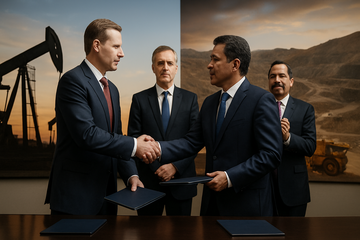
Heeney's Gold Concession and Continental's Orinoco MOU Landed on the Same Day at G20 Houston—That's the First US Private-Capital Footprint in Caracas Since 2019
On Sept. 16, 2026, Heeney Capital signed a mining concession for Venezuela's El Callao gold district and Continental Resources signed an MOU with PDVSA for the 30 billion-barrel Ayacucho 2 Block—both announced at the G20 Energy Abundance Ministerial in Houston. The two deals arrive two weeks after the US-NABEP agreement gave Washington a 35% equity stake and 20% off-take rights across 17 Venezuelan fields with ~65 billion barrels of P1 reserves, and a month after Chevron committed $7 billion to double production by 2031. The investable footprint is no longer just Chevron—it now extends to oilfield services (SLB, Halliburton, Baker Hughes), heavy-crude Gulf refiners (PBF Energy, Valero, Marathon Petroleum), and mining-equipment makers (Caterpillar).

The World Bank Just Tripled Its Private-Capital Pull to $112B — and the EM-Debt Tape Still Hasn't Priced It
On September 17, 2026 the World Bank Group reported $112B of private capital mobilized in FY2026 — more than triple the $35B of FY2022 and 62% above the $69B of FY2025 — driven by IFC's new origination-to-distribute factory and a guarantee platform that's now scaling toward $20B a year. With the same institutional buyers rotating out of US munis (where tax-exempt yields just hit ~5.00% and supply is a record $565B) and into EM debt yielding 7.26%, the marginal EM-credit buyer has changed hands — but the spread tape still widened 9 bps in July. The investors already inside the pipeline — BlackRock, Goldman Sachs, Brookfield Asset Management, Allianz, Legal & General — own the upside before the rest of the market catches up.
2026-09-16

Three labs say \"safety pact.\" Zuckerberg says labs already have every incentive to build safely — and the capex math proves the split is real
OpenAI, Anthropic, and Google have spent weeks negotiating shared third-party safety evaluators and a possible industry standards body — a coordination push Meta Platforms CEO Mark Zuckerberg publicly broke from on Tuesday night, arguing liability and competition already police the frontier. With Alphabet raising 2026 capex to $195–205B, Meta guiding $130–145B, and Microsoft running at ~$190B for FY27, the split lands directly on the next compute build-out, on the Anthropic S-1 expected to follow its June 1 confidential filing, and on the NVIDIA data-center ramp that funded all of it.
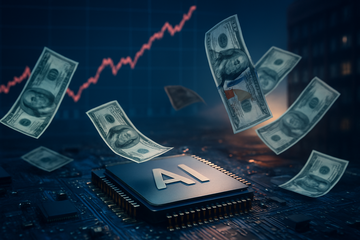
A $22B bank 'chip loan' to Blackstone's Alphabet JV lands the same day Warsh hikes — turning AI compute into the Fed's newest collateral class
Ten banks are underwriting $22 billion for Crux AI, the Blackstone–Alphabet TPU cloud venture — a bank-led, asset-backed structure with chips, not corporate guarantees, on the hook. Hours later, the Fed under Kevin Warsh raised rates 25 bps to 3.75%–4.00% and penciled in two more hikes, putting a rate-sensitive funding leg at the center of the AI buildout. The combination quietly rewrites who funds hyperscaler capex: a new Broadcom-anchored collateral class that Wall Street banks — led by Morgan Stanley and including JPMorgan, Citi, BofA, Goldman Sachs and Wells Fargo — now bear directly, with the Fed setting the marginal price.

Korean Air's 103-aircraft Boeing bet is really an aftermarket-services call
The $36.2B list-price order reads like a delivery headline, but the durable investment signal sits inside GE Aerospace's services backlog and Boeing's delivery-conversion risk on the 777X and 737 MAX 10 — two programs that anchor Korean Air's 2026–2039 fleet plan. With Korean Air absorbing Asiana on Dec. 17, 2026 and Boeing's commercial backlog at a record $597B, the trade is whether production throughput can outrun certification delays to monetize the services tail.

Boeing's Turkish Airlines Salvage Is the First Real Commercial-Air Test of 2026 — And It Hinges on a CFM Engine-Servicing Deal, Not the Airframe
Reuters reported on Sept. 15, 2026 that Boeing is close to finalizing a delayed 150-aircraft 737 MAX commitment from Turkish Airlines — part of a 225-jet package announced in September 2025. The bottleneck is not demand: it is a CFM maintenance-economics fight over the LEAP-1B engine that pushed Turkish to threaten switching to Airbus. For Boeing, the deal would slot a $10–14B revenue line into a record $715B backlog just as 737 MAX production ramps from 38 to 47 per month. For GE Aerospace and Safran (50-50 partners in CFM), conceding 'Premier' MRO access to a fast-growing flag carrier sets a precedent every other MAX operator will watch.
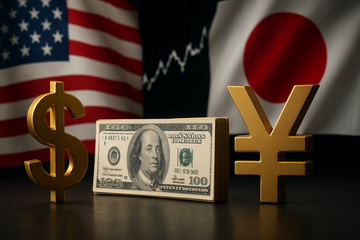
BOJ's 31-Year-High Rate Hike Lands in a US Bond Market Already at 5%—The Cross-Border Math the Carry-Trade Crowds Aren't Pricing
The Bank of Japan lifted its policy rate to a 31-year high of 1.00% on June 16, 2026, and 97% of economists polled by Reuters now expect a follow-up hike to 1.25% on September 18. That is the trigger nobody pricing the USD/JPY carry trade is treating correctly: the move happens into a US 10-year yield that just hit 5.041%—the highest since July 2007—and a Federal Reserve that is about to hike, not cut. Both ends of the rate differential are tightening at once, and a record $2.35 trillion cross-border yen carry position is the fuel line. The trade rewires itself: MUFG, SMFG and Mizuho collect ¥billions per 25 bps while NVIDIA and the AI complex lose the cheapest marginal funding source they have had in years.

Magna International's $42B Revenue Engine Just Got Yanked Between Two Continents
Mark Carney's EU pitch — pitched as 'associate member,' settled as 'unique alliance' — turns Canada's supply chains away from the US at the exact moment 50% Section 338 tariffs hit autos, dairy, and alcohol. The carve-out structure is the story: energy, potash, and critical minerals are excluded from Trump's proclamation, which is precisely what Canada is now selling to Europe. Investors who ignore this miss a multi-year reorientation of North American industrial flows.

GM Ceded 0.8 Points of US Share to the Hybrid Boom — and Won't Sell a Hybrid Until Late Decade
General Motors' first-half US market share slipped to 16.8% from 17.6% as hybrids captured 19% of US retail sales, and Toyota closed the volume gap to just 83,255 vehicles. With GM offering only the Corvette as a hybrid and BEV losses still hitting the P&L, the share map points clearly to Toyota, Honda and Hyundai Motor. Investors should weigh GM's near-term margin strength against a structural product gap the next two model years will not close.

Goldman's FICC Softens Into the Fed's First Hike in Three Years — the Trading-Desk Read That Pre-Everyone Else
Goldman Sachs CEO David Solomon told the Barclays conference on Sept 16 that Q3 FICC will be 'slightly softer' than the $4.59B record-equivalent Q2 print, while flagging equities as 'very strong' and warning that Q3 non-compensation expenses will run $500M+ above Q2 — a larger EPS hit than the FICC step-down. The same morning, the Fed lifted rates 25bp to 3.75-4.00%, the first hike since 2023, and the 10-year sits at ~5% with MOVE at83. Bank of America had already warned two days earlier that Q3 sales & trading would be flat versus $5.4B in Q3 2025. Read together, the tape is telling investors the Q3 trading-desk story: FICC softness is the new baseline, equities are the offset, and the expense base is the bigger drag — a setup that reshuffles value across Morgan Stanley, JPMorgan, Citigroup and the electronic-bond infrastructure of Intercontinental Exchange, CME Group, Tradeweb and MarketAxess.
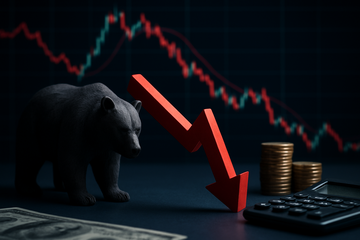
Hedge Funds Crowded Net-Short Consumer Right Into the Fed's First Hike in Three Years
Hazeltree's August 2026 Crowding Report shows 9 of the 20 most-shorted North American large- and mid-cap stocks are now consumer names—up from 4 in July—with Kimberly-Clark, DoorDash and Keurig Dr Pepper joining the top tier. Funds were loading these shorts the same month Chair Kevin Warsh's Fed delivered the first rate hike since July 2023 and oil jumped on the Middle East war. The tape is a positioning trade, not a fundamentals one: staples are still up double-digit YTD, the AI-infrastructure short list keeps expanding, and Alphabet's long-to-short ratio just flipped below parity for the first time this year.

Meta's Camera-Free Glasses Are a Privacy Ploy That Doubles as a Distribution Weapon
Meta's fall-launch 'Luna' glasses strip the camera that made Ray-Ban Meta controversial, betting that voice-only AI and the EssilorLuxottica store network can widen the installed base in a year when Apple is still absent and a $16.68 billion privacy settlement has rewritten the regulatory cost of having a lens in every face. The play defends Meta's 69.2% smart-glasses share, keeps suppliers like Qualcomm, Luxshare, and Goertek at full throttle, and turns litigation exposure into a product moat.
Microsoft vs. Anthropic's \"Consciousness\" — The Personality Clash Reshapes a $2 Trillion IPO and Microsoft's Silicon Bet
Microsoft AI CEO Mustafa Suleyman's public rebuke of Anthropic's Claude \"constitution\" — escalated this month with a 37-page Humanist AI Code of Conduct that rejects model \"legal personhood\" — landed directly between Anthropic's mid-October IPO at a $2 trillion target and Microsoft's Maia 300 chip reveal in September. The spat is the first open personality clash between the two labs and exposes a structural tension: Microsoft is simultaneously Anthropic's $30 billion Azure customer, an equity investor, and now its loudest philosophical critic. Investors should read the spat as positioning trade, not personality drama — the moat it's defending is Anthropic's enterprise share, and the silicon it's threatening is Nvidia's.
What to expect
Evidence-first notes with a visible point of view.
This section collects sharp takes on earnings, shareholder meetings, and market structure. Each new piece should make the thesis, the facts, and the implications obvious within the first few screens.
Expect direct analysis, not generic commentary.
Expect the data to be explicit and the argument to be easy to follow.