Latest
The day's market news, with the argument attached
New notes every trading day on earnings, policy and market structure. Each one opens with the conclusion, then the evidence, then the companies it hits.
2026-09-26


MOVE Just Crossed 96 While VIX Stayed Below 15 — The Bond-Equity Volatility Gap Is Now Naming the Real Winners and Losers
The ICE BofA MOVE Index has surged 27% in September to 96 while the VIX closed Friday at 14.87 — a divergence Bloomberg's Credit Weekly flags as the moment corporate-bond resilience finally cracks. With the 10-year back above 5.18% (highest since July 2007), mortgage rates jumping 32 bps in three days, and Oracle's 5-year CDS sitting near record highs, the rotation now running the tape is a sector story: long-duration rate-stable value (banks, insurers, utilities) absorbs the carry while AI-levered tech absorbs the credit mark.

Crusoe's $1.25B Boom Turbine Pullback Hands GE Vernova and Siemens Energy the Hyperscaler Power Keys
Crusoe abandoned its $1.25 billion order for 29 Boom Supersonic turbines on Sep 25, 2026 — nine months before the first unit was due to ship — because the modified jet-engine platform no longer fits its near-term power mix. With heavy-duty gas turbine lead times at the established OEMs already booked out to 2031, the freed-up 1.21 GW of demand — and likely every Crusoe campus that follows — flows back to GE Vernova and Siemens Energy. Baker Hughes takes the collateral hit on 1.3 GW of generator orders that were sized for a customer that may not exist.

From $700B to $960B: The Fed's Quiet Threshold Lift Hands U.S. Bancorp a Compliance Windfall—and Depositors a New Trade-Off
The Fed is preparing to lift the asset thresholds that trigger stricter oversight from $700B to roughly $960B and the lower step-ups from $100B/$250B to roughly $150B/$350B, per a Reuters report on Sept. 25, 2026. The change would pull U.S. Bancorp out of the second-tightest supervisory tier, give Capital One, PNC and Truist room to grow without tripping the cliff, and let smaller banks like Western Alliance and Zions operate below $100B indefinitely. The trade is concrete: less bespoke supervision, more M&A capacity, and a thinner early-warning system for the banks that already failed once in 2023.

FedEx's First Post-Spin Print Just Set a $17.50 EPS Bar — UPS, USPS, and Amazon Now Have to Clear It
FedEx closed fiscal 2026 with a $25.0B quarter and a calendar-2026 adjusted-EPS guide of $16.90–$18.10, the first earnings released after the June 1 FedEx Freight spin-off. The guide implies ~20% adjusted-EPS growth in the seven-month June–December transition period, but the stock fell because the midpoint trails UPS' full-year $7.06 trajectory and the USPS is ceding ground to Amazon Logistics, leaving FedEx to defend roughly 4 percentage points of margin compression inside the new pure-play.

FTC's Ferguson Just Put AI Agents on the Developer — and the S-1s Have to Disclose It
In two days, FTC Chair Andrew Ferguson told Reuters that AI developers — not their agents — own agent conduct, and the Commission voted 2-0 to advance a rulemaking on platforms that host AI scams. The framework turns Salesforce's $1.5B Agentforce ARR, Microsoft's 30M Copilot seats, and ServiceNow's $1B AI book into a Section 5 liability variable. Confidential S-1s at OpenAI and Anthropic now need an agent-conduct risk factor that didn't exist a quarter ago.

A €95M AI voice scam hit Italy's biggest bank — and US banks' KYC bill just got bigger
Fraudsters posing as Intesa Sanpaolo's CEO on WhatsApp and cloning a partner's voice with AI tricked Fideuram's chairman into wiring roughly €95M in February 2026, with €36M still unaccounted for. The heist hit a bank posting record profits and exposed the same 'no system breached' blind spot US banks are paying tens of billions in tech spend to close. The vendor picks — NICE, FICO, TransUnion, RELX — and the regulatory clock under the EU AI Act and OCC's April 2026 model-risk guidance turn this from an Italy story into a US-bank compliance catalyst.
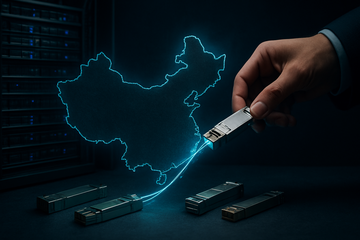
Lawmakers Just Drawn a Procurement Border Around Chinese Datacenter Optics — Innolight, Eoptolink Get a 5-Year Countdown
A bipartisan Senate bill introduced September 25, 2026 would bar Zhongji Innolight and Eoptolink optical transceivers from federal national-security systems, with Commerce and Defense free to widen the list. The named vendors control roughly a third of global data-center optical module revenue, while US peers Lumentum and Coherent are already absorbing the share-shift signal — the procurement law layers a federal-exclusion overlay on top of the FCC's separate August draft import ban.
McDonald's 30% Sell-Off Says the Big-Mac Inflation Trade Has Finally Broken — Now QSR Pricing Power Is the Question
McDonald's has shed roughly 30% from its March high — including a ~5% drop on September 23, 2026, when CEO Chris Kempczinski told investors industry traffic will stay flat while inflation keeps accelerating. The $8.5B NEXT plan eases franchisee pressure but concedes that the U.S. consumer no longer accepts price increases without pushback: domestic comps slowed from 2.5% in Q2 2025 to 0.8% in Q2 2026, with guest counts declining. The peer set tells the story — Wendy's traffic collapsed 12.5%, Chipotle comps are positive on real transactions, Yum Brands leans on Taco Bell, Restaurant Brands International is riding Burger King's reset. The trade is no longer about QSR pricing power; it is about who can run a no-traffic-growth operating model.

Gold Lost Its Halo. Aluminum Picks Up the Trade.
Morgan Stanley strategist Amy Gower publicly questioned gold's safe-haven role after the Iran war, then pointed investors to silver and aluminum. Silver has already done its job — up ~150% in12 months and now pulling back as solar demand falls 19%. Aluminum is the asymmetric successor: 4% of global supply is gone, China's cap holds, and AI data centers are bidding for the same electricity that smelters need, Alcoa, Constellium, and Boeing sit on the right side of that arithmetic.

The 32 bps Mortgage Spike Was the Bond Market, Not the Fed
Mortgage rates jumped roughly 32 bps in three days even though the Fed already delivered its expected 25 bps hike on Sep 16. The fingerprint on rates, the 10-year Treasury up 25 bps since Jackson Hole, and a10-year term premium near 0.96% all point to a duration/fiscal-supply shock rather than a fresh hawkish impulse. That changes who gets hit first: mortgage originators and MBS holders absorb the primary squeeze, while builders and titles feel it on a lag.
Nscale's $3.36B Pre-IPO Convertible Stops Working Above a $30B IPO — What Existing Holders Give Up If Pricing Opens Lower
Nscale priced $3.36 billion of pre-IPO convertible notes with a $30 billion valuation cap, converting automatically at the IPO at a double-digit discount. Above $30 billion the conversion price stops adjusting — noteholders surrender any extra upside. The cap is set roughly double the $14.6 billion March Series C mark, anchored to a S-1 that shows $140.6 million of H1 2026 revenue against a $1.02 billion H1 net loss and $103.4 billion of contracted total contract value of which only $2.6 billion (2.5%) is active. The question for the listing is not whether the converts convert — they auto-convert — but whether existing equity keeps or loses the cap subsidy depending on where bankers set the IPO range.

BP's AGM Revolt Didn't Just Kill Two Climate Votes — It Put a Buyback Gap on the Tape That Refining Can't Close
On23 April 2026 BP shareholders defeated two board resolutions and gave their highest-ever support (25.85%) to a capital-discipline proposal — then watched the chair get ousted 33 days later. The integrated peer set kept returning cash at the same time BP froze buybacks to repair the balance sheet, leaving BP trading at the cheapest EV/EBITDA among the majors (3.92x) yet visibly behind on cash returns. The investment question is whether the new CEO and chair use the Q2 2026 recovery (refining margins $29.6/bbl vs $11.9 a year earlier, net debt down to $22.3B) to close that gap or keep capex ahead of buybacks.

Oracle's $988M CEO Pay Went Underwater in Eight Months — Now the Board Is Trapped Inside Its Own Strike Prices
Oracle's compensation committee granted nearly $1 billion in stock options to Larry Ellison and co-CEOs Clay Magouyrk and Mike Sicilia in September–October 2025 — at the AI-cloud peak. With Oracle Corp shares down 53% to $137 by fiscal year-end (May 31, 2026), every option was underwater, per the Sept. 25, 2026 proxy. The same filing that exposes the compensation mismatch also reveals the deeper trap: $55.7B in capex ate $23.7B of free cash flow, and management is committing to another $90B–$95B in fiscal 2027. The November 18 proxy vote is now a referendum on whether the board priced the AI buildout into governance at all.
Cat Owners Are Out-Spending the Cycle: How Sep 24's Pet-Retail Print Reshapes the Consumer Trade-Down Map
Chewy and Petco just printed a clean cat-versus-dog split — cat food up double digits, dog food down high single digits at General Mills — while 22% of U.S. pet owners say they're cutting back overall. The thesis is non-obvious: cat discretionary is decoupling from the broader consumer trade-down, and the winners are the cat-skewed e-commerce retailer, the diversified omni-channel operator, and the premium pet-food brands with cat-tilted mix. Over a 1-3 year horizon, that reallocates wallet share away from dog-led staples and toward cat-positioned suppliers and digital retailers.

Poland's $4.4B Fort Trump Bill Hands Defense Primes a Host-Nation Counterparty — and a Backlog Floor Through 2029
Bloomberg reported on September 26 that Poland will fund up to $4.4 billion of the permanent \"Fort Trump\" US Army base — the first time a NATO ally has underwritten a named US installation with a hard ceiling. The check, layered on top of the $4 billion FMF loan signed September 9 and a cumulative $20 billion in US-Poland military support, turns Lockheed Martin, RTX, General Dynamics and Northrop Grumman into vendors to a foreign sovereign rather than purely to US appropriations. For investors, the shift matters less for the headline dollar than for the counterparty math: a 4,500–10,000 troop garrison sized for brigade combat, Patriot batteries, F-35 deliveries and IBCS integration adds a Polish-funded layer to defense backlog that compounds even as the US budget cycle tightens.
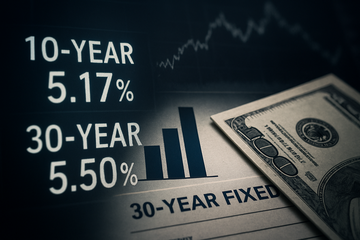
The 10-Year at 6% Isn't a Forecast—It's Already Priced In
The Federal Reserve just delivered its first rate hike since 2023, yet the CNBC narrative still frames the bond rout as a 'Fed-watch' question. Term premium is the real mover: at roughly 0.96% per the NY Fed's ACM model, it is doing most of the work, the forward curve already implies 6%, and the 30-year mortgage at 7.03% means housing has already broken. Investors hedging 'Fed pivots lower' are positioned against plumbing, not policy.
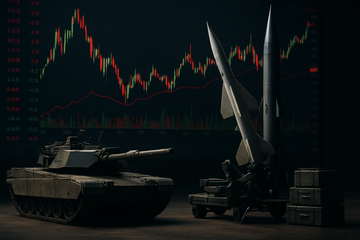
Denmark Just Made Article 5 a Months-Long Trade — Defense Stocks' Brutal 2026 Has Its Catalyst
The Danish Defence Intelligence Service on 24 September 2026 attached a 'low but growing risk' of a limited Russian military strike on a NATO country to a 'coming months' timeline — the first Western intelligence service to compress Article 5 risk from years to months since Crimea. Even as record backlogs at Lockheed Martin ($194B), RTX ($289B), Northrop Grumman ($104.7B) and Rheinmetall (€80.5B group) already proved the demand was real, US defense ETFs had given back most of 2025's gains — the iShares US Aerospace & Defense ETF (ITA) was effectively flat YTD at +0.11% versus a +13.30% category average. The DDIS assessment reframes the late-2025 'peace-dividend' unwind as overshot, restoring the bid under air-defense, sensor and munitions primes across both sides of the Atlantic.

China Just Pledged 20 Million Tons of US Coal. The Tariff Wall — and CNR's Export Terminals — Decide What Happens Next.
The Trump-Xi summit on Sept 25-26 produced a concrete, dated coal-purchase pledge: ≥10 Mt each in 2027 and 2028. But the 28-31% Chinese tariff on US coal was untouched by either the November 2025 truce or this week's $30B carve-out, so the deal is a volume commitment, not a margin unlock. The highest-beta read is Core Natural Resources, which owns the only east-coast thermal export terminals integrated from mine to ship — and the 10 Mt a year China wants is roughly a third of CNR's 2026 high-CV thermal sales guidance.
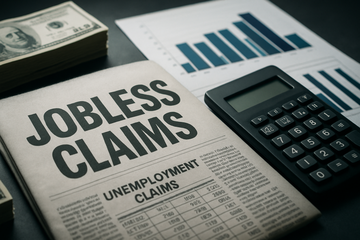
197K Jobless Claims Lock In the Fed's October Hike — Staffing Wins, Restaurants Lose
The September 25 print of 197,000 initial claims — near a 57-year low — with a four-week moving average of 202,250 hands Chair Warsh the cleanest pre-FOMC signal in weeks: the labor market is fragmenting into scarcity without layoffs. The September SEP's 4.1% median unemployment through 2029 and4.10% year-end fed funds projection put the October 28 meeting at the center of a 'hiring scarcity, not slowdown' trade. ManpowerGroup and Robert Half collect the cleanest read on contract demand; low-wage operators from McDonald's to Walmart absorb the wage stickiness on margins.
2026-09-25

What to expect
Evidence-first notes with a visible point of view.
This section collects sharp takes on earnings, shareholder meetings, and market structure. Each new piece should make the thesis, the facts, and the implications obvious within the first few screens.
Expect direct analysis, not generic commentary.
Expect the data to be explicit and the argument to be easy to follow.