Policy & Trade
Tariffs, export controls, and who absorbs them
Rulings, sanctions and trade negotiations traced to the companies that pay for them — margin by margin, route by route.
2026-09-14


The Tariff Dodge Is Unraveling: Why US Firms Are Quietly Heading Back to China
Tariff-rate convergence between China and its substitutes, plus a 21% drop in US manufacturing construction since June 2024, has flipped the post-2018 playbook. Alliance Consumer Group has already pulled sourcing back to its old Chinese supplier; German FDI in the US fell ~67% YoY in H1 2026; Chinese greenfield into the US collapsed to $80M. The 'reshoring supercycle' thesis breaks — and the capex math for 'Reshoring' stocks from Apple to Roche has to be repriced.
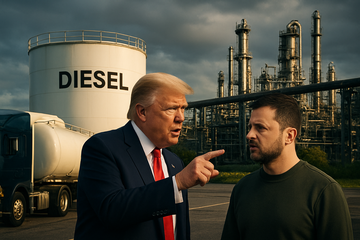
Trump Tells Zelensky to Spare Russian Diesel — Right as Marathon Petroleum, Valero and Phillips 66 Pocket a $5.1B Quarter
On Sept. 13, 2026, President Trump publicly told Ukraine to 'stop knocking out diesel fuel in Russia,' even as the U.S. diesel crack spread hit a record $108/bbl and the three largest independent refiners booked combined Q2 refining-segment income north of $15B. The call reframes diesel from a Russia-Ukraine story into a U.S. policy lever — and ties the U.S. refiner P&L, Saudi pipeline flows, and any Trump-Putin-Xi deal into a single crude-distillate trade. The squeeze itself is bigger than Kyiv: the IEA says the U.S.-Iran war has removed more supply, with the Strait of Hormuz historically carrying 20% of global oil and the Saudi East-West pipeline now offline after a Sept. 11 Houthi drone strike.
Apple's App-Store Power Survived Unscathed — Musk Dropped the Antitrust Suit on the Same Day iOS 27 Killed the Theory Behind It
X Corp and SpaceXAI quietly filed to dismiss their August 2025 antitrust lawsuit against Apple in a Texas federal court on September 14, 2026 — the very day Apple shipped iOS 27 with a Gemini-powered Siri and a third-party AI Extensions framework that, by design, demotes ChatGPT to one of several options. The dismissal leaves Apple's curation defense and App-Store economics intact, pushes the chatbot-monopoly theory onto OpenAI alone, and gives Alphabet a cleaner runway on both the Gemini integration and the parallel Google-Search antitrust overhang. For investors, the read-through is that platform-gatekeeper risk is now bounded by regulation, not private suits — Apple gained clarity on its most valuable asset while paying nothing in precedent.
2026-09-13
Xi's BRICS AI Coalition Hands Nvidia, Cisco and the US Hyperscalers a $50B Sovereign-Compute Ceiling—And the China Revenue Is Already Zero
At the 18th BRICS Summit on Sep 12, 2026, Xi Jinping's delegation proposed a BRICS AI open-source community, a digital ecosystem cloud platform, and smart-factory buildouts across 11 member states—a formalization of the parallel AI stack that has already pushed NVIDIA's China Data Center revenue to zero. With Huawei, Cambricon and Alibaba's T-Head now generating roughly $20B of annual AI-chip and AI-cloud revenue and a sovereign-AI market projected to grow from $50B in 2026 to $249.5B by 2035, the binding constraint on NVIDIA, Cisco, Microsoft, Amazon and Alphabet is no longer whether they keep China, but whether the rest of the bloc buys from anyone but them.

Loblaw's Buy-Canadian Tailwind vs. Brown-Forman's 60% Canada Collapse: Mapping the Demand-Side Boycott Tariffs Can't Reach
Canada's consumer boycott, not its Section 338 counter-tariffs, is the channel walling off U.S. consumer-staples brands: Canadian imports of U.S. wine collapsed 77% in a single year ($446.5M → $103.7M), spirits fell 46%, beer 64%, and Brown-Forman reported Canadian net sales down 60% year-to-date through January 2026. Loblaw and Empire are the channel beneficiaries — the country's largest grocer just green-lit a $2.4B, 70-store 2026 expansion plan even as Loblaw Q2 food same-store sales slowed to 1.6% from 3.5%, a sign the Buy-Canadian wave is being captured by Canadian supply chains rather than passed through to U.S. brand shelf space. The investable line is which U.S. names face brand-activist shoppers (spirits, wine, U.S.-branded confectionery) versus which ride through via local bottling and substitution (soft drinks, packaged food, personal care).
Macy's Beat Is Real on Bloomingdale's, Optical on Tariffs — and the Stock Still Dropped
Macy's just posted its fifth straight quarter of positive comps (+2.7%), with Bloomingdale's up 11.3% and adjusted EPS of $0.63 crushing $0.37 estimates. Strip out the $98M IEEPA tariff refund and the underlying beat is closer to break-even — yet the company raised full-year guidance and stock fell 4.7% anyway, because Q3 guidance points to a loss. The off-price trade-down is alive (Ross +10% comps) but starting to fray at the edges (TJX Marmaxx just +1%), making Macy's the cleanest department-store exposure but with a luxury-tail story most peers can't replicate.
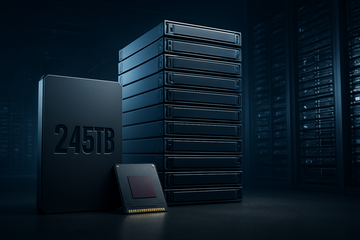
OpenAI's 1B-User Habitat Reveal Confirms a Second AI Capex Wave—And the Better Storage Trade Isn't Seagate
OpenAI's Sep 11 engineering post on its Habitat online store—70M requests/sec, 500+ petabytes, ~40 regions—turns the storage tier into a measurable AI capex line, and OpenAI is separately shopping ~5 exabytes. Seagate is sold out through 2027 on HAMR and the HDD trade still works, but Micron's shipping 245TB SSDs cut AI data-lake energy use 84× and rack count 82%, making the SSD+NAND complex—Micron, SK Hynix, Samsung—the higher-margin leg. The cleanest single-name way to play the storage-tier frontier is NVIDIA's growing equity grip on OpenAI's power stack.
NVIDIA's Open-Model Distribution Play Faces a New Threat — and It Isn't Coming From Beijing
Y Combinator's Garry Tan wants US open-weight labs to legally distill frontier models, turning the CISA/Anthropic 'China problem' into a US strategic asset. That shift rewrites who captures the open-weight layer — and the second-order loser is NVIDIA's bundling of GPU, Nemotron and AI Foundry, which today monetizes the gap between closed frontier and free open weights.

CFTC Yen Positions Just Flipped Net Long—A 103,000-Contract Reversal That Hands the AI Carry Trade a Two-Way Tail
Speculators flipped to a net long yen position of +10,796 contracts in the week to September 8, reversing the prior week's -92,227 and ending a seven-month run of bearish bets. The shift signals the carry trade is no longer one-way—but a crowded long position is its own risk, leaving both NVIDIA-led AI equities and Mitsubishi UFJ Financial Group's megabank peers exposed to renewed yen volatility into the Bank of Japan's December rate decision.
2026-09-12
Anthropic called for a global AI slowdown three days after filing to go public — and its own safety policy exempts itself
On June 4, 2026 — three days after Anthropic confidentially filed its S-1 — the company published a blog post asking every other frontier lab to pause. Anthropic's own Responsible Scaling Policy v3 had already been updated in February to carve out an exception: it will not slow down if it lacks a lead. With run-rate revenue now past $65 billion, a $2 trillion IPO in the mid-October pricing window, and $517 billion in compute commitments to fund it, the slowdown call is best read as a coordinated-pressure play against OpenAI and Google DeepMind ahead of the largest listing in tech history.

Druckenmiller Dumped Broadcom, Intel, and Micron. The Chip He Bought Instead Says the AI Trade Has Two More Years Left.
Stanley Druckenmiller's Q2 2026 13F cut Broadcom, Intel, and Micron — chips that already printed their 2025–26 melt-up — and opened a new position in AMD and a fresh miner-to-AI cluster in Bitdeer, Riot Platforms, Hut 8, and IREN. The chip he kept (a 19% larger TSMC stake) is the real tell: hyperscaler capex is heading toward $700 billion in 2026, and Druckenmiller is positioning for the picks-and-shovels picks, not the names that already cycled.

Judge Illston kills the FEMA halving — restoring the math for $758M of NFIP reinsurance and $570M of disaster-recovery contracts
U.S. District Judge Susan Illston ruled on September 12, 2026 that DHS broke post-Katrina law by ordering FEMA to slash its workforce in half — a liability finding that, with remedies due next month, preserves the federal catastrophe backstop reinsurers and disaster-recovery contractors had been quietly pricing for a 2027 alternative scenario. Disaster-recovery firms Jacobs Solutions and Tetra Tech get back the federal revenue base that was on the chopping block; RenaissanceRe, Everest and Arch Capital keep the stable treaty assumptions their January 2027 books were written against; and the $758M National Flood Insurance Program private-reinsurance renewal stays on track. Primary carriers AIG, Travelers and Allstate face a softer 2027 pricing story because the cost-shift onto private capital that market chatter had been pricing has just been defused — quieter underwriting, slower top-line.
JD.com's $500K SEC fine — the first 'sham transactions' case against a Chinese ADR — exposes a $160M gap auditors have to defend
On Sept. 11, 2026 the SEC hit JD.com-owned Dada Nexus with a $500,000 cease-and-desist for fabricating online advertising and marketing transactions across four quarters ending Sept. 2023, overstating net revenue and operating costs by more than $160 million. The penalty is token; the precedent is not — it is the first 'sham transactions' settlement against any Chinese ADR under the SEC's new Cross-Border Task Force, and it sets a quantifiable compliance template auditors will now apply to Alibaba, PDD Holdings, Baidu, NetEase and the rest of the US-listed China complex.
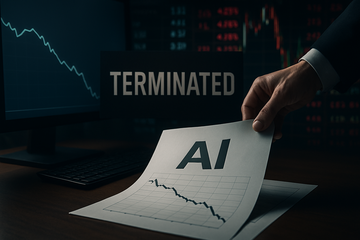
JPMorgan Becomes the First Major Prime Broker to Sever an AI-Concentrated Fund — and Wall Street's Counterparty Desk Just Priced the AI Trade Down
JPMorgan Chase terminated its prime brokerage lending relationship with Leopold Aschenbrenner's Situational Awareness LP on Sept. 11 — six weeks after the fund posted what the FT called the largest dollar loss in hedge fund history and migrated its financing to non-bank broker Clear Street. The cut marks the first time a top-tier US prime broker has formally severed a major AI-concentrated fund, while at the same time Goldman Sachs disclosed that roughly 16% of its prime brokerage financing book sat in AI memory stocks at the end of June. The transmission mechanism is now explicit: counterparty banks — not just fund managers — are pricing the AI trade down.
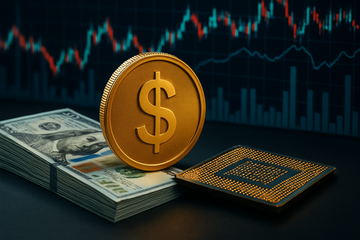
Nvidia's $10B Anthropic Anchor Is the First IPO Check Wall Street Has to Mark as a Circular AI Trade
Reuters reported Sept. 11 that NVIDIA is in talks to take a stake of up to $10 billion in Anthropic's October IPO, which could raise as much as $100 billion at a ~$2 trillion valuation. The check closes a loop the Street has paper-marked for two years: NVIDIA chips finance Anthropic, NVIDIA equity supports Anthropic's customers, and Anthropic rents NVIDIA-backed compute from CoreWeave — a flywheel that now forces investors to mark $94B of customer equity at IPO risk.
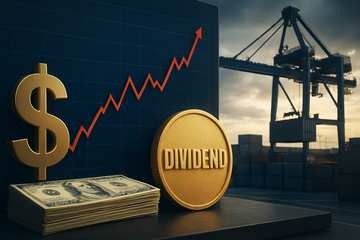
$166B Tariff Refund Reflux Has Peaked — Quietly Voids Trump's $5,000 Dividend Math And Forces a Treasury Re-Price
Tariff refunds under the post-IEEPA Supreme Court order have crossed from net-negative to net-positive in August 2026, the first time since the refund portal opened. Roughly $115B has already gone back to importers, with ~$100B still owed — a sum larger than every realistic2026 tariff-revenue forecast. Trump's floated $5,000-per-adult 'dividend' would cost ~$1.3T against ~$300B in current-law customs receipts, and the refund taper means those receipts will fall further as the year closes. The implication for equities: front-loaded cash beneficiaries (Nike, Apple, Walmart) have already booked most of their gains, while importers still holding large IEEPA receivables — and the entire fiscal baseline the dividend pitch rests on — face a re-price.

Trump's $500 ACA Refund Is the Headline — the Real Margin Story Is a 60-Basis-Point User Fee Cut Markets Haven't Priced
The September 10 announcement of $500 refund checks to ~1M unsubsidized ACA enrollees grabbed the headlines, but the bigger investor story is already locked in: CMS's May 2026 final rule cut the federally-facilitated exchange user fee from 2.5% to 1.9% of monthly premiums for 2027, redirecting an estimated $500M+ per year of insurer expense into margin. Combined, the two interventions cushion Centene, Oscar Health, and the rest of the ACA marketplace complex against a brutal 2026 enrollment year, with the largest pure-play leverage at Oscar Health and the largest footprint lift at Centene.
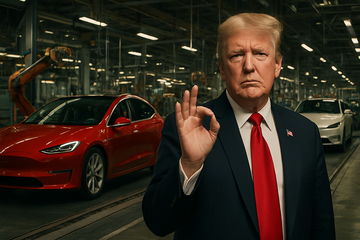
Trump's 'OK' to Chinese cars built in the US just turned Ford and GM's ban push into defense — BYD and Geely own the move
President Trump told Fox News on Sep 12, 2026 that he would welcome Chinese automakers building cars in the US, nine days after the Alliance for Automotive Innovation — Ford, GM, Stellantis, Toyota, Honda, BMW, Volkswagen, and Volvo — asked Congress to permanently ban them. The 'localize-or-stay-out' bargain replaces the import-threat frame: BYD and Geely can clear it with capex, while Transportation Secretary Duffy's parallel Sep 8 letter attacking Ford's existing CATL, Geely, and BYD links leaves US automakers caught between the new opening and the old pressure.

UAE's €40B German AI Bet Steals Sovereign Capital From the U.S. Power Wall
On September 10, 2026, the UAE pledged €40 billion ($46.4B) to Germany — anchored by ~1 gigawatt of new data-center capacity and 29 corporate MoUs worth €9.4B — the first sovereign capital deployment large enough to re-price the transatlantic AI compute map. With nearly half of 2026 U.S. data-center projects already delayed or cancelled by grid bottlenecks, the package quietly opens a European fast lane for NVIDIA-powered capacity, the Equinix/Digital Realty colocation duopoly, and Vertiv-grade power infrastructure, while pressuring U.S. hyperscalers to reprice their own European expansion roadmaps.
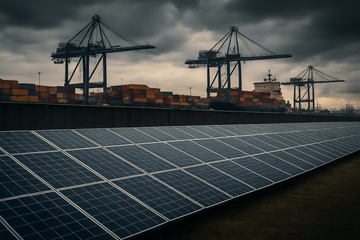
U.S. Just Put a ~250% Tariff Wall Around Indian Solar — Project IRRs, Not Polysilicon, Are the Story
On September 11, 2026, the U.S. Department of Commerce finalized AD/CVD duties stacking up to 249% on Indian solar cells, 268% on Indonesian, and 219% on Lao — combined with Section 232 minimum import prices taking effect December 4. The decisive channel is downstream: U.S. utility-scale project IRRs re-rate on module cost, domestic manufacturers like First Solar pull forward a $14.4B backlog, and Indian cell makers — already operating at 160 GW of capacity against 45-50 GW of domestic demand — face a hard pivot away from the U.S. market.
What to expect
Evidence-first notes with a visible point of view.
This section collects sharp takes on earnings, shareholder meetings, and market structure. Each new piece should make the thesis, the facts, and the implications obvious within the first few screens.
Expect direct analysis, not generic commentary.
Expect the data to be explicit and the argument to be easy to follow.