Policy & Trade
Tariffs, export controls, and who absorbs them
Rulings, sanctions and trade negotiations traced to the companies that pay for them — margin by margin, route by route.
2026-09-08


California’s 2026 “Billionaire Tax” revives the market’s hidden fear: forced selling at fixed valuation dates
A proposed California ballot initiative would levy a one-time 5% tax on billionaires’ net worth, with payment stretching into 2027–2031 and a structure that can push owners toward “forced-selling” dynamics despite “fair market value” language. The investable takeaway is less political than mechanical: when liquidity rather than fundamentals drives selling calendars, mega-cap holders’ near-term positioning risk can reprice even before any law passes.
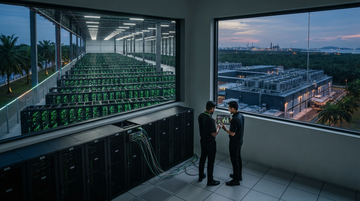
OpenAI's Malaysia Bet With Firmus Just Made the US Hyperscaler Capex Trade a Two-Region Story
Nvidia-backed NVIDIA partner Firmus has signed OpenAI as anchor tenant for two Malaysian AI factories, lifting its contracted capacity above 900 MW days before a planned A$15–30 billion ASX float. The deal is the first credible proof that the AI build-out has a second, cheaper geography: Malaysia's medium-voltage industrial power runs ~6.7¢/kWh against PJM's ~8.99¢/kWh in Northern Virginia, and PJM capacity prices have gone from $29/MW-day to $329/MW-day in two auctions. For Microsoft, Oracle, Amazon and Alphabet, the trade is no longer

Saudi Infrastructure, Not Hormuz: Why Brent's Six-Week High Reframes the Oil Trade
Iran-aligned Houthis struck Saudi Aramco's southern facilities on Sept 7-8, 2026, and Brent pushed through $97.31 to settle at a six-week high. With the East-West pipeline already maxed at 7M bpd and the 400,000-bpd Jizan refinery shut since July 27, the trade is no longer about Hormuz risk premium — it's about Saudi infrastructure resilience, Red Sea tanker re-routing, and the oil-services names embedded in Aramco's capex. Tankers and Middle-East-tied service companies are the cleanest expression; Saudi Aramco itself barely moved.

Brent Won't Break $100 as Iran Declares a Gulf 'Exclusion Zone' — The War-Risk Premium Has Quietly Migrated to Tankers and Diesel
Iran's Sept. 7–8 announcement of a new Persian Gulf 'exclusion zone' has not pushed Brent above $100 — and the Sept. 8 Reuters explainer asked exactly why. The answer is structural: a 5–7 million bpd supply loss is being absorbed by Saudi and UAE spare capacity, US pipeline bypass, and a Strategic Petroleum Reserve now at a four-decade low, while the war-risk premium is showing up in VLCC day-rates and a diesel crack spread that has already printed above $100/bbl. The trade is no longer in the front-month — it sits in crude tanker operators and US independent refiners, with Frontline, International Seaways, Valero, and Phillips 66 the cleanest exposures.

162K jobs + a trade ultimatum = the September $1T debt-market stress test for equities and credit
The August jobs shock (162,000 new jobs) tightened the market’s odds on a September Fed move, while a trade ultimatum tied to rate cuts raised the risk that funding-liquidity conditions—not just “rate direction”—dominate September. With U.S. debt interest costs running at over $1T a year and the 10-year yield pressing toward 5%, investors should treat this month as a stress test for term premium and credit transmission into risk assets.

DOJ’s “private liquidity” fraud theory could quickly re-rate secondary-market carry—because it attacks price discovery, not just paperwork
A DOJ case involving Linqto frames pre-IPO “liquidity” as criminal pricing conduct in markets where buyers cannot verify prices. The core investor shock is that secondary carry now depends on trust in secondary pricing models, so discounts can widen faster than fundamentals change.
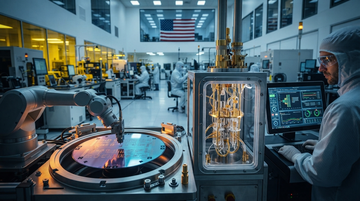
PsiQuantum's $100M CHIPS Award Just Made Photonic Quantum a US Defense Schedule — GlobalFoundries, Lumentum, Coherent Are the Real Trade
Commerce finalized $100M for PsiQuantum on Sept 8 — the same morning it finalized $100M each for Quantinuum, D-Wave and Rigetti, $375M for GlobalFoundries, and $1B for IBM's Anderon foundry. Photonic quantum now has a domestic manufacturing schedule, not a research grant. The listed names that already build its BTO optical switches, 300mm silicon photonic wafers, single-photon detectors, and cryogenic stack — GlobalFoundries, Lumentum, Coherent, Marvell, Applied Materials — become the investable read on a market that didn't exist as a factory line a year ago.

EU interoperability orders turn AI distribution into a compliance game—starting with Android’s “AI services” plumbing
The EU’s Digital Markets Act is moving from generic “fair access” promises to specific interoperability engineering deadlines. The July 2026 Alphabet/Android decision shows how interoperability enforcement can force third‑party AI providers to integrate deeper OS capabilities, shifting AI economics from model quality to routing, identity, and compliance throughput—well before consumers notice quality changes.

SEC’s transfer-agent modernization targets settlement risk—but the real trade is compliance overhead vs. operational resilience
The SEC’s Sept. 4, 2026 proposal would modernize registered transfer-agent rules around recordkeeping, restrictive legend controls, and outcomes-based safeguarding that explicitly covers custody, operational, and cybersecurity risks. For investors, the punchline is that the biggest near-term effects are likely to land in issuer servicing and regulated back-office systems—potentially improving real settlement reliability while also creating new “paper-to-system” workflow bottlenecks.

Social Security tax updates can reshape retirement cash flow—because the tax bill follows when income is realized
A new $6,000 “senior” deduction for tax years 2025–2028 changes how much taxable income high-income retirees realize each year. Separately, Social Security benefit taxation is set to shift starting in 2027, meaning the marginal tax cost will increasingly depend on realized (not reported) income timing. For investors, the tradable angle is a cash-flow-timing event that can pull forward or delay household demand for tax-planning, brokerage, and tax-prep services.

Taipei Just Weaponized AI Chips — And the U.S. Semi Customer Map Sits Squarely on the Wrong Side
At SEMICON Taiwan 2026, President Lai Ching-te turned chip scarcity into a negotiating asset, securing U.S. tariff relief and courting the EU and France while demanding $285B of bilateral commitments. The leverage is real — but it flows from the fact that NVIDIA, AMD, Apple and Broadcom all run their leading-edge silicon through TSMC. For U.S. semi customers, the new risk isn't tariffs on chips. It's terms on chips.

Slovenia Just Handed Tesla Its Sixth EU Country — Now the October 6 Vote Decides Who's Inside Europe's Robotaxi Window
Slovenia cleared Tesla FSD Supervised on September 7, making Tesla the only Western AV vendor with national sign-offs across six EU member states and a credible path to bloc-wide approval at the October 6 TCMV vote. A 'yes' converts ~$775M of annualized FSD subscription revenue into a 27-country compounding machine; a 'no' reopens the door for Mobileye's Munich/Tel Aviv robotaxi and Alphabet's Waymo Munich 2027 launch to define Europe's AV map without Tesla in it. France and Sweden are already opposed, the ETSC is asking ministers to delay, and Tesla's own safety data is under fire — so the binary cuts both ways, and every listed Western AV name sits on one side of the door.

US “industrial-scale” AI-theft memo changes the risk model for US cloud, GPU licensing, and AI budgets
A White House memo, later echoed in a House hearing record, alleges China-linked actors are running “industrial-scale” distillation campaigns against US frontier AI—using proxy accounts and “jailbreaking” to extract model capability. If prosecutors and regulators operationalize the memo’s approach, the first-order winners may not be the firms being accused, but the companies building the defensive perimeter (secure inference, auditability, and compliant distribution) across the AI supply chain.
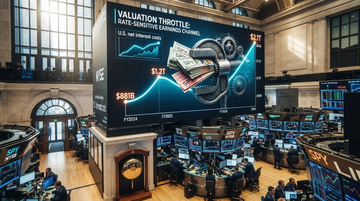
US debt’s interest bill is tightening equity multiples through a “rate-sensitive” earnings channel
Recent fiscal projections put US net interest on a steep upward track, with annual interest costs topping $1T in 2026 and rising toward $2T+ later this decade. That shift matters to equity markets less as a deficit storyline and more because it transmits directly into bank funding costs, spread dynamics, and—via the discount rate—valuation “throttle” effects.
2026-09-07

A Miami 767 Crash Just Put the E-Commerce Air Stack in Regulatory Crosshairs — Amazon, FedEx, UPS, and Boeing All Re-Price
Five died when a 32-year-old Amazon-branded 767-300F skidded off Miami's Runway 30 in 26-knot thunderstorm gusts on September 6, 2026. With Amazon Air already operating ~101 aircraft at a 26.5-year average fleet age — equivalent to 14.6% of FedEx capacity and 20% of UPS capacity — and 767 freighter production ending in 2027, the hull loss re-primes aviation insurance, reopens the case for fleet-wide 767 scrutiny ten months after the UPS MD-11 Louisville grounding, and accelerates Amazon's pivot toward drones that already run at one-thirtieth the per-mile cost of ground delivery.

Trump's Bombardier ultimatum is back — and only one US business-jet maker is fully battle-ready
On Sept 7, 2026, President Trump revived his \"build in the US or get out\" demand on Bombardier via Truth Social, but the Section 232 tariff lever was already closed by the White House on July 9, and Canada fires back with up to 50% counter-tariffs on Sept 8. With Bombardier's $21.8B backlog and ~2,700 in-service US jets in play, General Dynamics's Gulfstream is the cleanest winner — and the four-engine-OEM stack around Bombardier (GE Aerospace, Rolls-Royce, RTX and Honeywell) collects the aftermarket either way the ultimatum lands.

Citi’s China Brokerage License Re-Entry Is a “Fee Wallet” Event—But the Stock May Still Be Underpricing the Friction Risk
Reuters reports Citigroup. expects approval for a wholly-owned mainland China brokerage business as soon as September 2026, enabling onshore A-share brokerage, underwriting, research, and principal trading. The move directly upgrades Citi’s China fee pipeline, but the same re-entry faces policy and execution frictions that can delay monetization, which helps explain why the market may not fully re-rate Citigroup yet.

Italy's \"Voluntary\" Bank and Energy Ask Hides a €1.5–2B Extraction — and US ADR Investors Should Care
Italy's deputy prime minister Antonio Tajani asked banks and energy firms on Sept. 4 to \"bring forward\" tax payments for the 2027 budget, framing it as a negotiated, voluntary extension of two prior sector accords. Underneath the label sits a third round of cash from a banking system that has already paid €1.2B more tax in H1 2026 versus H1 2025, an energy sector that funded the August fuel-excise extension on the same model, and a coalition split where Deputy PM Salvini is publicly pushing a harder 5%-of-profits levy. The trade for US-based holders of UniCredit and Intesa Sanpaolo ADRs is not whether Italy hits the sector again — it already has — but whether Rome's template migrates to Spain or France and turns a managed extraction into a peripheral-Europe spread event.
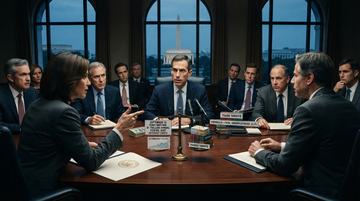
162K Jobs and a Trade Ultimatum: The September Fed Meeting Is Now a $1 Trillion Debt Showdown
The August payrolls surprise pushed Fed pricing toward a September hike at the same moment President Trump demanded cuts and floated halting trade with deficit countries. With $1 trillion in annual federal interest costs, the September 16 FOMC meeting is no longer a monetary-policy decision — it is a test of whether the central bank can remain independent of a White House treating interest rates as debt-service management.
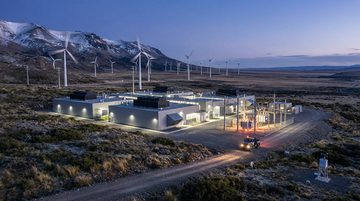
Why Patagonia’s Cold + Wind Can Break the Next AI Data-Center Siting Trade-Off—and Who Benefits
A Sept. 7 Reuters report says hyperscalers are probing Argentina’s Patagonia for mega data centers, attracted by wind-powered power economics and a cold climate that can lower cooling costs. The market signal isn’t just “cheaper kWh”—it’s that AI siting economics may shift toward places with both dispatchable-like renewable pricing dynamics and long runway for grid and generation buildout, reshaping who wins interconnect, power contracts, and capacity. Public investors should watch the listed power and data-center-adjacent names most exposed to these contract and buildout cycles.
What to expect
Evidence-first notes with a visible point of view.
This section collects sharp takes on earnings, shareholder meetings, and market structure. Each new piece should make the thesis, the facts, and the implications obvious within the first few screens.
Expect direct analysis, not generic commentary.
Expect the data to be explicit and the argument to be easy to follow.