Policy & Trade
Tariffs, export controls, and who absorbs them
Rulings, sanctions and trade negotiations traced to the companies that pay for them — margin by margin, route by route.
2026-09-23


India Just Quarantined the Korean OLED Pipeline — BOE, Not Hisense, Is the Real Substitute
India's Directorate of Revenue Intelligence is probing LG Electronics and Samsung Electronics for claiming a 5% LCD-era tariff on imported OLED open cells instead of the 15% rate the agency believes is owed, exposing up to a decade of Korean OLED panel imports to retroactive penalties. With India OLED TVs at ~$190M of a $4.7B TV market and Korean suppliers controlling virtually every premium panel, the substitute isn't a rival brand — it's BOE Technology, whose first Gen 8.6 AMOLED line entered mass production in Chengdu on June 17, 2026.
Microsoft's $10B Gulf Bet Funds a Backup Plan for AI — Not Just More Capacity
Microsoft will spend more than $10B across the UAE, Saudi Arabia, Qatar and Kuwait through 2030, with a focus on 'digital resilience' — readiness and critical-data protection that the company says it was already extending to Gulf partners during the first week of the 2026 Iran war. The spend is small relative to Microsoft's $175B FY2026 capex, but it is the first hyperscaler commitment explicitly framed around geopolitical durability rather than power cost, with NVIDIA, Brookfield-Qai and a new subsea buildout as the named upstream levers.
Novo Nordisk's Direct Listing Talk Won't Fix the Pipeline — But It Will Re-Price the Whole GLP-1 Trade
Novo Nordisk (NYSE: NVO) CEO Mike Doustdar told the FT he is open to replacing the company's American Depositary Receipts with a direct NYSE listing — a structural upgrade, not a fresh raise. The angle investors are missing: at 9.9x trailing P/E versus Eli Lilly's (NYSE: LLY) 39.2x, Novo trades at a discount that no longer reflects the operating reality (43.1% operating margin, DKK 78.5B Q2 sales). A direct listing would compress that gap before it would fix the CagriSema pipeline miss. The Danish krone, the obesity-pill race, and Catalent all sit on the same transmission line.
Wall Street's Tokenized-Stock Race Isn't a Crypto Trade — It's a Settlement-Layer Land Grab
ICE and Nasdaq spent 2026 wiring U.S. equities onto blockchain rails with Securitize and tZERO as digital transfer agents, capped by the SEC's Sept 17 Innovation Exemption and DTCC's October full launch. The investable signal runs through the people who own the rails — clearing banks, exchanges and stablecoin issuers — not the people trading the tokens.
2026-09-22
Accelevation's $5.4B IPO Tests the One AI Trade Wall Street Hasn't Priced: the Rack-Builder
Accelevation filed to price 30 million shares at $20–$24 on Sept. 22, 2026, targeting a $5.37 billion market cap — the first standalone US listing of a vertically integrated power-distribution and white-space manufacturer built specifically for AI data centers. Its $1.1 billion backlog and 32% gross margin sit between Crusoe's $30.9 billion private mark and Vertiv's $96 billion public valuation, putting the multiple for the rack layer of the AI build on the tape for the first time.
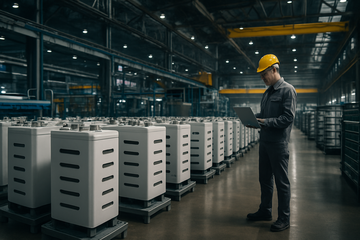
EnerVenue Just Built Its First Factory in China, Not Kentucky — and the Math Was Always Going to Win
EnerVenue, the US nickel-hydrogen battery startup that walked away from a $264M Kentucky plant after winning state incentives, opened mass production in Changzhou the week Trump sits down with Xi. The draw was graduate engineers at $1,792 a month and a local supplier base that finances itself until design wins — advantages no state subsidy can offset. For energy-storage hardware, China is now the factory of factories, and US startups with novel chemistries are voting with their capex. The investors who read this correctly will reposition around Chinese battery dominance, US industrial-policy wreckage, and the long-duration storage race.
DOJ's Iran-Sanctions Probe of Binance Makes Compliance an Earnings-Line Tax — And the Listed US Venues Aren't Priced for It
DOJ opened a formal probe (Sep 22, 2026) into whether Binance failed to stop Iran-linked trading on its platform — eight days after the same Manhattan office filed a $61M civil forfeiture tied to the same network. The 2023 plea deal already extracted $4.3B and imposed a three-year monitor; this new probe tests whether that monitor can be trusted. For Coinbase, Robinhood, and Circle, the question shifts from whether 'crypto compliance' is a marketing line to whether it now hits the income statement — and whether flow migration from Binance's 39% global spot share becomes a domestic-venue tailwind or a generic 'crypto crackdown' headwind.
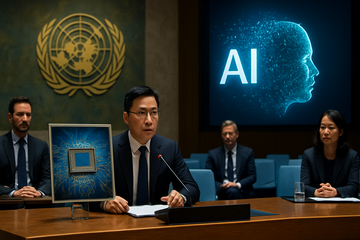
DeepSeek at the UN Security Council reframes the Trump-Xi chip trade — Beijing is exporting AI rules while blocking NVIDIA's H200 at home
Chinese AI lab [DeepSeek] will brief the UN Security Council on AI risk on Sept. 23, alongside OpenAI's Sam Altman and [Anthropic], marking the first time a frontier Chinese model developer speaks inside the chamber. The briefing lands as Trump and Xi sit down again with chip export terms unresolved: Washington approved limited NVIDIA H200 sales in January, Beijing has refused to let its own cloud firms (Alibaba, Tencent, ByteDance) take delivery. That asymmetry — exporting governance while blocking US silicon — rerates the China AI compute stack into SMIC and Cambricon, and rewrites what a $2T [Anthropic] IPO is actually pricing.

DoorDash's $131.5M 'We Screwed Up' Settlement — and What It Does to Uber, Lyft, and the Robotaxi Race
DoorDash agreed to pay New York City $131.5 million on September 22, 2026, admitting it underpaid roughly 264,000 delivery workers — capping a nine-month enforcement drive that already pulled an estimated $104 million of tips back to couriers. The deal lands the same week Uber cut 10% of staff (3,300 jobs) to bankroll robotaxis and Tesla launched paid Cybercab rides in Austin. Together the three moves crystallize a two-sided setup: US city-level pay floors are now durable, while the autonomous substitution that would offset them is still years from scale.
Silver Lake Sues Icahn to Kill the Endeavor 'Appraisal Arbitrage' Trade — And Force Every PE Take-Private With a Public Subsidiary to Read Its Own Deal Math
On September 21, 2026, Silver Lake and Endeavor Group sued Carl Icahn and dozens of hedge funds in Delaware Chancery, asking a judge to declare post-deal 'appraisal' claims invalid because the funds bought their shares after Silver Lake's $13 billion, $27.50-per-share deal was already public. Roughly 150 million Endeavor shares, worth about $4.1 billion at the deal price, are already locked in appraisal petitions; if a judge later lands near a $37.70-per-share independent analyst estimate, Silver Lake's exposure could exceed $1.4 billion plus 9.5% accrued interest. The Chancery ruling will force every future PE take-private of a parent with a publicly listed subsidiary to bake in a multi-hundred-million-dollar appraisal reserve or restructure the deal.
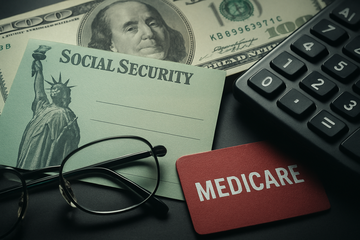
The 'No-Tax-on-Social-Security' Promise Skips the 88% Who Already Paid Nothing — the 3.6% 2027 COLA Won't
President Trump's headline 'no tax on Social Security' arrived as the 2027 COLA shaped up at roughly 3.6%, but the Working Families Tax Cuts Act machinery is a temporary $6,000 senior deduction that the Tax Foundation shows actually delivers a larger after-tax lift to lower-middle-income retirees than the original promise would. The COLA is the bigger investable event: about $70 a month extra on ~71 million checks flows straight into UnitedHealth Group, Humana, Welltower, Ventas, and the senior-skewed staples trade — not into the retirees the messaging targets.
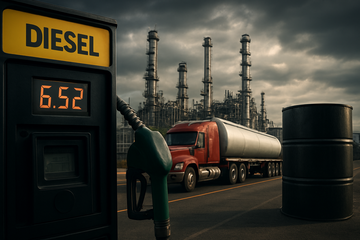
Trump's Diesel Export Ban Floats In. The $12.6B Refiner Trade Just Met Its First Real Policy Risk.
President Trump said on Sept 22 that he would support banning US diesel exports as pump prices hit a record $6.52/gal. The threat lands directly on Marathon Petroleum, Valero and Phillips 66 — whose combined Q2 net income of $12.6B was built on distillate cracks that are already near all-time records. A ban would not lower US pump prices because diesel is globally priced off Europe and Russia (where exports are already banned), but it would force refiners to cut runs and spill gasoline and jet. The investable pivot sits elsewhere: Union Pacific, CSX and Norfolk Southern already see truck freight converting to rail as diesel tops $5/gal — and a ban only accelerates that modal shift.
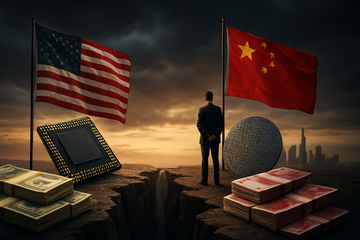
The AI Trade Is Already Splitting — Two Days Before Trump and Xi Sit Down
President Trump's Sep 24 summit with Xi Jinping hasn't happened yet, but the bifurcation is live: the Sep 20 Bessent–He Lifeng talks in New York locked in a US-China AI safety dialogue while explicitly carving chip export controls out of it, leaving the H200 pipeline to NVIDIA stuck at zero deliveries. NVIDIA itself guided Sep-quarter revenue of $108B with zero China data center compute baked in, while Chinese/HK investors crossed $750B in US equity holdings and US banks underwrote $17.2B of Chinese AI listings — investors are hedging both sides rather than picking one.
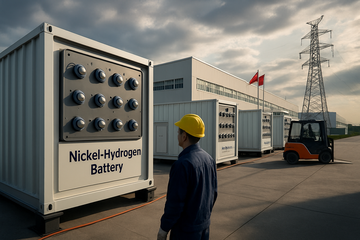
EnerVenue’s Changzhou start exposes the real constraint on “Made-in-USA” batteries
EnerVenue’s first high-volume nickel-hydrogen battery production in China starts the same day Trump meets Xi—showing that speed, industrial depth, and proven manufacturing know-how can outweigh industrial-policy promises. The move also highlights a supply-chain split: US policy may redirect demand, but China’s production engine is where new battery platforms are getting industrialized first.
2026-09-21
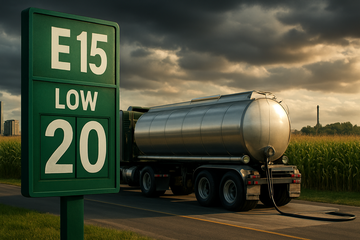
California E15 is now legal in all 50 states — a $1.5B ethanol windfall lands on refiners and station operators before it reaches the corn grower
California became the last state to permit E15 sales after Governor Newsom signed SB 795 on September 19, 2026, completing a regulatory path that began with AB 30 in October 2025. Aemetis pegs the new California ethanol demand at 600–650 million gallons per year — roughly 10× its 65-million-gallon Keyes plant — against $2.7 billion in annual pump savings. The ethanol dollar first runs through Valero Energy's 1.6B-gallon ethanol footprint and a refiner lobby that spent a year blocking the bill; only later does it reach corn processors like Archer Daniels Midland and station retailers such as Casey's.
Jane Street's $15B loss just landed on bank balance sheets — and the Fed, BoE and SEC are circling
The SEC has subpoenaed Goldman Sachs, JPMorgan Chase, Citigroup and Bank of America over margin lending to AI-focused hedge fund Situational Awareness, and the Fed and Bank of England are now jointly pressing global banks on intraday exposure to trading firms including Jane Street and Citadel Securities. With the BoE already flagging hedge fund equity prime brokerage balances at record levels and up ~40% year-over-year, the July blow-up is converting a private prop-trading loss into a system-wide bank-capital review of prime brokerage — and pulling SK Hynix and Taiwan Semiconductor into the regulatory frame.
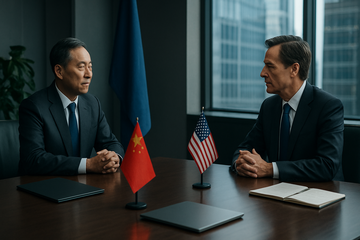
JPMorgan’s HQ just became the White House’s deal-room proxy for US-China talks—watch what that does to finance, AI and critical minerals
A Bessent–He bilateral held at JPMorgan Chase & Co. headquarters (not Treasury or State) underscores that Wall Street is becoming an operational platform for US–China diplomacy on AI security, trade and critical minerals. For investors, the signal is less about “friendlier ties” and more about lower execution friction for cross-border policy packages—a setup that can selectively support chips, memory and rare-earth supply chains while keeping downside pressure on compliance-heavy trading and financing.
OpenAI's Standards Pivot Is Aimed at the Wrong Adversary — and It's Already Changing Who's on the Hook
OpenAI is publicly lobbying for US-led, federally-mandated AI safety standards as a defensive moat against Chinese open-weight labs whose token-share on US enterprise clouds has crossed 46%. The push locks Alibaba- and Tencent-backed Moonshot, Z.ai, and DeepSeek into a regulatory perimeter export controls can't reach, and is forcing NVIDIA's chip-led advantage, Microsoft's CAISI alliance, and Hong Kong-listed Z.AI into the same frame.
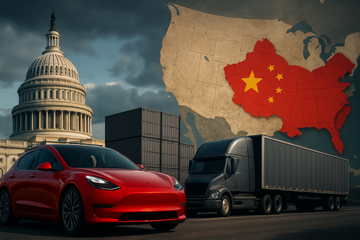
US lawmakers’ China-auto lockout collides with Detroit EV capex—and Mexico becomes the reroute
A fresh push from US lawmakers and industry groups is aimed at keeping Chinese automakers from selling, importing, or manufacturing in the United States, even as policy debates split on whether China should be allowed to produce inside the country. For Detroit’s EV cycle, the timing matters: companies are already right-sizing EV plans and taking multi‑billion-dollar charges, while Mexico’s refusal to subsidize Chinese EV makers under US pressure threatens to redirect where “China-built” vehicles can land.
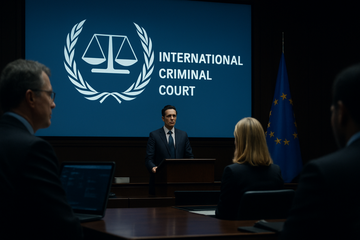
Treasury's ICC-wide sanctions make the 'rules-based order' a US corporate liability — defense primes with $26B of European FMS exposure are the read-through
The Trump administration has prepared sanctions against the entire International Criminal Court — a leap from individual designations under EO 14203 to an entity-wide prohibition on US 'services' to the court itself. With 125 ICC member states (including 28 in Western Europe) and US Foreign Military Sales still running at $104B a year, the transmission is straightforward: defense primes (Lockheed Martin, RTX, Northrop Grumman, General Dynamics, Boeing) sit on the wrong side of a new jurisdictional choice, and listed legal-information providers (Thomson Reuters, RELX, Wolters Kluwer) inherit the screening-and-blocking fallout.
What to expect
Evidence-first notes with a visible point of view.
This section collects sharp takes on earnings, shareholder meetings, and market structure. Each new piece should make the thesis, the facts, and the implications obvious within the first few screens.
Expect direct analysis, not generic commentary.
Expect the data to be explicit and the argument to be easy to follow.