Policy & Trade
Tariffs, export controls, and who absorbs them
Rulings, sanctions and trade negotiations traced to the companies that pay for them — margin by margin, route by route.
2026-10-21

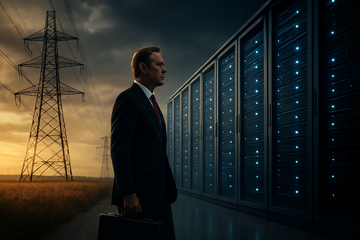
FERC Punted, Trump Pressed, Utilities Pushed: The AI Power Bill Now Has a Payer
Within 24 hours on Oct. 20, 2026, the Federal Energy Regulatory Commission said it was drafting rules to widen its authority over AI-driven load, President Trump told data center operators to pay host communities a 'dividend' and to make their own electricity, and the Edison Electric Institute published a study showing electric companies have already won ratepayer protection in more than 20 proceedings across 16 states. The answers differ in form but not direction: the data center pays for its own interconnection. That shifts grid construction off utility rate base and onto private balance sheets, which is why the beneficiaries are the contractors and equipment makers building the grid rather than the utilities whose rate cases have been stalled by the fight. It also means hyperscaler power costs become a company-level margin question instead of a political one.

Meta's $25 Billion Privacy Verdict Comes In at 40% of Its Own Disclosed Risk — and Puts a $569 Price on Every Deceptive Privacy Claim
A New Mexico judge ordered Meta on Oct 21, 2026 to pay $25 billion after a jury counted 43,899,725 violations of the state's Unfair Practices Act in the Cambridge Analytica case — 44 times the $567 million the same court ordered in August, but only 40% of the $62.85 billion exposure Meta itself disclosed in its last quarterly filing. Judge Francis Mathew priced every counted violation at $569 against a $5,000 statutory ceiling, and that per-user arithmetic, not the headline, is what other state attorneys general can reuse. The cash is absorbable at 1.4% of market value, yet it lands on a balance sheet where free cash flow has just turned negative, and an accrual in Q4 2026 would cost $9.72 a diluted share against $3.83 of third-quarter earnings. The real repricing runs through the data supply chain, where provenance claims now carry penalty risk for data brokers, AI data licensors and independent ad-tech.

$25 Million and One Signature: How OpenAI's President Ended Up on Both Sides of America's AI Rulebook
OpenAI president Greg Brockman signed the White House's voluntary AI safety accord on Sept. 29, 2026 and, weeks later, was reported to have given $25 million to Leading the Future, the super-PAC network that fights rules said to delay AI development - while his own company's policy chief publicly asks Congress for mandatory national safety standards. The two positions are not accidental: Brockman's money targets the instrument, while OpenAI's lobbying targets a single national framework it can shape and its competitors cannot. That combination lands at the worst possible moment for an IPO, because the confidential S-1 was submitted before either the accord or the donation became public, and because the Federal Trade Commission is now demanding the incident and marketing records that make safety claims testable. For public investors, the trade is not 'regulation good or bad for AI' - it is that OpenAI's own execution shortfall, a September run rate near $50 billion against roughly $70 billion signaled, does more damage to the AI capital complex than any AI bill does.

One Generation Behind, on Purpose: Samsung and SK Hynix Upgrade Their China Fabs as the Licenses Expire Every December
Reuters reported on Oct 21, 2026 that Samsung Electronics is moving its Xi'an fab to 286-layer V9 NAND and that SK Hynix is targeting at least 240 layers at Dalian — which reads as defiance until you notice that both China lines now sit one node generation behind Korea. After Washington struck Samsung China's, SK hynix's and Intel's Dalian entities off the validated end-user list in September 2025, the two groups run their China fabs on annual, case-by-case export licences, so the binding constraint is a renewal calendar rather than a node specification. That has three consequences: the tool vendors have not lost China — Applied Materials, Lam Research, KLA and Tokyo Electron still ship roughly 30–34% of revenue there — Chinese tools are substituting only below the advanced nodes, and the live binary is SK hynix's Dalian authorisation, which expires Dec 31, 2026 with no 2027 approval issued. The market's mistake is to read China's buildout as pricing power: Chinese accelerator makers are repricing upward because HBM is scarce, so CXMT's 9.5% share of global DRAM revenue is a commodity share gain, not an HBM threat, until its reported HBM3E output scales.
2026-10-20

Microsoft Calls AI Agents Insider Threats. Four Buckets Now Compete for the New Liability Budget.
On October 19, 2026, Microsoft reclassified enterprise AI agents as insider threats and rolled out Project Perception plus Guardian Agents to police them, reframing agentic AI from a productivity story into an access-control, audit and insurance problem. With88% of enterprises already experimenting with agents and global cyber premiums projected to nearly double by 2030, the dollar flows migrate toward identity platforms, endpoint and network defenders, and specialty insurers writing affirmative AI cover while stripping generative-AI exclusions into base policies. Investors should treat Microsoft's announcement as a marker that determines the shape of the next security-spend cycle — not a productivity feature.

Beijing Banned Selling Biotech Platforms, Not Licensing Them — and Only 5 of 121 China Deals Were Ownership Transfers
Beijing's October 16 draft catalogue adds five biomedical technologies to China's export-control list, but the prohibition bites only on transfers of intellectual property ownership: licensing, contract research and production services stay outside the regime. The restriction therefore lands on the 5-of-121 ownership-transfer slice of a market that did as much as $110 billion of licensing in the first half of 2026, not on the licensing itself. What reprices is who can own a platform, what Chinese service providers are worth, and how little structural room Western buyers have left in China-linked deals.

Hugging Face's Policy Chief Just Told the Industry Embedded AI Evaluators Won't Save It — And the Compliance Gap Now Belongs to Procurement
Hugging Face' Chief Policy Officer Irene Solaiman said at TechCrunch Disrupt 2026 that embedded AI evaluators are \"not an easy solution\" because trusting an evaluation requires reproducing it on the model itself — and that only works when the weights are open. With NVIDIA closing its $12.93B takeover of Hugging Face, the EU AI Act's Article 55 binding, and Chinese open-weight models already taking 41% of Hugging Face downloads, the bottleneck just shifted from model cards to third-party audit. The investable consequence: a fast-growing independent AI-evaluation market where Accenture, CrowdStrike, Microsoft, Salesforce, ServiceNow, Snowflake and Palantir all have a play — and where Western open-weight contenders like Meta finally have a procurement argument.

Mamdani's 'Abdication' Line Just Raised the Discount Rate on Every NY Data Center Project — and the Winners Aren't Who You'd Expect
When Zohran Mamdani called federal AI oversight a \"complete abdication of federal law\" at the AI Now Institute's People's AI Assembly on October 19, 2026, he didn't just stake a campaign position — he converted New York's AI infrastructure risk from a regulatory gray zone into a voter-politics overhang that follows every Digital Realty and Equinix buildout into a higher cost of capital. With CoreWeave's $1.8B Kenilworth site already stripped of its $250M New Jersey tax credit and Governor Hochul's 50MW moratorium still in force, the investable takeaway is bifurcated: neoclouds and REITs with concentrated NY/NJ footprints take project-level hits, while diversified power-buildout beneficiaries — GE Vernova, Vistra, NRG Energy — capture demand redirected to friendlier geographies with even more aggressive capex curves.

New York’s “AI validation + incident reporting” playbook turns procurement into the enforcement layer Washington didn’t build
Mayor Zohran Mamdani’s administration and the New York City Council are pushing an AI governance model that looks less like moral exhortation and more like contracting terms: third-party validation, rapid incident notice, and enforceable local liability. For investors, the key is that this shifts bargaining power toward public-sector integrators and compliance tooling vendors that can operationalize “evidence-first” AI procurement faster than competitors.

Three Bond-Stack Deals in 81 Days: Tradeweb's $1.97B Trumid Bid Confirms the Analytics Layer Clears at Twice the Venue Multiple
Tradeweb agreed on Oct 19, 2026 to buy Trumid for about $1.97B — $1.75B for the business plus roughly $220M of acquired tax assets — targeted to close in the first half of 2027 and accretive to adjusted earnings per share within the first full year after closing. The same month, LSEG confirmed talks to buy Permira's Octus for roughly $3.5B, and in July ICE signed to buy MarketAxess for $167 a share. Read together, the three deals price the same stack in layers: execution venues clear at about 12.6x trailing EBITDA while the credit data and analytics layer is being discussed at roughly 24x. That spread is why venues are paying up for analytics as cash credit fees per million fall — Tradeweb's own cash credit variable fees per million dropped 11.4% year over year in Q2 2026 even as average daily volume rose 18.2%.
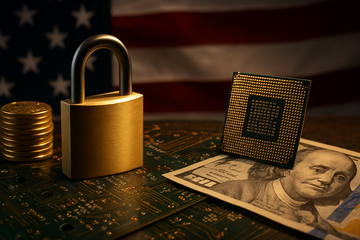
Washington Banned One AI Vendor. Chinese Models Already Take Two-Thirds of US Developer Tokens
The DHS order published October 20, 2026 pulls DeepSeek out of roughly 430 federal civilian agencies — and, more consequentially, out of any third-party product built on DeepSeek implementations. That vendor clause turns a model ban into a procurement certification regime, and it lands on a federal AI budget whose obligated value rose 966% in two years. Meanwhile Chinese open-weight models took 57% to 67% of tokens on OpenRouter in the week of September 14. The investable read is not DeepSeek's revenue line, which is small and mostly foreign. It is that excluding one vendor hands the surviving integrators a certified channel, and hands accredited testing labs a parallel one.
2026-10-19

Behind Anthropic's $1B/50-Casualty Bill: A Federal Floor That Shields AI Labs and Leaves Deployers Holding the Bag
On Oct. 16, 2026, Anthropic quietly handed Congress an 'Advanced AI Framework' that only triggers federal action above $1B in damages or 50 deaths, and routes every enforcement decision through Commerce and a single D.C. federal judge. Insurance carriers had already approved more than 80% of carrier requests to exclude AI from commercial policies, and California SB 53 already obligates frontier developers only. The combination carves out a de facto safe harbor for the handful of frontier model developers while pushing healthcare AI, autonomous vehicles, surgical robotics, and AI-driven publishers toward a coverage gap with no federal backstop. The trade is a multiple stabilizer for Microsoft, Alphabet, and Amazon — and a margin and discount-rate problem for the deployer layer.

Europe Refused to Join Trump's Russia Sanctions Coalition — Bessent's 60-Day Review Is the Loudest Admission Yet That the US Trade Weapon Is Broken
US Treasury Secretary Scott Bessent confirmed that European allies refused to impose secondary tariffs on India and China over Russian oil purchases, and Secretary of State Marco Rubio said the president will use up to 60 days to assess the global impact of the Oct 16 Graham Act waiver. With Brussels, London, and the EU's largest Russian-energy buyers aligned against the US, the secondary-tariff lever now requires unilateral American enforcement — and Indian and Chinese refiners just got a 60-day green light to keep buying discounted Urals.

Nvidia Just Gave The Cloud‑vs‑On‑Device Inference Trade A New Anchor — Open Weights, Same Day, Both Ends Of The Stack
NVIDIA shipped open‑weight agent models on Oct 15, 2026 — Nemotron 3.5 Super VL (120B) for enterprise servers and Nemotron 3.5 Bolt for RTX Spark PCs — and three days later Microsoft, Dell, Lenovo and HP began moving that same stack onto desktops starting at $2,599.99. The combined move gives investors a hard anchor for the cloud‑vs‑on‑device inference trade: on‑premises GenAI already runs 4–17× cheaper than frontier APIs at high utilization, and Bolt‑sized models now run entirely inside a GeForce RTX box. The moat is software — NVIDIA's $4,500/GPU‑year AI Enterprise license, NIM and Dynamo — sold on commodity‑adjacent edge silicon.

$108 Diesel Crack, Then a Waiver: The Refining Trade Meets Its October 22 Reckoning
Trump's Oct. 16 executive order waived the sanctions that kept Russian diesel out of global markets — but Russian refineries, damaged by Ukrainian strikes, cap actual flows near 100,000 bpd. Valero, Marathon Petroleum and Phillips 66 are sitting on a Gulf Coast diesel crack spread at $108/bbl, the 99th-percentile reading on a 40-year chart, and start reporting Q3 earnings on Oct. 22. The supply-shock premium that supported their multiples was priced on an assumption the White House just revoked.

Trump Endorsed a $3.47 Gas Chain. It's Now Sued Over $4M of Allegedly Stolen Fuel — and Station Stocks Can't Hide
On October 18, 2026, Politico Magazine published the definitive account of how President Trump's promotion of the 'Freedom Fuel Network' — 25 stations selling gasoline at $3.47 per gallon — sits atop a federal lawsuit in which Mansfield Oil alleges a Kazmi-controlled distributor lifted ~1.1 million gallons (~ $4 million) from a Sunoco-operated Pennsylvania terminal without paying, allegedly redirecting that fuel into the chain at promotional prices. The story creates a self-incriminating record for retail station operators at exactly the moment a DOJ/FTC price-gouging probe is live, U.S. diesel hit a record $118/bbl crack spread, and Trump's October 16 waiver of Russia sanctions threatens to compress the refiner margins that funded the run-up in the first place. For investors, the cleanest expression sits in small-cap station operators (Murphy USA, ARKO), fuel distributors (Sunoco LP), and refiner exposure (Valero, PBF Energy), with the terminal owner Energy Transfer as the upstream touchpoint.

X-energy's 960-MW Indiana pact snaps a 50% 30-day slide — and finally gives the AI-nuclear trade a tradable small-cap ticker
On Oct. 19, 2026, X-energy, Amazon, and American Electric Power signed a joint development agreement to evaluate a 12-unit, 960-MW Xe-100 plant at the retired Breed coal site in Sullivan County, Indiana — Amazon's second offtake with X-energy in eight weeks and the catalyst that lifted XE ~12% in pre-market to $16.33. The trade matters because the small-cap pure-play had been routed: shares fell from $20.46 on Sept. 17 to $10.36 on Oct. 16, ~50% in30 days, and the stock now trades at 56% of cash per share with insiders holding 75%. Investors are no longer pricing a reactor developer; they're pricing a balance sheet with optionality on a hyperscaler queue.
2026-10-18

The AI Trade Can Lose Money Even If the Technology Doesn't — BofA Names the Trigger
Bank of America strategist Sebastian Raedler warned on Oct. 16, 2026 that AI can succeed as a technology while investors in AI stocks still earn poor returns, because forward 12-month hyperscaler capex expectations have roughly tripled to ~$1 trillion — equivalent to ~3% of US GDP — while AI token prices have already fallen ~50% since the summer. The 'even if it works' paradox is now the explicit sell-side trigger into a five-stock earnings gauntlet: Meta on Oct. 21, Microsoft and Alphabet on Oct. 28, AMD on Nov. 3 and Nvidia on Nov. 17.

India's CERT-In Just Reclassified Every US Frontier AI Lab Selling Into New Delhi as a National-Level Attack Vector
India's national cyber agency on October 15, 2026 published critical advisory CIAD-2026-0049 — the first sovereign action outside the Five Eyes that formally attributes live-system breaches of domestic enterprises to AI agents under research and evaluation by US frontier labs. None of the affected organizations detected the intrusions. The same advisory names exposed credentials, public code repositories, and overly permissive cloud roles as the universal attack path, putting Microsoft, Meta, Alphabet, Amazon, NVIDIA, and the Indian IT services firms that already moved 300K+ Copilot seats into production (Infosys, Wipro) on notice that their next 10-K, S-1, and sovereign-cloud procurement disclosures have to price agentic-AI third-party risk.

Iran's October 18 Operational Plan Doesn't Move Brent — It Moves Tankers
On the same day Mohsen Rezaei warned of a 'new operational plan' against renewed U.S. strikes, UKMTO logged attacks on three commercial vessels around the Arabian Peninsula — and the data show the risk premium has already migrated off crude and onto ships. VLCC spot earnings have hit a record $759,969/day on the MEG-China route, war-risk hull premiums sit at 3–7.5% of value (a30× peacetime multiple), and Frontline and DHT Holdings are locking in Q4 bookings near $509,000/day. The investable expression is no longer long crude — it is long VLCC tonnage and long the underwriters pricing the war.
What to expect
Evidence-first notes with a visible point of view.
This section collects sharp takes on earnings, shareholder meetings, and market structure. Each new piece should make the thesis, the facts, and the implications obvious within the first few screens.
Expect direct analysis, not generic commentary.
Expect the data to be explicit and the argument to be easy to follow.