Policy & Trade
Tariffs, export controls, and who absorbs them
Rulings, sanctions and trade negotiations traced to the companies that pay for them — margin by margin, route by route.
2026-10-28

Asia Cut $281 Billion of Treasuries Since February — and the Long End Cleared at 5.73% Anyway
The Treasury's own flow data do not show a 60% cut in official buying: in August, official institutions bought $42.9 billion of long-term Treasuries while foreign private investors bought $257.8 billion, the private bid of the year. What shrank was Asia's stock of the paper — Japan, China and South Korea together are down $281 billion since February — and the replacement money is price-elastic and levered rather than official. With a $1.99 trillion deficit, a Fed that hiked to 3.75%-4.00% in September, and a leveraged basis trade roughly $360 billion smaller, the 30-year has to clear at 5.3%-5.7%, and it does. Money funds, stablecoins and the Fed can absorb the bills; they cannot absorb the duration. For investors, that means Circle Internet Group's shrinking reserve book, JPMorgan Chase's wider margin, and a November 4 refunding decision that matters more than any Fed meeting.

The First Public Price Tag on a Major-League Franchise: MSG Knickerbockers and MSG Rangers Trade 39% Below Private-Market Marks
Madison Square Garden Sports completed the carve-out of the New York Knicks and New York Rangers at 11:59 p.m. ET on Oct. 26, 2026, and the first two trading days revalued nothing: the two new companies together are worth $9.44 billion against $9.36 billion for the combined parent a week earlier, and roughly $10.4 billion of enterprise value against $16.95 billion of private-market marks. The separation published the long-standing 39% discount rather than curing it, because a public price tag can only ever mark a minority, non-controlling, arena-leased interest. Two mechanics decide whether that gap closes: the local rights fees cut 28% for the Knicks and 18% for the Rangers now expire in 2028-29 and must be re-auctioned against two separate counterparties, and the league is selling the same schedule to Kalshi and Polymarket with no disclosed pass-through to franchises. For privately held teams the template reads as a haircut — the first public benchmark for a major-league franchise is what a non-controlling slice fetches, and that is roughly 61 cents on the dollar of private marks.

AUKUS Becomes an Order Book: Munitions Lines and Rare-Earth Capacity Are the Real Payload of the 'Swiftly Execute' Pledge
On 27 October 2026, on the margins of the ASEAN Defence Ministers' Meeting in Cebu, Pete Hegseth and Richard Marles agreed to 'swiftly execute' force-posture collaboration: investment at Australian air force bases, combined logistics capacity, and co-production of critical munitions under Australia's Guided Weapons and Explosive Ordnance Enterprise. That is a production decision, not another declaration — it hands Lockheed Martin and RTX a second industrial node outside the United States at the moment the FY2027 request asks for about $70.5 billion of munitions, nearly three times FY2026, into an industry whose binding limits are solid rocket motors and seekers. The submarine leg is already cash: Australia's $3 billion into the US Submarine Industrial Base is funding supplier expansions including a $60 million propulsor line at Pascagoula. The rare-earth leg is the quiet one — no minerals language appears in the readout, yet a separate minerals framework and more than A$5 billion of joint project support are underwriting a non-Chinese processing chain that will not reach earnings before 2028.
2026-10-27
Anthropic Lost on Its Safety Policy. Alibaba Won on Lobbying. The Pentagon's AI Rule Now Sorts Vendors, Not Risks
Two federal rulings a month apart reset how the Pentagon buys software. The D.C. Circuit upheld Anthropic's supply-chain-risk designation on September 25, holding that a model which refuses a lawful military task is itself a national-security hazard; on October 26, Judge Eumi K. Lee in San Francisco blocked the government from denying Pentagon contracts to firms that work with lobbyists for Alibaba, without touching the designation itself. Read together they show that US military AI procurement has split into two tracks testing two unrelated things: whether a model will refuse, and whether a company is Chinese. The investable consequence is a re-routing of government AI demand toward auditable open-weight models — Qwen has passed 3 billion downloads in six months and Chinese models now take 41.4% of Hugging Face generative downloads — while the money keeps leaking out of Alibaba's own accounts as CNY 155.5 billion of annual capital spending drives free cash flow to negative CNY 77.5 billion.
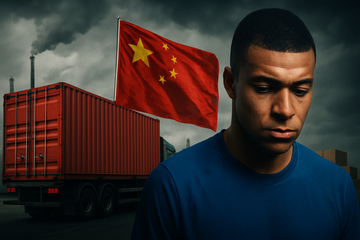
Consumer boycotts can move faster than trade policy: the Mbappé case shows Chinese nationalism acting like a tariff-free “demand shock”
In a matter of hours, Chinese brands ended deals with Kylian Mbappé after a Mao-related remark backlash, signaling how quickly consumer nationalism can hit brand-funded demand. For global consumer companies with meaningful China exposure, the risk is less about shipping costs and more about distribution and brand-funded traffic—factors that can unwind before any tariff line item matters.

Honda's 'Catastrophic' Warning Is a Content Warning — U.S. Content in Canada-Built Cars Has Fallen to 50%
Honda called a doubling of U.S. auto tariffs on Canadian-built vehicles to 50% \"catastrophic for the entire industry\" on October 27. The arithmetic behind the word is a content problem Washington's own trade report already documents: U.S.-origin content in Canada-built vehicles fell from 85% in 2017 to 50% in 2024, so the dutiable base has tripled before the rate doubles. Toyota and Honda build 76% of Canada's 1.2 million vehicles while the Detroit Three have cut their share to 24%, which puts the exposure squarely on the transplant OEMs — and on Honda in particular, which just posted its first full-year net loss since 1957 and has already frozen its Canadian growth capital.

Syngenta's $66 Billion Ask Puts 15x EBITDA on Ag Chem While Corteva Trades at 3x
Syngenta's advisers are targeting at least $66 billion for a Hong Kong listing priced at 15 to 20 times 2026 EBITDA, after a confidential filing that would make it the city's largest IPO since 2010. The ask sits far above every listed comparable: Corteva trades near 3 times trailing EBITDA and FMC's trailing EBITDA is negative, while Nutrien is on 7 times and CF Industries under 5. The deal is therefore a referendum on whether ag chemicals can re-rate above their own cycle, and it hands a Chinese state owner a $5 billion to $10 billion partial exit at a multiple no Western peer can match.
Treasury Raised Its Long-End Bid to $6 Billion. The 30-Year Still Printed a 19-Year High
On Oct. 26 the Treasury set the preliminary size of its next liquidity-support buyback at up to $6 billion in 20- to 30-year nominal coupons, with the operation running Oct. 27 and settling Oct. 28 — the same afternoon the Fed publishes its decision. The headline size reads like a buyer of last resort; the operating record does not. Through July, Treasury filled 100% of its cap in the long end on offers 11.9 times the maximum, but since Sept. 9 it has taken just 68% of the cap ($4.078 billion of $6 billion on Sept. 24) while the 30-year printed a nineteen-year high of 5.36%. What has genuinely changed sits at the front end, where the official sector funded more than $550 billion of extra bill supply in July and August and left the long end to leveraged, price-sensitive private capital — which is why BlackRock's decomposition finds the 10-year's 110 basis point rise in real rates rather than in the term premium. Nov. 4's refunding, where Citi expects $3 billion of 20-30 year auction sizes to be cut and replaced with bills, is the only lever that changes the arithmetic.
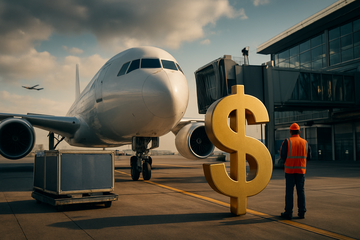
Export Credit Is Just 2% of Aircraft Financing — and Now It Holds the US-EU Trade Truce
USTR Jamieson Greer told the EU on October 26 that Washington's inability to see the terms of the European Investment Bank's €3 billion loan to Airbus threatens the 2021 large civil aircraft truce, moving the aerospace dispute from tariffs to the financing terms of a sovereign loan. The lever came from Boeing, which asked USTR in July for a full accounting of the facility, and the 2021 framework obliges both sides to fund their aircraft champion on market terms through an open and transparent process. Export credit is a tiny share of the money but a concentrated one — 2% of Boeing's first-half 2026 delivery financing, and 23% of the financing behind Boeing's 29 deliveries into Europe and Central Asia — and the 2025 US-EU deal already removed aircraft from the tariff schedule, leaving finance and transparency as Washington's remaining aerospace leverage. The asymmetry is stark: the complainant runs a -5.4% trailing operating margin and $38.7 billion of net debt, while the respondent holds €8.4 billion of net cash and a +8.1% margin, so a broken truce hurts both and hands the next order to whoever finances it best.
2026-10-26
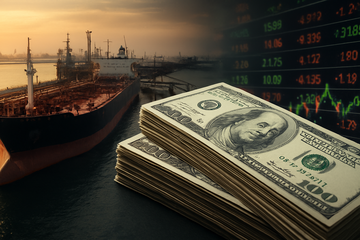
37.5% on Covered Brazilian Goods: The Censorship Tariff Lost Its Author in Court, and Lula's Win Doesn't Touch It
Lula's 51.76% runoff win over Flavio Bolsonaro on October 25, 2026 removed the political author of Washington's Brazil penalties, but not the penalties themselves. The 40% duty written around the Bolsonaro-era censorship of US online platforms was already knocked down by the Supreme Court, and what replaced it is a legally durable Section 301 pair: 25% from July 22, 2026 plus a 12.5% forced-labor action from July 24, a 37.5% stack on covered goods. The binding variable for Brazilian assets is now fuel: Atlantic Basin diesel cracks are at records while Petrobras' diesel sells at a near-yearly-record discount to import parity, so the election decides whether that gap is paid by Petrobras's refining margin or by the federal treasury, and a contested handover keeps an institutional risk premium on Brazilian assets until January 1, 2027.

Washington Can't Raise Its Canada Tariff Rate — So It Re-Cut the Product List Eleven Days Before the Midterms
The Oct 23 proclamation stripped 50% duties from Canadian plywood, paper products, machinery, refrigeration equipment and packing crates while adding carpets, valves and waste products, effective Oct 30. That is a schedule rewrite, not a negotiating position, and it reveals how this trade war will now be fought: Section 338 caps the rate at 50%, so the only thing that can move without a signed deal is which product lines sit inside the list. For investors the consequence is precise — trade the list, not the rate, because the companies whose gross margins compressed hardest in Q2 and Q3 2026 are the ones that ship product across the 49th parallel in both directions.

The NBA's First Prediction-Market Toll Is $100M–$200M a Year — What It Sold Was Permission, and a Channel Into the Rulemaking
The NBA has become the first league to split the US prediction market in two: on October 26, 2026 it signed an integrity memorandum with the CFTC, named Kalshi and Polymarket its preferred prediction market exchanges, and made DraftKings an authorized operator with nationwide promotional rights. The fee is trivial — industry sources put the two exchange deals at $100 million to $200 million a year against an estimated $4 billion of annualized revenue at Kalshi alone — so the real transfer is not cash but control over who may trade the league's games. The agreement gives the league a contractual grip on its partners and a formal channel into the rulemaking that decides which sports contracts the CFTC will permit, which is worth more than the rights fee. Own the data supplier that sits on both sides of the deal, Sportradar; be careful with the operators left outside the perimeter, including Robinhood, Flutter and Caesars.
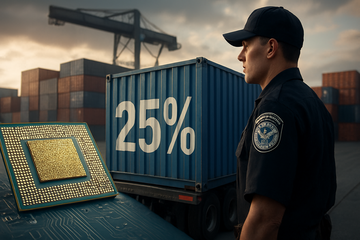
The Semiconductor Tariff Starts at Customs, but Its Real Cost Lands Further Down the Stack
A 25% Section 232 duty begins applying to a narrow set of semiconductor imports on October 26, 2026. The immediate exposure is concentrated in imported chips and chip-containing products, but the larger investment question is bargaining power: foundries and memory suppliers can often pass through the charge, while accelerator designers and hyperscalers face a higher bill of materials before customers see a price increase.
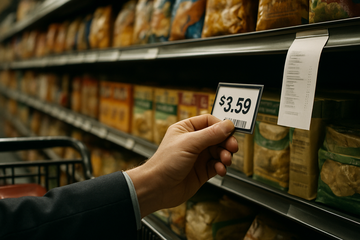
4,300 Failed Price Checks in 23 States: Dollar General's October Settlement Is the Playbook Every Grocer Now Faces
New York's attorney general settled with Dollar General on October 13, 2026 for $1.875 million over shelf-versus-register overcharges, and the size of the payment is the least important part of the deal. What the company agreed to build — scheduled shelf-tag updates, independent secret-shopper audits and reformatted receipts at more than 600 stores — is a compliance architecture other state prosecutors can lift wholesale, and it is now the working template for grocers, clubs and quick-service chains. With the disclosed enforcement bill at roughly 0.8% of trailing operating profit but the pricing file under a microscope in a growing list of states, the trade is not the fine. It is whether a trade-down retailer can still raise shelf prices without documenting, in its own systems, the case against it.

Tower Semiconductor Jumped 9.9% on a Deal Signed Two Weeks Ago — and Still Trades 42% Below Its High
Tower Semiconductor rose 9.9% on October 26 with no new company disclosure, as the market re-marked a capacity contract signed on October 13 in which Semtech reserved dedicated silicon germanium capacity across Tower's American, Israeli and Japanese fabs for 800G, 1.6T and 3.2T AI links. The deeper story is that Tower has already sold 2027: $1.3 billion of contracted silicon photonics revenue and $290 million of customer prepayments, which is how a 200mm specialty foundry funds a 300mm photonics build-out. The tension is that the same shares trade at 72 times trailing earnings while trailing free cash flow depends on those prepayments, and management's 2028 model needs gross margin at 45% on 85% utilisation. Investors should treat the November 2 third-quarter report, not the October 26 pop, as the checkpoint that matters.
2026-10-25
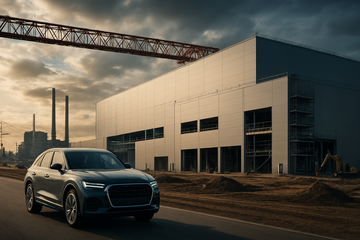
Audi's $4 Billion Georgia Plant Prices a Tariff, Not a Car — While Georgia's Grid Already Carries 17 Gigawatts of Data Centers
Volkswagen's Audi will build 200,000 premium SUVs a year at the Middle Georgia Megasite for about $4 billion, with full production in 2031, after 25% Section 232 duties cost the brand roughly €1.2 billion in 2025. The plant is a hedge priced against a policy variable, not a growth bet: VW Group's2025 operating profit roughly halved to €8.9 billion and first-half 2026 operating profit fell 12% on a 3.8% margin. The grid framing is the wrong worry — Southern Company already carries 17 GW of contracted large load and an $81 billion 2026-30 capital plan, while Georgia's dedicated large-load tariff means an industrial customer pays for its own grid build. The tradeable consequences sit in the tariff schedule, the rate base and the rail, not in the plant itself.

The AI power trade has its first hard denominator: 412.6 terawatt-hours a month, and 9–17% by 2030 is now an arithmetic test
The EIA's August electricity data, published October 23, 2026, is the first official measurement of a US power market that is no longer flat: retail sales reached 412,568 GWh in August, up 4.6% year on year, with commercial sales — the customer class that holds data centers — up 5.1% while industrial sales fell 1.5%. That turns EPRI's contested 9% to 17% data-center share by 2030 into arithmetic: at the low end it fits inside the EIA's own load forecast, at the high end it needs a 2030 US electricity market roughly 11% larger than any published federal baseline. The supply chain has already booked that demand — GE Vernova took $24.2B of orders in a single quarter and lifted backlog to $176B — yet the complex has de-rated 19% to 49% from its 12-month highs. The investable question is no longer whether AI needs power; it is who is paid when the denominator is re-priced.
A 50-Page Subpoena, a $518 Billion Compute Book and a November Roadshow: AI Safety Marketing Now Faces a Securities Test
On October 14, 2026 the Federal Trade Commission sent OpenAI and Anthropic separate civil investigative demands of more than 50 pages each, seeking incident records, safeguards, marketing materials and privacy practices — compulsory process delivered about three weeks after both labs' top executives signed a voluntary safety pledge at the White House, and roughly four weeks before bankers are reported to start marketing Anthropic's IPO. Because a deception case turns on whether a claim had a reasonable basis, the labs' own safety reports and advertising copy become the exhibit list, and underwriters' counsel will ask for the same documents the agency just demanded. For listed investors the transmission runs through the balance sheets that finance the labs: $115.9 billion of annual capital spending at Microsoft, $20.6 billion of debt-funded capacity at CoreWeave, a $300 billion OpenAI contract at Oracle, and $200 billion of Anthropic compute commitments at Alphabet. Own the balance sheet that collects on the compute bill; discount the credit that assumed the labs' credibility was unquestioned.
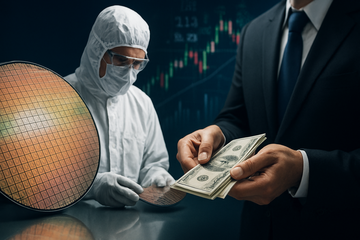
Malta's $21 Billion: Japan Buys the Wafers, the Tool Chain Gets Paid First, and GlobalFoundries Gets 4% Diluted
Japan's up-to-$21 billion commitment to two new 300mm fabs at GlobalFoundries's Malta, New York site, announced Oct. 14, 2026, is not an equity investment: the fabs will be jointly owned by the Japanese and US governments while GlobalFoundries operates them, and the first wafer arrives in 2029. The money lands first with the semiconductor equipment vendors — Americas 300mm equipment spending is forecast to more than double from $18.1 billion in 2026 to $40.6 billion by 2029 — while Washington takes roughly 4% of GlobalFoundries' equity and redirects $955 million of CHIPS money into silicon photonics, silicon-germanium and advanced packaging at the same site. Investors are being asked to pay 34.7x trailing earnings for a sovereign-backed foundry option that carries no disclosed volumes, no firm power for the new fabs and no revenue before 2029.

Moonshot Curbed Kimi's Hacking Ability on Purpose — and That Is Where the Export-Control Fight Really Is
Moonshot AI's Oct. 23 release of Kimi K3.1 Pro strips cyber data from both mid-training and reinforcement learning, cutting the model's own exploit-development score from 90.5% to 81.0% at pass@3 before the Nov. 4 weight drop. The cap is nearly free in frontier terms — the same release chart still shows Kimi at 74.7 on ExploitBench against 91.0 for Claude Opus 5.5 and 100 for GPT-6 Astra — and it lands eight days after Beijing proposed rules that would put two-trillion-parameter-plus model weights under export control while exempting API access. The sequence says the enforcement layer has slid down the stack from silicon to weights to classifiers: Commerce suspended foreign access to Anthropic's Fable 5 and Mythos 5 in June and lifted the order 18 days later after a new safety classifier, while US agencies now advise altering responses rather than blocking access. The trade follows the gatekeepers of gated capability — CrowdStrike and Palo Alto Networks, both founding partners of Anthropic's Cyber Mission — while Moonshot's disclosed ceiling sets a bar the Hong Kong-listed Chinese labs have not met.
What to expect
Evidence-first notes with a visible point of view.
This section collects sharp takes on earnings, shareholder meetings, and market structure. Each new piece should make the thesis, the facts, and the implications obvious within the first few screens.
Expect direct analysis, not generic commentary.
Expect the data to be explicit and the argument to be easy to follow.