Policy & Trade
Tariffs, export controls, and who absorbs them
Rulings, sanctions and trade negotiations traced to the companies that pay for them — margin by margin, route by route.
2026-10-30


AWS Grew 39% and Amazon Fell 7%: Big Tech's $720 Billion Capex Year Now Trades on Funding, Not Growth
Amazon delivered the cloud acceleration investors asked for — AWS revenue up 39% to $46.0 billion, AWS operating income up 55% to $17.8 billion, a record 13.9% consolidated operating margin — and the stock still fell about 7% after hours on Oct. 29. The reason is arithmetic, not disappointment: Amazon spent $77.3 billion on property and equipment against $42.4 billion of operating cash flow, pushed trailing free cash flow to an outflow of $42.4 billion, and funded the gap with $48.1 billion of new long-term debt in a single quarter while buying back no stock. With the four largest hyperscalers guiding to roughly $720-740 billion of 2026 capital spending against about $677 billion of combined operating cash flow, the market has stopped paying for cloud growth on its own and started paying for how that growth gets financed — a repricing that cuts both ways across memory, power and neocloud credit.

Binance's $6.3B Breach Is a Private Credit Event — and the Listed Crypto Proxies Traded It Like a Market Crash
About $6.3 billion left 17 Binance hot wallets across nine chains between 20:04 and 23:56 UTC on Oct. 29, 2026, and roughly $3.1 billion was still sitting in the attacker's wallets the next morning — unsold, and never routed to an exchange, a mixer or a bridge. That is what makes this the first exchange failure large enough to read as a credit question rather than a theft: the loss sits on one private balance sheet while the listed complex sold as if the market had been contaminated. The proxies are not mispriced on level so much as on composition, because the beneficiaries here are venues that capture migrating balances and balances that never reach a market, not the names carrying the most balance-sheet beta. Coinbase, Circle, Galaxy and Strategy each hold a different slice of that risk.

Canada's C$1.6 Billion Bet on Cohere Now Hangs on a Washington Export-Control Decision Nobody Has Made
Ottawa's C$1.6 billion equity purchase in Cohere — announced Oct. 29 alongside a C$7 billion Series E at a C$35.7 billion valuation — buys an implied 4.5% option on Canada's seat at the frontier layer, with the money directed at compute: at least C$1.7 billion of Canadian infrastructure and 1,000 technical jobs by 2030. Four weeks earlier, on Oct. 2, Prime Minister Carney stood up a 13-member National Council on Artificial Intelligence, giving the state an advisory seat next to its equity one. The binding constraint sits in Washington: on June 12, 2026 the Commerce Department required licences before any foreign person could reach Anthropic's Fable 5 and Mythos 5 models, and on June 26 it carved out only 'certain trusted partners' — for one of the two models. Cohere says it will begin frontier-scale training with allied partners, so the investable question is not whether Canada's money moves but whether Washington's list includes a Canadian state-backed lab. For NVIDIA, CoreWeave and BCE the answer sets the price of sovereign demand; for the incumbent model vendors it sets the price of the premium they can charge in regulated industries.

ExxonMobil's Q3 War Premium Is a Refining Story — and That Makes the Buyback a Ballot Issue
ExxonMobil releases third-quarter results before the open on October 30, and its own October 16 filing already shows where the war premium went: $4.5 billion of refining-margin uplift against a $1.3 billion upstream hit from higher crude prices. That mix matters politically, because the profit pool filling up is the one that sets the price at the pump, while the cash funding the buyback is running at 124% of trailing free cash flow. Democrats' Big Oil Windfall Profits Tax Act now names stock repurchases, so ExxonMobil's capital-return pace has become an election-month risk factor rather than a valuation lever.

Intel's 29% Crash Puts $12 Billion of Washington's Chip Stake in Play and Exposes the Flaw in CHIPS-for-Equity
Intel fell about 29% on Oct. 30, 2026 — its worst session since July 1974 — after guiding Q4 revenue to $15 billion–$16 billion against $17.1 billion of consensus, and the 433.3 million shares Washington bought at $20.47 were marked down by roughly $12 billion in one afternoon. The structural finding is sharper than the price move: the CHIPS-for-equity swap left Intel carrying a $13.7 billion escrowed-share derivative liability, so its own share price now writes its GAAP income statement. Meanwhile the margin in this cycle went upstream to Micron, SK hynix and Samsung Electronics, whose price gains pushed PC prices up 17% and shipments down 22.4% — leaving Dell Technologies, HP Inc. and Lenovo to absorb the difference in volume rather than price.

Nvidia's China Revenue Doubled to $7.9 Billion — and an Alleged Spy Plot Shows Export Controls Have Moved From Chips to People
An alleged spy plot aimed at Jensen Huang matters less for what it says about the case than for where export control has moved: out of the chip and into the relationship. Nvidia's filings put a number on the stakes. Revenue from China-headquartered customers reached $7.88 billion in the quarter ended July 26, 2026, nearly double the year-ago quarter, and almost the entire increase came in the single quarter Washington cleared roughly ten Chinese firms to buy Hopper 200 chips. Management shipped licensed Hopper 200 into China in that quarter and still guides to zero China data-center compute revenue, so the China book is now licensed, capped at 75,000 chips per buyer and taxed 25% to the US government. Enforcement has followed the value, from the indictment of Super Micro Computer's co-founder to the detention of an Nvidia employee in Taiwan and the November 2026 restart of the rule that licenses foreign workers at advanced fabs. For investors the conclusion is blunt: the margin pool sits upstream in memory and foundry, where neither the licence queue nor the spy plot can reach, while any revenue that depends on one relationship deserves a governance discount that no filing currently prices.

OpenAI's Governance Stack Is Now the Product: A $70 Billion Run-Rate Just Got an Auditable Paper Trail
On Oct. 29, 2026 OpenAI rewrote its Model Spec around five values, retired most of the style guidance, and published the four-layer monitoring system that catches a model misbehaving in production. The commercial read is not \"safety\" but \"contract\": a written behavioural specification plus monitoring with a 30-minute review cadence and customer-facing webhooks gives a regulated buyer something it can actually diligence. The timing is the tell — Microsoft\u2019s OpenAI licence went non-exclusive in April, OpenAI\u2019s models reached all three hyperscalers by October, and Anthropic filed publicly on Oct. 26. Investors should watch whether the spec is cited by name in enterprise contracts, and whether the monitoring layer ever gets priced as a cost of goods sold rather than buried in inference.

The Rare-Earth Truce Bought Two Months on Paper and 11 Days in Law — and Only Nov. 10 Is Tradable
Washington and Beijing extended the trade truce to Jan. 10, 2027 on Sept. 23, yet as of Oct. 29 neither government had published the notices that would carry China's export-control suspension past Nov. 10 or the U.S. Affiliates Rule suspension past Nov. 9. What is actually being priced is the ex-China heavy-rare-earth premium: dysprosium oxide trades at $2,500–3,500/kg outside China against a $179.48/kg APAC benchmark, a 14–19x spread that exists because April 2025 licensing on seven medium and heavy rare earths was never suspended. MP Materials owns a $110/kg Defense Department floor through 2035 and must hand 30% of its upside back once its 10X plant ramps, while the binding constraint on the whole Western magnet buildout is not Beijing but utilization — General Motors walked away from a magnet contract on July 1, 2026 and U.S. EV sales are down 30.7%.
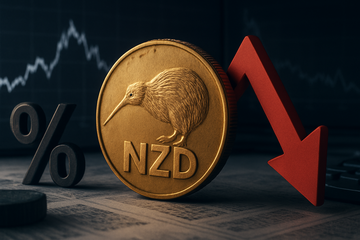
The Kiwi Fell 1.7% While Its Own Rates Fell Just 13bp: FX Now Prices Board Credibility, Not Rate Paths
On October 28, 2026 the Reserve Bank of New Zealand held its official cash rate at 2.75% on a 4-3 vote against a market that expected a 25bp hike, and the New Zealand dollar fell as much as 1.7% to $0.5583 while the two-year swap rate fell only about 13bp to 3.98%. That gap is the story: the currency repriced roughly thirteen times harder than the rates it was supposed to track. The same pattern ran through the Bank of Japan's hawkish 8-1 pause, the Federal Reserve's 10-2 hold with two members voting to hike, and the Bank of Canada's fully priced 25bp increase - FX is now paying for whether a committee's path is confirmed, not for the expected rate itself. For US investors that means underwriting USD-funded carry and AI-infrastructure debt on committee dispersion, and it leaves the yen as the only positive-carry funding currency in the majors while its own board tightens.

No God Required: Two Workers Won Religious Exemptions From Workplace AI in 2026 — and Every Enterprise Rollout Now Needs a Documented Opt-Out
Two US workers have won religious exemptions from mandatory workplace AI, and the second one involves no religious affiliation at all: David Durman, a research administrator at the University of Kentucky, was granted a Title VII accommodation on Sept. 25, 2026 excusing him from personally using ChatGPT and Microsoft Copilot. Because the Supreme Court's Groff standard makes refusal hard to defend and the EEOC elevated religious liberty to a chair-level priority on June 4, 2026, enterprises that mandate AI tools now need a per-user opt-out, a documented business rationale for the mandate, and an audit trail of who was excluded. That requirement is sold by the same vendors selling the tools — ServiceNow, Workday, Microsoft, ADP — and the interesting part is that none of them has built or priced it yet, while the market punished ServiceNow for anything but hard AI monetization.

DTEC's $600M Malaysian Refinery Puts the First Price on 'Process It Abroad' — and the Scarce Asset Is Now the Contract, Not the Plant
A US-majority-owned startup has committed $600M to a Malaysian rare-earth refinery — 5,000 tonnes a year first, 10,000 across two plants within three years — and told Washington it is eligible for Export-Import Bank, Development Finance Corporation and Defense Department money. Because ex-China NdPr oxide has slipped to about $95/kg, below the $110/kg floor Washington pays, the scarce asset in this chain is no longer separating capacity but a floored government contract, and every new refinery competes for the same defense-side demand pool. That directly challenges MP Materials, whose $17.6M of price-protection income in Q2 2026 — 16% of revenue — is the government contract doing the work. The market has already repriced the sector down 26% to 67% from June 30, 2026, paying only for delivered, floored volume.

xAI's 418-Home Buyout Slips Through Treasury's Home-Buyer Ban. The Rental REITs Don't
xAI's Southaven subsidiary is offering to buy up to 418 homes for roughly $75.24 million, conditioned on owners releasing a June 2026 noise class action against the 1.2 gigawatt turbine plant behind Colossus 2. Read against Treasury's proposed ROAD to Housing Act rules, the buyout shows the compute buildout can buy its way out of local risk with property while the January 7, 2027 ban lands on housing REITs instead: a temporary-and-incidental carve-out most likely leaves xAI outside the definition of a large institutional investor, while Invitation Homes' 86,192 homes sit 246 times above the 350-home trigger. The tradable split is upstream, where turbine orders keep coming whoever wins the siting fight, and inside the housing names, where acquisition-led growth and development-led growth no longer deserve the same 13.7x multiple.
2026-10-29

Disruptive's $10 Billion Blind Pool Just Became the Largest Bidder in the AI Power Bottleneck — and the Same Assets Trade at Half the Price in Public Markets
A Dallas firm that has never raised a traditional fund closed a $10 billion blind pool on Oct. 27, planning up to $1 billion checks into roughly ten late-stage AI, infrastructure and defense companies. The structural change is not the size but the concentration: one manager writing ten-plus mega-checks behaves like an infrastructure owner, buying the same scarce power, grid and industrial capacity that public companies from GE Vernova to Hyosung Heavy Industries are now selling at record backlogs. The contradiction investors must price is that the private marks on this cohort have fallen while the public marks on the same bottleneck assets have not — Groq's valuation dropped to $3.5 billion in a round Disruptive itself led, roughly a year after the $6.9 billion mark. Meanwhile GE Vernova's gas-turbine backlog and slot reservations reached 122 GW and Vertiv grew organic orders more than 100%. The bulk-buying shift puts private capital directly into the physical assets that public markets are repricing, and makes the public supply chain the cleaner way to own the thesis.

Ford's Flat 2027 Guide Is the Tell: Tariff-Assisted Earnings Just Met a 5% Long-End, and Ford Credit Is Where It Lands
Ford beat on every headline number of the third quarter — $2.66 billion of adjusted EBIT, 49 cents of adjusted EPS, $4.7 billion of adjusted free cash flow — and still guided 2027 to roughly in line with 2026, because commodities, memory and logistics will add about $2 billion of cost next year. The tell is not the plant: Ford Credit supplied 30% of quarterly adjusted EBIT and grew 27% on a favorable derivative mark, even as its US retail loss-to-receivables ratio rose to 0.67% and off-lease auction values fell 3%. With the 10-year Treasury printing 5.13% on October 21 and Ford Credit carrying $139.4 billion of debt at an implied cost of funds of roughly 5%, a flat guide is Ford admitting that tariff-washed pricing power has peaked and the balance sheet is where the shock now lands.

Continuity Risk Hits the Oil Premium, Not the $741.6B Defense Book at Lockheed Martin, RTX and Northrop Grumman
Defense Secretary Pete Hegseth removed Army Lt. Gen. Brett Sylvia, the Pentagon's top military planner, on Oct. 28-29, 2026, hours after President Trump denied any Iran peace talks were underway and as U.S. forces prepared to move within 96 hours of an order. The firing does not reprice a single award: Lockheed Martin, RTX and Northrop Grumman closed Q3 with $741.6B of combined backlog, all appropriated and contracted, so continuity risk lands on FY2028 program prioritization and on the factory capacity needed to build it. The tradeable expression of the same signal is oil, where Brent settled at $111.64 on Oct. 28 with Hormuz war-risk insurance at 3-10% of hull value and tanker rates at records, and where the futures curve already prices the premium unwinding. Own the funded backlog and the capacity build; the tanker trade needs Iran's 7-Day Plan to fail.

Microsoft's $45.2 Billion Quarter: Azure's First Dollar Number, a $10 Billion OpenAI Check, and the Capex Guide That Now Funds the AI Trade
Microsoft's September quarter made the AI build auditable for the first time: Azure revenue of $33.165 billion disclosed in dollars, $10.0 billion of revenue from OpenAI (about 11% of sales), and $45.2 billion of capital spending that came in below the $50.7 billion consensus and still rose 30% year over year. CoreWeave, Nebius and IREN fell 3% to 5% anyway, because in this market Microsoft's own capital plan has become the funding variable for everyone who builds compute on Microsoft's behalf — and the quarter's miss was mostly a shift of leases from finance to operating, with cash capital spending up 103% and December-quarter spending guided above $50 billion. The deeper risk is concentration and cash: trailing free cash flow fell 38% to $60.0 billion while revenue rose 18%, receivables grew 85% year over year, and the revenue-sharing component of the OpenAI relationship is capped at $38 billion through 2030.

Qatar Just Became a Buyer of American Gas: 4 Million Tonnes Contracted Through 2054, and a $25/MMBtu Spread the Oil Trade Never Saw
QatarEnergy, the world's largest LNG producer, is now buying the molecules it used to sell: 33 US spot cargoes worth about $1 billion so far, a 4 mtpa free-on-board contract with Cheniere Energy running through 2054, and at least 3 mtpa in advanced talks with Venture Global. The hedge works because American molecules never transit the Strait of Hormuz, and it costs more than $20 a MMBtu because the same gas sells into Asia at $32.36 while Cheniere realized $7.07 on its legacy long-term volumes in 2025. Brent at $113.88 captures the oil side of the chokepoint; the equity consequences sit in US liquefaction fees, contracted 2030s volumes and freight tonne-miles, which is where the premium actually changes hands.
2026-10-28

Robinhood now earns more from prediction-market contracts than from crypto — and the CFTC's Nov. 19 comment deadline, not Election Day, is the line item the midterms actually move
On Oct. 9 the Commodity Futures Trading Commission did what Congress had not: it issued an interim final rule excluding casino-style wagers from the definition of a swap and simultaneously proposed defining sports, politics, cultural and weather event contracts as swaps, with the comment record closing Nov. 19 — sixteen days after the Nov. 3 midterms. The election therefore no longer decides whether the rulebook exists; it decides who writes the record that finalises it and whether a new Congress reopens the file. The AI money is splitting along the same hinge: the pro-deployment camp has put about $8 million into the midterms and the safeguards-first camp about $6.9 million, and their real fight is whether federal rules preempt state law. The investable read-through is narrow and testable: Robinhood Markets has already converted the rulebook into $173 million of quarterly event-contract revenue, while DraftKings is spending $200 million to $300 million a year chasing the same trade against a trailing operating loss.

BlueChip's 20% Premium Is a Certification Fee, Not a Markup — and the 8-to-16-Month Audit Trail Is the Real Product
Anduril and Qualcomm unveiled BlueChip on October 27, 2026: a rugged laptop designed and assembled in the US, with circuit board assembly at Anduril's Arsenal-1 plant in Ohio and a Snapdragon X chip built at TSMC's Arizona fabs. It is a prototype — orders open in 2027, pricing is undisclosed, and at any plausible first-year volume the revenue rounds to a fraction of one percent of Qualcomm's. The investable content is the procurement regime the product is built for: the Pentagon's proposed PCB rule turns supply-chain provenance into a certification requirement with an 8-to-16-month lead time, and the FY2026 NDAA puts a January 1, 2030 deadline on adversary-sourced computer displays and optical glass. Provenance, not performance, becomes the moat — and the money sits with the tier-one suppliers who can already hold the certificate, not with the private brand that announced it.

Anthropic IPO “shutout” turns AI exposure into a proxy-price trade—start with ADRs, end with the next frontier listing
Bloomberg reports that investors shut out of Anthropic’s IPO allocation are rotating into “proxy” exposure trades across listed AI-linked companies and even crypto/derivatives. The mechanic matters: when direct access is rationed, marginal pricing shifts to the most liquid listed proxies—even when their fundamentals are only indirectly tied to the model’s success. The clearest market test case is how SK hynix’s US ADR listing traded at a large premium to its Seoul share during the early dislocation window.
What to expect
Evidence-first notes with a visible point of view.
This section collects sharp takes on earnings, shareholder meetings, and market structure. Each new piece should make the thesis, the facts, and the implications obvious within the first few screens.
Expect direct analysis, not generic commentary.
Expect the data to be explicit and the argument to be easy to follow.