Policy & Trade
Tariffs, export controls, and who absorbs them
Rulings, sanctions and trade negotiations traced to the companies that pay for them — margin by margin, route by route.
2026-10-15

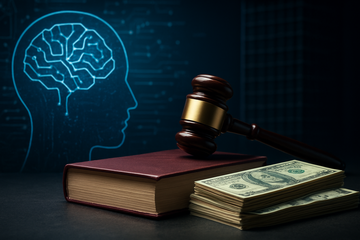
Eight States Just Sued OpenAI in One Day — and the $17.1B Meta Settlement Sets the Price of ChatGPT's Compliance Wall
On October 14, 2026, eight state attorneys general — Arizona, Arkansas, Idaho, Iowa, Kansas, Montana, Nebraska and West Virginia — filed separate but coordinated consumer-protection suits against OpenAI over ChatGPT's alleged harms to minors. With Meta's $17.1 billion multistate settlement as the fresh template, the action turns 'state regulation' into a coordinated legal perimeter that OpenAI's confidential S-1 and $1.4 trillion pre-IPO valuation now have to absorb — and pulls Microsoft's $135 billion stake, SoftBank's 13% holding, and NVIDIA's $30 billion investment into the same blast radius.

CNN, Axios and Forbes Just Signed Google's AI News Pilot. Australia's 2.5% Levy Already Pays Publishers More.
Alphabet's October 2026 expansion of its News AI pilot to 400+ publications is the first US scale price-discovery event for generative-AI content licensing — but the economics look thin. Publishers call the payouts \"peanuts,\" Apple is preparing a $100M+ pay-as-you-go alternative, and Australia's News Media Bargaining Charge Act, which came into force Aug. 27, would now impose a 2.5% levy on platforms that fail to sign deals. With Microsoft-backed OpenAI facing fresh $250M+ suits from USA Today and Seattle Times as it moves toward IPO, the real money is flowing toward litigation and statutory levies — not voluntary pilots.
Treasury's $3B Cut at 20Y/30Y Won't Fix a 5.62% Long End — It Buys Bessent Time Until CPI Does
A Citi note reported by Bloomberg on Oct 14 sees Bessent cutting $3B each from the 20Y and 30Y auctions at the Nov 4 quarterly refunding — but with the 30Y bond clearing at 5.618% on Oct 8 and Sept CPI printing 3.7% on Oct 14, the move is at most a 12% trim on the long end. The stock-market verdict was brutal: Nasdaq -1.88%, long-duration tech like Oracle down 8.83%, and Realty Income sliding as rate-hike odds jumped to 46%. The trade is bond relief, not a fiscal reset — and the durability of any long-end rally depends on whether the Oct 29 CPI softens the path to the Oct 28 Fed.

Treasury Wants Allies to Call AI “Super Intelligence”—and That Name-Change Can Rewrite Compliance For Models, Markets, and Deals
A September 29 U.S. executive order directed federal agencies to replace “Artificial Intelligence” with “Super Intelligence,” and U.S. Treasury officials say Washington is now negotiating to use the same term across global IMF communications. For investors, the takeaway isn’t branding—it’s that a shared term-of-art can quickly steer how export-control categories, procurement language, and competition-law narratives get drafted and applied.
2026-10-14
ASML Just Priced the EUV Ceiling — and the AI Compute Trade Has to Pick Volume vs. ASP
ASML's Oct 14 print didn't give investors a clean 2027 EUV system number — it gave them a harder piece of information: even after adding30% to its 2027 low-NA EUV and DUV immersion capacity, planned supply will not meet customer demand, with some fabs already asking for 2029-2030 slots. The €11.7B Q3 beat lifts2026 guidance to €44-45B, but the binding constraint has flipped from demand to capacity, forcing fabs to either pay premium ASP for early delivery or accept rationing — a fork that pulls TSMC, SK Hynix, Tokyo Electron, Lasertec and the rest of the equipment sub-tier into the same queue. After a 65% YTD move, ASML's 3% drop on the print says the bull case from here has to come from ASP leverage and Installed Base Management monetization, not unit volume.
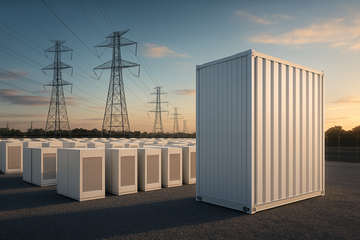
Newsom's VPP Law Hands Tesla Megapack the 2027 Grid Trade — And It's Bigger Than Cybercab
Governor Newsom signed SB 913 and SB 905 on September 30, 2026, letting aggregated batteries qualify for Resource Adequacy in California and explicitly targeting utility peaker costs. Combined with a record 580 MW Tesla/Sunrun VPP dispatch on September 9 and a 16 GW Sunrun/Renew Home/Tesla hyperscaler pipeline, the law turns Tesla's $18.3B energy segment into the recurring utility-scale storage trade for 2027 — cleaner cash, regulated procurement, and a margin path that doesn't depend on Cybercab volume.

DOJ's '70 US Companies' Verdict Turns HR Into a Sanctions Control — and Re-Rates Screening, HCM, and Identity SaaS
The Department of Justice indictment unsealed Oct. 13, 2026, naming 14 defendants across a North Korean remote-IT-worker scheme that infiltrated more than 70 U.S. companies, reframes onboarding and contractor sourcing as sanctions-compliance surfaces — not HR back-office. With UN estimates of $250M–$600M a year flowing to Pyongyang through these schemes and CrowdStrike having attributed the cell to 'Famous Chollima,' the action hands screening leaders like First Advantage and HireRight, identity platforms like Okta, and HCM incumbents like Workday a board-level re-rating catalyst that the freelance platforms and IT-staffing names have to fund.
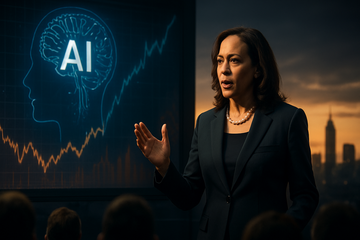
Harris's 'Window Closing' Warning Hits a $3.6 Trillion AI-IPO Cohort Exactly Where Its Risk Factors Already Live
On Oct. 14, 2026, former Vice President Kamala Harris warned in Seoul that 'the window is shutting' for AI safeguards and pressed the United States to engage China on shared AI rules — reframing frontier-AI safety as a US-China bargaining chip weeks before the November midterms. The warning lands directly on the combined ~$3.6 trillion public-market pipeline of Anthropic, OpenAI and SpaceX/xAI, with Anthropic's leaked S-1 already devoting roughly a third of its prospectus to 'catastrophic or existential risks' and warning that 'Washington could tank our business.' The investor question is no longer whether policy lands in the risk factors — it does — but which side of a cooperative-versus-controlled AI trade the supply chain ends up on. NVIDIA, TSMC, SK Hynix, Amazon, Alphabet, Broadcom and Microsoft set the speed limit and carry the heaviest exposure.
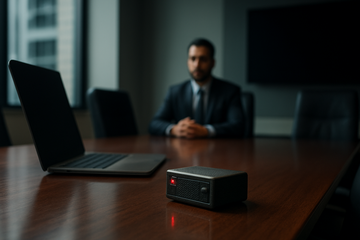
An OpenAI Engineer Hid a Recorder in a Conference Room — and ‘Insider Threat’ Just Became a Hard S-1 Risk Factor
Federal agents arrested 35-year-old Saudi national Abdulrahman Alfozan on October 9, 2026 for concealing a covert audio recorder in an OpenAI executive conference room in San Francisco, charging him under 18 U.S.C. § 2511 in a complaint that reads like a how-to for insider espionage. The episode reframes physical-world insider risk as a disclosed, dollar-measurable line item for the confidential S-1 OpenAI filed in June 2026 — and lights up the listed cybersecurity names that already sell the antidote.

Six GOP senators just told Trump to undo his own Russia deal — and pointed him at the bill he signed three weeks earlier
A bipartisan letter from 12 senators — including McConnell, Cornyn, Tillis, Collins, Murkowski and Armstrong — condemns the October 9 Trump-Putin diesel deal as a 'gift to our adversary' and demands Trump rescind OFAC General License 135 and instead 'execute' the Lindsey O. Graham Sanctioning Russia and Iran Act he signed September 18. That is the new cliff: a sitting president asking the GOP base to override a sitting Republican Senate letter that cites a sitting Republican law. For refiners already up 50–55% in Q3 on a $66 / bbl 3-2-1 crack spread (highest monthly since 2006), the letter raises the chance that General License 135 collapses before April 2027 — keeping crack spreads wide and pulling ~$4B of expected Russian diesel revenue out of Moscow's war chest.

Doug Field Leaves Ford for a $3.4B Rivian Spinoff — A Labor-Market Tell for the Embodied-AI Trade
Rivian's industrial-AI spinoff Mind Robotics hired Ford's former EV chief Doug Field as president on Oct. 13, 2026, making it the most senior OEM-production executive yet to defect to a private physical-AI lab. The hire lands on top of more than $1B raised in ten months at a $3.4B valuation, with Rivian as launch customer and Volkswagen and Salesforce venture arms on the cap table. For public investors, the read-through is that the embodied-AI thesis now has a verifiable talent-migration tailwind, with NVIDIA, Teradyne and Symbotic sitting on the demand side and the traditional auto majors on the supply side of that rotation.

Stargardt Patient #1 Just Got Science Corp's PRIMA — The BCI Vision Trade Now Has a Real FDA-Anchored Inherited-Blindness Catalyst
Science Corporation's PRIMA retinal implant — already CE-marked for geographic atrophy AMD with NEJM-published 78% responder rates — was implanted in its first Stargardt disease patient at Sydney Eye Hospital in May 2026, publicly disclosed Oct. 13. That moves the vision-restoration BCI trade from lab demo to a defined regulatory clock, with a US FDA decision now expected in early 2027 sitting just days after Belite Bio's tinlarebant PDUFA on Feb. 12, 2027. Listed investors have multiple ways to play the inheritance-blindness race: device via the only public BCI in NeuroPace, drug via Belite Bio and Ocugen, and AMD-GA incumbents through Biogen and Alcon.
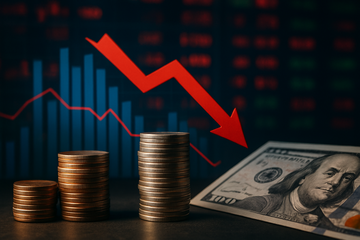
Hot CPI Just Flipped December Into the Fed's Base Case — and the Nasdaq's 1.9% Selloff Is Only the Opening Trade
September CPI reaccelerated to 3.7% year-over-year (from 3.4% in August) and core to 2.6% (from 2.4%), with both prints running 0.1 percentage point above consensus and a 5.2% energy surge supplying the bulk of the headline. Markets responded by lifting the 10-year Treasury yield to 5.30%, jumping the December 9 FOMC hike probability to 76-87%, and sending the Nasdaq Composite down 1.9% with semis and AI infrastructure bearing the brunt. The Fed's own September dot plot already projects 4.1% by year-end 2026, and today's data pushes that path toward the high end — meaning the Apple/Microsoft/NVIDIA cohort is now repricing not for one more 25bp, but for a terminal rate the market had largely written off six weeks ago.
2026-10-13

AI is rebuilding US factory payrolls and reviving SF/NYC office leases — the building trades are the lever
Three years into the AI capex cycle, US manufacturing has added 72,000 jobs since its December 2025 low, specialty trade contractors another 86,000 over the past year, and AI tenants now absorb roughly half of new San Francisco office leases. The transmission runs through electrical and mechanical construction firms, power-equipment suppliers, and Manhattan-centric REITs — not the hyperscalers themselves.
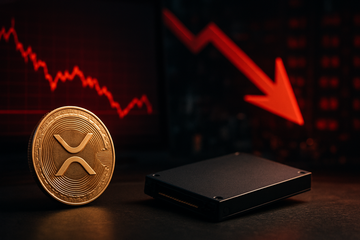
SanDisk Tokenized Perps Out-Liquidated XRP in Asia's $803M Flush — Bitcoin's $83K Rebound Exposes the AI-Storage Trade, Not BTC, as the Real Risk-Off
Asia's Oct 12–13 chip rout triggered $803M in 24-hour crypto liquidations, but the bulk of the pain landed on tokenized AI-storage contracts, not headline coins. SanDisk perpetual futures saw $19.5M liquidated — beating both XRP at $18.78M and HYPE at $19M — while Bitcoin briefly fell below $81,000 before rebounding above $83,000 even as KOSPI dropped 7.4% and Samsung Electronics and SK Hynix lost 7–9%. The decoupling reframes BTC as a flow trade and reveals retail's leveraged AI-NAND exposure on Hyperliquid's HIP-3 market as the actual risk being unwound.
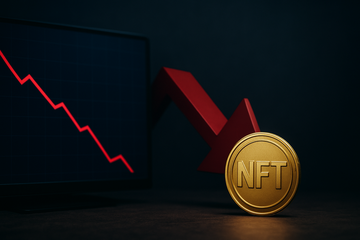
Blur's frontend shutdown crystallizes OpenSea's Ethereum NFT monopoly — and buries the pro-trader experiment
Blur will switch off its marketplace website on November 12, 2026 after monthly trading fell from roughly $1.43 billion in March 2023 to under $7 million by March 2026 — a 99.5% collapse that also erased 99.75% of the BLUR token's value. The onchain marketplace protocol stays live and BLUR holders keep the fee switch, but Blend stops matching new loans, Foundation, Nifty Gateway, Binance NFT, and Magic Eden's EVM venues have already closed, and Ethereum NFT trading is now functionally a single-venue story under OpenSea.
BoA's $1.21B Treasury AML Fine Lands a Day Before Its Q3 Print — And the Q4 Charge Is Now the Sector's Compliance-Opex Benchmark
Treasury, the OCC, and OFAC imposed a combined $1.21 billion in penalties on Bank of America on October 13, 2026 — the largest OCC civil penalty ever and the third-largest FinCEN action against a U.S. depository, anchored on $5B+ in late suspicious-activity reports and 475 OFAC violations spanning Iran, Russia, Belarus, Burma, and Somalia. Announced a day before BoA's Q3 print and after the quarter-end, the fine slips into Q4 and turns BoA's provision line into the cleanest public read on what systemic AML failures now cost a top-three U.S. bank. With JPMorgan, Wells Fargo, Citigroup, and Goldman Sachs all reporting Q3 the same morning with no comparable exposure disclosed, the read-through is peer multiples, not peer P&Ls.
Hammack Just Tipped the Fed Toward a December Hike — The 5.36% 10-Year Is Already Pricing Both the Bank NII Trade and the AI Capex Funding Test
Cleveland Fed President Beth Hammack told the Inflation Conference on Oct. 12 that 'a restrictive monetary policy stance is appropriate' and that even higher rates could come if inflation stays sticky. With the September SEP dot already implying one more 25 bp hike in 2026, Hammack's freshly on-the-record hawkishness makes December the base case. The 5.36% 10-Year Treasury — a 24-year high touched Oct. 7 — is now pricing both sides of that decision: banks harvest the steepest deposit-repricing benefit in three years while the $725 billion hyperscaler capex machine faces the most expensive AI funding window of the cycle.
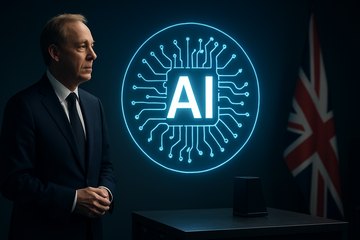
Microsoft Just Tipped the UK as the Global AI Referee — And the Transatlantic Capture Race Is Now in the Tape
Microsoft President Brad Smith's October 12 public endorsement of UK-led AI regulation is the first time a US hyperscaler has formally preferred a foreign referee — and it lands as Washington is gutting CAISI and the UK is quietly absorbing AISI into the role the US vacated. The implication runs beyond policy: the £30B Microsoft-Google-AMD-CoreWeave UK buildout pulls forward UK-region AI capex for Microsoft, Alphabet, Amazon, NVIDIA, AMD and CoreWeave, and concentrates sovereign-AI exposure on whoever governs them.
JPMorgan's Trading Boom Is the Only Floor Under the Banks This Print — Provisions Just Confirmed the Trade
With JPMorgan Chase, Goldman Sachs, Wells Fargo and Citigroup all reporting before the bell on Oct. 13, the print-day setup looks like a record $47B Q2 trading haul fading into a ~19% sequential drop — but still up ~13% YoY — while Wells Fargo's consumer charge-off rate keeps drifting lower. The real signal is whether the 'trading saves the day, provisions stay benign' trade keeps working as the 10-year sits at its highest yield since 2002 and the KBW Bank Index enters prints down 9.7%.
What to expect
Evidence-first notes with a visible point of view.
This section collects sharp takes on earnings, shareholder meetings, and market structure. Each new piece should make the thesis, the facts, and the implications obvious within the first few screens.
Expect direct analysis, not generic commentary.
Expect the data to be explicit and the argument to be easy to follow.