Policy & Trade
Tariffs, export controls, and who absorbs them
Rulings, sanctions and trade negotiations traced to the companies that pay for them — margin by margin, route by route.
2026-08-08


OpenAI’s $300–$400 Smart Speaker Trade: a voice-first margin switch that forces retailers and phone ecosystems to pay for access
A leaked report places OpenAI’s first consumer device—a screenless, donut-shaped AI speaker—at ~$300–$400 and suggests a 2027 entry. For investors, the key question isn’t “will people buy it?” but “who funds the margin bridge from OpenAI API to an always-listening voice edge in the home,” with likely knock-on pressure for Apple (ecosystem control) and Sonos (connected-audio relevance) while Amazon monetizes shipping distribution.

SEC’s pardon-linked dismissal turns a once-binary insider tail risk into a discretionary policy lever—biotech executives should price the upside differently
When an insider-trading defendant receives a presidential pardon, the SEC can choose to drop the civil case rather than litigate the merits. That “pardon-as-procedural-shield” enforcement discretion is likely to lower expected legal tail-risk for politically connected healthcare and biotech executives—while keeping M&A and trial-disclosure conduct in focus, because the operational information advantage still drives market outcomes.

The CLARITY Act slip turns 2026 crypto market-structure into a 2027 expectation problem
The Senate will not vote on the Digital Asset Market Clarity Act in August, pushing a key SEC/CFTC jurisdiction fight into mid-September instead. For public crypto market-structure intermediaries, that procedural delay matters less because “Congress is slow” and more because it extends uncertainty that directly prices order-flow, stablecoin rails, and token-issuer IPO/launch timing toward 2027.

Trump’s “cancel offshore wind and pay” policy turns developers’ sunk costs into a utility balance-sheet problem—$4B becomes a 2027 grid reprice trigger
The Trump administration’s offshore-wind buyouts have reached nearly $4B in taxpayer-backed settlements to cancel leases and projects, shifting risk from developers to whoever ultimately must fund the replacement generation build. For investors, the signal isn’t just lower clean power supply—it’s a new cancellation-with-compensation mechanism that can re-rate regulated utilities’ capital plans starting in 2027.

DFC’s $3B minerals bet turns “China decoupling” into a processing-margin race—and the winners are the firms that can monetize working capital first
The U.S. Development Finance Corporation (DFC) has outlined a $3B set of domestic critical-minerals deployments, including a prominently cited $58M-financed component, aimed at strengthening defense-adjacent supply chains. For investors, the key shift is not “more mining,” but which listed processors can pull forward separation/refining timelines—because DFC-style financing changes capex sequencing and who captures the processing margin.

Volkswagen’s US-built pickup play is a direct tariff-resistant hit at Ford’s truck profit engine
Volkswagen is moving a US-built pickup to the “end of the decade” timeframe as part of a broader US strategy overhaul under new leadership. The move matters to investors because it targets the same US profitability gravity well—Ford’s truck-and-commercial “Ford Pro”—where Ford posted $6.8B of EBIT on $66.3B of revenue in 2025 (10.3% margin), and it forces a rethink of EV-vs-ICE mix inside VW’s Chattanooga footprint.

WBD’s streaming engine didn’t stall—its 10% jump forces the Paramount deal to be judged on growth, not fear
Warner Bros. Discovery’s latest print shows streaming revenue rising 10% year over year as the Paramount combination faces antitrust and court friction. That single datapoint changes the merger debate from “optionality in delay” to “value creation while the clock is running,” and it tightens the antitrust math around likely post-close competitive effects in streaming.

Judge Halts DoD’s WuXi “Chinese Military Company” Label—But BIOSECURE’s Clock Can Re-Start Differently
A U.S. judge preliminarily enjoined the Pentagon from enforcing its June 2026 Section 1260H “Chinese military company” designation for WuXi AppTec, blocking the immediate BIOSECURE reactivation path tied to that label. For investors, the key question is not whether the BIOSECURE restriction exists, but how CROs and US biotechs must re-route procurement after the compliance trigger is legally paused.
2026-08-07

Alibaba’s “pay-for-heavy-users” open-weight twist turns Qwen into a monetization moat—weeks after the open-weights cost wave started
Reuters reports Alibaba plans to charge “big users” for its next open-weight model (Qwen3.8-Max), with timing aimed for next week and revenue-sharing for commercial “sale-as-a-service” deployments. The immediate investor signal: if open-weight can be turned into a paid tail without killing developer adoption, it pressures US hyperscalers’ inference-at-low-margin playbooks that currently benefit from free distribution.

Anthropic’s 85% fewer biology fallbacks reframes biosecurity as a measurable, cost-to-serve moat
Anthropic says its Aug 7, 2026 update cut biology-related “fallbacks” by about 85% in testing by tightening the boundary of its biology safeguards (constitutional classifier tuning). If regulated labs buy based on operational friction—not just policy—this kind of measurable false-positive reduction can lower reroute-and-retry costs while improving throughput into life-science workflows.

Anthropic’s 85% fewer biology fallbacks turns biosecurity from “friction” into a measurable cost-to-ship advantage for regulated labs
Anthropic reports that an update to Claude Fable 5’s biology safeguards reduced biology-related fallbacks by about 85% in testing, while keeping higher-risk dual-use controls intact. For enterprises running AI in regulated laboratory environments, fewer fallbacks means less workflow interruption, fewer manual handoffs, and lower total cost per usable “research session”—even when safety remains a hard requirement.

Anthropic’s Aug 7 Fable 5 biology update cuts biology fallbacks ~85%—turning biosecurity into a measurable “cost-to-ship” for frontier AI into regulated labs
Anthropic’s Aug 7 update to Claude Fable 5 biology safeguards reduced biology-related fallbacks by about 85% and lowered total fallbacks across product surfaces by material double-digits. The change matters to investors because it makes biosecurity compliance operational: a lab integrating frontier AI can expect fewer “route to Opus” interruptions, but also inherits a new sourcing liability around safety classifier performance and auditability.

DR Congo uranium embedded in cobalt shipments could turn battery supply-chain compliance into a nuclear traceability crisis
A newly detailed probe argues that uranium can co-move with Congo cobalt hydroxide exports—creating a gap between chemical supply-chain documentation and nuclear-material accounting. The implication for Glencore, Umicore, Freeport-McMoRan, and downstream battery-linked manufacturers is a new type of liability: customs screening, not just product purity, may become the gating risk.

DeepSeek founder’s quant-linked funds slid ~16% in the week ending July 17—turning a model release into a forced position unwind
A Bloomberg-reported drawdown tied to DeepSeek founder Liang Wenfeng shows how China’s quant “regime shift + crowded trades” can hit the same players that helped power DeepSeek. The deeper issue isn’t only market beta: when a quant desk and a lab are financially linked, model-release timing can tighten or loosen the desk’s ability to hold risk—creating feedback from trading losses back into model output constraints.
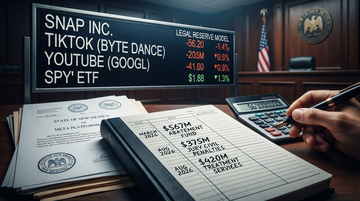
Meta’s $567M New Mexico teen verdict turns “Section 230 settlement risk” into a state-jury reserve model for Snap, TikTok, and YouTube
The New Mexico court ordered Meta to fund $567M of youth-mental-health abatement after a jury found liability under state consumer-protection law—$420M earmarked for treatment services over five years. For public platform investors, this shifts the liability curve from “possible future settlements” to state-jury-priced compliance reserves that can arrive on a predictable schedule—right as Snap and TikTok face closely related teen-harm claims.

SK Hynix Just Led a Record $83B Asian Share-Sale Wave—And It Changes How to Size the AI Memory Trade
The record $83B wave matters less for “AI euphoria” and more for market mechanics: it adds fresh equity supply right as the memory oligopoly needs stable pricing power to fund aggressive capex. For SK Hynix, that tension shows up in capital efficiency and the way funding sources stack—public-market liquidity now acts like a second pipeline for HBM investment, with different implications for Micron Technology, Samsung Electronics, and the rest of the AI memory complex.
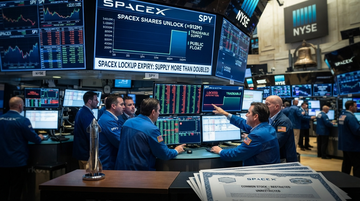
Space Exploration Technologies (SpaceX)'s share unlock more than doubles tradeable supply—a liquidity stress test IPO banks can’t control
SpaceX’s first post-IPO lockup expiry is creating a step-change: up to 911.5–912 million shares become eligible for trading on Thursday, more than doubling the company’s current public float. The stock’s next move will be decided less by Starship headlines and more by how the market prices a private-to-public “inventory reset” that other mega-privates (and underwriters) will face too.

Washington is moving from “AI guardrails” to “voluntary frontier access”—and the compliance burden is likely shifting onto model buyers, not model labs
In Executive Order 14409, the Trump administration explicitly rejects mandatory federal licensing or preclearance for new frontier AI models while creating a voluntary early-access process with up to a 30-day window. For investors, the second-order effect is straightforward: fewer gatekeepers inside model development, but more governance work for enterprises and downstream platforms deciding whether—and how—to deploy covered frontier capabilities.

Trump’s “Regulate AI Out of Business” Line Signals a Break From the Pre‑Regulation Coalition—and It Reprices AI Policy Risk Fast for Microsoft, Alphabet, NVIDIA, and AMD
The White House has already built an executive-branch “frontier model” review pathway with 30‑day timelines and no mandatory licensing. But Trump’s Aug 7 public framing of AI regulation as “out of business” would shift leverage from agencies’ voluntary access model toward Congress-driven, industry-constraining rules—changing the near-term probability distribution for AI monetization, cloud demand timing, and compute capex.
2026-08-06

What to expect
Evidence-first notes with a visible point of view.
This section collects sharp takes on earnings, shareholder meetings, and market structure. Each new piece should make the thesis, the facts, and the implications obvious within the first few screens.
Expect direct analysis, not generic commentary.
Expect the data to be explicit and the argument to be easy to follow.