Aerospace, Defense & Space
Defense budgets and the contractors behind them
Procurement rounds, backlogs, launch cadence and rearmament programmes, read as multi-year revenue with the primes and suppliers named.
2026-08-07


2026-08-06

2026-08-05

Cerberus’s $4B Supply Chain Fund II pitch turns private capital into a Pentagon policy lever—because Feinberg is now an underwriting mechanism
Cerberus is targeting at least $4B for its second supply-chain fund, framed as scaling U.S. domestic industrial capacity. The unusual signal isn’t just fundraising size—it’s that Stephen Feinberg’s post as Deputy Secretary of Defense creates a feedback loop where defense-aligned portfolio bets can directly shape the Pentagon’s procurement-and-industrial base priorities.

Honeywell Aerospace is trading like an “inventory-and-labor” story after it cut its 2026 outlook for supply-chain reasons
Honeywell Aerospace’s first stand-alone guidance update reframes the supply-chain debate from macro “constraint noise” into a measurable operating squeeze: inventory normalization and labor execution risk show up in how it guides 2026. For investors, the read-through is less about “GE Aerospace-style sell-the-news” and more about who downstream can absorb delivery gaps while upstream (titanium/fasteners/avionics) still has the hardest bottlenecks to solve.
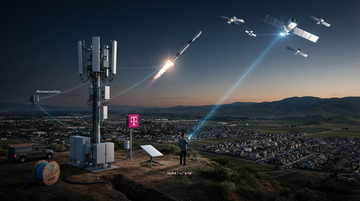
Starlink Direct-to-Cell Turns the “Carriers vs Satellites” Narrative Into a Verizon–T-Mobile Valuation Question: $23B Spectrum and FCC-Approved Service Close the Gap
SpaceX’s Starlink Direct-to-Cell is already commercially available in the U.S., meaning the near-term disruption isn’t theoretical—it’s competing for the same “coverage gap” customers that carriers used to serve with tower buildouts. The first valuation signal is likely to hit Verizon VZ (fiber/dark-fiber leverage) and T-Mobile TMUS (already partnered for Direct-to-Cell), while AT&T T faces a more delayed competitive pressure unless its capacity ramp from EchoStar spectrum acquisition translates quickly into improved 5G economics.
2026-08-03

Boeing's 737 MAX 7 gets FAA type-certificate clearance—so airline delivery conversion can finally stop being a “regulatory option” and start being cashflow
The FAA issued an amended type certificate and updated the Production Limitation Record for the Boeing 737 MAX-7 on Aug 3, 2026—clearing the last big certification overhang that kept 737 MAX 7 deliveries from being a straightforward sales-and-delivery story for carriers. For investors, the key shift is that the remaining uncertainty moves from “will it be certified?” to “how fast will Boeing and the supply chain convert order book into aircraft + acceptance slots,” which should reprice near-term delivery timing risk for Alaska Air Group and Southwest Airlines and flow through to suppliers like Howmet Aerospace.

Palantir’s guide raise is the market’s first “AI budgets are real” signal—because it’s coming through the U.S. commercial line
Palantir’s latest guidance raise is most investable when you treat it as evidence that AI deployments are moving from one-off pilots into contracts that show up in forward revenue. The clearest through-line is the uplift in Palantir’s U.S. commercial revenue guide, which makes the AI/defense thesis a budget-and-execution story—not just a demo-market story for software vendors.

Tom Lee’s 2027 “best year” only works if mega-caps keep leading while SpaceX-or-Fed shocks don’t reprice risk—here’s the trade book
Tom Lee’s bullish 2027 setup is best understood as a conditions trade: mega-caps must keep capturing AI earnings momentum while the market digests massive tech IPO supply and avoids a Fed-led tail unwind. The concrete test is whether leadership stays narrow (NVDA/META/GOOGL/AXP/CVX) or spreads into the small-cap bridge—because if it doesn’t, “best year” becomes a liquidity/valuation story rather than an earnings story.
2026-08-02

2026-08-01

2026-07-31

2026-07-30

L3Harris LHX Turns Weapons Demand Into Throughput Economics—Backlog Is Now the Unit of Measure
L3Harris LHX's Q2 results tie weapons-demand strength to production volume rather than one-off contract wins, which is exactly what “restock cycle” believers need to see. The market should now judge defense primes less by backlog headlines and more by how fast backlog converts into revenue, cash, and operating margin under constrained industrial capacity.

Lockheed’s Patriot production ramp proves the “restock” story is now structural—but the promised $58.6B ceiling is not verified from primary sources this session
In a key Patriot-related award, the U.S. Army funded Lockheed Martin PAC-3 MSE production at scale, explicitly tying deliverables to a multi-year acceleration plan. However, the specific claim that a single “$58.6B Patriot” contract ceiling was just awarded is not verifiable from the primary sources opened in this session, so the article anchors the supply-chain argument on the confirmed, quantified PAC-3 MSE production ramp and what it implies for missile-industrial-policy capacity constraints.
2026-07-29

Boeing’s Air Force One charge just proved why “commercial recovery” won’t fix consolidated cash flow unless fixed-price risk stops
In Boeing’s latest SEC filing, it increased the VC-25B (Air Force One) reach-forward loss by $280 million in a single quarter—underlining that the presidential-aircraft program is consuming earnings power faster than commercial deliveries can rebuild it. The real investor question isn’t 737 numbers; it’s whether recurring “reach-forward” losses on fixed-price defense/presidential work keep overriding cash-flow improvements.

General Dynamics can’t monetize defense demand if shipbuilding execution hits a fixed “output ceiling”
Recent disclosures show record backlog scale for General Dynamics alongside explicit recognition that higher U.S. Navy demand is pressuring the shipbuilding industrial base already stressed by demographics. The investable question shifts from “is demand strong?” to “how fast can backlog be turned into margin and cash when capacity, labor, and supplier throughput bind?”

Defense backlogs are not “capacity”—fixed-price contract structure and supply-chain + labor execution decide which primes (and suppliers) actually monetize demand
Across Lockheed Martin and Northrop Grumman, the filings show that backlog growth can coexist with contract-level cost and margin pressure under fixed-price development/early-production risk. Investors should treat backlog as a demand signal—but value conversion hinges on labor availability, supply-chain performance, and how much profit/loss risk sits inside the contract terms.

DoorDash's Part 135 move turns drone delivery from a partnership add-on into a regulated, asset-heavy moat
DoorDash says its DoorDash Labs unit earned FAA Part 135 air-carrier certification on Jul 29, 2026, and is launching an in-house “DoorDash Air” vertical stack. That changes the economics of last-mile drone delivery because DoorDash can amortize its own aircraft + hub setup while shifting integration away from Wing/Flytrex/Manna partners—while Part 135 certification acts like a regulatory capacity barrier.

General Dynamics' backlog conversion is already showing up in cash—now the question is whether that production curve can keep up
General Dynamics is printing classic backlog-to-execution signals: a 2-to-1 book-to-bill in Q1 2026 and operating cash conversion of 192% of net earnings. The risk for investors isn’t demand—it’s whether delivery pacing (especially in aerospace) can sustain as backlog rises, without margin or cash quality slipping.

House Democrats Just Forced xAI/SpaceXAI to Answer a Clean-Air Permitting Loophole—Turning 27–60 “Unpermitted” Gas Turbines Into a Federal Risk
A House Energy & Commerce ranking-member letter to SpaceXAI demands documents and site-visit access about Colossus 1/2 turbines alleged to be operating “without air permits,” explicitly describing an attempted dodge via “mobile sources.” For hyperscalers planning behind-the-meter gas capacity, the message is simple: once on-site turbines reach scale, permitting becomes a federal oversight issue, pushing the market mix toward utility PPAs (and away from regulatory arbitrage).
2026-07-28

What to expect
Evidence-first notes with a visible point of view.
This section collects sharp takes on earnings, shareholder meetings, and market structure. Each new piece should make the thesis, the facts, and the implications obvious within the first few screens.
Expect direct analysis, not generic commentary.
Expect the data to be explicit and the argument to be easy to follow.