Aerospace, Defense & Space
Defense budgets and the contractors behind them
Procurement rounds, backlogs, launch cadence and rearmament programmes, read as multi-year revenue with the primes and suppliers named.
2026-10-23


2026-10-22

AI Capex Fear Reached the Default Market: A Record 114.79bp Meta Spread, a 2% Nasdaq Drop and the Protection Nobody Is Underwriting
On October 22, 2026 the Nasdaq fell 2.06% while Meta's five-year credit default swap printed a record 114.79 basis points and CoreWeave's sat near 1,090bp, which means AI capex risk is now being repriced in the credit-default layer rather than in equity duration alone. The mechanism is funding cost, not imminent default: Oracle covered a $28.7bn trailing free-cash-flow hole with $37.2bn of new debt and $25.1bn of new equity, Meta turned to a non-voting share class, and CoreWeave sold converts at a 2.875% coupon against a 16.2% yield on its own 2031 bonds. The protection nobody is underwriting is being written by dealers warehousing the risk, by private credit funds already warning about concentration, and by shareholders absorbing dilution, with no reinsurance layer behind AI infrastructure at all.

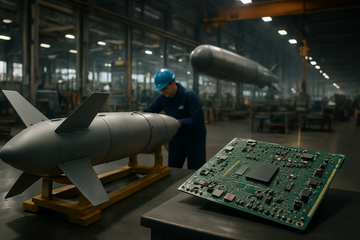
Lockheed Martin Won 850 F-35s and Raised Its Forecast — but Only 94 Jets Shipped in Nine Months and the Raise Was Mostly Cash
The Pentagon and Lockheed Martin have agreed a 10-year framework covering at least 850 U.S. F-35s, a 156-aircraft annual rate and 10 years of sustainment — a rate card, not an order, and Congress still has to authorize it. Third-quarter results show why the sequence matters: F-35 deliveries fell to 94 in nine months from 143, while the raised full-year guidance is almost entirely cash rather than profit. The money then travels to the tier that gets paid per aircraft or per engine hour — RTX's Pratt & Whitney, Northrop Grumman, Howmet Aerospace, Hanwha Aerospace, IHI — while the prime has agreed to fund at least $7 billion of its own industrial base to keep the line full.

SpaceX Grew AI Revenue Ninefold to $7.6 Billion and Spent $19.6 Billion Doing It — the Tesla Merger Committees Are a Financing Decision
SpaceX is now an AI infrastructure company with a launch business attached: Super Intelligence revenue of $7.56 billion in the quarter ended Sept. 30, 2026, up more than ninefold, exceeded what Starlink and space launch produced together, and the company posted its first operating profit as a public company at $2.79 billion. That profit came with $19.59 billion of capital expenditure — 84% of it inside the AI segment — and negative $9.96 billion of free cash flow, with fourth-quarter capital expenditure guided to $35–40 billion. Both boards have formed special committees of independent directors to study a Tesla combination, yet no merger agreement has been filed, the committees have not agreed on terms, and SpaceX's final IPO lock-up tranche expires on Dec. 8, 2026. Read the committees as a financing and governance decision for a GPU build-out that equity markets are unlikely to fund cheaply into that unlock, not as an industrial combination.
2026-10-21
2026-10-20

2026-10-19
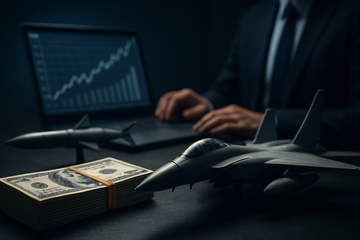
JPMorgan just turned 50% of its defense equity war chest into deals — the deposit-taker is now the Pentagon's banker of first resort
One year in, JPMorgan has spent $5B of the $10B direct-equity ceiling inside its Security and Resiliency Initiative — co-leading Shield AI's $2B Series G and Castelion's $1.05B Series C, anchoring Perpetua Resources, and pulling MP Materials into a DoD-style public-private structure. The bank is converting its $4.4T deposit base and balance sheet into a matchmaker for defense-tech capital flows, reframing Lockheed Martin, Northrop Grumman, RTX, and the critical-minerals supply chain as downstream beneficiaries of a credit pipeline Wall Street has avoided for two generations.

Musk's $10.5B SpaceX-to-Every-Kid Pledge Is a Three-Wire Risk: Float, Votes, and the Trump Accounts Lifeline
Elon Musk's Oct 19 promise of one SpaceX share to every U.S. child in 2027 — roughly 73 million shares at the Oct 17 close of $146.03, worth ~$10.5B — tests more than philanthropy. The gift coincides with Anthropic's 5% public-benefit pledge, uses a Trump-administration distribution channel Musk already seeded, and may force Musk's supervoting Class B to convert to Class A on transfer, trimming the ~85% voting block he holds under SpaceX's super-voting charter. For Tesla holders facing a possible merger announcement before December, the real question is whether the pledge is signal, branding, or the first move of a broader Musk wealth-redistribution plan.

Tesla's Q3 is the capex receipt Musk has to honor — and the SpaceX merger is the fallback he's keeping warm
Tesla reports Q3 2026 on Wednesday after the bell with the Street expecting ~$27.8B in revenue and ~$0.30 in EPS, but the print only matters as the first public test of Musk's $25B+ AI capex plan, which already pushed Q2 to a $1.1B free-cash-flow burn. After Barclays reactivated the TSLA-SpaceX merger timeline on Oct 14 — with a Dec 6 AGM finish line — the merger has stopped being gossip and started being the funding fallback if Cybercab revenue and Terafab capacity don't arrive on time. Investors should watch three numbers Wednesday: free cash flow, the [SPCX] mark-to-market swing on Tesla's $2B stake, and any shift in capex guidance toward the $30B credit lines Reuters confirmed on Sept 29.
2026-10-18
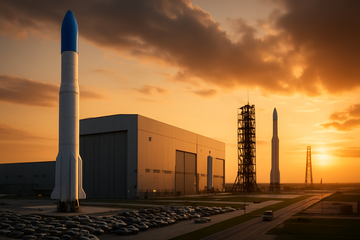
Blue Origin Puts $330M Into Florida — And Quietly Opens the Door to a Two-Heavy-Lift US Market
On Oct 16, 2026, Blue Origin committed $330M to a 1.37M-sq-ft Rocket Park facility that supports 150 New Glenn 9x4 upper stages a year and is sized to clear FAA-approved flight rates of up to 50 launches a year by decade-end. The build is the first material capex that converts Blue Origin's launch cadence promises into a real industrial timeline — and it lands just as SpaceX begins retargeting production away from Falcon 9 to Starship, putting a credible second US heavy-lift option into the supply, customer, and NSSL-pricing math.
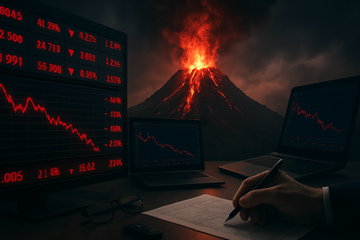
Burry's 'Supervolcano' Warning Lands on the Worst Nasdaq Week Since June — A Sentiment Tell the Tape Itself Confirms
Michael Burry's Saturday post warning that every market top in the past 40 years sat above a 'caldera of lava' landed one day after the Nasdaq fell2.14% to26,140 — its worst week since June — and CoreWeave bonds traded at 15% yields. The bigger signal is the convergence: AI debt stress at CoreWeave, a 10-year Treasury stuck near 5.10%, a VIX that surged ~21% intraday, and a $1.1 billion bet against NVIDIA and Palantir from a fund manager who has now deregistered his adviser. Burry isn't calling a crash date; he's calling a positioning setup where the surface looks calm while leverage quietly builds underneath.

DOT Just Quietly Lifted a Year-Old Ban on Mexican Airlines — Boeing, Airbus, and One NYSE Carrier Are the Real Winners
On Oct 16, 2026, the US DOT revoked Order 213-2 — the last domino in a four-step bilateral aviation reset that began in May with a US-Mexico framework deal and culminated in the formal reinstatement of Mexican carriers' route rights from both Mexico City airports. The political read is midterms; the investable read is Volaris's pent-up capacity, Boeing's 737 MAX backlog, and a Delta-Aeromexico joint venture that is, once again, legally intact.
2026-10-17

Morgan Stanley's Moog Upgrade Is a Bet That Pentagon Ramp and AI-Cooling Pumps Are Both Here to Stay
Moog's fiscal Q3 2026 print delivered record $1.12B revenue and a 23% jump in 12-month backlog to $3.3B, but almost all the headline margin expansion came from a $30M tariff-refund one-off. The cleaner story is segment-level: the Industrial unit's 18% growth is now powered by data-center liquid-cooling pumps that quadrupled from roughly $25M to $100M in a year — anchored to one hyperscaler through two CDU partners. Morgan Stanley's Oct 16 Overweight upgrade, with a $448 price target lifted from $405, sits on top of the backlog ramp from missile-control programs like Lockheed Martin's $53.9B PAC-3 contract. The investment question is whether a stock at ~32x forward earnings has already priced in both tailwinds, or whether one hyperscale customer concentration is the real risk.

$3.3B USDA Loan to a Georgia Co-op Just Wired Rural America Into the AI Power Grid
USDA's record $3.3 billion Rural Utilities Service loan to Oglethorpe Power — a nonprofit serving 38 Georgia electric co-ops — is the first federal rural-utility financing formally tied to data-center load growth. With Google's 948-acre Monroe County site adjacent to the new 1,425 MW Smarr plant and GE Vernova sitting on a $176B backlog, the deal pulls the rural co-op stack off the agricultural sidelines and into the AI buildout — and puts Vistra, Constellation Energy, and Quanta Services on collision course with Southern Company for the next dollar of load growth.
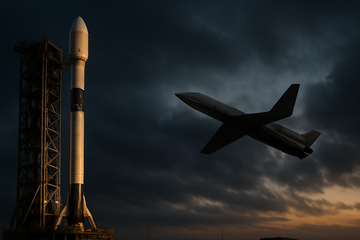
A 100-mph Starlink curb cut Ukraine's drone wing — and SpaceX's $6B Starshield pipeline is the next collateral
On the night of October 14, 2026, SpaceX throttled Starshield connectivity for Ukrainian military terminals traveling above 100 mph — Reuters reports the order came from inside the White House. The curb degraded Kyiv's deep-strike drones and Shahed interceptions during Russia's largest barrage of the war, and a bipartisan Senate letter is now asking the Pentagon inspector general to investigate. For SpaceX, the takeaway is uncomfortable: a Starlink network that can win a $6B Starshield backlog in a single quarter can also be switched off by politicians — and airlines, allied militaries, and Starlink's India bid all sit on the same kill switch.
2026-10-15
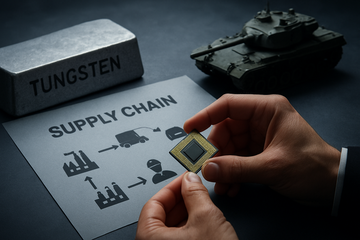
2026-10-14

Six GOP senators just told Trump to undo his own Russia deal — and pointed him at the bill he signed three weeks earlier
A bipartisan letter from 12 senators — including McConnell, Cornyn, Tillis, Collins, Murkowski and Armstrong — condemns the October 9 Trump-Putin diesel deal as a 'gift to our adversary' and demands Trump rescind OFAC General License 135 and instead 'execute' the Lindsey O. Graham Sanctioning Russia and Iran Act he signed September 18. That is the new cliff: a sitting president asking the GOP base to override a sitting Republican Senate letter that cites a sitting Republican law. For refiners already up 50–55% in Q3 on a $66 / bbl 3-2-1 crack spread (highest monthly since 2006), the letter raises the chance that General License 135 collapses before April 2027 — keeping crack spreads wide and pulling ~$4B of expected Russian diesel revenue out of Moscow's war chest.
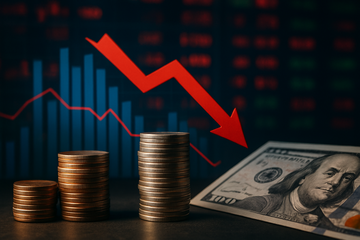
Hot CPI Just Flipped December Into the Fed's Base Case — and the Nasdaq's 1.9% Selloff Is Only the Opening Trade
September CPI reaccelerated to 3.7% year-over-year (from 3.4% in August) and core to 2.6% (from 2.4%), with both prints running 0.1 percentage point above consensus and a 5.2% energy surge supplying the bulk of the headline. Markets responded by lifting the 10-year Treasury yield to 5.30%, jumping the December 9 FOMC hike probability to 76-87%, and sending the Nasdaq Composite down 1.9% with semis and AI infrastructure bearing the brunt. The Fed's own September dot plot already projects 4.1% by year-end 2026, and today's data pushes that path toward the high end — meaning the Apple/Microsoft/NVIDIA cohort is now repricing not for one more 25bp, but for a terminal rate the market had largely written off six weeks ago.

SpaceX's X Subscription Reshapes the AI Bundle Math — ChatGPT Pro and Claude Pro Have Until Q1 to React
On October 13, 2026, SpaceXSI (SpaceX's AI subsidiary) launched The X Subscription — five tiers from $0 to $200/month that put Grok, Grok Bot, Cursor, and X Premium behind a single paywall. The $30 Premium tier alone replaces what was $90/month a week earlier, and every plan carries at least twice the coding usage of the comparable standalone Cursor plan. For SpaceX, which paid $250B for SpaceXAI and $60B for Cursor inside eight months, the bundle is the first monetization payoff on the M&A chain. For Microsoft, Alphabet, Amazon, and Meta, the consumer subscription benchmarks they anchor now have a bundled challenger sitting $10–$60 below comparable pricing — and the third-party-model surcharge inside the bundle shows where the margin trap really lives.
2026-10-12
What to expect
Evidence-first notes with a visible point of view.
This section collects sharp takes on earnings, shareholder meetings, and market structure. Each new piece should make the thesis, the facts, and the implications obvious within the first few screens.
Expect direct analysis, not generic commentary.
Expect the data to be explicit and the argument to be easy to follow.