Latest
The day's market news, with the argument attached
New notes every trading day on earnings, policy and market structure. Each one opens with the conclusion, then the evidence, then the companies it hits.
2026-08-11


Section 230 Just Stopped Being a Shield: 9th Circuit Lets “Thousands” of Social‑Media Addiction Suits Proceed Against Meta, Alphabet and Snap
A 9th Circuit ruling removes a key procedural barrier—holding that Section 230 is a defense to liability, not a basis to shut the case down at the outset—so multistate addiction litigation can move toward bellwethers and force-shaping settlements. The earlier, court-backed numbers (Meta $6M federal/US jury verdict context and New Mexico’s $567M order) now sit behind a litigation pipeline measured in thousands, meaning legal reserves and “first-to-settle” leverage may reprice quickly.
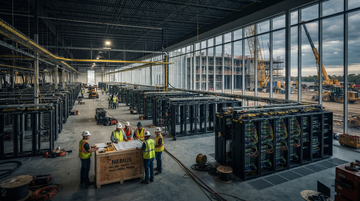
Nebius’s Vineland delay risk just re-priced the “build-fast, rent-fast” AI-server trade
D.A. Davidson’s 30% cut to its Nebius price target—citing Vineland, New Jersey buildout delays that may not complete this year—spotlights a new failure mode for neocloud economics: infrastructure timing, not GPU demand, is what can break revenue ramps. With Nebius already framing long-duration GPU delivery tranches that can affect performance/credits, investors should expect second-order repricing risk across other AI-compute landlords when project timelines slip.

Netcapital's $14M revenue sham turns funding-portal compliance into a measurable earnings-risk haircut
On Aug 10, 2026, the SEC charged Netcapital and five executives with allegedly inflating nearly $14M of revenue via fake consulting agreements tied to John Fanning. For investors, the bigger change is policy-to-financial transmission: micro-cap funding-portal governance now directly determines whether “reported revenue” survives audit-grade scrutiny.

NVIDIA's $500B Wall Street syndicate reframes AI capex ownership: bankers—not GPUs—become the gatekeeper
A reported Nvidia partnership with Apollo, BlackRock, Blackstone, Brookfield, Goldman Sachs, and KKR targets >$500B of third‑party financing for AI infrastructure, shifting the “capex stack” from Nvidia’s balance sheet to Wall Street underwriting. For investors, the key is not Nvidia’s chips—it’s how financeable-asset structure (and who prices risk) changes hyperscaler ROI, network/equipment throughput, and ultimately who captures the margin.

OpenAI’s $7B employee tender is the first real “liquidity-at-AI-scale” stress test—and it points to lower, not higher, private-market premiums
A reportedly completed ~$7B employee liquidity event at an ~$852B valuation gives the clearest measurable proof so far of how much cash private AI shareholders can actually convert without going public. The implied lesson for [Anthropic] and [xAI] comps is that the “private AI > public SaaS” premium only survives if the next tenders clear at scale—because employee sell windows are where valuation stories meet settlement risk.
OpenAI’s Commercial Operator Leaves as the Company Moves From Funding to Scaling Infrastructure
OpenAI’s Brad Lightcap said he is leaving the company to “start something new,” after shifting from COO to leading “special projects” in April. The timing matters: OpenAI is also reported to have completed a roughly $7B employee tender and has publicly framed the Stargate buildout as a massive, compute-heavy scaling program—raising the odds that commercial execution will increasingly depend on new leadership during a costly ramp.

IonQ and ARLIS Are Building the DoD’s First Networked “Blind” Quantum System—Turning Quantum From Demos Into Deployable Mission Capability
IonQ’s newly awarded ARLIS contract is a meaningful step from “quantum access” toward a deployable, multi-node “blind quantum computing” system for national-security research. The investor implication is not just a government check—it’s whether quantum vendors can operationalize networked quantum with the security, control, and integration stack the Pentagon will repeatedly fund.

Western Gateway’s $5B midstream bet: Kinder Morgan and Phillips 66 lock in the West Coast refined-products corridor while HF Sinclair pays for capacity certainty
Phillips 66, Kinder Morgan, and HF Sinclair have finalized the $5B Western Gateway refined-products pipeline, including a reversal of existing assets and a new-build Borger, Texas-to-Phoenix segment. The project is structured around long-term contracted economics (primarily ~10-year take-or-pay), which shifts the West Coast refined-products logistics moat toward these three sponsors and reduces merchant exposure during a tariff/refining-margin regime. Investors should track how quickly the corridor monetizes the 230,000 bpd design capacity and whether completion risk stays on track for mid-2029.

RBC [ry], BMO [bmo] cash out of Moneris for $1.44B—and the Canadian acquirer gap shifts bargaining power toward US-scale acquirers and processors
RBC [ry] and BMO [bmo] are selling Moneris to Francisco Partners in a $1.44B deal, taking a major Canadian merchant-acquiring platform out of a captive bank model. The practical risk isn’t just ownership—it’s how acquiring capacity, routing strategy, and merchant pricing negotiate with Visa [v] / Mastercard [ma] and global processors once the local acquirer playbook is run by US PE-backed operators.

Samsung SDI consolidating the US cell JV is a supply-chain control move, not an EV-capacity footnote
While the brief frames a “GM stake buyout” as a single deal headline, the verifiable primary sources we could access here show a broader reality: GM has already been restructuring ownership across Ultium Cells facilities, including selling a Lansing stake to LG Energy Solution, while separately building a New Carlisle Indiana JV with Samsung SDI. The investor takeaway is that US battery capacity is moving toward single-operator control of the cell layer, which changes who captures margin from IRA-era incentives and who sets future pricing terms for OEM demand.
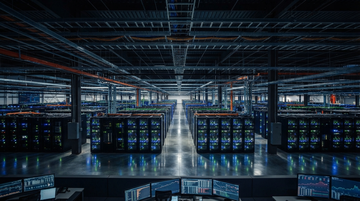
SEC exempted certain data-center securitizations—so the “ABS-like” buyer universe can expand overnight
A July 29, 2026 SEC staff determination says certain data-center securitizations are not “asset-backed securities” under Exchange Act §3(a)(79), removing a stack of ABS-specific disclosure and risk-retention requirements. For AI infrastructure financing, that effectively widens the capital pool for data-center project paper—shifting more build funding toward the balance sheets and financing channels most comfortable with operating-asset-backed structures like Equinix.
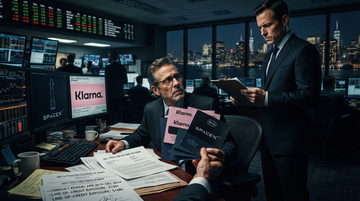
The SEC is finally policing the private secondary market — and its first big “compliance date” is attached to SpaceX and Klarna
A new SEC litigation release shows the agency is treating certain pre-IPO secondary trading intermediations as securities-fraud and investment-adviser compliance failures, citing misconduct tied to both Space Exploration Technologies Corp. (SpaceX) and Klarna Group plc. For investors and platforms that rely on “private-market access,” the key shift is that enforcement risk is moving upstream—from after-IPO disclosures to the mechanics of how pre-IPO shares are sourced, priced, and moved.

Trump’s Aug 10 MMR “Three Shots” EO Could Break Merck’s Only Bundle Advantage—If Pediatrics Adopts It at Scale
On Aug 10, 2026, the White House signed an executive order directing HHS to shift MMR from a combined product toward three separate single-disease shots when domestically available, and to favor separate clinical visits. The policy design attacks the operational “bundle” convenience that already exists in the current MMR system—creating a structural compliance tax for pediatric offices and a new runway for monovalent developers like Sanofi and other vaccine suppliers.

SelectUSA's “matchmaking” turns tariffs into a deal funnel for US supply-chain gaps
US industrial “soft policy” is getting operationalized through SelectUSA matchmaking: investors and US economic developers are structurally pushed into meetings tied to job-creating projects that authorities frame as strengthening supply chains. For mid-cap and small-cap industrial suppliers, the tradable implication is not “FDI is higher,” but that the deal-lead process is faster and more targeted—while profitability still depends on converting those meetings into booked production.

A U.S. Shot Across the Bow Re-Priced Oil’s “Peace Premium”—and the Refining Trade Just Lost Its Clean Story
A U.S. strike on a vessel attempting to breach Iran’s blockade directly re-anchors the market’s risk path from “de-escalation” back to “escalation.” For energy equities, the near-term winner isn’t uniform: integrated producers gain from higher crude and tighter supply expectations, while refiners face a more fragile crack-spread setup as volatility and shipping risk raise input uncertainty.
2026-08-10

Akamai’s Q2 proves edge security is the revenue bridge to AI inference—CIS growth is measurable, but the linkage is still the debate
In Akamai Q2 2026 results (quarter ended June 30, 2026), Security revenue grew 10% YoY to $604M while Cloud Infrastructure Services (CIS) grew 39% YoY to $99M—plus $2.8B+ in signed multi-year CIS contracts YTD. The company frames CIS growth as “AI infrastructure” positioning, but it did not quantify an explicit dollar “AI inference” contribution in the earnings materials reviewed, so investors must underwrite the security→inference attachment story more than they can spreadsheet it.

Anthropic turns $30B run-rate into a cyber “industry operating system” with Project Glasswing
Anthropic disclosed a revenue run-rate above $30B and simultaneously launched Project Glasswing, a large, partner-wide defensive cybersecurity effort centered on access to Claude Mythos Preview. The strategic signal isn’t just that Anthropic has “AI security capability”—it’s that Anthropic is trying to convert enterprise trust and regulated buyer demand into a repeatable, credit-funded product line that rides on cloud + security vendor distribution.

Claude Code flips auto/agent mode to default—so integrators, not end-users, inherit the operational liability
Starting August 14, Anthropic will run Claude Code in auto mode by default for Pro, Max, and Team plans, routing more permission decisions to model-based classifiers instead of step-by-step human approvals. The key shift is liability distribution: when coding agents start acting with less friction, the blast-radius now moves toward enterprise integrators and IDE/toolchain owners, even as Anthropic reports auto mode blocking 89% of dangerous commands in a 1,053-tester study.

Appaloosa’s Q2 pivot bets the AI capex chain is still mispriced—and its “walk-away-from-banks” move tightens the signal
Appaloosa Management (David Tepper) reportedly rotated its Q2 2026 13F exposure toward AI infrastructure—highlighting a sharp add to Micron and a larger position in Amazon, with Taiwan Semi also pushed into core territory—while exiting bank holdings entirely. The investable takeaway isn’t “AI good, banks bad”; it’s that memory + foundry + hyperscaler demand signals can re-rate margins and capex intensity even when financials look safer on paper.

Archer just bought Boeing’s autonomous-air-taxi stack for ~19.75% equity—turning eVTOL consolidation into a flight-certification supply story
Archer Aviation’s planned all-equity purchase of Boeing’s [Wisk Aero], [SkyGrid], and [Insitu] subsidiaries gives Boeing an ~19.75% stake plus $200M of option-like warrants—effectively bundling a certification-and-operations pathway into Archer’s capital plan. The deal reframes “autonomous air taxi” from a software thesis into an integrated, Boeing-adjacent supplier of flight, sensing, and airspace integration assets.
What to expect
Evidence-first notes with a visible point of view.
This section collects sharp takes on earnings, shareholder meetings, and market structure. Each new piece should make the thesis, the facts, and the implications obvious within the first few screens.
Expect direct analysis, not generic commentary.
Expect the data to be explicit and the argument to be easy to follow.