Capital Markets
Deals, listings and the cost of money
IPOs, mergers, buybacks and credit issuance — what the terms of a deal say about what this market is willing to fund right now.
2026-10-27


Apollo's near-10% stake in Mubadala Capital makes Abu Dhabi the cheapest funder of AI data centers
Apollo's Oct. 26, 2026 agreement to take a minority stake in Mubadala Capital — with Apollo and other strategic investors committing a combined $5 billion to Mubadala's strategies at initial close — is a plumbing deal, not an acquisition: it converts a sovereign balance sheet with $385 billion of assets into permanent, fee-paying capital for the private-credit funds that now finance AI data centers. The timing is the story. Apollo led a $40 billion GPU master lease for SpaceX the same day, hyperscalers have lifted debt-funded capex from 9% of spending in fiscal 2024 to 32% on a trailing basis, and Carlyle estimates private credit alone could finance about $1 trillion of AI compute. Sovereign money lowers the cost of that credit at exactly the moment public markets are repricing it — CoreWeave bonds yielded 15% to 16% in mid-October with credit-default swaps near 1,200 basis points — so the risk does not disappear; it migrates into books that mark far less often than a bond does.

DoorDash's $17B Instacart Bid Pays 14x for a $1.2B Ad Ledger Growing at Half Walmart's Rate
DoorDash's advanced talks to buy Instacart for roughly $17 billion, reported Oct 26, 2026, would be the largest US grocery-delivery deal ever and the first to fold a retail-media ad business into a restaurant marketplace. The arithmetic says the basket is the cheap part: Instacart earned $3.47 of adjusted EBITDA per grocery order in Q2 2026 against DoorDash's $0.94 per restaurant order, but the only high-margin line in the deal — $297 million of advertising and other revenue, 28% of sales — is compounding at 16%, against 38% at Walmart and roughly 50% at Uber. Paying a 30% premium with 25x-forward-earnings stock for an ad book whose brand contracts run under a year leaves DoorDash about 12% dilutive on forward earnings before synergies, and the 2021 antitrust precedent is on the record: $17 billion is a price, not a verdict.

Meta Pre-Commits $95 Billion of Equity With No Cash in Hand — and the Buyers Are Its Own Chip Vendors
Meta's $35 billion underwritten offering plus a $60 billion at-the-market program is the largest equity raise a hyperscaler has ever attempted, and the structure matters more than the headline: $22.5 billion of it is a forward sale that delivers no proceeds until Meta chooses to settle, and the $60 billion program does not open until the first quarter of 2027. Nvidia, AMD and Broadcom have signalled non-binding interest in buying up to $5.0 billion of the paper, closing an AI capex loop no previous deal closed. Read that $5 billion as a signal rather than financing — it is 5.3% of the raise and 0.07% of the three vendors' combined $7.6 trillion market value, and none of them needs the money. For investors the real question is what the raise prices in: roughly 5.8% dilution against a $454.5 billion commitment book, with a stock that must absorb the supply before the earnings arrive.
Strategy Repurchased $205M of Its Own Preferred and Bought No Bitcoin: the Marginal Buyer Is Now Strive
Strategy spent $204.9 million buying back 2,068,459 shares of its own STRC preferred stock in the week ended Oct. 25, 2026 and bought no bitcoin at all, ending an accumulation streak that had shrunk to roughly $22 million of coins a week. The switch is arithmetic, not sentiment: at roughly 1.13 times net asset value, buying back common stock destroys value per share while retiring $100 par preferred at $99.06 creates it, which is why the $1.0 billion common repurchase authorization sits untouched. The bitcoin that Strategy stopped buying was picked up by Strive, which spent $511.4 million on coins in a single week, while Marathon Digital and Riot Platforms sold bitcoin to fund AI campuses. For investors the question is no longer whether bitcoin is cheap but who is left to buy it, and Strategy's own $242.4 million of cash covers one more week of its buyback.

Syngenta's $66 Billion Ask Puts 15x EBITDA on Ag Chem While Corteva Trades at 3x
Syngenta's advisers are targeting at least $66 billion for a Hong Kong listing priced at 15 to 20 times 2026 EBITDA, after a confidential filing that would make it the city's largest IPO since 2010. The ask sits far above every listed comparable: Corteva trades near 3 times trailing EBITDA and FMC's trailing EBITDA is negative, while Nutrien is on 7 times and CF Industries under 5. The deal is therefore a referendum on whether ag chemicals can re-rate above their own cycle, and it hands a Chinese state owner a $5 billion to $10 billion partial exit at a multiple no Western peer can match.
Treasury Raised Its Long-End Bid to $6 Billion. The 30-Year Still Printed a 19-Year High
On Oct. 26 the Treasury set the preliminary size of its next liquidity-support buyback at up to $6 billion in 20- to 30-year nominal coupons, with the operation running Oct. 27 and settling Oct. 28 — the same afternoon the Fed publishes its decision. The headline size reads like a buyer of last resort; the operating record does not. Through July, Treasury filled 100% of its cap in the long end on offers 11.9 times the maximum, but since Sept. 9 it has taken just 68% of the cap ($4.078 billion of $6 billion on Sept. 24) while the 30-year printed a nineteen-year high of 5.36%. What has genuinely changed sits at the front end, where the official sector funded more than $550 billion of extra bill supply in July and August and left the long end to leveraged, price-sensitive private capital — which is why BlackRock's decomposition finds the 10-year's 110 basis point rise in real rates rather than in the term premium. Nov. 4's refunding, where Citi expects $3 billion of 20-30 year auction sizes to be cut and replaced with bills, is the only lever that changes the arithmetic.
2026-10-26

The NBA's First Prediction-Market Toll Is $100M–$200M a Year — What It Sold Was Permission, and a Channel Into the Rulemaking
The NBA has become the first league to split the US prediction market in two: on October 26, 2026 it signed an integrity memorandum with the CFTC, named Kalshi and Polymarket its preferred prediction market exchanges, and made DraftKings an authorized operator with nationwide promotional rights. The fee is trivial — industry sources put the two exchange deals at $100 million to $200 million a year against an estimated $4 billion of annualized revenue at Kalshi alone — so the real transfer is not cash but control over who may trade the league's games. The agreement gives the league a contractual grip on its partners and a formal channel into the rulemaking that decides which sports contracts the CFTC will permit, which is worth more than the rights fee. Own the data supplier that sits on both sides of the deal, Sportradar; be careful with the operators left outside the perimeter, including Robinhood, Flutter and Caesars.

A $377 Million SPAC at Trust Value: What Corxel's Obesity Listing Says About Pricing a Pre-Revenue Pill
Corxel US and Amanat Acquisition Corp will take a Phase 3-ready oral GLP-1 public through a SPAC at an implied $200 million pre-money, with a $300 million PIPE at $10.00 a share and $75 million of trust money — marking the whole pro forma company at trust value, with no premium for the de-risked asset. The mechanism is a specialist syndicate willing to fund the trial but not to pay up for it, and the benchmark is a market that has already repriced oral GLP-1 assets from scarcity to competition since Novo Nordisk's pill and Eli Lilly's Foundayo arrived. For investors, the read-through is that pre-revenue obesity assets can still be financed quickly and at scale, but only at prices the strategic market has already written down.

Private Defense Tech Is Marked at 24–32x Sales; Its First Public Print Cleared at 4x
Private defense-tech marks — Helsing at $18 billion, Shield AI at $12.7 billion, Anduril at $61 billion — now price contract revenue at roughly 24 to 32 times sales, a multiple no listed defense company commands. The one clean public test of that model, the Lyntris IPO in August 2026, priced below its marketed range at $17.50 and trades at $10.28, roughly four times trailing sales. The primes are not where the risk sits: Lockheed Martin closed the third quarter with $292.0 billion of backlog, Northrop Grumman with $109.6 billion and RTX with $340 billion, and all three trade between 1.9 and 3.0 times sales. The warning points at the private marks, and it reaches listed investors through the drone and space proxies and the propulsion suppliers that sized capacity to private order books, not through prime backlog.

Lycia Therapeutics Raised $317.5 Million Into a December Rate Hike — and Put 28% of It Into a Race It Is Losing
Lycia Therapeutics priced 17.64 million shares at $18.00 on Oct. 22, 2026 — $317.5 million gross, the top of its range, and the only traditional US operating-company IPO of $100 million or more to price that week — then closed at $30.00 on debut, up 66.7%, five days before a Federal Reserve meeting at which all 100 economists surveyed expect a December hike. The print tells you the window for pre-revenue biotech has not shut; it has narrowed, and it now demands one thing: enough capital to reach the next value inflection without returning to the market. What the prospectus quietly concedes is where that capital is mispriced. $90 million of the raise — 28% — funds LCA-0321, a Phase 1 Graves' disease program that Biohaven is already running in Phase 3 and licensed to Ono Pharmaceutical two weeks earlier for $80 million upfront plus roughly 20% royalties. Pharma paid cash and a royalty stream for the later-stage asset; public investors paid cash for the earlier-stage one. That gap is the market's revealed preference, and it says this window is paying for Lycia Therapeutics's IgE food-allergy data, not for its autoimmune program.
Morgan Stanley mapped a 15% chip drawdown — from inside the bank that helps finance the buyers
On Oct. 26, 2026, Morgan Stanley chief U.S. equity strategist Mike Wilson told clients that semiconductor shares may not find support until 15% below current levels — published on a session when chip ETFs rose nearly 3% and Nvidia added 2.5%. The tension is structural: the same house is a committed funder in the record $60 billion Broadcom–Anthropic chip-financing package, and Nvidia's own Aug. 10 release now markets compute as "an investable asset," so chip equities set the price of the collateral that supports a wave of AI debt Morgan Stanley itself forecasts near $570 billion in 2026. Wilson's framework is therefore a credit input, not a chart level, and both halves of the call — a 15% chip drawdown and a continuing AI-debt boom — can be true at the same time.
Private Credit's $265 Billion Value Erasure Didn't Stop AI's $500 Billion Debt Boom — It Relocated the Risk
Blackstone took in $63.3 billion of inflows in the quarter ended September 30, 2026 while its private credit book returned 1.8% net, and more than $265 billion of value was erased across the largest listed private credit managers. That reckoning was a liquidity and confidence event in retail-facing vehicles, not a credit event — which is precisely why the AI buildout is still being financed with debt rather than delayed. With nearly $500 billion of AI-related debt issued in 2026 so far and roughly a third of hyperscaler capital spending debt-financed, the risk is moving out of visible semi-liquid funds into bank balance sheets, insurer books and project-level structures. Read the redemption headlines as a map of where the credit now sits, not as evidence that the cycle has stopped.
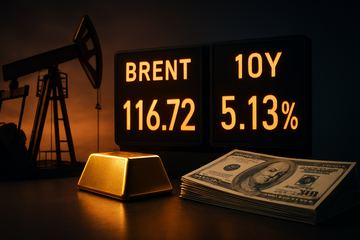
The Hedge That Pays Is the Pain: $116.72 Oil, a 5% Long End and an FOMC That Can't Hike
Three prices landed inside 72 hours and reset the correlation regime: Brent settled at $116.72 on Friday, the 10-year spent three sessions between 4.96% and 5.13% against a Fed on hold at 3.75%-4.00%, and spot gold broke below $4,000 an ounce on the very session oil hit a six-month high. The classic hedges failed for opposite reasons, because a supply-driven oil shock lifts inflation and the discount rate at the same time. The real transmission runs through funding: Meta posted its first negative free cash flow quarter ($34.91B of capex against $32.79B of operating cash flow) and lifted long-term debt by $25.9B in three months, while roughly a third of hyperscaler capex is now debt-financed. That makes the AI buildout a credit question before it is an equity one, and leaves energy cash flow — Valero at $23.89 of quarterly EPS, INPEX planning on $70 Brent, PetroChina at a record half — as the only place where the shock lands as revenue rather than cost.
2026-10-25

A Third of the S&P 500's Profit Growth Is a Memory Price Cycle — and Half of It Is Still an Estimate
The Wall Street Journal put a number on AI concentration on Oct. 24: Nvidia and Micron alone account for 34% of projected S&P 500 third-quarter profit growth, and about ten companies account for roughly two-thirds of it. That is an earnings-flow fact, not a market-cap one — blended index earnings growth is 29.5%, and it falls to roughly 20% without those two names, because Micron supplied 5.79 points of the market's 30.7% growth rate on a DRAM price move while its gross margin reached 86.8%. At a forward 12-month P/E of 18.7 against a 5.00% 10-year Treasury, the index is paid roughly 35 basis points for equity risk and can only earn that if memory pricing holds. The catch: Micron has reported, Nvidia has not — its quarter closed on Oct. 25 and results land Nov. 17 — so about half of that concentrated third is still an analyst estimate.

The AI Graveyard Is Demand Proof — but the Write-Offs Land on Credit, Not on Silicon
A public ledger of failed AI projects — published and updated by TechCrunch since September 2026 — is the first demand-side audit of the AI build, and it shows the cancellations concentrating where leases and cloud bills were signed rather than where the products died. Character.AI filed Chapter 11 on Oct. 12, 2026 with $50 million to $100 million of assets and liabilities; Builder.ai's creditors include Amazon and Microsoft; Stability AI's suppliers forgave about $100 million owed plus $300 million of future obligations. Yet NVIDIA's write-downs shrank to $2.1 billion in the first half of fiscal 2027 from $6.3 billion a year earlier, because the commitments that funded the build mature in fiscal 2028 and 2029. Credit markets have already repriced that risk: CoreWeave's five-year credit default swaps closed near 1,038 basis points on Oct. 15 and its 2031 bonds yielded 15.78%. The graveyard is priced; the write-down is scheduled.

Anthropic's Mid-November IPO Is the First Honest AI Price — and It Prints Into a Record AI Credit Repricing
Anthropic is on course to price in mid-November, and on the $16.8 billion of third-quarter revenue it showed investors on Oct. 14, a $1.5 trillion mark is about 22x annualized sales — more than NVIDIA's 16.8x enterprise value to trailing sales, and less than the 25x implied by OpenAI's $1.25 trillion private valuation on a run rate itself cut to $50 billion on Oct. 8. The print lands three weeks after Meta Platforms's five-year credit default swaps hit a record 114.79 basis points, with Oracle at 295 basis points and CoreWeave above 1,100. All 100 economists in a Reuters poll expect a December Federal Reserve rate hike. A public mark on a $518 billion compute commitment therefore re-anchors every private AI valuation still outstanding, inside a financing structure that the rating agencies themselves say they cannot fully see.
A 50-Page Subpoena, a $518 Billion Compute Book and a November Roadshow: AI Safety Marketing Now Faces a Securities Test
On October 14, 2026 the Federal Trade Commission sent OpenAI and Anthropic separate civil investigative demands of more than 50 pages each, seeking incident records, safeguards, marketing materials and privacy practices — compulsory process delivered about three weeks after both labs' top executives signed a voluntary safety pledge at the White House, and roughly four weeks before bankers are reported to start marketing Anthropic's IPO. Because a deception case turns on whether a claim had a reasonable basis, the labs' own safety reports and advertising copy become the exhibit list, and underwriters' counsel will ask for the same documents the agency just demanded. For listed investors the transmission runs through the balance sheets that finance the labs: $115.9 billion of annual capital spending at Microsoft, $20.6 billion of debt-funded capacity at CoreWeave, a $300 billion OpenAI contract at Oracle, and $200 billion of Anthropic compute commitments at Alphabet. Own the balance sheet that collects on the compute bill; discount the credit that assumed the labs' credibility was unquestioned.
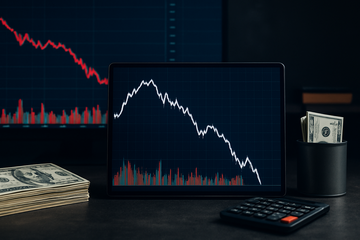
Households Now Hold More Stock Than at the Dot-Com Peak — So the $1.2 Trillion October Wipeout Rotated Instead of Cascading
American households hold 48.2% of their financial assets in equities, the highest share in Federal Reserve records back to 1945 and far above the 38.7% dot-com peak, and the marginal seller in October's roughly $1.2 trillion two-day drawdown was levered retail: industry margin debt of $1.48 trillion, with Interactive Brokers customer margin loans up 36% year over year to $105.2 billion. That ownership structure turned an AI credit scare into a rotation rather than a liquidation — Bank of America client-flow data showed a record $14.8 billion of one-week individual-stock sales offset by $2.8 billion of equity ETF buying, and Charles Schwab transactional sweep cash rose $7.1 billion to $492.8 billion. The damage landed in duration instead of the index: global investment-grade spreads hit 129 basis points, Oracle's five-year default swap sits at 295 basis points, and the 30-year Treasury yield rose to 5.29% even as Treasuries posted their best day in more than two years. The expression is long the cash-generative complex and the brokers that finance the rotation, and short the long-duration cash flows and the debt-funded build — not the index the crash calls are selling.
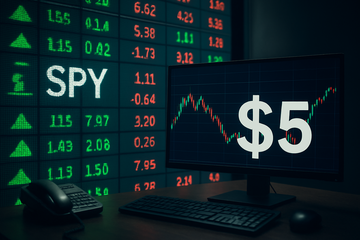
October 24, 2026: A $5 Quote Cap and a Mandatory Failover Reprice the Top of the Book
Two hard deadlines landed on the same Saturday, and neither is a new SEC rule. Cboe Global Markets's tiered maximum market-maker quote differential became operative on Oct. 24, 2026, while Regulation SCI Rule 1004 put the largest venues, clearing houses and their designated members through a coordinated business-continuity failover. Both raise the fixed cost of staying in the market, which taxes the marginal participant and pushes flow toward the biggest venues and the biggest wholesalers. For investors the trade is a scale premium: Nasdaq and CME Group monetise the volume wave while absorbing a trivial compliance bill, while Robinhood Markets carries retail-transaction revenue that depends on the spread capture these rules compress. The pending proposal to rescind Rule 611 remains the catalyst that decides how wide that gap gets.

ServiceNow pays $7.75B for Armis: identity arrives inside the workflow layer, and rivals’ “per-seat” logic gets stress-tested
ServiceNow agreed to buy Armis for $7.75B in cash and later completed the deal on April 20, 2026, tying cyber asset intelligence to the Now Platform’s workflow layer. The investor question is no longer whether identity is “a bolt-on,” but whether agent-era automation makes standalone identity revenue structurally harder to defend.
What to expect
Evidence-first notes with a visible point of view.
This section collects sharp takes on earnings, shareholder meetings, and market structure. Each new piece should make the thesis, the facts, and the implications obvious within the first few screens.
Expect direct analysis, not generic commentary.
Expect the data to be explicit and the argument to be easy to follow.