Consumer
What households are actually spending on
Traffic, pricing power, trade-down and inventory across retailers, restaurants and brands — who is holding margin, and who is buying volume.
2026-09-13


2026-09-12

Arizona just opened a state-level liability lane on hair-relaxer cancer — and L'Oréal's €44B group is the test case
Arizona Attorney General Kris Mayes filed the first state consumer-fraud suit against L'Oréal on September 10, 2026, alleging the company concealed cancer risks tied to its Dark & Lovely, Optimum and Mizani relaxers. With 12,129 federal MDL plaintiffs already lined up for a January 2027 bellwether trial and the EU banning 12 cosmetic substances months ahead of any FDA action, L'Oréal's €16B Consumer Products division now sits at the center of a liability template that drags in Godrej Consumer Products, the private Wella Company (now filing for a US IPO), and global peers Coty, Estée Lauder, and Procter & Gamble.

Ford's 223,500-F-150 fuel-tank recall lands on a $17.6B warranty pile — but Tesla's 1.2M probe is the bigger cost-of-quality unknown
Ford's NHTSA recall of 223,472 2023–2027 F-150s for improperly secured fuel tanks adds an estimated ~$110M of strap-replacement work to a Q2 2026 warranty reserve of $17.6B — manageable against a reserve where pre-existing-warranty accruals fell two-thirds in H1 2026. The cleaner peer isn't Tesla's 1.2M-unit suspension probe, still in preliminary evaluation with zero crashes but five times the vehicle count; the closest template is General Motors's L87 engine recall, which has already booked $700M in warranty claims and expanded to ~998K trucks. The supply-chain angle runs through Magna International, a Tier 1 fuel-tank supplier exposed to F-150 strap-replacement volume.

Tesla's Oct 1 Roadster reveal is a capex-mix test, not a launch — and Cybercab/Optimus already lost the funding race
Tesla confirmed a \"10.01\" Roadster reveal Saturday, but the second-gen supercar isn't shipping until 2027 or 2028 — well after Cybercab started production at Giga Texas and Optimus ramps toward ~2,500 robots/week by year-end. With Q2 free cash flow at -$1.09B and full-year capex guided above $25B, the Roadster's only near-term financial role is re-anchoring the brand narrative while the $25B checks go to robotaxis and humanoids. Investors should read Oct 1 as a marketing event, not a capex trade, and watch the Q3 capex split between Cybercab lines and the new Optimus factory as the real mix signal.
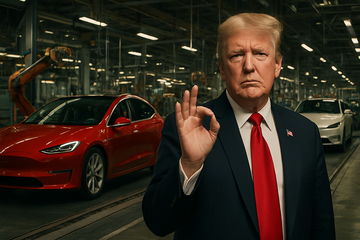
Trump's 'OK' to Chinese cars built in the US just turned Ford and GM's ban push into defense — BYD and Geely own the move
President Trump told Fox News on Sep 12, 2026 that he would welcome Chinese automakers building cars in the US, nine days after the Alliance for Automotive Innovation — Ford, GM, Stellantis, Toyota, Honda, BMW, Volkswagen, and Volvo — asked Congress to permanently ban them. The 'localize-or-stay-out' bargain replaces the import-threat frame: BYD and Geely can clear it with capex, while Transportation Secretary Duffy's parallel Sep 8 letter attacking Ford's existing CATL, Geely, and BYD links leaves US automakers caught between the new opening and the old pressure.
2026-09-11

Barington Lights a Fuse at Bath & Body Works — the Stock at 5x EBITDA Is the Real Headline
Bath & Body Works trades at 5.3x trailing EBITDA and a 29% free-cash-flow yield — multiples usually reserved for broken companies, not a brand that just printed $0.62 of adjusted EPS and grew its digital business for the first time in five years. Barington Capital's roughly one million-share stake (about 0.5% of shares outstanding) is the catalyst, but the thesis it lights up is bigger: any mid-cap consumer-discretionary name whose stock has decoupled from cash generation is now a take-private candidate, whether or not the activist is at the table. Investors should expect a Barington letter to BBWI's board within weeks — and read the read-through to Macy's, Victoria's Secret, Tapestry, and the wider specialty-retail cohort that is trading at the same deeply discounted multiple.

China's 2030 Autonomous Plan Just Killed the 'China Lag' Trade — Tesla, Mobileye, Pony AI, and WeRide Are Now on Beijing's Clock
On September 11, 2026, China's MIIT unveiled the 15th Five-Year Plan roadmap targeting 70% NEV share and large-scale autonomous-driving deployment by 2030 — with a national L3/L4 safety standard already in force. The plan doesn't accelerate Tesla or Mobileye into China; it forces them onto the same deployment clock as Pony AI, WeRide, and Chinese OEMs that have already been running ahead. The 'China lag' trade — underweight Chinese AV players because they're behind — is now structurally invalid, and the second-order winners are the ones with the deepest China distribution: Hesai for lidar, Pony AI for robotaxi scale, and Li Auto and XPeng for the L2-to-L3 transition.

Colgate's $1B+ Personal-Care Carve-Out Is the First Real Test of Whether a US Mega-Staples Can Cut Itself in Half
Colgate-Palmolive is exploring the sale of Softsoap, Irish Spring, and Speed Stick for more than $1B combined, with Goldman Sachs running the process. The brands are the weakest slice of a US personal-care unit that has produced two straight quarters of negative North America organic growth (Q1 2026: -2.2%, Q2 2026: -3.0%) and a 7% drop in personal-care operating profit in 2025. If the deal closes, it sets the template US consumer staples have avoided since Haleon's 2022 GSK spin and Unilever's December 2025 ice-cream separation — and hands the most obvious buyer, Church & Dwight, a turnkey soap-and-deodorant platform in a single transaction.

Inditex plans 20 US projects by 2027 as Shein's IPO opens flat — the new map for fast fashion, mall REITs, and DTC peers
Inditex (IDEXY) will roll out 20 US projects across Zara, Bershka, and Massimo Dutti by end-2027, including new Zara stores in Denver, Phoenix, and Pittsburgh — its most concrete US commitment to date. The push lands as Shein (625.HK) closed its Hong Kong debut down ~10% on a ~$26.5B valuation, roughly 70% below its 2022 private-market peak. For Simon Property, Macy's, Kohl's, Reformation, American Eagle, Urban Outfitters, and TJX, the math now has two simultaneous signals: a physical-first incumbent is going on offense in the US at the exact moment its digital-born rival re-enters the public market from a position of weakness.

Kroger just halved its same-store sales outlook — three food companies in seven weeks have now formally confessed the trade-down
The Kroger Co. on Sept. 11 cut its full-year identical-sales (ex-fuel) guide to 0.2%–0.8% from 1.0%–2.0%, attributing roughly140 basis points of the headwind to the Inflation Reduction Act. The move follows Albertsons Companies' July 23 cut to a (1.5)%–(0.5)% range and Hormel Foods' Aug. 27 trim of full-year sales to $12.1B–$12.2B — making the consumer retrenchment the most coordinated acknowledgment in the food-retail chain in years. The winners are the discount share-takers (Walmart, Costco); the losers are mid-tier grocers and packaged-food suppliers like Conagra Brands, Kraft Heinz and General Mills.
2026-09-10

Deloitte's 4.8% Holiday Forecast Hands Off-Price a Tailwind and Squeezes Discretionary Big-Box
Deloitte raised its 2026 holiday outlook to a 4-4.8% range — a modest acceleration over last year's 4.1% — but the composition splits sharply. Value-seeking consumers, a +4.5-5.2% disposable-income backdrop, and a 7.5-8.4% online push route share to off-price (TJX, ROST, BURL) and platforms (AMZN, SHOP), while discretionary big-box (BBY, TGT) absorbs the tariff bill. Investors should position for the channel mix, not the headline number.

Bloomingdale's +11% Just Topped Every U.S. Off-Pricers — Macy's Premium Bet Pays, But Holiday Is the Real Test
Macy's reported Q2 2026 comp sales of +2.7% and lifted full-year EPS guidance to $2.15–$2.35, but the real headline is that Bloomingdale's alone posted +11.3% — beating Ross Stores at +10%, TJX Companies at +4% and Burlington Stores at +2%. The premium-tier outperformance runs counter to the trade-down narrative that powered off-price all year, and now Macy's has to prove the Bloomingdale's engine holds through a holiday where consumers may finally reorder spending toward value. A one-time $116M IEEPA tariff refund — about $0.05 of the new full-year EPS — props up the optics; underlying namesake comp was just +1.1%, and Kohl's just printed -0.9% on the same back-to-school window.
2026-09-09

AT&T's Stankey called the iPhone Duo 'not new' — that's the first honest carrier read on Apple's $1,999 bet
AT&T CEO John Stankey told the Goldman Sachs Communacopia conference on Sept. 9 that Apple's $1,999 foldable iPhone Duo is just another Android-style foldable in a category that has stayed niche — a verdict from the channel that controls postpaid upgrades. The Duo starts shipping Oct. 23 with Samsung Display as its exclusive OLED panel supplier and Foxconn handling assembly; Counterpoint and IDC both project Apple taking 20–25% of the global foldable market in its first year. The trade is whether Apple's direct-to-consumer financing pivot can bypass the carrier skepticism that just got stated out loud.

DOJ’s widening probe into Fox’s Roku deal targets TV streaming’s distribution choke point—investors should price higher “deal-friction” before they price synergies
The DOJ’s reported move to expand its antitrust inquiry into Fox’s planned acquisition of Roku turns a distribution merger into a subscriber-and-ad-economics risk test, not just a process headline. Fox is buying Roku for a stated ~$22B enterprise value and $160/share, with management banking on cost synergies and cash-flow accretion—so a prolonged, second-request style review threatens the timing and economics investors assumed for streaming distribution leverage.
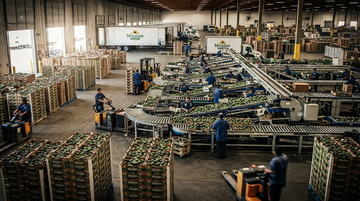
Mission Produce’s margin swing is explaining less “pricing power” than “fruit math”: a tape move built on timing can unwind fast
In Mission Produce’s recent results, the same margin line can swing while per-pound avocado pricing moves sharply—meaning the market’s focus on “good margins” risks over-crediting sustainable pricing power. The filings show gross margin changing alongside per-unit price and volume (and with industry supply conditions explicitly driving results), so investors should stress-test margins under a normalization of both fruit prices and customer/order timing.

Signet Jewelers' premium-jewelry slowdown looks more mall-linked than demand-wide
In Signet Jewelers’ latest reporting, same-store sales stayed slightly positive overall in FY26 but slipped in the key holiday quarter (Q4 FY26 SSS -0.7%). The guidance language also flags mall-traffic and customer-credit risks, implying the recent premium-jewelry softness is more channel/placement-driven than a broad affordability collapse—important for deciding whether discretionary weakness spreads to all retail categories.
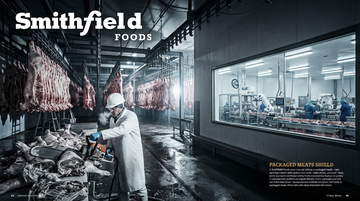
Smithfield Foods' Q3 pork-loss guide makes the protein-cycle the next margin test—while packaged meats stay shielded
Smithfield Foods SFD guided a Q3 Fresh Pork adjusted operating loss of $70M–$90M, with total adjusted operating income of $115M–$175M—making this a clearly measurable protein-cycle margin reset, not a demand/marketing timing issue. The swing matters for the whole complex: when the “spread compression” phase hits, processors with heavier fresh exposure get the earnings timing pain first, while packaged peers with more pricing power decide whether they can offset it.

US blocks Canadian motorcycles (over 800cc), plus key dairy and most alcohol—making trade “permissioned” substitution the real battleground
The White House issued import exclusions aimed at specific Canadian product HTS codes, with effect for goods imported on or after September 29, 2026—rather than applying a single broad price-only tariff. For investors, the market effect is likely to be less about macro price levels and more about who can quickly source “like goods” outside Canada, re-paper distribution contracts, and manage short-cycle inventory and compliance risk.
2026-09-08

2026-09-07

What to expect
Evidence-first notes with a visible point of view.
This section collects sharp takes on earnings, shareholder meetings, and market structure. Each new piece should make the thesis, the facts, and the implications obvious within the first few screens.
Expect direct analysis, not generic commentary.
Expect the data to be explicit and the argument to be easy to follow.