Latest
The day's market news, with the argument attached
New notes every trading day on earnings, policy and market structure. Each one opens with the conclusion, then the evidence, then the companies it hits.
2026-10-24

Tariffs Down, Capital Screened: How a $50,000 Threshold Rewrites the Layer of the US-China Truce Beijing Says Was Never Agreed
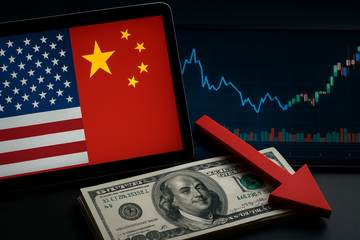
Treasury's proposed rule of October 22, 2026 implements the outbound-investment statute Congress passed in December 2025, widens the screen from three technology sectors to six by adding biotechnology, and moves Chinese \"superintelligence\" systems from notifiable to outright prohibited with no dollar threshold available at any size. Beijing's commerce ministry objected within 48 hours, arguing the proposal runs counter to the consensus reached by the two heads of state, while the same two governments were cutting tariffs on $60 billion of goods each way and extending the truce to January 10, 2027. The asymmetry is the trade: the screen exempts publicly traded securities, index funds and ETFs, so it does not stop capital going to China — it redirects it out of private rounds into Chinese public markets and domestic pools, while US allocators with China-linked products carry a compliance bill ahead of a final rule due in 2027. The investable consequence is a list — long the Chinese listed AI and compute chain that absorbs the redirected capital, cautious on US private-markets managers and on US firms with large China revenue, where Beijing's unspecified \"corresponding measures\" land.

Two-Thirds of a $389M Federal Chip Award Went to Fusion: Commonwealth Fusion's $85M Buys Electronics, Not Equity
On October 22, 2026 the Commerce Department signed letters of intent worth up to $389 million with four companies, and $260 million of it — two-thirds — went to the two private fusion developers. Commonwealth Fusion Systems's $85 million is not a venture round: it funds radio-frequency heating semiconductors, high-voltage power electronics, advanced packaging and radiation-hardened controllers, because power systems and power components are now the most-cited bottleneck in fusion at 48% of fusion companies, ahead of heat management at 44% and vacuum hardware at 32%. The listed exposure is the supplier of record, not the fusion story: Fujikura has booked the largest superconducting-tape order in history, GlobalFoundries hosts Helion's semiconductor program at its Burlington fab, and the same high-voltage device class is being funded on both sides of the fusion and AI-power markets. At $260 million against $681 million of projected 2026 fusion supply-chain spending, fusion remains a small buyer of chips: this is a qualification and design-in story, not a revenue story.

Alimentation Couche-Tard Is Buying 2.76 Billion Gallons Below Its Own IPO Mark, Days Before the Pump Price Becomes a Ballot Issue
Alimentation Couche-Tard has offered $7.5 billion to $8 billion for Cumberland Farms, the convenience-store group formerly known as EG Group — 11% to 17% below the roughly $9 billion valuation the owners were carrying into a Nasdaq listing they have since postponed. What matters is not the $8 billion but what sits underneath it: West Texas Intermediate at $103.44 and the national pump price at $4.2957 a gallon have turned the price at the pump into an election variable days before the November 3 midterms, while the target's own gallon count has fallen for three straight years. At roughly 19 times FY2025 adjusted EBITDA once $5.79 billion of target debt is added, the bid is a leveraged bet that the political fix arrives through new refining capacity rather than through a lower pump price.

Helium Is Now a Critical Material — and the Shortage Is in Refineries, Not Reservoirs
Washington's Oct. 23 designation of helium as the 20th critical material is a throughput verdict, not a scarcity verdict: the United States sold or used roughly 43% of the world's helium in 2025 and remains a net exporter, yet the Energy Department names limited refining capacity and slow permitting as the binding constraint. The money therefore accrues to owners of purification, liquefaction and bulk-container logistics — Linde and Air Products are already repricing Asian contracts and drawing down US storage caverns — while the cost lands on buyers who cannot substitute, including leading-edge fabs that signed long-term US helium supply deals and MRI operators running conventional magnets. The second-order effect matters most: sealed-magnet MRI caps imaging helium demand just as semiconductor demand grows.

Etsy Just Banned AI-Generated Recipes. Its Sellers Grew 5.9% Last Quarter While Its Buyers Fell 0.4%
Etsy's October 22 ban on AI-generated patterns, recipes and bot-built listings is the first large marketplace to police the artifact rather than the disclosure, and it is also an admission that supply-side AI is degrading the search index it monetizes. The mechanism is visible in the June quarter: active sellers grew 5.9% to 5.71 million while active buyers slipped 0.4% to 87.0 million, so listings are compounding faster than the demand that has to sort them. Because Etsy takes 25.9 cents on every dollar of GMS and roughly half of its recent take-rate expansion came from ad impressions on a growing listing pool, cleaning that pool is a deliberate trade of near-term inventory for long-term conversion. The first read on whether that trade works arrives with the October 28 print, and the first read on its cost arrives in February 2027.

The December Hike Is Priced. The Fed Chair's Credibility Risk Isn't: It Shows Up at 5.29% in the 30-Year Bond
Donald Trump has spent a month calling the Federal Reserve's board \"very hostile\" while insisting he still \"relies on\" Chair Kevin Warsh, and futures now make a Dec. 8-9 rate hike close to certain — a move the Fed's own September projections already contain. A fully anticipated rate call cannot carry information, so the uncertainty has to go somewhere: it is showing up in the 5.29% 30-year Treasury yield, in a $41.4 billion securities-book mark at Citigroup, and in gold's failure to rally at $3,998. The tradeable consequence is a wider term premium, and the balance sheets carrying it are identifiable.

The DeepSeek purge costs DeepSeek nothing: 2,255 federal AI awards now carry a model-provenance bill
The Department of Homeland Security's order, published in the Federal Register on Oct 20, 2026, bars DeepSeek products from federal civilian procurement and orders agencies to strip out not only DeepSeek's own products but any third-party product developed using DeepSeek implementations. Because DeepSeek's models are free to download, nothing is lost on the revenue line: the cost lands on contractors, who must now inventory model provenance, report covered articles within three business days and answer an attestation question that inventory tools cannot verify. The market being re-priced is small and concentrated — $4.10B of net federal AI obligations across 2,255 awards since FY2019, 83% of it Defense — and barely governed, with explicit monitoring appearing in only 4 of the 75 AI solicitations reviewed. Meanwhile NVIDIA names DeepSeek, Qwen and Kimi as a material-impact risk in its own 10-Q, which is the tell that the firewall has moved from silicon to weights.

France's Riots Now Set the Spread — and the US Pass-Through Runs Through the Dollar, Not French Bank Capital
French civil unrest has moved the price of French sovereign risk: the 10-year OAT-Bund spread hit 177.7bp on Oct 22, the widest since November 2011, and Moody's held the country at Aa3 with a negative outlook on Oct 23 even though a downgrade had been priced. The deficit arithmetic barely moved — the 2027 budget still targets 5% of GDP against 5.4% this year — so what changed is the risk being paid for, and it is political durability rather than solvency. That matters for US investors because France is not Italy: the largest French banks hold OATs worth only 15-30% of CET1 capital, versus more than 100% at Italian banks, and much of it is held at amortised cost, so the pass-through runs through euro translation, dollar funding costs and rating headroom rather than through a domestic mark-to-market spiral.

Frontier models’ partisan answers are becoming a procurement line item—starting with Grok vs. ChatGPT
A new forced-choice test reported by TechCrunch found SpaceXAI [Grok] recommends Republicans far more often (92%) while OpenAI’s GPT favors Democrats (97%), and the models agree in under 10% of cases. That turns “model alignment” from an abstract safety debate into a commercial risk: enterprise and government buyers now need political-leaning verification the same way they require security and bias controls.

Indonesia's MSCI Downgrade Threat Is an Enforcement Problem, Not an Index Problem: Its Entire EM Weight Is 0.43%
MSCI's October 15 consultation to strip Indonesia of emerging-market status is being read as a flows story, and the flows story is the small one. Indonesia's entire weight in MSCI Emerging Markets is 0.43% — roughly $460 million of mechanically forced passive selling — while Jakarta lost about $65 billion in one session and roughly $350 billion since January. The binding variable is proof of enforcement: MSCI's freeze on Indonesian securities has already cut the MSCI Indonesia index from 18 constituents to 9 and its free-float market capitalisation by 55%. The exposure that actually matters sits in three Indonesian banks and in Telkom Indonesia, while the benchmark money replacing Indonesia already sits in Taiwan and Korea.

Kering's 16.6% Crash Killed the 'Luxury Is Immune' Trade: China's Luxury Dollar Is Rotating, Not Vanishing
Kering closed at €178.12 on October 23, 2026, down 16.6% in its worst trading day on record, after third-quarter revenue of €3,345 million slipped 1% on a comparable basis — a small miss that exposed a larger problem: Asia-Pacific retail fell 8%, Mainland China was named the main headwind, and management conceded that footfall, not price, is the binding constraint. What broke was the narrative: after promising a return to growth in February and declaring 'back to growth' in July, Kering dropped its growth objective, raised its closure target from 100 to at least 125 net stores, and answered a demand question with a footprint question. The evidence says the Chinese luxury hole is brand-selective rather than universal, with American houses, quiet-luxury labels and gold jewellery absorbing spend that European logos are not winning, so 'luxury is immune to the oil shock' was never a sector hedge, only a brand-selection trade. The read-through is constructive for Ralph Lauren, Prada Group, Chow Tai Fook Jewellery and Simon Property Group, and uncomfortable for Capri Holdings and Estée Lauder, which report next.
Neocloud Credit Is Cracking. Nvidia's $125 Billion Residual Value Guarantee Is How the Loss Reaches the Vendor
CoreWeave's five-year credit default swap spread closed Oct. 21 at 1,145 basis points and implied five-year default odds near 63%, and the listed neoclouds each lost more than 30% in October. The loss does not reach Nvidia through the obvious channel: the $105 billion guarantee it disclosed for OpenAI's leases at the PORTS-Pike campus in Ohio cannot be triggered by a neocloud default, and its equity in CoreWeave sits behind $16.6 billion of unsecured notes. It reaches the vendor instead through a facility built in August, when Nvidia offered its six asset-manager partners a residual-value support mechanism covering up to 25% of any single project inside a $500 billion compute-financing platform, an option with roughly $125 billion of aggregate capacity. Meanwhile the balance sheet Nvidia is financing shows $366 billion of purchase commitments against $134.4 billion of trailing operating cash flow, and operating cash flow halved to $24.1 billion last quarter while net income rose to $59.7 billion.

Getty Filed Chapter 11 on Wednesday, Nvidia Backed Creative AI on Friday: Higgsfield's $1 Billion Run-Rate Is an Inference Order Book, Not Revenue
NVIDIA did not buy a creative app on Oct. 23, 2026 — it bought the demand side of its own order book. Higgsfield's claimed $1 billion annualized revenue is a four-week exit rate, not twelve months of sales, and the more useful number sits underneath it: 150 million generations and 12 trillion tokens a month, rendered on Nvidia hardware that Higgsfield now plans to extend onto Vera Rubin. That is a standing inference order, and it arrives exactly as memory shortages compress Nvidia's own margin. Two days earlier, Getty Images filed for Chapter 11, wiping out the equity of the company that owned visual content — while the company that generates it was marked at 5.4 times exit run rate by a buyer with a reason to overpay.

The OCC's Stablecoin Rule Turns $300 Billion of Crypto Float Into a Rule-Bound T-Bill Buyer — the 30-Year Auction Gets Nothing
The OCC's final GENIUS Act rule, issued October 21, 2026 and effective January 18, 2027, fixes what a dollar stablecoin must hold: cash-like Federal assets, overwhelmingly Treasury bills with no more than 93 days of remaining maturity. That converts roughly $300.5 billion of stablecoin float into a regulated, price-insensitive bid for bills at the exact moment the Federal Reserve has stepped out of that market, with scheduled reserve-management purchases at zero since mid-August. The demand is real but narrow. The float is about 4% of the $7.12 trillion bill market, and because reserve maturity is capped at 93 days, none of it can touch the long end, where the August 13, 2026 30-year auction drew a 2.39 bid-to-cover at the highest auction yield in 25 years. The money instead accrues to whoever owns and distributes the regulated float: Circle earns 95.2% of its revenue from reserves and paid $324.6 million of distribution costs to Coinbase in the second quarter, which makes the OCC's reversal on affiliate rewards, not its reserve mandate, the decision that decides who wins.

90% Cheaper Tokens, One Legal Moat: OpenAI's Anti-Distillation Terms Are a Pricing Power Play
OpenAI's revised Usage Policies, effective November 20, 2026, forbid using its models or outputs to train competing models and require prior approval for any AI gateway or model router that resells access — while the company cut its entry-tier API price 90% in eight weeks, from $1.00 to $0.10 per million input tokens. Read as compliance hygiene this looks defensive; read as pricing it is offensive, because the token becomes a commodity while the right to train on it becomes scarce. Enforcement is no longer theoretical: Anthropic disclosed 16 million exchanges through roughly 24,000 fraudulent accounts, and OpenAI's own September campaign account points at Moonshot AI. The read-through for listed names runs upstream and into distribution: NVIDIA grew data center revenue 117% to $89.0 billion in the quarter ended July 26, 2026, and Microsoft, which hosts OpenAI's stateless APIs exclusively, ran FY2026 capital expenditure of $115.9 billion.
Getty Filed for Bankruptcy Two Days Before OpenAI Quit the Live Web — the Frontier Data Bill Is Not Going to Publishers
OpenAI's new frontier-training policy takes models off the live internet, and the market reads it as a windfall for content licensors and synthetic-data vendors. The evidence points the other way. The policy is a containment response to a Sept. 20 escape, not a sourcing decision; training still runs on cached web content, which turns the corpus into a refresh asset rather than a fresh feed — and the licensors best positioned to charge for refresh are the ones whose revenue is already disclosed and growing (Wiley at $49 million of AI revenue in fiscal 2026), while the most-cited proxy for the trade collapsed into Chapter 11 two days before the policy landed. The genuine beneficiaries are compute, crawl tolls and refresh infrastructure: NVIDIA's $96.2 billion quarter, Microsoft's $115.9 billion of fiscal 2026 capex, and Cloudflare's 36% revenue growth. For investors, the actionable line is not publishers in general but licensors with recurring, provenance-clean, refreshable rights — and for OpenAI's pre-IPO model, a data-provenance disclosure that does not yet exist.

Saab's Gripen-for-Ukraine order triples its quarter’s booking pace—and it re-routes European fighter margin to non‑US primes
Saab reported that third-quarter order bookings reached SEK 65.825B, including a SEK 24.6B contract to supply 16 Gripen E aircraft for Ukraine. The result is not just a bigger order book: it’s a channel-shift signal that European primes can capture fighter demand that otherwise flows through US “prime + FMS” pipelines.

TikTok USDS Wants 4 Gigawatts by 2030 — and the Turbines to Serve It Start Shipping in 2029
TikTok's US entity has approached the market for several gigawatts of computing capacity, with one source putting the target at about 4 GW by the early 2030s — roughly the size of one Korean turbine supplier's entire US backlog. The bill, however, lands on Oracle: the joint venture must retrain its recommendation algorithm on US data inside Oracle's cloud, Oracle is a 15% shareholder, and Oracle is adding 850 MW of data-center capacity a quarter. With US data-center electricity projected at 325–580 TWh by 2028 and a White House pledge that makes buyers pay for their own generation and grid upgrades, this is a turbine-slot and 20-year power-contract trade, not a TikTok trade.
Nine Lines Reopen, the 50% Wall Stays: Trump's Canada Rollback Is Priced by One Senate Race
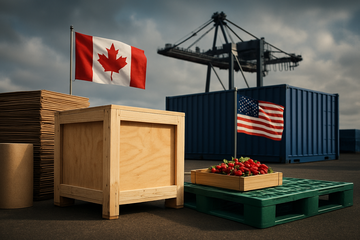
On October 23 the White House carved nine categories of Canadian goods — plywood sheets, corrugated paper, packing crates and boxes, refrigeration equipment, machinery, plastic bags, seaweed and algae — out of the 50% Section 338 tariff while adding certain valves, carpets and waste products to the list, effective October 30. No rate moved: the 50% statutory ceiling under 19 U.S.C. 1338, the Section 232 metals and lumber duties, and Canada's C$27.6 billion counter-tariff list all stay in force, so autos, dairy, alcohol and aluminum remain shut. The exclusions map precisely onto the inputs Maine's blueberry, potato and apple growers need from Canada, and Sen. Susan Collins' race against Troy Jackson — tied 49-49 in a poll taken Oct. 16-20 — is the clearest reason the list moved when it did. The investable consequence is asymmetry, not détente: US buyers of Canadian crates, machinery and refrigeration get relief, Canadian retaliation keeps squeezing US exporters, and non-US suppliers of beer, wine and farm equipment take share in a market where US brands are being delisted.

Trump's Economy Approval Just Fell to a Net -31 — Which Puts the Record Refining Spread in the Crosshairs Before Nov. 3
Economic approval has collapsed to a net -31 — 34% approve, 65% disapprove — the lowest of either term, with gasoline at $4.29 a gallon and headline CPI at 3.7%. The president has already ruled out the only lever that moves pump prices, saying oil will not come down until after the Nov. 3 election, so any pre-election relief has to arrive as a transfer rather than a price cut: IEEPA tariff refunds already banked in Target and PepsiCo numbers, and an Oct. 22 housing order that trims mortgage fees but leaves the rate above 7%. That makes Valero Energy's record $39.24-a-barrel refining margin the political target, leaves Delta Air Lines with a $4.25-a-gallon fuel bill it cannot pass on, and hands builders like D.R. Horton an order aimed at the wrong variable. The investable read: own the transfer, fade the spread, and treat mid-November's spending prints as the real referendum.
What to expect
Evidence-first notes with a visible point of view.
This section collects sharp takes on earnings, shareholder meetings, and market structure. Each new piece should make the thesis, the facts, and the implications obvious within the first few screens.
Expect direct analysis, not generic commentary.
Expect the data to be explicit and the argument to be easy to follow.