Latest
The day's market news, with the argument attached
New notes every trading day on earnings, policy and market structure. Each one opens with the conclusion, then the evidence, then the companies it hits.
2026-10-26


NVIDIA's $1.1 Billion Test Prepayment Puts the AI Buildout on Its Suppliers' Balance Sheets
NVIDIA has stopped letting its back-end vendors finance the AI buildout themselves. On October 21, 2026 it prepaid $1.1 billion to King Yuan Electronics to reserve U.S. chip-test capacity, alongside a multibillion-dollar advance to IBIDEN, a $1.3 billion agreement with Amkor Technology and co-investment with Samsung Electro-Mechanics — all six of its capacity partners are now building with customer money. The structure matters more than the size: NVIDIA's supply and capacity commitments jumped from $119 billion to $279 billion in a single quarter while its own capital spending stayed at 2.4% of revenue, so the fixed assets — and the free cash flow — have migrated onto vendor balance sheets that now spend 25% to 74% of sales on capacity. The durable profit is moving with the owners of scarce capacity: Amkor Technology with $3 billion of NVIDIA agreements, ASE Technology Holding whose packaging unit is scaling optical engines 15x, and upstream at Advantest and Teradyne, whose tool revenue is growing faster than the chips they test.

Private Credit's $265 Billion Value Erasure Didn't Stop AI's $500 Billion Debt Boom — It Relocated the Risk
Blackstone took in $63.3 billion of inflows in the quarter ended September 30, 2026 while its private credit book returned 1.8% net, and more than $265 billion of value was erased across the largest listed private credit managers. That reckoning was a liquidity and confidence event in retail-facing vehicles, not a credit event — which is precisely why the AI buildout is still being financed with debt rather than delayed. With nearly $500 billion of AI-related debt issued in 2026 so far and roughly a third of hyperscaler capital spending debt-financed, the risk is moving out of visible semi-liquid funds into bank balance sheets, insurer books and project-level structures. Read the redemption headlines as a map of where the credit now sits, not as evidence that the cycle has stopped.
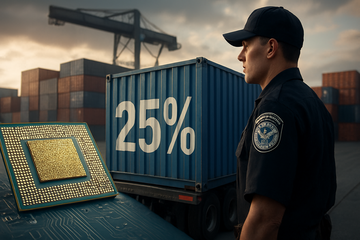
The Semiconductor Tariff Starts at Customs, but Its Real Cost Lands Further Down the Stack
A 25% Section 232 duty begins applying to a narrow set of semiconductor imports on October 26, 2026. The immediate exposure is concentrated in imported chips and chip-containing products, but the larger investment question is bargaining power: foundries and memory suppliers can often pass through the charge, while accelerator designers and hyperscalers face a higher bill of materials before customers see a price increase.
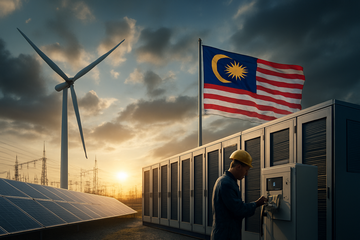
SoftBank's $50 Billion Malaysia Bet Lands on Turbines and Bonding Tools First — and It Bypasses the Credit Stress Now Choking US AI Capex
Malaysia's prime minister said on October 24, 2026 that SoftBank Group will put $50 billion into Malaysian AI, new technology and data centres — a number SoftBank Group has not confirmed in its own disclosures, and the only signed Malaysian document is an October 8 framework agreement with Grab and state oil-and-gas company PETROS that carries no megawatts and no schedule. Sized against the US cycle it is small: J.P. Morgan puts 2026 hyperscaler capex at $697 billion, and Goldman Sachs estimates roughly a third of AI capex is now debt-financed with new-issue concessions on large hyperscaler deals widening to about 20 basis points from 2-3. Malaysia's wave is funded by sovereign and strategic capital rather than that credit market, so it extends the equipment cycle rather than cannibalizing it. And because Malaysia's binding constraints are 9 GW of missing gas-fired capacity by 2032 plus export permits for advanced AI chips, the money lands first on power and cooling gear and on advanced packaging, not on accelerators.

4,300 Failed Price Checks in 23 States: Dollar General's October Settlement Is the Playbook Every Grocer Now Faces
New York's attorney general settled with Dollar General on October 13, 2026 for $1.875 million over shelf-versus-register overcharges, and the size of the payment is the least important part of the deal. What the company agreed to build — scheduled shelf-tag updates, independent secret-shopper audits and reformatted receipts at more than 600 stores — is a compliance architecture other state prosecutors can lift wholesale, and it is now the working template for grocers, clubs and quick-service chains. With the disclosed enforcement bill at roughly 0.8% of trailing operating profit but the pricing file under a microscope in a growing list of states, the trade is not the fine. It is whether a trade-down retailer can still raise shelf prices without documenting, in its own systems, the case against it.

Tower Semiconductor Jumped 9.9% on a Deal Signed Two Weeks Ago — and Still Trades 42% Below Its High
Tower Semiconductor rose 9.9% on October 26 with no new company disclosure, as the market re-marked a capacity contract signed on October 13 in which Semtech reserved dedicated silicon germanium capacity across Tower's American, Israeli and Japanese fabs for 800G, 1.6T and 3.2T AI links. The deeper story is that Tower has already sold 2027: $1.3 billion of contracted silicon photonics revenue and $290 million of customer prepayments, which is how a 200mm specialty foundry funds a 300mm photonics build-out. The tension is that the same shares trade at 72 times trailing earnings while trailing free cash flow depends on those prepayments, and management's 2028 model needs gross margin at 45% on 85% utilisation. Investors should treat the November 2 third-quarter report, not the October 26 pop, as the checkpoint that matters.

AstraZeneca Won IgAN on a Proteinuria Proxy — but the Category's Price Was Set at $60,000 a Year
Complement blockade now holds the two anchors of primary IgA nephropathy: Novartis's oral factor B inhibitor Fabhalta, converted to traditional approval on 48% eGFR slowing, and AstraZeneca's Ultomiris, approved on Oct 21, 2026 on proteinuria alone. That label victory lands in a category ICER already repriced in March, with value-aligned annual prices of $60,000–$81,000 for the newest IgAN biologics and only 6% of eligible US patients treatable before the agency's $821M budget-impact threshold. So the fight that decides this category is not which molecule wins the label race but which balance sheet can absorb a discount north of 79% on a population-scale chronic disease — which favors incumbent franchises with payer contracting muscle and squeezes the launch challengers.
The $450M Pentagon Tungsten Bet Solves the Wrong Problem: China's 85% Refining Grip Still Prices the Metal Inside AI Memory
Washington's $450 million commitment to The Elmet Group buys conversion capacity and a Defense stockpile option — not ore. The United States has not mined tungsten commercially since 2015, China controls roughly 85% of global APT refining capacity, and the first new North American APT plant is dated to restart in the second half of 2028. Meanwhile the metal has already been paid out to the miners: Almonty Industries swung to C$17.6 million of adjusted EBITDA in a quarter while Elmet's margin gain came from holding inventory rather than owning supply. For AI hardware the binding constraint is not price but qualification — standing up an alternative WF6 supplier takes 18 to 24 months — so the chokepoint to watch is a Chinese refinery, not a plant in Maine.

Verizon raised guidance a third straight quarter without raising capital spending — the AI backhaul bill is being paid by copper retirement
Verizon reported third-quarter 2026 net income of $5.3 billion, adjusted earnings of $1.31 a share and free cash flow of $7.8 billion, then lifted full-year guidance for a third consecutive quarter while holding 2026 capital spending at $16.0 billion to $16.5 billion — a range below every year since 2023. The funding comes out of the legacy network: AT&T is running copper service down to 1% of eligible customers, counting on $4 billion of annual savings by the end of 2028, and moving half of a new wholesale fiber platform to GIP and CPP Investments in a joint venture that closes in the first half of 2027. Meanwhile Verizon has ordered more than 80 million miles of fiber from Corning for 2027 through 2032 and sold Google more than $1 billion of dark fiber. The capital is rotating out of the carriers' build programs and into the fiber supply chain and contracted hyperscaler demand.

The Hedge That Pays Is the Pain: $116.72 Oil, a 5% Long End and an FOMC That Can't Hike
Three prices landed inside 72 hours and reset the correlation regime: Brent settled at $116.72 on Friday, the 10-year spent three sessions between 4.96% and 5.13% against a Fed on hold at 3.75%-4.00%, and spot gold broke below $4,000 an ounce on the very session oil hit a six-month high. The classic hedges failed for opposite reasons, because a supply-driven oil shock lifts inflation and the discount rate at the same time. The real transmission runs through funding: Meta posted its first negative free cash flow quarter ($34.91B of capex against $32.79B of operating cash flow) and lifted long-term debt by $25.9B in three months, while roughly a third of hyperscaler capex is now debt-financed. That makes the AI buildout a credit question before it is an equity one, and leaves energy cash flow — Valero at $23.89 of quarterly EPS, INPEX planning on $70 Brent, PetroChina at a record half — as the only place where the shock lands as revenue rather than cost.
2026-10-25

At-Home Skyrizi Is a Channel Switch, Not a Demand Curve — and Option Care Health's $5.8B Takeout Already Priced the Shrinking Infusion Pool
AbbVie's at-home Skyrizi induction approval in Crohn's disease, dated October 23, moves the drug from the medical benefit into the pharmacy benefit and deletes three to four infusion visits per new start, but it changes where Skyrizi is sold rather than how much: U.S. Skyrizi net revenue was $4.77 billion in the second quarter of 2026. The administration layer it displaces is small next to the drug — Option Care Health earned $267 million of gross profit on $1.44 billion of quarterly revenue — and that listed equity was taken out at a 37% premium on October 6, so the shrinking pool gets repriced by M&A rather than by a de-rating. Expect no fourth-quarter revenue: management's 60- to 90-day paid-access lag points to December 2026 through January 2027 for the first reimbursed at-home starts, making the October 30 print a guidance checkpoint rather than a catalyst.

A Third of the S&P 500's Profit Growth Is a Memory Price Cycle — and Half of It Is Still an Estimate
The Wall Street Journal put a number on AI concentration on Oct. 24: Nvidia and Micron alone account for 34% of projected S&P 500 third-quarter profit growth, and about ten companies account for roughly two-thirds of it. That is an earnings-flow fact, not a market-cap one — blended index earnings growth is 29.5%, and it falls to roughly 20% without those two names, because Micron supplied 5.79 points of the market's 30.7% growth rate on a DRAM price move while its gross margin reached 86.8%. At a forward 12-month P/E of 18.7 against a 5.00% 10-year Treasury, the index is paid roughly 35 basis points for equity risk and can only earn that if memory pricing holds. The catch: Micron has reported, Nvidia has not — its quarter closed on Oct. 25 and results land Nov. 17 — so about half of that concentrated third is still an analyst estimate.

The AI Graveyard Is Demand Proof — but the Write-Offs Land on Credit, Not on Silicon
A public ledger of failed AI projects — published and updated by TechCrunch since September 2026 — is the first demand-side audit of the AI build, and it shows the cancellations concentrating where leases and cloud bills were signed rather than where the products died. Character.AI filed Chapter 11 on Oct. 12, 2026 with $50 million to $100 million of assets and liabilities; Builder.ai's creditors include Amazon and Microsoft; Stability AI's suppliers forgave about $100 million owed plus $300 million of future obligations. Yet NVIDIA's write-downs shrank to $2.1 billion in the first half of fiscal 2027 from $6.3 billion a year earlier, because the commitments that funded the build mature in fiscal 2028 and 2029. Credit markets have already repriced that risk: CoreWeave's five-year credit default swaps closed near 1,038 basis points on Oct. 15 and its 2031 bonds yielded 15.78%. The graveyard is priced; the write-down is scheduled.

Anthropic's Mid-November IPO Is the First Honest AI Price — and It Prints Into a Record AI Credit Repricing
Anthropic is on course to price in mid-November, and on the $16.8 billion of third-quarter revenue it showed investors on Oct. 14, a $1.5 trillion mark is about 22x annualized sales — more than NVIDIA's 16.8x enterprise value to trailing sales, and less than the 25x implied by OpenAI's $1.25 trillion private valuation on a run rate itself cut to $50 billion on Oct. 8. The print lands three weeks after Meta Platforms's five-year credit default swaps hit a record 114.79 basis points, with Oracle at 295 basis points and CoreWeave above 1,100. All 100 economists in a Reuters poll expect a December Federal Reserve rate hike. A public mark on a $518 billion compute commitment therefore re-anchors every private AI valuation still outstanding, inside a financing structure that the rating agencies themselves say they cannot fully see.

Audi's $4 Billion Georgia Plant Prices a Tariff, Not a Car — While Georgia's Grid Already Carries 17 Gigawatts of Data Centers
Volkswagen's Audi will build 200,000 premium SUVs a year at the Middle Georgia Megasite for about $4 billion, with full production in 2031, after 25% Section 232 duties cost the brand roughly €1.2 billion in 2025. The plant is a hedge priced against a policy variable, not a growth bet: VW Group's2025 operating profit roughly halved to €8.9 billion and first-half 2026 operating profit fell 12% on a 3.8% margin. The grid framing is the wrong worry — Southern Company already carries 17 GW of contracted large load and an $81 billion 2026-30 capital plan, while Georgia's dedicated large-load tariff means an industrial customer pays for its own grid build. The tradeable consequences sit in the tariff schedule, the rate base and the rail, not in the plant itself.

Only 6% of $221 Billion in Biotech Licensing Is Cash — and the FDA's Calendar Decides When the Rest Arrives
Biotech's rally is being financed by large-pharma balance sheets rather than by de-risked science. Through the third quarter of 2026, J.P. Morgan counts $138.9 billion of biopharma M&A and $221.1 billion of announced licensing value, but only 6% of that licensing value arrives as upfront cash — the remainder vests on approvals the FDA has not yet granted. The mismatch explains both the rally's narrowness and its fragility: the S&P Biotech ETF rose 3.6% in the week to Oct. 23, 2026 while the median of 20 tracked small caps fell 15.1% over the past month and three of them trade below estimated cash. The fault line is the review clock — the FDA has extended four target action dates by a full quarter in 2026, including Exelixis's zanzalintinib decision, moved from Dec. 3, 2026 to March 3, 2027, just as Exelixis spent $902 million retiring 20.2 million shares. Treat index-level biotech strength as a bet on deal flow and single-name weakness as a bet on the calendar, and size them separately.

The 59% Is Real. The Company That Won Is Not the One You Think: BMS's iza-bren Reorders the HER2-Adjacent ADC Race
The Oct. 23 Phase 3 readout that cut progression-or-death risk 59% in hormone-receptor-positive, HER2-negative advanced breast cancer belongs to Bristol Myers Squibb, not AstraZeneca and Daiichi Sankyo — and to an EGFR×HER3 bispecific, not a HER2 ADC. The molecule, izalontamab brengitecan, originated at Sichuan Biokin in China, was out-licensed to SystImmune, and now sits inside a $8.4 billion Bristol-SystImmune collaboration whose economics run through $800 million paid upfront and up to $7.1 billion still in milestones. The real investable finding is not the hazard ratio but the safety envelope: adjudicated interstitial lung disease ran at 1.1% versus 11.3% for Enhertu in the comparable HR-positive setting, which is what makes combination and earlier-line use plausible. With Enhertu at $1.7 billion in first-half 2026 revenue and Bristol's stock falling 2.4% on the day, the trade is a relative-value call between an incumbent franchise and a China-originated pipeline now validated in five tumor types.

$31 Million Demanded, $390 Million of Idle Time: Boeing's 777F Standoff Shows Who Really Holds Widebody Leverage
Boeing's 777 freighter line has been dark for nearly two months because a sole-source wing-part supplier stopped shipping trailing-edge rib kits during a price fight. Boeing put the cost of that stoppage at up to $6.5 million a day in its own August court complaint, while a related Delaware filing puts the supplier's demand at roughly $31 million above contract pricing — a gap that says far more about qualification lock-in than about scale. The episode is a cash and timing event, not a demand event: Boeing still books a $715 billion backlog, and GE Aerospace, whose engines cannot be re-sourced, holds more durable leverage in the same chain. Investors should read the episode as a working-capital and execution problem whose only structural fix is bringing the part in-house.

Booz Allen's Civil Revenue Fell 15% While Its Peers Grew: Federal IT Dollars Are Being Re-Scoped, Not 'AI-ified'
Booz Allen's September-quarter revenue fell 3.9% to $2.78 billion, but the headline overstates the damage and the civil line understates it: pass-through billable expenses fell 10.6%, so the fee pool was down only 0.8%, while Civil and Commercial revenue fell 15% as recompetes transitioned to smaller follow-on contracts. Over the same reporting window CACI grew 8.2% and SAIC's civilian revenue grew 9.1%, so a civilian IT budget that fell from $75.1 billion to $67.9 billion is a re-scoping, not a uniform contraction. The AI dollars that are actually growing are buying platforms and defense capacity — 83% of federal AI obligations went to Defense and Palantir grew US government revenue 90% — not civilian advisory hours, which leaves Booz Allen a defense contractor with a shrinking civil option and a second half that must accelerate to stay in guidance.

Brent at $116.72, WTI at $103.27: The War Premium Is a Paper Premium, and the $13.45 Gap Names Who Pays
Brent's six-month closing high on Oct. 23 came with WTI at $103.27 and a $13.45 gap that stayed remarkably intact even as both benchmarks rallied about 9% in twelve days. The barrels never stopped moving: Hormuz transits ran near 13.1 million barrels a day in late September, and roughly 40% of the region's crude now bypasses the Strait entirely, so the premium is charged in freight, war-risk insurance and deferred futures rather than in missing molecules. The gap is the bill for moving a barrel, and it is paid by whoever needs one delivered to a specific refinery on a specific date, with Asian and European importers first in line, while tanker owners, seaborne US producers and midstream operators collect it. That also re-cuts the December Fed hike: US inflation is running on product cracks, and the futures curve prices the $116.72 front month down to $87.28 by December 2027.
What to expect
Evidence-first notes with a visible point of view.
This section collects sharp takes on earnings, shareholder meetings, and market structure. Each new piece should make the thesis, the facts, and the implications obvious within the first few screens.
Expect direct analysis, not generic commentary.
Expect the data to be explicit and the argument to be easy to follow.