Latest
The day's market news, with the argument attached
New notes every trading day on earnings, policy and market structure. Each one opens with the conclusion, then the evidence, then the companies it hits.
2026-10-17

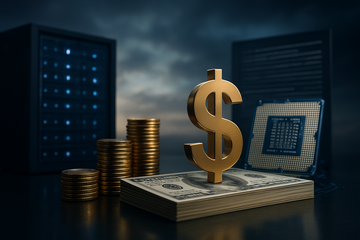
Anthropic Now Sets the Funding Cost of Frontier Compute — And It's 10%
Anthropic is paying Blackstone above 10% on a $9 billion junior slice of a $60 billion Broadcom-arranged debt package that funds ~1.5 gigawatts of Google TPUs. The structure inverts who absorbs funding risk in AI infrastructure, swaps [Anthropic]'s $2 trillion S-1 from a revenue-curve debate into a funding-cost debate, and tells a hard story for NVIDIA, CoreWeave and every vendor that still underwrites AI lab compute on its own balance sheet.
BNY's $92M of Securities-Lending Fees Just Named the 'AI Cash Drag's Real Address
Bank of New York Mellon's Q3 2026 print — $5.68B revenue, $2.37 adjusted EPS, both ahead — wasn't built on AI hype; it was built on the cash that hyperscalers can't yet spend. Securities-lending revenue jumped ~48% YoY on $630B of client securities on loan, and the Securities Services segment booked $1B of pretax income at a 36% margin. With hyperscaler capex on pace for $610B–$760B in 2026 and free cash flow turning negative, BNY's custody books are the cleanest gauge of where the AI capex pile is actually parked and earning — putting the lie to the idle-cash narrative and giving read-throughs to State Street, Northern Trust, and BlackRock's cash-management complex.
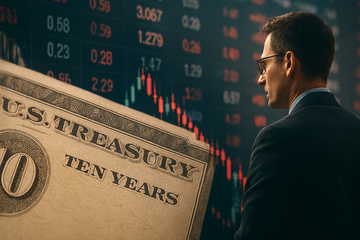
Treasuries Just Did Their Oldest Job for the First Time in Months — Skiba Names the Bond-Equity Divorce the Tape Has Been Hiding
On October 16, RBC Global Asset Management's Andrzej Skiba told CNBC that bonds had finally performed their safe-haven function — rallying into a weaker tape for the first time in months. The move came only after a $2 trillion chip rout finally did what BlackRock CEO Scott Bessent's $4 billion Treasury buyback couldn't: pull 10-year yields back from 5.36% to 5.08%. With the SPDR S&P 500 ETF Trust +14% YTD but four in ten names in the red, the equity risk premium below zero, and the bond-equity correlation plumbing a 15-year trough, the long-promised rotation from passive equity into Treasuries just got its first real print — and the listed names most exposed to it sit on both sides of the trade.
IBKR's Q3: Customer Margin Loans Surged 36% Right Before the AI Rout Tested Them
Interactive Brokers reported Oct. 15 with customer margin loans up 36% year-over-year to $105.2 billion and management calling the posture \"risk-on\" — then the next session's Nasdaq 2.14% slide, with CoreWeave down 12%, became the first live test of that leverage book. Net interest income climbed 19% to $1.15 billion on a still-widening balance sheet, but stock volume fell 24% and annualized DARTs per account slid 14% — so the gains came from heavier bets on fewer trading days, not more activity. The Oct. 27 Robinhood print is the next retail-only window; until then, IBKR's Q3 is the only broker-released snapshot of what retail was holding when the AI trade broke.

JBHT Beat the Print, Lost the Margin: Intermodal Proves Demand Is Alive — and Costs Are Eating It
J.B. Hunt's Q3 2026 print validates the 'diesel, not demand' thesis that crashed the stock 13% on Sept. 16: revenue beat by 3%, intermodal volume jumped 8% with Eastern loads up 18%, and management now says demand is outpacing capacity. But $50M+ of sequential cost pressure — driver, fuel, and claims — clipped operating margin to 6.7% from 7.9%, and the stock still slid 4% after-hours. With Aurora's Oct. 7 FMCSA exemption now in force and UPS, ODFL, CSX, and UNP all printing in the next two weeks, this bellwether re-prices the truck-rail-modal fight before autonomous trucks go mainstream.
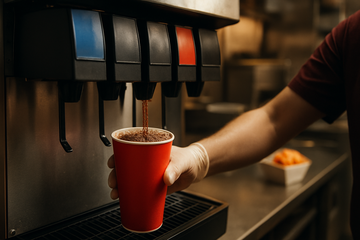
KFC's Coca-Cola Switch Costs PepsiCo $50M-$500M. The Read-Through Is the Trade.
KFC ended a 40-year fountain monopoly on Oct 15, 2026, but analyst estimates put PepsiCo's direct revenue hit at 0.2%-3% of segment sales. The investable question: does Coca-Cola's win crack PepsiCo's other restaurant accounts, or does Yum Brands' parallel 10-year Taco Bell renewal prove the lock-in is more durable than the headline?
Morgan Stanley's Moog Upgrade Is a Bet That Pentagon Ramp and AI-Cooling Pumps Are Both Here to Stay
Moog's fiscal Q3 2026 print delivered record $1.12B revenue and a 23% jump in 12-month backlog to $3.3B, but almost all the headline margin expansion came from a $30M tariff-refund one-off. The cleaner story is segment-level: the Industrial unit's 18% growth is now powered by data-center liquid-cooling pumps that quadrupled from roughly $25M to $100M in a year — anchored to one hyperscaler through two CDU partners. Morgan Stanley's Oct 16 Overweight upgrade, with a $448 price target lifted from $405, sits on top of the backlog ramp from missile-control programs like Lockheed Martin's $53.9B PAC-3 contract. The investment question is whether a stock at ~32x forward earnings has already priced in both tailwinds, or whether one hyperscale customer concentration is the real risk.
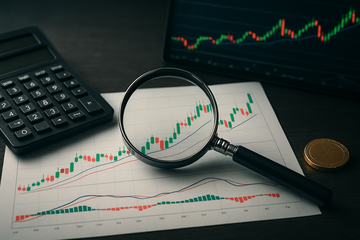
$325 Is the Line: Why JPMorgan Just Became the Cleanest Non-AI Breakout in the Market
CNBC's Jay Woods pinned JPMorgan Chase as the breakout candidate for the week ahead — and the call has nothing to do with Mag-7 derating. The chart is coiled above the 2026 AVWAP with a bullish MACD crossover and RSI divergence, while a Q3 print that missed headline EPS still grew managed revenue 8% and prompted management to raise full-year net interest income guidance to roughly $106 billion. In a market where energy is up 51% YTD and financials are the cheapest they have been in years, the cleanest expression of the rotation is the largest U.S. bank.
October NY Fed Survey Locks In The 'Stagflation Lite' Setup — And Citi's December Hike Is Now Consensus
The Federal Reserve Bank of New York's October Business Leaders Survey, released October 16, 2026, is the first hard regional print to confirm both halves of the September inflation story: service-sector activity collapsed to -20.7 while the prices-paid index held near 70 and prices-received hit the fastest pace since 2022. The combination validates Citigroup's October 14 flip from no-change to a 25bps December rate hike, and pushes the bar for the Federal Reserve to stay restrictive higher. For investors, that pressures rate-sensitive REITs like Realty Income and Simon Property Group, pressures services-exposed names like Marriott, Hilton and Booking, while favoring net interest margin plays like JPMorgan Chase, Bank of America and Citigroup.

ChatGPT's 1.2B users now sit above the app store, the search ad market, and the AI cloud — that is the gatekeeper math the $1.2T OpenAI round priced
OpenAI's GPT-6 + Intelligent UI launch on Oct. 7, 2026 turns ChatGPT into the distribution surface every app, ad network, and model vendor must reach — and that 1.2B-weekly-user funnel is what the $1.2T pre-IPO round is paying for. With annualized revenue approaching $50B, ChatGPT Ads already at a $1B run rate in 200 days, and Microsoft disclosing $24.1B of FY26 revenue tied directly to OpenAI, the moat is no longer the model — it is the interface that reroutes economics for [Microsoft], [Alphabet], [Apple], [Amazon], and [NVIDIA] simultaneously.

Replit Just Quit Anthropic — The First Dev-Stack Defection Tests a $965B IPO Thesis
Replit CEO Amjad Masad said on Oct. 16, 2026 that the platform is no longer working with Anthropic, citing cost, performance, and partnership — a move made weeks after OpenAI became its default model and Microsoft Fabric its enterprise gateway. The defection lands the same week Anthropic is racing toward a $965B post-money valuation, 80%+ enterprise/API revenue mix, and a confidential IPO filing; it is also the second high-profile dev-stack exit from a frontier lab in two months, after OpenAI cut Cursor on Nov. 12, 2026. The investor takeaway: distribution gatekeepers — Replit, Cursor, Vercel — are now the binding constraint on Anthropic's lock-in thesis, and the upside accrues to the listed names that own those workflows: Microsoft, Alphabet, Amazon, and NVIDIA.
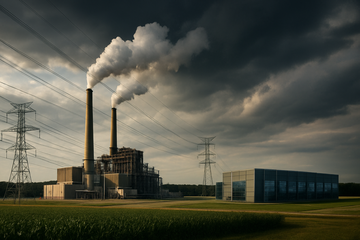
$3.3B USDA Loan to a Georgia Co-op Just Wired Rural America Into the AI Power Grid
USDA's record $3.3 billion Rural Utilities Service loan to Oglethorpe Power — a nonprofit serving 38 Georgia electric co-ops — is the first federal rural-utility financing formally tied to data-center load growth. With Google's 948-acre Monroe County site adjacent to the new 1,425 MW Smarr plant and GE Vernova sitting on a $176B backlog, the deal pulls the rural co-op stack off the agricultural sidelines and into the AI buildout — and puts Vistra, Constellation Energy, and Quanta Services on collision course with Southern Company for the next dollar of load growth.

SoftBank's $18B Allied Universal Bid Stretches an Already AI-Loaded Balance Sheet
SoftBank Group is weighing a roughly $18B equity / up to $30B enterprise-value check for Allied Universal, the third-largest private employer in North America, with ~$23B in revenue and ~800,000 guards. The strategic pitch — AI-driven security robotics and data-center guarding — is credible; the price tag lands on a balance sheet that just absorbed another $20B of OpenAI-related borrowings and pushed Q1 FY2026 net debt to ¥24.1T. SoftBank Group Corp shares fell 8.3% on the news, the market's first verdict that even Japan strategic capital has to defend a1.3x-sales price for a labor-heavy service franchise.
Tesla's Biggest California FSD Class Just Died at the Ninth Circuit — But the Memo Is Unpublished, and Three Cases Stay Live
A three-judge panel vacated class certification in LoSavio v. Tesla on October 16, 2026 — but the slip opinion is an unpublished memorandum, not citable as Ninth Circuit precedent. Tesla's $243M Benavides punitive-damages appeal at the Eleventh Circuit, a fresh Waller hardware suit, and a W.D. Texas securities class action remain active. The Cybercab reserve math moves on the margin, not on the merits.
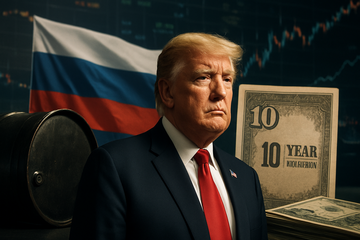
Trump Waived His Own Russia Sanctions Bill. The Bond Market Hasn't Blinked.
Twenty-eight days after signing the Lindsey O. Graham Sanctioning Russia and Iran Act of 2026 into law, President Trump used Section 115 to suspend its 500% tariff on Russian goods and the 100% secondary tariffs on India and China two days before they took effect. The Russian 10-year OFZ yield sat at 16.63% on Oct. 17 — barely moved; the U.S. 10-year Treasury drifted lower; Brent crude printed a five-month high near $110. Markets are treating the waiver as reversible political theater, not a regime change. The trade implication: fade any \"Russia relief\" theme until the EU's parallel tightening — 1,569 new listings adopted Oct. 12 and a unanimous Oct. 15–16 summit rejection of a U.S. proposal to unfreeze €260 billion in Russian sovereign assets — gets fully priced.

Trump's Loan Cap Pushed Grad Students Into 16% Private Debt — Sallie Mae and Capital One Are on Opposite Sides
The One Big Beautiful Bill Act capped federal graduate and professional borrowing on July 1, 2026, pushing a generation of med-school, law-school, and doctoral students into private credit at double-digit rates — and former U.S. Bankruptcy Judge Sarah Sharer Curley is warning that personal filings will rise as a result. The trade splits cleanly across sectors: Sallie Mae and SoFi collect the displaced demand at high yields, while Capital One and Synchrony Financial carry the most direct exposure if those borrowers convert to credit-card stress. Bankruptcy filings are already up 12.2% over the trailing year on Administrative Office of the U.S. Courts data — the OBBBA cohort has not yet started defaulting.

Mastercard and Citigroup went from 'ask' to 'demand' in Bangkok — the $290B cross-border fight is now a Trump–Xi deliverable
On Oct 16, 2026, U.S. Treasury Deputy Secretary Francis Brooke pressed the PBOC and China's finance ministry in Bangkok for Mastercard independent domestic clearing status and Citigroup approval for a wholly-owned China securities license — both framed as deliverables from Xi Jinping's late-September Washington visit, not favors. The push follows the Oct 13 PBOC 'Application to Prepare' for Visa and converts a long-running market-access complaint into a line-item in the bilateral trade ledger. Investors should treat Mastercard and Citigroup as the two cleanest beneficiaries — Visa is now the template — while American Express loses first-mover insulation and Chinese incumbents like CITIC Securities absorb the first wave of new foreign competition in onshore underwriting and principal trading.
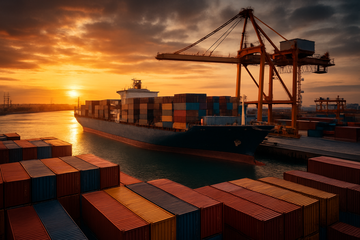
U.S. Import Prices Just Printed an 8.1% Annual Climb — And That's Before Tariffs
The BLS Import Price Index rose 1.1% MoM and 8.1% YoY in September 2026, the largest 12-month gain since July 2022. But the BLS series excludes tariffs — and with an effective U.S. tariff rate of 7–10%, the all-in landed-cost inflation running into retail shelves is closer to 15–19% YoY. Q2/Q3 corporate margins were padded by Supreme Court-ordered IEEPA refunds; Q4 guidance will not be.

A 100-mph Starlink curb cut Ukraine's drone wing — and SpaceX's $6B Starshield pipeline is the next collateral
On the night of October 14, 2026, SpaceX throttled Starshield connectivity for Ukrainian military terminals traveling above 100 mph — Reuters reports the order came from inside the White House. The curb degraded Kyiv's deep-strike drones and Shahed interceptions during Russia's largest barrage of the war, and a bipartisan Senate letter is now asking the Pentagon inspector general to investigate. For SpaceX, the takeaway is uncomfortable: a Starlink network that can win a $6B Starshield backlog in a single quarter can also be switched off by politicians — and airlines, allied militaries, and Starlink's India bid all sit on the same kill switch.
2026-10-16
What to expect
Evidence-first notes with a visible point of view.
This section collects sharp takes on earnings, shareholder meetings, and market structure. Each new piece should make the thesis, the facts, and the implications obvious within the first few screens.
Expect direct analysis, not generic commentary.
Expect the data to be explicit and the argument to be easy to follow.