Latest
The day's market news, with the argument attached
New notes every trading day on earnings, policy and market structure. Each one opens with the conclusion, then the evidence, then the companies it hits.
2026-10-19


The Dumb-TV Rebellion Hits Where Roku's 90% Platform Revenue Lives
Consumers are using AI agents to strip ads, ACR tracking, and bloatware from Roku, Amazon Fire TV, and Alphabet Google TV devices — threatening the connected-TV ad model that delivered 90% of Roku's Q2 2026 revenue ($1.22B of $1.35B). Texas has already forced Samsung Electronics and LG Electronics to halt ACR without express consent, and open-source projects like 'dumbtv' and 'cleanyourtv' are packaging the work into one-click tools. The investor question is which platform's revenue mix is most exposed — and the answer is Roku, by a wide margin.

A $55M Startup Just Matched GPT-6 Astra on Vision at 6% of the Price — And It's Built by the People Who Trained Gemini
On October 16, 2026, Elorian shipped Glimpse, a visual reasoning model that beats OpenAI's GPT-6 Astra on four of six frontier benchmarks while charging $0.60 / $3 per million tokens — 94% below Astra, 85% below Anthropic's Claude Opus 5.5, and 20% below Alphabet's Gemini 3.8 Flash. The startup is led by ex-Google DeepMind Gemini data lead Andrew Dai and ex-Apple multimodal chief Yinfei Yang, post-trained on an open-weights base model with a few hundred GPUs, and funded by NVIDIA, Menlo Ventures, Striker Ventures, Altimeter and Jeff Dean. The launch proves that the frontier multimodal moat is no longer compute — it's people — and it forces a repricing of every vision-API contract struck since GPT-6 Astra shipped September 3.

Europe Refused to Join Trump's Russia Sanctions Coalition — Bessent's 60-Day Review Is the Loudest Admission Yet That the US Trade Weapon Is Broken
US Treasury Secretary Scott Bessent confirmed that European allies refused to impose secondary tariffs on India and China over Russian oil purchases, and Secretary of State Marco Rubio said the president will use up to 60 days to assess the global impact of the Oct 16 Graham Act waiver. With Brussels, London, and the EU's largest Russian-energy buyers aligned against the US, the secondary-tariff lever now requires unilateral American enforcement — and Indian and Chinese refiners just got a 60-day green light to keep buying discounted Urals.

FITB's First Post-Comerica Print Pits a 3.40% NIM Ambition Against Warsh's 5.36% Yield Curve
Fifth Third leads off regional-bank Q3 2026 earnings pre-market today under Chair Kevin Warsh's hawkish Fed and a 10-year still sitting inside 30 basis points of its October 5.36% peak, testing whether a $300 billion Midwestern regional can push NIM toward management's 3.40% target even as PNC's latest print showed two basis points of margin compression. With $850 million of targeted Comerica cost synergies already flowing, Texas deposits building, and the December FOMC pricing roughly a 74% hike probability, the release decides whether the regional complex derates or re-rates into a 2027 the Fed may still be tightening.

IBM's Q3 Print Has to Reconcile 'AI Budget Routing' With $13.6B of Free Cash Flow
IBM reports Q3 FY2026 on Oct 21 with consensus at $16.84B revenue and $2.87 adjusted EPS — a modest 3.1% top-line print after a Q2 that triggered a record 25% single-day stock crash on a 42% IBM Z revenue collapse. The bull case is that enterprise services and the z17 mainframe refresh are absorbing AI budgets customers are rerouting from traditional software; the cash flow reality is $13.63B in trailing free cash flow and management's reaffirmed full-year FCF target of roughly +$1B year-over-year. The print decides which version of IBM investors own: a slow-decay mainframe story trading near 15x trailing FCF, or an AI services platform with a compounding FCF trajectory.

JPMorgan just turned 50% of its defense equity war chest into deals — the deposit-taker is now the Pentagon's banker of first resort
One year in, JPMorgan has spent $5B of the $10B direct-equity ceiling inside its Security and Resiliency Initiative — co-leading Shield AI's $2B Series G and Castelion's $1.05B Series C, anchoring Perpetua Resources, and pulling MP Materials into a DoD-style public-private structure. The bank is converting its $4.4T deposit base and balance sheet into a matchmaker for defense-tech capital flows, reframing Lockheed Martin, Northrop Grumman, RTX, and the critical-minerals supply chain as downstream beneficiaries of a credit pipeline Wall Street has avoided for two generations.

Laplace Intelligence makes physical-AI safety a venture line — and forces NVIDIA, CrowdStrike and Palo Alto Networks to decide who owns it
A profitable University of Michigan spinout is selling automated red-teaming for robots and self-driving cars — a layer that sits between NVIDIA's Halos safety stack and the runtime-agent products CrowdStrike, Palo Alto Networks and Zscaler already ship. With ABI projecting 49M L3–5 AVs and Omdia 60M industrial robots by 2035, the validation piece is becoming its own market. Investors who treat this as 'just an AI safety startup' miss the trade: Laplace's Cosmos-based simulation is a high-margin adjacency to NVIDIA's automotive segment, and it is one quarter of revenue from being either acquired or absorbed.
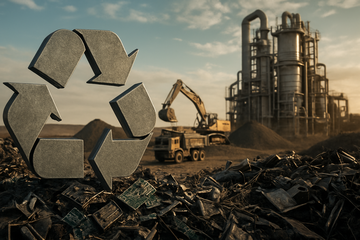
Rare-Earth Recycling Just Got Its First US SPAC — HyProMag's Listing Could Be the Sequel
Three rare-earth and critical-minerals SPACs are racing to a US tape right as China tightens its grip and Washington opens the wallet. Hall Chadwick's REEcycle deal has already signed to claim the first US-listed pure-play rare-earth recycler; Kensington Capital's Nth Cycle follows at a $585M enterprise value; and Mkango's Songwe/Pulawy mining cousin is in registration under the MKAR ticker. HyProMag USA, the recycling vehicle the original brief focused on, is still pre-deal — its announced strategic review points to a late-2026 or early-2027 listing after Texas hub construction milestones, not a wrap on a SPAC today.

Musk's $10.5B SpaceX-to-Every-Kid Pledge Is a Three-Wire Risk: Float, Votes, and the Trump Accounts Lifeline
Elon Musk's Oct 19 promise of one SpaceX share to every U.S. child in 2027 — roughly 73 million shares at the Oct 17 close of $146.03, worth ~$10.5B — tests more than philanthropy. The gift coincides with Anthropic's 5% public-benefit pledge, uses a Trump-administration distribution channel Musk already seeded, and may force Musk's supervoting Class B to convert to Class A on transfer, trimming the ~85% voting block he holds under SpaceX's super-voting charter. For Tesla holders facing a possible merger announcement before December, the real question is whether the pledge is signal, branding, or the first move of a broader Musk wealth-redistribution plan.
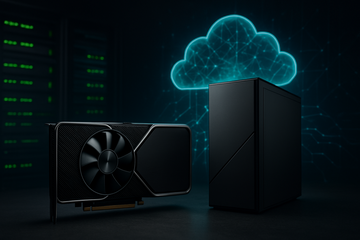
Nvidia Just Gave The Cloud‑vs‑On‑Device Inference Trade A New Anchor — Open Weights, Same Day, Both Ends Of The Stack
NVIDIA shipped open‑weight agent models on Oct 15, 2026 — Nemotron 3.5 Super VL (120B) for enterprise servers and Nemotron 3.5 Bolt for RTX Spark PCs — and three days later Microsoft, Dell, Lenovo and HP began moving that same stack onto desktops starting at $2,599.99. The combined move gives investors a hard anchor for the cloud‑vs‑on‑device inference trade: on‑premises GenAI already runs 4–17× cheaper than frontier APIs at high utilization, and Bolt‑sized models now run entirely inside a GeForce RTX box. The moat is software — NVIDIA's $4,500/GPU‑year AI Enterprise license, NIM and Dynamo — sold on commodity‑adjacent edge silicon.
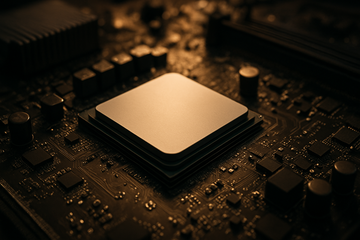
Modal Just Made Nvidia's Vera CPU the Default for AI Agents — and Took That Seat From AMD and Intel
Modal, the $15.75 billion inference neocloud whose sandboxes run agent workloads for Anthropic, Meta, DoorDash and Cognition, said Monday it will start hosting AI agents on Nvidia's Vera CPU after early tests showed the chip doubling throughput over comparable x86. The deal pulls a 100% Intel-and-AMD CPU fleet into a mixed architecture and puts a real reference customer behind Nvidia's $20 billion Vera revenue target for the fiscal year ending January 2027 — pressuring AMD's grip on neocloud CPU shelf space and validating Arm-based silicon as the third rail of the AI data center.

Three Earnings, One Verdict: AI Capex Will Decide Whether This Week's Beats Actually Matter
Tesla, Netflix and American Express all have clean fundamental stories to tell in the week of Oct. 20 — but the multiple-expansion trade they need is hostage to hyperscaler commentary on Oct. 28–29. After Alphabet raised its 2026 capex guide to $195–$205B in July and saw its stock sold off 5%, the market has a template: a clean consumer beat can still be punished if Microsoft, Alphabet and Amazon re-accelerate infrastructure spend while the 10-year Treasury sits at 5.09%.

Qualcomm Pitches Agentic AI to Smartphones. Smartphones Aren't Buying — Memory Suppliers Are
Qualcomm shipped its most ambitious smartphone silicon ever on Sep 22 — the first mobile CPU to break 5GHz, a 2nm Hexagon NPU 35% faster than its predecessor, and an explicit 'agentic AI' pitch. Four weeks later the same company is staring at a smartphone market that just printed its worst quarter in 14 years: Counterpoint counts global unit shipments -20% YoY in Q3 2026, the steepest decline since 2012, with ASPs up roughly 20% on memory costs. The suppliers cashing in on that squeeze are not chip designers — they are the memory vendors behind it, with Samsung Electronics guiding to a record $80B operating profit, Micron Technology posting 379% revenue growth, and SK Hynix riding a near-pure memory upcycle.

$108 Diesel Crack, Then a Waiver: The Refining Trade Meets Its October 22 Reckoning
Trump's Oct. 16 executive order waived the sanctions that kept Russian diesel out of global markets — but Russian refineries, damaged by Ukrainian strikes, cap actual flows near 100,000 bpd. Valero, Marathon Petroleum and Phillips 66 are sitting on a Gulf Coast diesel crack spread at $108/bbl, the 99th-percentile reading on a 40-year chart, and start reporting Q3 earnings on Oct. 22. The supply-shock premium that supported their multiples was priced on an assumption the White House just revoked.

Tesla's Q3 is the capex receipt Musk has to honor — and the SpaceX merger is the fallback he's keeping warm
Tesla reports Q3 2026 on Wednesday after the bell with the Street expecting ~$27.8B in revenue and ~$0.30 in EPS, but the print only matters as the first public test of Musk's $25B+ AI capex plan, which already pushed Q2 to a $1.1B free-cash-flow burn. After Barclays reactivated the TSLA-SpaceX merger timeline on Oct 14 — with a Dec 6 AGM finish line — the merger has stopped being gossip and started being the funding fallback if Cybercab revenue and Terafab capacity don't arrive on time. Investors should watch three numbers Wednesday: free cash flow, the [SPCX] mark-to-market swing on Tesla's $2B stake, and any shift in capex guidance toward the $30B credit lines Reuters confirmed on Sept 29.

TriGemX's $160M PIPE Pits a TRPM8 Pill Against AbbVie's $742M Migraine Franchise — and the Phase 2b Miss Won't Go Away
TriGemX Bio (formerly Kallyope) is taking a Phase 3 TRPM8 migraine drug public through a SPAC merger with TCGX Acquisition Corp, locking in ~$246M of gross proceeds and a ~$600M pro-forma EV under the new TriGemX Bio ticker on Nasdaq. The thesis hinges on elismetrep clearing AbbVie's $742M Q2 2026 migraine franchise with a triptan-resistant mechanism no CGRP inhibitor has touched — but the Phase 2b primary endpoint already missed conventional significance at P=0.0650, and the $160M PIPE runs straight into a mid-2027 readout. The PIPE itself is the real signal: anchored by TCG Crossover Fund III (the SPAC sponsor's own affiliate), with The Column Group and Viking Global Investors repeating from the $94M crossover round — a quality of money that says this is a thesis bet, not a momentum trade.

Trump Endorsed a $3.47 Gas Chain. It's Now Sued Over $4M of Allegedly Stolen Fuel — and Station Stocks Can't Hide
On October 18, 2026, Politico Magazine published the definitive account of how President Trump's promotion of the 'Freedom Fuel Network' — 25 stations selling gasoline at $3.47 per gallon — sits atop a federal lawsuit in which Mansfield Oil alleges a Kazmi-controlled distributor lifted ~1.1 million gallons (~ $4 million) from a Sunoco-operated Pennsylvania terminal without paying, allegedly redirecting that fuel into the chain at promotional prices. The story creates a self-incriminating record for retail station operators at exactly the moment a DOJ/FTC price-gouging probe is live, U.S. diesel hit a record $118/bbl crack spread, and Trump's October 16 waiver of Russia sanctions threatens to compress the refiner margins that funded the run-up in the first place. For investors, the cleanest expression sits in small-cap station operators (Murphy USA, ARKO), fuel distributors (Sunoco LP), and refiner exposure (Valero, PBF Energy), with the terminal owner Energy Transfer as the upstream touchpoint.
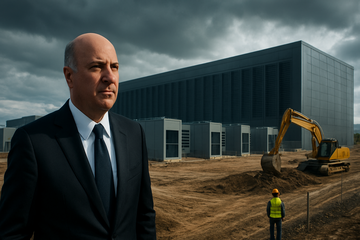
Kevin O'Leary is building the world's biggest data center. He just said 60-65% of them will never get built.
Kevin O'Leary — the Shark Tank 'Mr. Wonderful' who is racing to build a 40,000-acre Utah AI campus named after himself — went on MarketBeat on October 16 and said 60-65% of announced North American data center projects will never reach operations, killed by missing water, fiber, or power, or by political moratorium. Compute demand, in his telling, is roughly 3x available capacity. The warning lands in the middle of a $740B 2026 hyperscaler AI capex year, and splits the supply chain into clear winners (power, compute, real estate that has already broken ground) and clear losers (data center REITs exposed to speculative projects that will never energize).
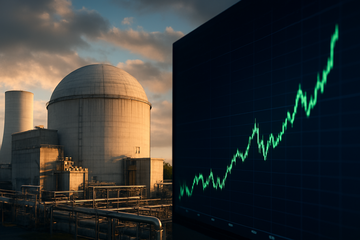
X-energy's 960-MW Indiana pact snaps a 50% 30-day slide — and finally gives the AI-nuclear trade a tradable small-cap ticker
On Oct. 19, 2026, X-energy, Amazon, and American Electric Power signed a joint development agreement to evaluate a 12-unit, 960-MW Xe-100 plant at the retired Breed coal site in Sullivan County, Indiana — Amazon's second offtake with X-energy in eight weeks and the catalyst that lifted XE ~12% in pre-market to $16.33. The trade matters because the small-cap pure-play had been routed: shares fell from $20.46 on Sept. 17 to $10.36 on Oct. 16, ~50% in30 days, and the stock now trades at 56% of cash per share with insiders holding 75%. Investors are no longer pricing a reactor developer; they're pricing a balance sheet with optionality on a hyperscaler queue.
2026-10-18

What to expect
Evidence-first notes with a visible point of view.
This section collects sharp takes on earnings, shareholder meetings, and market structure. Each new piece should make the thesis, the facts, and the implications obvious within the first few screens.
Expect direct analysis, not generic commentary.
Expect the data to be explicit and the argument to be easy to follow.