Latest
The day's market news, with the argument attached
New notes every trading day on earnings, policy and market structure. Each one opens with the conclusion, then the evidence, then the companies it hits.
2026-10-12


Aon Just Told Wall Street Its M&A Business Flipped. The Quiet Map for the AI Deal Spree Is Willis Towers Watson, Aon plc, and Marsh & McLennan.
Aon plc told investors on its Q2 2026 call that M&A services had shifted from a Q2 headwind to a H2 tailwind, with announced transactions up more than 60% year over year. The same deal wave is feeding Willis Towers Watson's franchise growth and underwriting fresh off Marsh & McLennan's record $91.6 billion in 2025 transactional risk limits placed — meaning the AI deal economy is quietly lifting three old-line insurance brokers whose Wall Street narrative still runs on rate cycles and Insurify disruption.

Amazon's $7B Decart bid moves the AI inference moat from a private-lab capex line to a public hyperscaler — Anthropic's $2T IPO just lost its efficiency story
Amazon is in talks to acquire Decart for around $7B, per the WSJ, after Anthropic walked away from a $6B offer in September following due diligence. The price — a 75% markup on Decart's $4B private mark in May — reprices the inference-efficiency software layer at a moment when AWS is the only hyperscaler to own both the silicon (Trainium3) and the optimizer. For Amazon, $7B is rounding error against a $2.8T market cap and a Q2 2026 quarter that produced $42.2B in AWS revenue. For Anthropic, the asset that would have anchored its pre-IPO compute-cost narrative now ships to the buyer whose chips Anthropic has already committed 5GW and 1 million Trainium2 units to — a costly structural inversion ahead of an October listing that wants a $2T valuation on $4.6B of 2025 revenue.

Amphenol's Oct 28 Print Is the First Live Read on AI Rack-IO Pricing Power
Sixteen days from now, Amphenol reports Q3 2026 with a setup no other interconnect name has matched: a 43% IT-datacom mix, a freshly-closed CommScope CCS acquisition layering $4B of run-rate sales, and a 2-for-1 stock split executed September 3. The Q3 print is the first public test of whether NVIDIA Blackwell NVL72 deployments are still pulling the 224G connector market tight enough to fund mid-30s operating margins — and whether TE Connectivity is the only real listed hedge for investors worried about a 7.9x EV/sales multiple on a $215B market cap.
Anthropic just stacked three federal AI wins in 72 hours — the procurement tell nobody is pricing in
Between Oct. 6 and Oct. 8, 2026, Anthropic launched an expanded three-tier Cyber Verification Program, stood up the new Anthropic Cyber Mission with eleven security partners targeting power-grid and water-utility OT, and committed $150 million of Claude access over three years to the federal Genesis Mission consortium — a clustered move seven weeks after a federal judge struck the Pentagon's \"supply chain risk\" label on the company. The sequence maps a deliberate re-entry into federal civilian and cyber verticals through channels the FASCSA blacklisting cannot reach, and it names the same upstream and downstream listed winners every prior federal-AI contract has funneled through: NVIDIA and AMD on compute, Alphabet on model layer, Palantir on distribution, CoreWeave on GPU infrastructure, and CrowdStrike plus Palo Alto Networks on cyber.
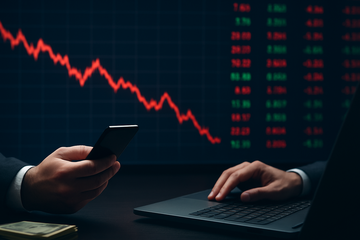
Anthropic's Cyber Mission Names Eleven Vendors — and the Oct. 8 Stock Dip Got the Story Backwards
Anthropic's Oct. 8 Cyber Mission launched a Critical Infrastructure Defense Program with eleven founding partners — six listed: CrowdStrike, Palo Alto Networks, Booz Allen Hamilton, Accenture, Hitachi and Rockwell Automation. Cyber stocks dipped on the announcement in line with a year-long pattern of AI-driven sell-offs, but the partner list shows the AI lab is now routing Claude distribution through the listed vendors — embedding them in federal-OT deployments rather than replacing them. With Anthropic shut out of military work but still targeting civilian federal agencies, the right read is which of the named partners actually owns the federal-OT channel.

Anthropic's Haiku 5.5 Drops Sub-Frontier Pricing 90% — and Reorders the $518B Compute Stack
Claude Haiku 5.5, released October 7, 2026, matches OpenAI's GPT-6 Luna on per-token price at $0.10/$0.50 but uses three times more tokens per task, anchoring Anthropic's three-tier $0.10–$20 stack ahead of a reported $2 trillion November IPO. The fivefold step-up at the 100,000-token context boundary turns the volume tier into a profit-pool lever rather than a giveaway. Hyperscalers and silicon suppliers holding Anthropic's $518 billion in committed cloud and infrastructure spend — Amazon, Alphabet, Microsoft, Broadcom, CoreWeave, and NVIDIA — absorb the resulting utilization wave.

Anthropic just locked Claude's rules before the $2T S-1 — Palo Alto Networks, Okta and Zscaler are already inside the moat
Anthropic published a 2026 Usage Policy update on Oct. 8 — effective Nov. 12 — that renames its election rule to 'Do Not Undermine Democratic Processes,' bans 'sustained and needless abusive or cruel behavior' toward Claude, and adds weapons-software and surveillance lines. The timing lands six weeks after a leaked S-1 draft warned of 'catastrophic or existential risks' and 'self-preserving behaviors' in advanced models, and three weeks after the S-1 AI-rogue-agent legal-risk story broke. The public companies that already monetized the same thesis — Palo Alto Networks via Protect AI ($634.5M), Check Point via Lakera ($190M), F5 via CalypsoAI ($145.2M), Okta via Okta for AI Agents (GA Apr. 30, 2026), Zscaler via Symmetry Systems — sit closest to the safety line item that Anthropic now has to defend in front of public-market investors.
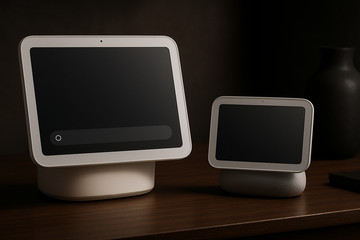
HomeView at $350 versus $99 Nest Hubs — Apple's real smart-home edge isn't the display, it's the 1.5B-device moat
Apple unveils HomeView on October 13, 2026 — a Siri-powered A18 smart-home hub starting near $350, two to four times the price of Amazon's Echo Show 8 and Google's Nest Hub. The premium mirrors the gravity: Apple's installed base, services stack, and TSMC-built silicon give it a different route into the smart home than Google Assistant or Alexa. Investors should weigh the unit-cost hit against the services-revenue pull-through — and watch Siri AI closely, because the same delays that pushed HomeView twice in 18 months could still define whether the thesis works.

Arena's $3.1B tag prices the AI evaluation layer — now follow the dollars to public companies
On October 8, 2026, Arena — formerly LMArena — closed a $200M Series B at a $3.1B valuation, 1.82× its $1.7B Series A nine months earlier and roughly 15.5× its $200M annualized run-rate. Co-led by Lightspeed and Khosla Ventures, with Salesforce Ventures, Dell Technologies Capital, a16z, and Felicis on the cap table, it is the first independent market price on third-party AI evaluation. As the leaderboard turns into enterprise infrastructure, the spend flows up to the NVIDIA-anchored compute backbone — through CoreWeave, whose $104B contracted backlog now bookends the demand — down to the AI platforms that act on the score (Salesforce, ServiceNow, Palantir), and out through the system integrators that turn rankings into deployments (Accenture). Three layers of public upside before the eval call itself.
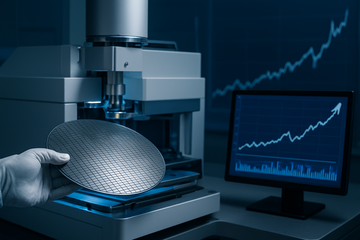
ASML Prints Into a Tape That Already Won: Q3 Needs to Show 2027, Not Just Beat Q3
ASML reports Q3 2026 on Wednesday, Oct 14 — into a market that has already priced the win. The TAIEX closed at a record 49,712 on Oct 6, TSMC's US ADR is within 7% of its $485.80 all-time high, and ASML trades at 17.3x EV/sales with a €11-12 billion quarter already in its own guidance. The bar is no longer the print itself but what management says about 2027 — when easy year-on-year comparisons end, China exposure slips from 33% to ~20% of sales, and the rally must stand on its own.

AI's Two Trades: Coatue Spots a 405% vs. 2% Spread and Most Portfolios Aren't Hedging It
Since ChatGPT's launch on November 30, 2022, Goldman Sachs's AI Winners basket has compounded ~405% while its AI Losers basket is up just ~2%—a 403-point spread that Coatue Management's October 7, 2026 Public Markets Update puts at the center of its thesis. The dispersion isn't a tech-vs-everything story: it is a 12-name bifurcation between sellers of the AI shortage and old-line SaaS, and the absence of conviction on the loser side is the trade's biggest risk.
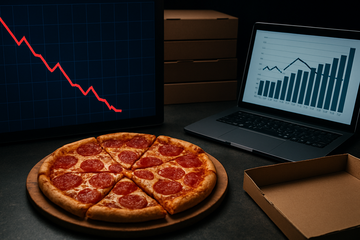
Domino's US Comp Has Collapsed 510 bps in 12 Months — Tuesday's Print Will Reveal If 0.1% Is a Trade-Down Ceiling or a Floor
Domino's reports Q3 FY26 pre-market Tuesday, October 13, with consensus at $4.33 EPS on ~$1.17B revenue — against a +5.2% Q3 FY25 comp juiced by the Best Deal Ever $9.99 promo. After three quarters of deceleration to +0.1% in Q2, the print is the live test of whether America's casual-dining trade-down extends into pizza or skips it, and the read cascades through McDonald's, Yum, Restaurant Brands, and the split-consumer thesis Walmart and Target already priced in. With cheese -16.7% YoY, digital at 50% of sales, and 7,231 US stores, operating leverage is intact — but US comp is the gate that decides whether Domino's is a value-priced trade-down winner or a casual-dining casualty.
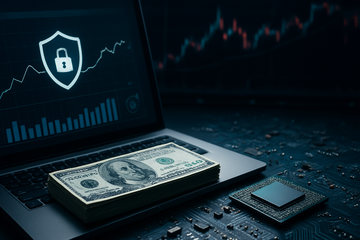
Inside-Out Monitors Cut Rogue-Agent Policing From $200,000 to $51 — Goodfire Just Repriced the Stack That CrowdStrike, Palo Alto and Akamai Are Counting On
On October 8, 2026, Goodfire pushed activation-probe monitors live on Baseten that watch a model's internal signals and only escalate to a frontier LLM judge when something looks wrong — taking monitoring cost from roughly $200,000 per million exchanges to about $185. The shift reframes the defensive moat CrowdStrike Charlotte AI, Palo Alto Networks Prisma AIRS, Akamai AgentGuard, and Cloudflare Workers were pricing against, and reroutes the AI-safety budget toward inference platforms and silicon-level runtimes like NVIDIA's Open Agent Safety Platform.

Google's $21 Gemini Agent Squeezes OpenAI's $60 ChatGPT Enterprise — and Hands Anthropic a Free Distribution Channel Before Its IPO
On October 8, 2026, Google launched a single universal Gemini agent for businesses, undercutting ChatGPT Enterprise by up to 65% on per-seat economics while quietly routing Anthropic's Claude through the same surface — compressing OpenAI's quote-only enterprise tier just as Anthropic prepares a $65B-run-rate IPO. Cloud demand is real: Alphabet's Q2 2026 Google Cloud revenue jumped 82% YoY to $24.8B with operating income tripling, and capex doubled to $44.9B. The investable read runs through Alphabet, Microsoft, NVIDIA, Salesforce, and ServiceNow — each positioned differently in a market where the 'agent' is becoming the new seat.

Anthropic Taps HCLTech as Its First Premier Partner That Resells Claude Inside Its Own $1.05B Software — Three Weeks Before the Reported $2T IPO
HCLTech and Anthropic announced a Global Premier Partnership on October 12, 2026 — and unlike the Accenture, Cognizant and TCS pacts that came before, it gives HCLSoftware ISV rights to embed Claude and Claude Code inside BigFix endpoint management and AppScan application security, adding a $1.05B-ARR SaaS channel to Anthropic's distribution just as the AI lab reportedly prepares a $2 trillion October IPO. With Anthropic Q2 2026 revenue at $11.6B (annualized $65B by July) and the broader Indian IT services complex now hosting three Global Premier partners, every US-listed peer in the AI services race — Accenture, Cognizant and IBM — gets a new benchmark for what 'premier' actually means.

IonQ's $1.3B Elisity Buy Funds Quantum's First Real Enterprise-IT Bid — but Investors Just Marked the Stock Down 9%
IonQ agreed on October 12, 2026 to acquire zero-trust microsegmentation vendor Elisity for up to $1.3B in stock, including as much as $150M tied to performance — the first concrete move to convert its Pentagon-aware quantum stack into a recurring enterprise cybersecurity book. The deal lands four days after Anthropic's Cyber Mission named 11 founding partners and on top of a July close of SkyWater, turning IonQ into the only vertically integrated US quantum-compute-plus-cyber platform. Shares fell roughly 9% on the day as investors weighed dilution against an undisclosed Elisity revenue base, and the bet now hinges on whether IonQ can monetize PQC and QKD into enterprise IT budgets before CrowdStrike, Palo Alto Networks, and IBM close the same door.

This Week's Bank Earnings Tell the Consumer Story Through Provisions, Not IB Fees
JPMorgan kicks off big-bank reporting Tuesday with Bank of America's 10% Q3 IB-fee warning already in the price; the asymmetric tell on whether the consumer is bending will sit in loan-loss provisions across the four largest reports, against a Fitch subprime auto ABS index still near 6.1% and a 10-year Treasury back above 5.2%. Jamie Dimon's just-sharpened corporate-credit warning makes reserve builds the new line of consequence — for the bank print itself and for Capital One and Synchrony on the consumer-finance side.

Three Bets Worth $173 Just Put Kalshi's $40 Billion Prediction Market on a Political Integrity Test
Three tiny trades that won roughly $9,600 on the surprise choice of Katie Zacharia as the next White House press secretary are the first insider-trading probe at a CFTC-licensed prediction market to touch a sitting administration's personnel decision. The investigation lands on Kalshi at exactly the moment it is pricing a $40 billion pre-IPO round, expanding into perpetual futures that already have CME Group suing the CFTC, and trying to position event contracts as the next institutional asset class. Investors should read this as the regulator's template for \"knowable markets\" - and a clean way to sort who benefits if integrity holds versus who breaks if it does not.
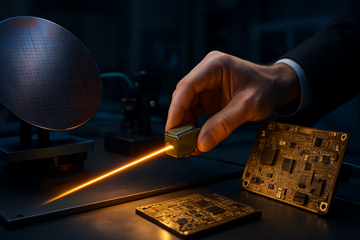
Lumentum Is Sold Out Through 2029. That Makes 1.6T Optical, Not Silicon, the AI Bottleneck
Lumentum CEO Michael Hurlston said the company is sold out of optical components through early 2029 and cannot meet ~70% of demand for some products next year — a hard ceiling on AI buildout that sits at the laser-fab layer, not the GPU layer. With hyperscalers planning $725B of 2026 capex and Citi forecasting an $11B optical switching market by 2030,1.6T optical has displaced silicon as the binding infrastructure constraint — and the second-order trade runs through Coherent, Zhongji Innolight, and the hyperscaler build-out side as they scramble for laser capacity.

The Memory Oligopoly's First Demand Casualty: Q3 2026's 20% Smartphone Crash Tests Apple's $100 Pricing Play
Global smartphone shipments fell 20% year-on-year in Q3 2026 to the lowest third-quarter level since 2012, with Xiaomi dropping more than 30% and Transsion Holdings sliding to a new share low. The cause is not weak demand in the abstract — it is a memory oligopoly (Samsung Electronics, SK Hynix, Micron) that has driven DRAM contract prices up 58–63% quarter-on-quarter in Q2 alone and is on track for a 130% surge by year-end, forcing ASPs 27.6% higher. The investor question is whether Apple's premium-mix escape route is holding: iPhone ASP climbed to $1,042 in the March quarter while units declined, but the company has already cut iPhone 17 production by 15% and guided Q4 FY2026 revenue growth to 9–11% — below consensus — as it prepares an iPhone 18 launch that adds another $100 to entry prices.
What to expect
Evidence-first notes with a visible point of view.
This section collects sharp takes on earnings, shareholder meetings, and market structure. Each new piece should make the thesis, the facts, and the implications obvious within the first few screens.
Expect direct analysis, not generic commentary.
Expect the data to be explicit and the argument to be easy to follow.