Latest
The day's market news, with the argument attached
New notes every trading day on earnings, policy and market structure. Each one opens with the conclusion, then the evidence, then the companies it hits.
2026-10-08


Google's Free SynthID Verifier Hands Regulators the Only AI Detector That Scales — And That's the Real Threat to OpenAI and Anthropic
Google opened its SynthID Detector to everyone on October 7, 2026 — no account, no fee, covering images, video, and audio from Google, OpenAI, NVIDIA, Kakao, and (soon) Apple, and already processing more than 1 million checks a day. The site gives creators a verification utility on the surface, but underneath it makes Alphabet's proprietary watermark the de facto plumbing for EU AI Act Article 50 compliance — leaving Anthropic's C2PA-only bet on the outside and turning Google's tool into a regulated free toll-booth. For the listed AI stack, the question is no longer whether AI content will be marked; it is whether the marker that survives a regulator's desk reads 'Google.'
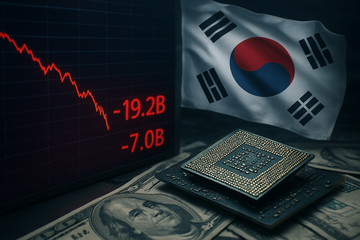
SK Hynix and Samsung Electronics Are Doing EM Flow Now — And September's $26.3B Outflow Says Korea Is the Bellwether, Not Brazil
Foreign investors yanked $26.3B out of emerging markets in September 2026, the first monthly outflow since June, with $19.2B — roughly three-quarters — coming from emerging-market equities and almost all of that traced to South Korea. A hawkish September FOMC hike from Chair Kevin Warsh reset the U.S. dollar cycle, blew out USD/KRW, and turned what had been a bond story into a direct equity-flow channel with single-stock consequences for Korean chip majors.

Healthleap's $38M AI Just Made Every Adult Inpatient a Daily Triage Decision — And UNH's 86.7% MCR, Epic's 43.7% EHR Grip, and the Nurse-Ratio Fight Are All Now on Notice
Healthleap closed a $38M round (Oct 7, 2026) on 50-hospital traction, with one Penn Medicine site alone producing $23.8M of annualized impact — 27% more severe-malnutrition diagnoses and 8,632 bed-days saved. The product writes daily nutrition-risk scores straight into the EHR flowsheet, sits upstream of CDI, and bills on a three-year, per-licensed-bed, outcome-based contract. For investors, the wedge is that frontline AI has stopped being a documentation tool: it now substitutes for the manual screening nurses used to do, funnels previously missed E43 claims into the $7,250-per-claim MCC bucket, and shortens the LOS that insurers like UnitedHealth, Elevance, and Humana pay for.
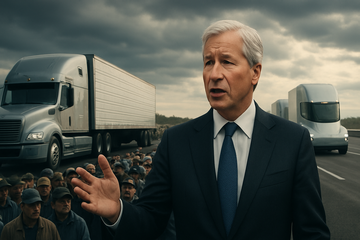
Dimon Put Numbers on the AI Labor Trade: $150K Truckers to $25K, and a 'Civil Unrest' Warning
On October 7, 2026, JPMorgan Chase CEO Jamie Dimon turned a Davos hypothetical into a market event: 2 million truckers making $150,000 falling to a $25,000 replacement job would, in his words, 'bring civil unrest.' That sentence lands in the same week the McKinsey Global Institute named transportation and logistics as one of three sectors absorbing three-quarters of all AI-driven occupational churn, the same month Aurora Innovation said it will exit 2026 with 200 fully driverless trucks, and against a backdrop of record diesel prices and a trucker base that just spent September flirting with an October 1 strike. For bond markets and the Fed, this is the moment a CEO-level 'phase it in' ask becomes a sectoral macro argument the labor-side inflation story can't ignore.
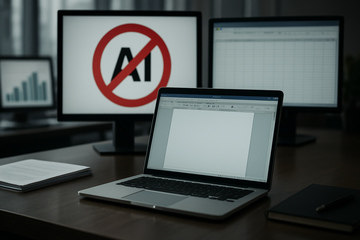
LibreOffice's 'No AI' Bet Just Crossed 2 Million Downloads — The First Clean Read on Productivity's Trust Ceiling
LibreOffice 26.8, released August 26, 2026, branded its absence of AI as an explicit selling point and crossed 2 million downloads within two weeks — the inverse signal that AI productivity has hit a user-side trust ceiling. Combined with Microsoft pulling Copilot Chat from Word/Excel/PPT in April, Adobe paying $4B+ to bundle Firefly free in Saudi Arabia, and OpenAI launching its own office workspace in late September, the value chain reads as a bifurcation: full-AI suites lose pricing power, and AI-optional tools capture the privacy/audit segment. The read for Microsoft, Adobe and Alphabet is that AI monetization now has to clear a higher trust bar, not just a feature checklist.
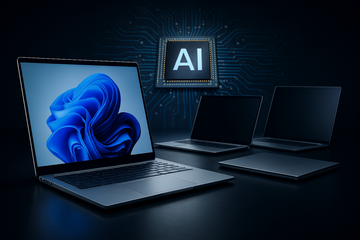
Microsoft Turns Windows 11 Into the AI PC's Distribution Surface — RTX Spark Laptops Start at $2,599
On Oct. 7, 2026, Microsoft fused Windows 11 26H2's new agent platform with NVIDIA's RTX Spark superchip, shipping Surface Laptop Ultra at $2,599 alongside RTX Spark models from HP, Dell, Lenovo, and ASUS — turning the OS itself into the AI PC's first real distribution surface and validating NVIDIA's on-device bet. Entry pricing starts at $2,599 with 128GB unified-memory flagships topping $5,899, just as Microsoft Windows OEM revenue slipped 7% in fiscal Q4 2026 and the broader PC market contracted 4.9% in calendar Q2 per IDC. The race now splits: memory-supply-led volume pain against an AI-PC premium cycle that Microsoft and NVIDIA just turned on.
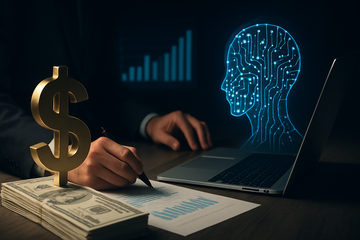
Nous Research's $1.5B Puts the First Public Price on an AI Agent Layer That Hyperscalers Are Quietly Co-Owning
On Oct 7, 2026, open-source agent builder Nous Research closed a $90M Series B at a $1.5B valuation led by Robot Ventures, with NVIDIA, Microsoft M12 and Samsung Electronics on the cap table. At roughly 42x its $36M annualized revenue — versus 53–82x for Cognition, Sierra and Harvey — Hermes Agent is the cheapest seat at the 2026 AI agent category, and the only one financed by the same trio whose enterprise platforms it competes with. The deal forces enterprise buyers to choose between closed-stack agents (Salesforce Agentforce, Microsoft Copilot Studio, ServiceNow AI Agents) and a model-agnostic, self-improving harness running on their own infrastructure.

OpenAI's 1.2-Billion-User Bet — GPT-6 + Intelligent UI Converts a $70B Run-Rate Into a Distribution Platform
On October 7, 2026 OpenAI handed its most capable models and a new interactive format to all 1.2 billion ChatGPT weekly users, with GPT-6 Sol powering paid tiers and GPT-6 Luna unlocking the free tier at $0.10 per million input tokens. The 'Intelligent UI' surface transforms every ChatGPT answer into tappable, decision-shaped layouts that align with OpenAI's $1B-arr ads business — reframing the S-1 narrative from enterprise ramp to consumer distribution. The supply chain — NVIDIA Blackwell, Broadcom custom silicon, CoreWeave, TSMC, and Microsoft Azure — must now absorb a 44% faster 'GPT-6 Instant' running at 1.2B-WAU scale, with Alphabet Gemini's consumer parity making the launch a strategic stand-off.
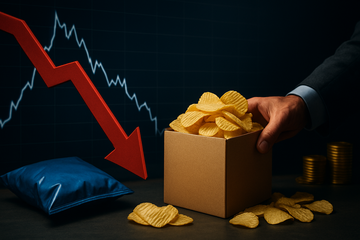
PepsiCo's $25.3B Quarter Hid a 12% Profit Collapse in North American Snacks — the Consumer-Staples Canary Just Sang
PepsiCo delivered a 5.6% revenue beat but cut its 2026 core EPS growth guide roughly in half as ~$178M of tariff refunds masked a 12% collapse in North American snack operating profit and a margin that contracted 35 bps. The signal for consumer staples is stark: the 15% chip-price cut PepsiCo ran in February failed to buy back volume elasticity, while Coca-Cola and Mondelez still grow volume and Conagra and Hormel keep eroding. PepsiCo's profit engine is now international (45% of segment operating profit), with chip prices set to rise again late 2026 — so the Q3 print tells you which staples names own pricing power and which are buying time.
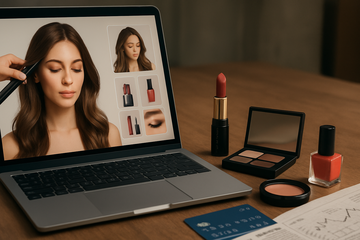
Pinterest's Beauty Guides Convert 640M Saved Pins Into a Checkout Surface — and Steal Beauty Budget From Meta Platforms and Alphabet
Pinterest launched Beauty Guides on October 6, 2026, turning hair and nail Pins into AI-generated salon playbooks with embedded shoppable products and a Sephora partnership attached to the Makeup Maximalism trend. The release turns Pinterest's 640M MAUs — already delivering 1.8% e-commerce conversion at CPMs roughly a third of Meta Platforms's — into a third consumer-AI conversion surface that the Alphabet search ad stack and Meta Platforms's social graph cannot replicate. The near-term squeeze lands on beauty incumbents The Estée Lauder Companies, Ulta Beauty and e.l.f. Beauty, whose customer-acquisition economics on Meta Platforms and Alphabet just got a substitute they can't reprice.

Parallel Systems Lands $100M for Driverless Trains. Class I Rails Just Lost Their Crew-Cost Appeal.
Parallel Systems, founded by SpaceX alumni and bankrolled with a $100M Series C led by AVP on Oct 7, 2026, will scale driverless battery-electric rail vehicles that target the sub-500-mile freight market Class I carriers cannot serve. The capital lands two months after the 11th Circuit on Aug 11, 2026 upheld the FRA's two-person crew rule, foreclosing the labor-cost arbitrage that CSX, Norfolk Southern, Union Pacific and BNSF had been pursuing for FY26 margin. J.B. Hunt's Sept 16 Q3 EPS warning — $25M of incremental driver cost, more than $10M of fuel — shows the cost pressure is already hitting intermodal, the rail-adjacent business most exposed to a parallel autonomous threat. Together, these events compress the FY26–FY27 margin guide for Class I rails while opening the door for short-haul battery-electric rail to claim freight that today moves by truck.
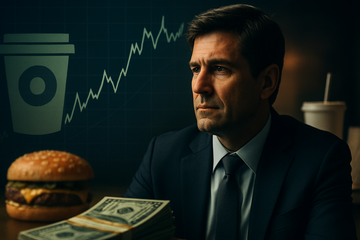
Brian Niccol's Two-Chair Question: How the Starbucks-Chipotle Rumor Reset the 2027 QSR M&A Map
On Oct 6–7, 2026, Semafor reported that Chipotle had quietly tapped bankers to fend off a takeover, and floated one out-of-left-field theory: Starbucks buying the burrito chain. Shares of both names moved on the rumor even though no bid exists. The structurally unique part is the CEO — Brian Niccol, who ran Chipotle from 2018 to 2024 and Yum Brands's Taco Bell before that, is the only sitting public-company CEO with credibility on both sides of the table. That single fact reframes the QSR peer set: investors should now price which of McDonald's, Yum Brands, Restaurant Brands or Domino's becomes the next consolidator — and which becomes the next target.

After Three Weeks of Branding, Trump's Super Intelligence Force Finally Meets to Set Real Federal AI Buying Rules
The four-leader SIF council convenes Thursday for its first working session — the first concrete policy-shaping moment after the Sept. 29 EO rename, the 'morally binding' tech-exec accord, and the Oct. 4 launch. Because the panel controls Palantir's and Oracle's federal procurement pipeline and sits over Nvidia's compute commitments inside the new Genesis Mission, the meeting's output — not the rebrand — will decide who wins the next federal AI dollars.
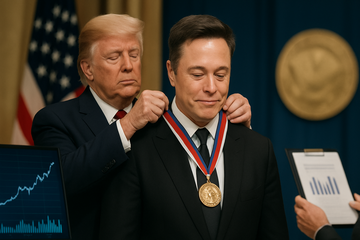
Trump's Meta Buy and SpaceX Bond Were Disclosed the Same Day He Handed Medals to Their CEOs
President Trump's August financial disclosure, made public October 8, 2026, shows he bought $5M–$25M of Meta Platforms stock on August 21 — eight days before the FTC filed its reply brief in the live FTC v. Meta antitrust appeal — and $1M–$5M of SpaceX 5.35% senior unsecured notes due 2031 on August 18, two days before he signed the National Space Transportation Policy. The same day the disclosure was released, the White House hosted the \"Science: A New Golden Age Summit,\" awarding the National Medal of Science to SpaceX/Tesla CEO Elon Musk, Nvidia's Jensen Huang and AMD's Lisa Su — the latter two of which Trump sold the previous month. The transaction log itself does not violate any law: the Stop Insider Trading Act, which failed Senate cloture on September 30, exempts the president by design.
TSMC's $46.7B Q3 Beat Confirms AI — But the Mix Below It Is the Story the Tape Hasn't Priced
Taiwan Semiconductor Manufacturing Company just printed a record NT$1.49 trillion (≈$46.71B) in Q3 revenue, up 50% year-over-year and above both consensus and its own guidance — yet the more important read is what sits underneath that line. A heavy AI-customer tilt toward NVIDIA, a 2nm capacity concentration in Apple, and a roughly 39% capex-to-revenue ratio are reshaping the economics of every name in the supply chain, and Apple's just-cut gross-margin guide to 47–48% is the first hard evidence that wafer pricing is passing through.
Waller's 'Flexibility' Pivot Confirms It: The 5.3% 10Y Is the Floor, Not the Ceiling
Fed Governor Christopher Waller's October 7-8 remarks — \"more hikes needed\" with \"flexibility about the pace\" — reframe the bond tape: the 10-year's October 7 intraday print of 5.36%, a 24-year high, is the new structural anchor, not a spike to fade. With the September SEP showing 16 of 18 FOMC members expecting at least one more 25bp move before year-end and market-implied odds at 85% for another hike by December, rate-sensitive equity, credit, and housing exposures face a longer-than-expected high-yield regime — even as the Fed buys itself optionality to skip the October 27-28 meeting.
Webull just crossed the “China-link” line regulators can’t ignore—because the risk now sits in customer-cash handling
A House Select Committee report says Webull is “tied in structural ways” to the PRC through ownership, technology and financing, and that the concern escalated after Webull began carrying customer cash directly in October 2025. For investors, the key takeaway is not politics—it’s how the compliance burden shifts when a brokerage’s customer-cash model turns a front-end data risk into a balance-sheet risk.
2026-10-07

Anthropic's $0 Quotation for Claude Team Doesn't Beat OpenAI's Compute Wall — It Reveals Who Actually Owns the AI Seat Race
On October 6, 2026, Anthropic opened a free year of Claude Team (five Premium seats, $100/month each) plus $1,000 in API credits and up to $45,000 in partner value — an Anthropic-side subsidy of roughly $7,000 to $8,500 per startup. The giveaway only works because Anthropic has booked more than 10 gigawatts of compute across Amazon, Google, and SpaceX, while OpenAI was forced to pause new $200 Pro sign-ups on September 10, 2026 for capacity reasons. The real beneficiaries are NVIDIA, Amazon, Alphabet, and Broadcom; the exposed names are Microsoft and Oracle, which back the rival stack.
Berkshire's Tiny 'Secret' Portfolio Dumped Alphabet and Broadcom — While the Main Fund Quietly Added $17B to Alphabet
The Oct. 7 headline about a $863M 'secret' sub-portfolio under Berkshire Hathaway trimming Alphabet and Broadcom is technically true, but it buries the real story: in the same quarter, Berkshire's main fund went net buyer of $19.8B and lifted its Alphabet stake by ~$17B. The 'secret' book is NEAM, a regulated insurance-asset subsidiary whose trades carry no signal on Buffett or Abel's view. The genuine contrarian AI exit is happening elsewhere — Ackman sold Alphabet outright, Tiger cut it 45%, and Burry is loaded with puts on the AI complex — and the Q3 13F due mid-November is the next test of whether the divergence widens or closes.
Bitcoin's $550M 'Leverage Wash' Looks Small Next to 2025's $19B Bloodbath — That's Exactly Why It's Bullish
On October 7, 2026, Bitcoin slipped to ~$83,500 and flushed roughly $550 million in leveraged crypto bets — a tiny tremor compared with October 10, 2025's $19 billion, 1.6-million-trader wipeout that knocked wrapped-asset stablecoins off their pegs. The new flush landed at an eight-month BTC high, ran 97% on the long side, and was followed by a rebound in open interest from ~$54B to $55B. Far from a leverage unwind, this is a quality-of-liquidity print: crowded retail longs got squeezed, options books stayed balanced, and the structural plumbing held. For Coinbase, Strategy, and the major miners, that changes the read from 'risk-off' to 'constructive.'
What to expect
Evidence-first notes with a visible point of view.
This section collects sharp takes on earnings, shareholder meetings, and market structure. Each new piece should make the thesis, the facts, and the implications obvious within the first few screens.
Expect direct analysis, not generic commentary.
Expect the data to be explicit and the argument to be easy to follow.