Latest
The day's market news, with the argument attached
New notes every trading day on earnings, policy and market structure. Each one opens with the conclusion, then the evidence, then the companies it hits.
2026-11-02

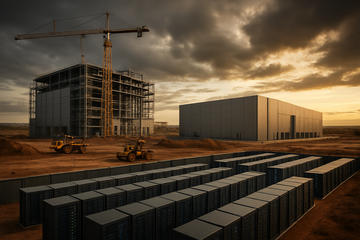
A 1GW Outback Deadline Just Vanished — and $586.6B of Hyperscaler Capex Still Assumes Permitting Is Never the Bottleneck
Regulators, not megawatts, now set the pace of AI capacity. After the Northern Territory's environment regulator suspended its own deadline to set environmental parameters for Energy North's 1GW Project Ares, the developer told Reuters it had abandoned the June 28, 2028 first-power date lodged with its referral four months earlier. That is the same fault line Microsoft described three weeks later, when September-quarter capital expenditures of $45.2 billion came in short of plan because third-party capacity deliveries were delayed, cutting its calendar-2026 spending forecast to roughly $170 billion. Amazon, Microsoft, Alphabet and Oracle have put $586.6 billion of property and equipment on the ground in the trailing twelve months, and every dollar assumes permits, connections and equipment land on one calendar. The investable consequence is not to short the equipment chain, which is paid on order, but to underweight capacity operators whose revenue starts at energization and whose balance sheets cannot wait for a regulator.

Shell's $10–15 Billion LNG Canada Stake Is Unsold, and $111 Oil Is the Wrong Reason to Buy It
Shell has been trying to sell its 40% operating stake in LNG Canada to a single buyer; Apollo, Blackstone and KKR reached the final round on a price reported at well north of $10 billion and possibly $15 billion, and as of Nov 2, 2026 nothing has been signed. The tempting explanation, a Brent print of $111 after crude crossed $100 on Sept 9, is the wrong one, because LNG Canada's volumes sit under long-term Asian supply agreements and the toll does not float with crude. What actually made the asset scarce is Hormuz: JKM printed $32.84/MMBtu on Oct 30, chokepoint-free Atlantic supply now carries a strategic premium, and that is what pulled a sovereign investment arm into a process that began as a financial one. The investable consequence is that owners of contracted LNG cash flow reprice first, with Cheniere raising 2026 adjusted EBITDA guidance to $8.75–9.25 billion and trading at 11.0x trailing EV/EBITDA against Shell's 4.5x, while whoever wins the auction inherits roughly C$13 billion of Phase 2 equity for revenue that starts in the early 2030s.

BWXT Owns the U.S. Naval Fuel Gate — Tonight's Print Is About Commercial Growth, Not the $189 Million Headline
BWX Technologies is the sole supplier of nuclear fuel to the U.S. Navy, has just booked a $189 million naval contract, and has won a $1.5 billion federal contract to enrich the very fuel it currently only downblends — yet the stock closed Oct. 30 at $130.48, 46% below its 52-week high, because the market sold the AI-power trade rather than the fuel business. The two loudest announcements of the quarter sit in the slow-moving 81% of backlog that is government work, where second-quarter adjusted EBITDA fell 4.9% year over year, while the growth engine, Commercial Operations, rose 71.8% to $302.5 million and is about to shrink again as medical is sold for up to $800 million. Consensus of $1.18 of adjusted EPS on $970.5 million of revenue will look light by construction, since management expects roughly 55% of second-half earnings in the fourth quarter. The investable question is whether commercial nuclear equipment and TRISO fuel justify27 times 2026 guidance — and whether the upstream gate, held by Centrus Energy and demanded by Meta Platforms's reactor buildout, is the better place to sit.
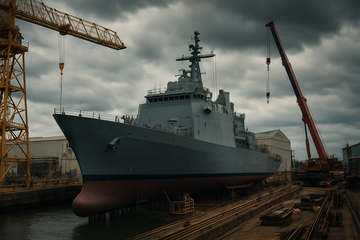
Hanwha Aerospace's First U.S. Navy Hull Prices Below the Navy's Own Budget: the Labor-Cost Wedge Is Philadelphia, Not Korea
Confirmed on Oct. 30, 2026: Hanwha Defense USA will build one Medium Landing Ship for $269 million at Hanwha Philly Shipyard, with options for three more, in the Navy's first shipyard selection under its new vessel construction manager model. The hull is built in Philadelphia, not Korea, at a price below the roughly $315 million per vessel implied by the Navy's own fiscal 2027 request, so the familiar wage-arbitrage reading is wrong. The wedge is a 1,500-person Philadelphia yard that is half non-union, plus a $5 billion capital plan and an ownership reshuffle inside the Hanwha complex — with a public price reference that domestic yards now have to beat.

Charles Schwab money-in-motion meets Series I bonds: a 5.51% retail inflation lock shifts the Fed’s cash-and-claims math
Starting Nov. 1, 2026, newly issued Series I savings bonds reset to a 5.51% composite rate (1.40% fixed + 4.08% inflation component) for purchases through Apr. 30, 2027. That creates a new, retail-driven “inflation-yield floor” inside the cash-management channel—potentially pulling brokerage sweep and money-fund flows at the exact moment sticky inflation makes the Fed’s headline problem worst.

Orphan Drugs Won a Zero-Tariff Island in July — and Insmed's 15% Surge Was Volume, Not Price
Insmed reported third-quarter revenue of $524.4 million on Oct. 29, 2026 and raised only the floor of its 2026 guidance — BRINSUPRI to $1.35 billion from $1.25 billion — yet shares jumped about 15% to $111.59 the next morning and held $112.58 on Nov. 2. Nothing about price changed: BRINSUPRI has carried an $88,000 annual list price since its August 2025 launch, and management guides gross-to-net in the mid-to-high 20s. What changed is that orphan volume now sits inside a policy shelter no other drug category has — a zero Section 232 tariff on drugs whose approved indications are all orphan-designated, and exclusion from Medicare price negotiation. The catch is that the shelter is conditional, and Insmed's largest pipeline asset targets populations that would fail the test.

Kioxia Guided Flat Profit and Rising 2027 Bit Demand — and the Stock Fell 15.8%
Kioxia's September quarter was a record: revenue of ¥2.48 trillion, operating profit of ¥1.996 trillion at an 80% margin, and one quarter that out-grew all of fiscal 2025. Its December-quarter guide then held profit flat at about ¥2.0 trillion, roughly 15% below the ¥2.35 trillion the market expected, and the shares fell as much as 15.8% in Tokyo before closing 13.3% lower at ¥11,680. The guide was a price call, not a demand call: Kioxia raised its 2027 NAND bit-growth forecast to 20–24% and said fiscal 2027 capacity is fully contracted, while the sequential rise in flash prices dropped from about 70% to the mid-20% and is expected at 15–20% in the December quarter. That is the trade now on offer — roughly 4x trailing EBITDA for pure NAND at peak margin versus about 9x for AI memory with a DRAM base — so being wrong on cycle timing, not on demand, is what costs you a double-digit percentage in a single session.

Seoul's $3.5 Billion Frontier AI Bet Is Less Than One Week of SK hynix Revenue — and Memory, Not Money, Is the Bottleneck
On October 5, 2026, South Korea's science ministry put 4.7 trillion won of state equity behind a frontier AI model starting in March 2027, with 3.85 trillion won of it earmarked for GPU capacity and roughly 29,000 government GPUs to be allocated by year-end. The cheque is small next to the industry it targets: it equals about 58% of one week of SK hynix revenue and 5% of what SK hynix alone returned to shareholders in 2026. The binding constraint is allocation, not money — SK hynix's long-term agreements already cover more than half of 2027-28 capacity and the shortage runs to 2030 — and on October 26, 2026 Washington denied Korea the licence exception covering semiconductor items, leaving the sovereign stack captive at home. The read-through investors are missing: a state-anchored Korean buyer for domestic HBM4 arrives while the memory complex runs at 80% operating margins on capacity that is already spoken for.

Marvell's $115 Billion Lumentum Deal: A 23.9% Premium That Melted Into a Discount in Two Sessions
The biggest semiconductor deal of 2026 is also the strangest: Marvell is paying a fixed 4.500 of its own shares for every share of Lumentum, so the purchase price is set by Marvell's stock — and Marvell's stock fell about 22% in the two sessions after the talks leaked, cutting the value of that same exchange ratio from $1,132 to roughly $862 per Lumentum share. That flips a 23.9% premium into a small discount without a word of the agreement changing. The asset being bought is genuinely scarce: Lumentum is sold out through early 2029 and guides to 45% non-GAAP operating margins next quarter. But at 38 times trailing sales for Lumentum's fiscal 2026 revenue, Marvell is handing over roughly a third of a company that trades at 18 times sales, so the share count, the Chinese review clock and the $1 billion synergy target matter more than the $115 billion headline.

MaxLinear Beat and Raised, Then Fell 25% in a Month: 92% of Its Growth Comes From One Product Line, and the 1.6T Payoff Lands in 2027
MaxLinear beat on revenue and earnings, guided fourth-quarter sales about 10% above consensus and raised its 2026 optical data-center outlook to $250-270 million on October 22, 2026 — and the stock fell 13.9% that day, then 25% over the following month. The tape is not mispricing the quarter; it is repricing where the AI connectivity profit pool actually sits. Infrastructure supplied $84.6 million of the $91.6 million year-over-year revenue increase, the 2026 optical ramp is 800G silicon with 1.6T revenue only starting in early 2027, and the company booked $28.9 million of GAAP net income while consuming $13.6 million of operating cash. At roughly eight times estimated 2026 sales, MaxLinear is now a bet that 1.6T optics and active-copper silicon convert into cash in 2027 and 2028.

A Blue Sweep Buys Oversight, Not Relief: The Tariff Wall Was Rebuilt Under Section 232 Before the Vote
Democratic control of Congress would not repeal a single live tariff: with neither chamber likely to reach a veto-proof majority, the only statutes Democrats can legislate against are Section 338 and the Section 122 surcharge that expired on July 24, 2026, while the wall itself was rebuilt on Section 232, Section 301 and Section 338 after the Supreme Court struck down the IEEPA tariffs on February 20, 2026. The investable variable is therefore administrative, not electoral — which tariffs survive the proclamation flow, and how Canada's $20 billion of 15% to 50% counter-tariffs, live since September 8, 2026, lands in first-quarter 2027 income statements. Inside the protected industries the dispersion is already wide: Nucor widened gross margin to 19.6% in the June 2026 quarter while Cleveland-Cliffs ran a 1.9% trailing gross margin on $20.1 billion of sales and a $473 million net loss.

Crude Slid 6% as the Gulf Came Back — Vitol's 3 Million Barrel-a-Day Demand Call Is the Number That Actually Breaks the Bull Case
Brent's January contract fell $7.13, or 6.3%, to $106.30 on Nov. 2 after US-Iran talks in Doha unwound a war premium — and the barrels behind that premium had already come back, with Middle East shipments averaging 24.6 million barrels a day against 23.3 million before the war. The bull case does not break on supply; it breaks on demand. Vitol's Russell Hardy told ADIPEC that global demand could sit roughly 3 million barrels a day below 2025 levels by year-end, close to the IEA's 2.6 million barrel average decline, and that changes who captures the cheap barrel: refiners running negative Saudi selling prices with utilization still below pre-war win, US shale plateaus rather than breaks, and the AI power buildout gets a cheaper fuel floor.
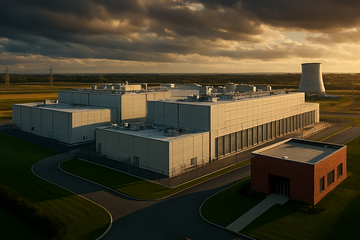
OpenAI's “AI Compute Campus” Push Is a Permit Strategy — and 843 Opposition Groups Say Why
OpenAI will relabel its data centers as “AI compute campuses” and push state legislation that gives residents a say in how projects are built, launching the push right after the Nov. 3 midterms. Read as strategy rather than branding, the campaign times a vocabulary push to the moment state lawmakers write the rules, in a year when 843 local opposition groups and roughly $200 billion of stalled projects have made site selection the binding constraint on AI capacity. For investors, the winners are the balance sheets that already own the permits, the power and the credit: the chip vendor whose balance sheet now backs the landlord's leases, the equipment makers, and the utilities whose rate base grows only if the compact holds. The label matters because the first public prospectus to use it will set the terms for everyone who follows.

Palantir Reports Tonight: The AI Skeptic Debate Turns on a $1.03 Billion Line Item, Not the $2.16 Billion Headline
Palantir reports third-quarter 2026 results after the close on Nov 2, and the headline the market will trade — revenue guided to $2.160–$2.164 billion — is not the number that settles whether the AI buildout is a durable annuity or a capex illusion. The deciding line is U.S. commercial revenue, which must clear roughly $1.03 billion to keep the company's own full-year guide of more than $3.424 billion reachable, a 35% sequential step-up from the $764 million booked in the second quarter. Palantir's cash flow shows why the two debates are not the same debate: trailing capital spending of $42 million against $3.36 billion of free cash flow, while the layer that owns the silicon burns cash at a rate that has Oracle's credit default swaps at a record 288 basis points. Read tonight as evidence on enterprise AI demand; treat the funding-cost question as unresolved.

Publishers Just Moved the “AI Scraping” Fight Into Federal Court—Turning the AI Content Toll Into a Paywall Bypass Liability
A New York federal lawsuit accuses Brave of scraping publishers’ copyrighted pages, bypassing paywalls, and distributing the resulting content to downstream AI companies. The market impact is less about model training economics and more about who controls the “last-mile” web access layer—where Cloudflare, Akamai, and browser/edge security vendors can become the nearest courtroom winners or collateral damage.
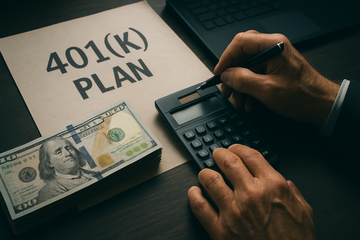
The IRS Sets the Withdrawal Amount at 75 — and the Biggest Savers Are Converting It Away
A November 1, 2026 explainer made a tax mechanic visible: once a 401(k) holder turns 75, the IRS — not the owner — sets the size of every annual withdrawal, and missing it costs a 25% excise tax. The same rule that forces the withdrawal creates the incentive to route around it, and the savers with the largest balances are converting to Roth before the first distribution rather than drawing one down, splitting America's $51.2 trillion retirement market into two opposite flows. The consequence for investors is specific: custodians collect the relocated assets, annuity writers collect the forced withdrawals, and the negative equity-fund flow tape is mostly a wrapper rotation rather than retirees fleeing stocks.
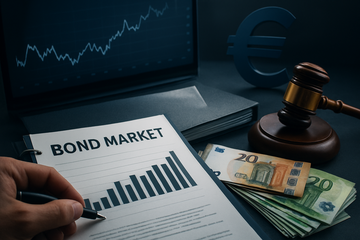
Hedge Funds Now Drive More Than Half of Europe's Bond Market — and the SEC's Nov. 2 Deadline Decides How They Hedge It
The SEC's proposal to add European Union debt obligations to Exchange Act Rule 3a12-8 closes for comment on Nov. 2, 2026, and Bloomberg reports hedge funds are backing it, with the Managed Funds Association endorsing the same day. The list governs which sovereign debt can be hedged on-exchange without US securities-law ambiguity, and the EU's own bonds — now roughly €738 billion and growing — are the one major euro issuer missing from it. With hedge funds behind more than half of the roughly €13 trillion euro government bond market and Europe's rate plumbing showing its worst liquidity since 2008, the practical consequence is that a Washington rule decides who can trade euro duration directly and who must still go through a dealer's balance sheet.
Fractile's Mark Rose 6.5x on a $250M Order for Silicon That Doesn't Ship Until 2027 — In the Same Week OpenAI Cut $150 Billion Off Its Own
In the eight days between Anthropic opening its IPO book and OpenAI trimming its round, private AI marks moved in opposite directions: Fractile re-rated about 6.5x to $6.5 billion on a $250 million pre-shipment order from Anthropic, with the UK's Sovereign AI Fund taking a slice, while OpenAI cut its target valuation by $150 billion and Anthropic's expected valuation fell from roughly $2 trillion to about $1.5 trillion. The cause is not demand. Anthropic's filing shows at least $518 billion of mostly non-cancellable compute obligations and NVIDIA's 10-Q shows $108.5 billion of guarantees backing an OpenAI affiliate's leases, so the risk has migrated out of model-lab equity and into supplier credit and sovereign balance sheets where no quarterly mark exists. For listed investors, the compute layer's cash flows remain intact while its equity is repriced on funding quality, and Anthropic's IPO is the settlement event that decides which side is right.

Tower Semiconductor's Record Quarter Proves the AI Power Chain Is Real. Its 34% Gross Margin Proves Pricing Isn't.
Tower Semiconductor closed 2026 with record third-quarter revenue of $526.2 million, up 33% year over year, and guided the fourth quarter to $600 million — a $2.0 billion year and a $2.4 billion exit run rate. The engine is mix, not price: silicon photonics heads to a $1.1 billion annualized run rate, five times 2025, while $321 million of customer prepayments funded the capacity buildout that fills it. What shareholders get for that growth is a 34.0% gross margin against Taiwan Semiconductor Manufacturing's 66.4%, which is why Tower trades within a turn of the leader on sales but at 27.8 times forward earnings versus TSMC's 18.3 times.

Twilio Beat on EPS by 12% and Fell 15%: Carriers Repriced the Toll Before Agents Reprice the Volume
Twilio's third quarter was a record on every line — $1.56 billion of revenue, $1.65 of non-GAAP EPS, $369.6 million of free cash flow — and the shares still fell 15.2% to $205.03 because Q4 organic growth was guided to 11–12% against 16% in Q3. The reason is mechanical rather than mysterious: $53 million of new U.S. carrier pass-through fees landed in the quarter, roughly $245 million is expected for 2026, and that alone cuts about 200 basis points of gross margin while adding no software margin at all. The market is no longer paying for messaging volume; it is paying for who sets the toll on an agent-driven conversation, and in 2026 that is the three national carriers plus the two platform owners. At roughly 26 times trailing free cash flow, the price still assumes the toll is temporary, which is the assumption worth testing.
What to expect
Evidence-first notes with a visible point of view.
This section collects sharp takes on earnings, shareholder meetings, and market structure. Each new piece should make the thesis, the facts, and the implications obvious within the first few screens.
Expect direct analysis, not generic commentary.
Expect the data to be explicit and the argument to be easy to follow.