Latest
The day's market news, with the argument attached
New notes every trading day on earnings, policy and market structure. Each one opens with the conclusion, then the evidence, then the companies it hits.
2026-09-30


OpenAI's $30B at $1.4T: A Bridge Round SoftBank Is Funding With High-Yield Paper
OpenAI is raising at least $30B at a ~$1.4T pre-money valuation just six months after a $122B round at $852B, a 64% step-up that effectively resets the IPO ceiling. The money is coming primarily from SoftBank, which just sold $11B of bonds to fund a third OpenAI tranche, with NVIDIA and Amazon likely backfilling the rest. For investors, the transmission runs through chip supplier NVIDIA, the Stargate compute partners Oracle and CoreWeave, and the prior anchor Microsoft and Amazon — and the bigger risk is concentration in SoftBank Group, whose balance sheet now carries the AI trade.

OpenAI Sat Out Nvidia's 100-Partner Rogue-AI Pact on Purpose — The Front-Runner Chose Regulation Over Engineering, the Day Before DevDay
On Sept 28, 2026, NVIDIA rallied 100+ organizations — Microsoft, Anthropic, CrowdStrike, CoreWeave, Palantir, Oracle Cloud, Cisco, HPE, Dell, Salesforce, ServiceNow, Palo Alto Networks — onto the Open Agent Safety Platform, a hardware-enforced agent kill-switch that runs on NVIDIA's own BlueField DPUs. OpenAI was the conspicuous holdout, one day before its own DevDay 2026. The absence is not a technology gap; it is a pre-IPO political choice. While NVIDIA bets on voluntary industry engineering, OpenAI is positioning itself as the face of mandatory federal AI regulation, and the split redraws the liability line for every company touching frontier agents.

OpenAI Built a 4,000-App Agent Store Inside ChatGPT — and xAI Hijacked the 'Dot' Brand the Same Day
At DevDay on September 29, 2026, OpenAI launched Dots, a 4,000-plugin ecosystem, a $500 Pro 500 tier, an Office-style suite, and a 32-partner marketplace on top of 1.2 billion weekly ChatGPT users. The same evening, xAI redirected dot.com to Grok Bot. The platform play targets [Apple]'s 30% App Store take and [Microsoft]'s Office franchise — and it lands the same week OpenAI opened talks at a $1.5 trillion valuation.

Oura Shelved a 4x-Oversubscribed $2.2B IPO. The 89% Subscription Margin Tells You Why Smart Rings Now Set Their Own Clock
Oura postponed its Nasdaq debut on Sept. 29, 2026 despite being profitable and roughly four times oversubscribed, citing \"uncertainty in the IPO market.\" With Holtec and Bamboo Insurance already shelved, an AI-led risk-off tape pressing the consumer-health window, and the deal's 73% insider secondary structure, the pull exposes a deeper truth: smart-ring subscription economics at 89% gross margin are strong enough that Oura can pick its own listing date. For listed wearables — Garmin, Apple, Peloton, Alphabet and Samsung Electronics — the question is which of them is now on the wrong side of that same subscription math.

Paramount Skydance sells $44.4B of bonds to buy Warner Bros. Discovery — and the equity tells you what the credit market won't
Paramount Skydance launched a $44.4B senior secured note offering on Sept. 28, 2026 to fund its $31-a-share, $110B-EV takeover of Warner Bros. Discovery. The bond market — 109 billion dollars of orders on a 32-billion-dollar investment-grade tranche — said the credit is workable. The stock market, sending PSKY down 3% on launch day to a market cap under $11 billion, said equity holders will eat the leverage. The combined balance sheet will carry roughly $80 billion of debt against a pro forma EBITDA base that S&P Global Ratings puts at a 7.6x leverage ratio through 2027. The strategic logic: a 175-million-subscriber Paramount+–HBO Max stack built to fight Netflix's 325 million subs and YouTube's $11 billion-a-quarter ad machine.

Reco's $55M round crystallizes AI-agent security as its own venture category — and the PANW/ZS/CRWD bundle math gets harder
Agent-runtime security — a layer Palo Alto Networks, Zscaler, and CrowdStrike all claim to cover — now has a standalone funding market of $435M deployed in five months. Reco's $55M Series B extension, anchored by AT&T Inc. as both investor and customer, validates a SaaS-resident thesis that complicates the platform bundle: agents live inside Salesforce and ServiceNow, not on endpoints, so an endpoint-bundled AI feature alone won't win. The platforms are responding with acquisitions — Palo Alto's $500M Console deal, Zscaler's Symmetry Systems, Okta's $200M Permiso, and SentinelOne's Prompt Security — but until they replicate Reco's 280-app discovery footprint, incumbents face a widening gap in agent governance.

Reddit Just Made Itself the AI Economy's Toll Booth — and the Q2 Backlog Says It's Working
Over18 months, Reddit has progressively choked off free access to its 20-year corpus — rewriting robots.txt to block Microsoft's Bing, rate-limiting public RSS to one call per minute, and cutting Alphabet and OpenAI the only real keys. The market is treating this as a fight over the $60M Alphabet renewal. It's actually a fight over who gets charged rent on human conversation — and Reddit's contracted licensing backlog shrank from $121M to $92M in a single quarter.

Restate's $20M Raise Lands Next to a $12.55B Peer — The Picks-and-Shovels Layer That Decides Which Agent Stack Survives Production
A Berlin startup with $27M in cumulative funding is going head-to-head with Temporal, the $12.55B-valued heavyweight of durable execution, for the infrastructure layer that every production AI agent stack now requires. Restate's Sep 30 Series A — led by Singular with Redpoint Ventures and Capital One Ventures — closes 16 days after Temporal's $550M Series E and lands in the same week MongoDB shipped Atlas Agent Engine and Cloudflare deepened its Durable Objects stack. The durable-execution layer is consolidating fast, and the read-through for investors runs straight through Microsoft, Salesforce, ServiceNow, and the observability attach at Datadog.

The SEC Just Made Tesla's Auto-Vote Playbook the Default — Every Board Can Now Pre-Wire a Standing Majority
On September 29, 2026, SEC staff turned the standing-instruction voting program Tesla designed into a framework any US issuer can adopt without separate approval — the same mechanism that helped push Musk's $1T pay package through on 75% of votes cast despite both ISS and Glass Lewis recommending against. The template lets a board convert the typical silent retail bloc (about 40% of ExxonMobil shares, 75% of which don't currently vote) into a default pro-board voting stream, with the vote cast the moment the definitive proxy is filed, ahead of any shareholder read of the materials. For investors, the structural winners are the proxy plumbers (Broadridge, Robinhood); activist capital faces a harder road; and founder-super-voting structures like Anthropic's 50.1% Founder LLC and SpaceX's dual-class look newly defensible.

Tesla's Friday Print Tests a Tough YoY Math: Median Consensus 463K Is Already a 7% Drop, and Even the Bull-Case 482K Is Down
Tesla's IR-compiled Q3 2026 delivery consensus, posted Sept 29, sits at a median 463,406 with a 421,758–482,000 range — every estimate is below the Q3 2025 record of 497,099. Combined with operating margin already compressed to 1.4% in Q2 and BYD taking the global BEV crown back in Q2, the print will set the tape not just for Tesla but for Rivian, the GM and Ford EV lines, and the upstream battery names tied to Tesla volume.

Treasury Just Auto-Enrolled 60M Kids Into 100% Equity Accounts — State Street Holds the Default, and the $1T Headline Is Wrong
Treasury's Sept 29, 2026 temporary regulations will auto-enroll more than 60M additional children into Trump Accounts starting Oct 1, 2026, with every dollar flowing into the State Street SPDR Portfolio S&P 500 ETF (SPYM) by default. The forced demand is real but smaller than the trillion-dollar framing: Wells Fargo pegs near-term inflows at ~$20B, while McKinsey's long-term ceiling tops $900B over a decade. The actionable trade is the asset-management and custody stack — State Street as default beneficiary, BlackRock and Vanguard for alternate slots, BNY Mellon as financial agent, Robinhood as initial trustee — operating against the awkward backdrop of a Fed that just hiked, not cut.
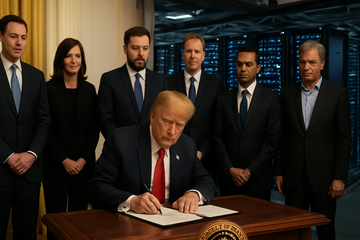
Trump's 'morally binding' AI accord gives the six frontier labs the pen — and unblocks a $200B data-center pipeline
On Sept. 29, 2026, NVIDIA-led Alphabet, Meta, OpenAI, Anthropic, and Elon Musk's xAI signed a voluntary 'Super Intelligence' accord at the White House while Trump issued an executive order renaming AI to 'Super Intelligence.' With community opposition now blocking ~$200B of U.S. data-center projects and Republicans trailing on the issue, the deal hands frontier-model oversight to the labs themselves, replaces hard regulation with industry-written controls, and embeds a Trump-endorsed data-center buildout as federal policy — the structural win is for the AI utility and infrastructure complex, not for new safety rules.
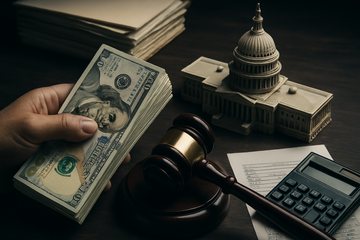
Trump's $810M Pocket Rescission Got a Same-Day Court Challenge — A Test of Whether the President Holds the Checkbook
On Sept 29, 2026, the Government Accountability Office formally declared pocket rescissions illegal under the 1974 Impoundment Control Act, and a coalition of ten housing nonprofits sued HUD to block the $56.1M piece of Trump's $810M late-fiscal-year clawback. The dollar figure is tiny against roughly $6.75T of federal outlays, but the precedent is not: the administration timed the request five days before FY26 ends and after the House announced it would stay out until November, a combination that converts congressional inaction into automatic cancellation. With the federal government funded only through Dec 11 on a continuing resolution — no FY27 budget has been enacted — the fight is really about who controls the discretionary spigot, and the HUD housing counseling cut is the first casualty investors can trace through listed title insurers and homebuilders.
2026-09-29
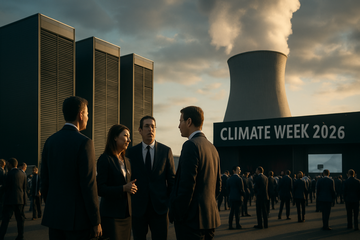
Hyperscalers Walked Into Climate Week 2026 With $700B of AI Capex, a 16% Emissions Spike, and a 22-Year Nuclear Deal — All at Once
Climate Week NYC 2026 became an AI forum by accident, and the four hyperscalers arrived arguing both sides: Amazon disclosed a 16% jump in emissions driven by data centers, while announcing1,920 MW of new nuclear PPAs from Talen Energy; Microsoft brought its $41 billion Q4 buildout into a week where the UNECE warned that AI capacity is growing faster than the grids that must power it; Alphabet inked a $15 billion Finland nuclear deal two weeks earlier; and Meta quietly sits on three plant extensions. The policy fork no one priced is whether regulators treat AI as a clean-energy buyer or as the next industrial polluter — and that framing will decide who pays for the grid, who sells the power, and how much margin the AI capex actually clears.
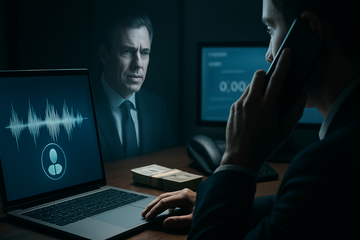
DetectifAI launched the week €95M walked out of Fideuram on a cloned CEO voice — and Palo Alto Networks, CrowdStrike, Zscaler aren't selling one
A cloned CEO voice authorized €95M out of Fideuram, Intesa Sanpaolo's private banking arm, in February 2026 — €53M recovered, €36M still missing. Days later, on Sep 28, 2026, a 21-year-old founder's deepfake-detection startup, DetectifAI, came out of stealth handling more than 100,000 calls a month for Indian banks. The collision crystallizes a gap between listed cybersecurity giants (Palo Alto Networks, CrowdStrike, Zscaler) — which bundle AI defenses but lack dedicated voice-channel products — and a small cluster of venture-backed pure-plays (Reality Defender, GetReal, Modulate, Sensity) selling specialized detection. With Deloitte projecting $40B in US AI-enabled fraud losses by 2027, this is the week the AI anti-fraud category stopped being hypothetical.

AMD pays $8.2B for a 100-person lab with no revenue — the new unit economics of chip companies buying their own roadmap
On Sept 28, 2026, Advanced Micro Devices agreed to acquire Fei-Fei Li's World Labs for roughly $8.2 billion in stock — about a third of its trailing Data Center revenue and 0.8% dilution, but the first time a frontier chip company paid frontier-AI-lab money for a spatial-intelligence stack. The deal folds the architects of spatial reasoning inside AMD's silicon roadmap, gives AMD a direct counter to Nvidia's Cosmos platform, and reframes Helios from a rack-scale GPU story into a vertically integrated world-model stack. The investor question isn't whether the math works on paper — it doesn't, on any conventional multiple — but whether pulling research inside the chip company is the only way to win workloads that haven't been written yet.
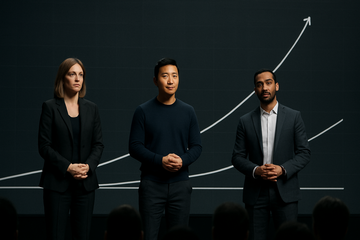
Anthropic, Gamma, and Clay walk onto TechCrunch Disrupt and put a number on enterprise AI: $300M+ of ARR, 50 employees, and the unbundled path has already won the first wave
TechCrunch Disrupt's Oct 13–15 AI Stage panel pairs Anthropic's Cat de Jong with Gamma's Grant Lee and Clay's Kareem Amin to dissect what survives the move from demo to deployment. Behind the speakers sit three revenue curves that explain where enterprise AI is actually being bought: Anthropic at a $65B run rate, Clay at a ~$200M run rate with 17,000 customers, and Gamma at $100M ARR with ~50 employees. The integrated-stack incumbents — Salesforce Agentforce, ServiceNow Now Assist, Microsoft Copilot — are still printing record AI revenue, but the unbundled-tool path is now the procurement default for non-tech enterprises, and the upstream bill lands on Amazon and NVIDIA.
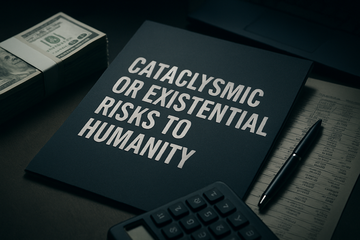
Anthropic's Public S-1 Tells Investors Its Own Product May End Humanity — Now the $2T Math Has to Defend That Sentence
Anthropic's first public prospectus, surfaced Sept. 28–29, 2026, dedicates 80 pages to risk factors against 48 pages of business description and warns that advanced AI could pose \"catastrophic or existential risks to humanity.\" Underneath sits a 2025 P&L with revenue up 12-fold to $4.6B, a $42B net loss driven largely by a $34B non-cash charge, compute spend tripling to $7.33B, and $518B in locked-in cloud and infrastructure obligations — with 24% of revenue coming from two customers who also happen to be Anthropic's two largest investors and compute suppliers. The buyers who walk away from a $2T print are the same ones the deal structurally rewards; Nvidia's pending $10B anchor and Amazon plus Alphabet's combined $300B compute commitments mean the public-market float and the locked-in supply chain aren't drawing from the same pool of money.
Oracle Reaffirmation Bought Fuel Cells One Day; Monday Already Erased Half of It
After Oracle Corp publicly confirmed its 2.4 GW Project Jupiter contract with Bloom Energy Corp on Sept. 25, Bloom Energy Corp closed up 8.3%, Plug Power gained 6.5%, and FuelCell Energy crept up 0.6% — the brief intraday spike for Bloom Energy Corp hit roughly 13% before fading. The bounce lasted one session: Bloom Energy Corp fell 7.8% on Monday as S&P 500 index demand faded and insiders kept selling. The three stocks share a green-data-center narrative but not a balance sheet — Bloom Energy Corp trades at 25x sales and 337 trailing earnings on a record quarter, FuelCell Energy just posted a 29% revenue decline, and Plug Power is a dilution-heavy turnaround with break-even gross margin. Investors asking whether the fuel-cell selloff is over have to first decide which of these three businesses they actually believe.

From 'Glitch' to 'Stop-Ship': Boeing's 6.9% Rout Hands Airbus the 2027 A321neo Window
On September 28, 2026, the FAA put 737 MAX 10 certification on hold over a newly disclosed VNAV software glitch — sending Boeing down 6.9% in its worst day since April 2025. The hold puts roughly 31% of Boeing's undelivered 737 backlog at risk of slipping past 2027, opens a fresh pricing window for Airbus on the A321neo, and has already triggered a partial stop-ship on new MAX deliveries at Southwest and United. Engine and airframe suppliers GE Aerospace, Safran, and Howmet all face a second production wobble inside twelve months, and Boeing's $1B–$3B 2026 free-cash-flow guidance now looks more vulnerable.
What to expect
Evidence-first notes with a visible point of view.
This section collects sharp takes on earnings, shareholder meetings, and market structure. Each new piece should make the thesis, the facts, and the implications obvious within the first few screens.
Expect direct analysis, not generic commentary.
Expect the data to be explicit and the argument to be easy to follow.