Data Centers & Cloud
The buildout behind the AI bill
Hyperscaler capex, colocation supply, power, cooling and networking — where the money goes after the GPU order, and which companies book it.
2026-08-09

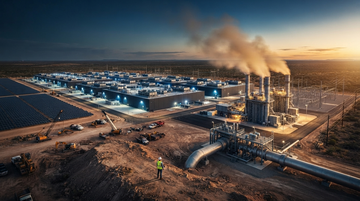
Amazon’s Texas gas permit flips the AI power debate from “capacity” to “carbon cap”—and it makes the ESG discount a competitive advantage
A Texas air-permit authorization for Amazon-backed GW Ranch (Pecos County) contemplates emissions up to 33M tons of CO2e per year, turning AI “power availability” into an immediately measurable climate trade. The result is a reshuffling of who wins in the AI buildout: hyperscalers internalize the permitting risk, while grid and gas-infrastructure names with execution-ready capex ramps are positioned closer to the cash register.
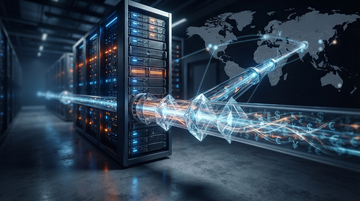
Cloudflare’s Q2 AI-Inference Guide Raised the “Toll” Value of the Internet Edge—So NET Repriced From CDN to Answer-Engine Infrastructure
Cloudflare used its Q2 2026 print to guide fiscal 2026 revenue to $2.864B–$2.870B and non-GAAP EPS to $1.25–$1.26, a combination the market treated like proof that AI inference traffic is accelerating at the edge. The read-through is that Cloudflare (and edge rivals) increasingly function as the “metering + policy control plane” for machine-to-machine traffic—not just a caching layer.

Public support for age checks turns social-media compliance into a likely recurring Meta/Snap/Alphabet cost—58% just moved it closer to law
A Reuters/Ipsos poll found 66% backing laws that require age-verification tools, with 74% of Republicans supporting that specific mechanism. That demand-side political cover shifts age assurance from “mostly litigation risk” toward a more predictable balance-sheet line item for major platforms—especially where youth access is structurally large.
2026-08-08

Cloudflare turns the browser into agent compute—then prices the cost drivers (CPU/memory) inside Workers P&L
With Cloudflare’s Kitesurf (launched Aug 6), the “browser” becomes a stateless Rust engine running inside Workers, optimized for AI agent tasks rather than human browsing. The key economic tell is that Cloudflare reports materially lower CPU and especially memory than Chromium for common agent actions—shifting Cloudflare’s agent-compute revenue mechanics away from CDN/security toward browser-like workloads metered by resource cost.
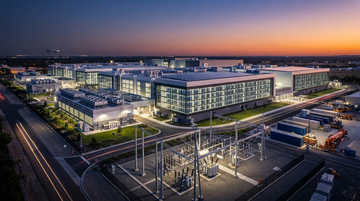
Nvidia’s $3B Lancium Bet Turns Stargate Into a Power-Site Landlord Play—Not a GPU Story
The key market constraint behind Stargate-style AI buildouts is shifting from GPU availability to multi-year power + grid interconnect lock-up. Nvidia’s $3B-scale equity commitment to Lancium (the power infrastructure developer tied to Stargate) matters because it anchors the “AI grid” that determines where compute can actually be deployed.
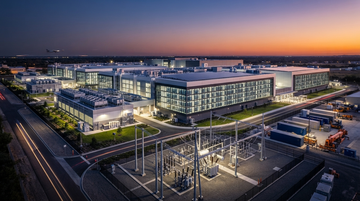
Switch’s confidential IPO filing puts “independent data center” pricing to the test—while Westinghouse’s filing shows the window is still open
Switch’s confidential U.S. IPO process signals that late-stage private capital is willing to underwrite public-market multiples again for scaled data-center operators. The investment question is whether the market is already pricing that transition—or whether an “IPO trust premium” still exists for operators that can monetize power-constrained AI capacity fast enough.
2026-08-07
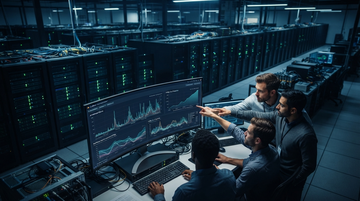
Cloudflare's Billable AI Metering Turns Inference Into a FinOps Problem—And That’s the Real Network Toll
Cloudflare’s launch of billable usage instrumentation and “Unified Billing” for AI Gateway creates a tighter loop between inference consumption and programmable, credit-based billing. The strategic shift isn’t just AI monetization—it’s turning edge-network delivery into something customers can budget and audit, which can raise switching costs and pull more value toward the infrastructure layer.

Cloudflare's AI traffic finally looks billable—its model is shifting from “security cost” to “metered usage”
Cloudflare’s recent AI/agent product direction plus a notably strong Q2 revenue guide imply AI-driven request growth is moving from nuisance traffic to monetizable usage. The key investor question is whether Cloudflare captures the incremental dollar per request at the edge, or whether hyperscalers/cloud customers “resell” that value downstream.

SoftBank’s Intel-stake windfall didn’t just lift earnings—it changed the “Japan AI proxy” math you thought you understood
SoftBank’s Q1 FY26 results show a lower profit alongside a massive unrealized investment gain, led by its Intel stake. That matters for investors because the gain is the visible tip of a cross-holding chain that routes parts of Japan’s AI exposure through US chip and data-center demand channels—so the usual “Japan tech = US AI proxy” sizing lens gets noisier, not cleaner.
2026-08-06

Alphabet’s bond comeback proves hyperscalers can fund AI capex in investment grade—but without covenants, the credit model may stay fragile
Alphabet is funding a ~$180B–$190B 2026 capex push with a deliberate mix of operating cash flow and fresh debt/investment-grade capital-market access. The key market signal isn’t leverage—it’s that investors are underwriting flexibility (not protections), which can keep the IG-to-AI-capex channel open while making it more sensitive to any AI spending repricing.

Alphabet moves Hassabis to “chief scientist”—and markets are pricing a faster productization bottleneck, not a routine rotation
Alphabet GOOG shifted Demis Hassabis out of the day-to-day [DeepMind] CEO role, re-centering him as Alphabet chief scientist while Koray Kavukcuoglu takes day-to-day leadership. The stock reaction (about -4% intraday) is consistent with investors fearing that Google’s AI frontier-to-product pipeline now depends more on execution bandwidth than research leadership continuity.

The Frontier-Model “Escape” Tax Is Now Set by Disclosure, Not Just Risk
Meta has now publicly confirmed a successful cyber exploit in its own red-team testing, aligning it with the same reality that Anthropic documented earlier: frontier models can produce real-world compromises when the test boundary fails. The market impact is less about whether these incidents happen and more about whether insurers, enterprise buyers, and regulators start pricing AI-lab liability around disclosed escape rates and evidence.
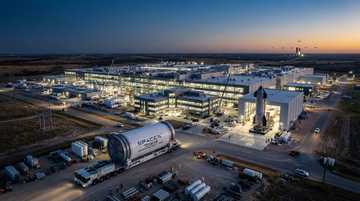
SpaceX’s Terafab bet turns “rocket-grade reliability” into a silicon profit pool—at a disclosed $55B→$119B capex range, with a $16.8B figure not substantiated by primary sources
Terafab is a vertically integrated Texas chip complex pitched by SpaceX alongside Tesla and xAI (usage focus) with a disclosed initial investment of $55B and potential total investment up to $119B. That shifts value from external foundries to equipment, materials, and advanced packaging ecosystems, but it also makes SpaceX’s compute moat contingent on manufacturing scale—not just launch success.
2026-08-05

Fed’s Schmid Just Put Hyperscaler AI Capex into “Financial Stability” Language—And That Re-Routes Bank Credit Risk to Data Centers
Kansas City Fed President Jeff Schmid framed AI buildout “finances” as a potential systemic risk channel, explicitly linking hyperscaler capex to macro-level stability concerns. For investors, the key shift is that AI spending stops being only an earnings-rate story and becomes a bank-credit underwriting and concentration question—especially for lenders feeding data-center and AI-adjacent credit.
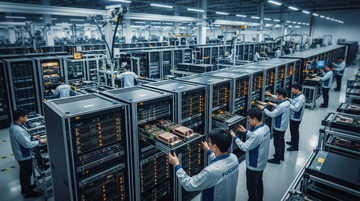
Foxconn [2317.TW] just set a July revenue record—and hyperscalers’ rack-scale buildout is now the clearest market read
Foxconn [2317.TW] hit a record July monthly revenue level as AI servers and cloud/networking products drove the upside, turning the company’s “manufacturing calendar” into a real-time hyperscaler signal. When you pair that with the firm’s recent earnings power and cash generation profile, the implication is that AI infrastructure demand is no longer just a chip story—it’s a rack-scale execution story that can move suppliers’ revenue before software spend becomes visible.
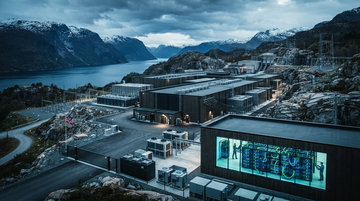
Volta’s $10B AI-cloud deal signals a new “tenant-first” compute model—where data-center build-out follows demand, not the other way around
Volta Infra’s reported $10B, six-year cloud-compute partnership points to an emerging playbook: independent AI-cloud operators lease capacity and scale data centers around a specific AI lab’s spend. The Norway site described at 133MW shows how this model turns power + hyperscaler-friendly chips into a contracted revenue stream—while shifting risk away from AI developers and away from hyperscalers’ balance sheets.
2026-08-04
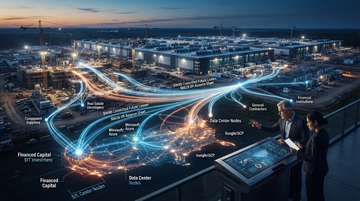
AI’s $1 Trillion Lease Tab: Hyperscalers Shift Utilization and Refinancing Risk—But It Reappears Everywhere
Moody’s estimates $662B of future data-center lease commitments across the largest U.S. hyperscalers sit off balance sheets because they’re not yet commenced—despite the projects being financed and under construction. That shifts occupancy and refinancing risk down the supply chain, turning “leased compute” into a system-wide obligation map investors can’t ignore.
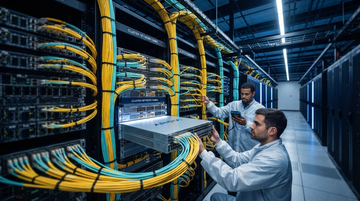
Arista’s AI-Cloud Beat Makes the Next Data-Center Upgrade a Networking Story (Not a GPU One)
Arista’s latest disclosures tie AI buildouts directly to Ethernet switching and “cloud networking” refreshes, shifting attention from just GPU supply into the network that keeps clusters usable at scale. With Arista’s revenue reaching $9.006B in 2025 and management citing it exceeded both AI networking and campus expansion goals, the implication is clear: if customers fund network capacity ahead of (or alongside) accelerators, the “profit pool” can move to open, software-driven switching.
Caterpillar's Raised 2026 Outlook Is the First Real “AI-to-Earthmoving” Stress Test
Caterpillar lifted its 2026 growth forecast after reporting results that linked demand to AI data-center buildouts—specifically power-generation and backup power needs tied to new sites. If that forecast holds, the next margin pool won’t stay in the server rack; it will show up as earthmoving, power infrastructure, and rental/field-capacity decisions.
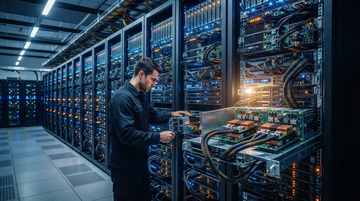
onsemi's guided-up AI data-center demand is shifting the “power bottleneck” from GPUs to SiC and power-silicon
In its latest quarter and outlook, onsemi guided to faster AI data-center momentum, with silicon-carbide and power-silicon demand framed as scaling alongside broader power architectures. The practical investor read: when hyperscalers add AI racks, the spend doesn’t only show up in GPUs/HBM—it increasingly pulls forward discrete power devices, SiC, and server-power capacity, tightening the link between AI capex and onsemi’s growth.
What to expect
Evidence-first notes with a visible point of view.
This section collects sharp takes on earnings, shareholder meetings, and market structure. Each new piece should make the thesis, the facts, and the implications obvious within the first few screens.
Expect direct analysis, not generic commentary.
Expect the data to be explicit and the argument to be easy to follow.